

A roaring fire brings welcome comfort to your living room during a bitter Ontario cold snap, but damaged bricks inside the firebox compromise your household safety. Fireplace bricks, known as refractory firebricks, are engineered to absorb intense heat and shield surrounding structural framing from combustion temperatures. When hairline fractures expand into deep cracks or refractory mortar joints crumble, heat and toxic combustion gases can bypass this protective barrier. Homeowners across Markham often overlook small fractures behind soot layers, yet addressing these masonry flaws early preserves the safety, efficiency, and structural value of your heating hearth.
Markham Chimney Services provides specialized cracked fireplace bricks repair from our home base at 4418 Highway 7 East. We assist residents across diverse Markham neighbourhoods, restoring original brickwork in mid-century bungalows, split-level family residences, and modern custom homes. Whether your fireplace burns natural cordwood or operates with gas logs, our independent masonry specialists assess damaged refractory linings and apply purpose-formulated refractory compounds. We focus on durable craftsmanship, thorough diagnostics, and clean work practices that ensure your hearth remains a dependable, safe centrepiece for your family throughout the longest winter months.
Cracked Fireplace Bricks Repair: visit summary
Cracked Fireplace Bricks Repair in Markham: fireboxes, surrounds and smoke chambers repaired or restored to safe working order. Serving Markham and the Greater Toronto Area (GTA). The estimated local market range is $295 – $895 CAD, not a fixed company rate. The final scope and quote are confirmed before work begins.
| Estimated market range | $295 – $895 CAD. All estimates are in Canadian dollars and exclude 13% Ontario HST. |
|---|---|
| Typical time | 2 to 4 hours on site |
| Price factors | Total number of cracked bricks needing replacement; Depth and extent of refractory mortar joint deterioration; Underlying moisture damage requiring flue or crown attention |
| Routine signs to discuss | Visible Mortar Erosion Between Firebricks; Hairline and Wide Through-Brick Cracks; Spalling and Crumbling Brick Surfaces; Loosened or Shifting Firebox Bricks; Rust Stains or Moisture Behind the Hearth; Persistent Odours Near Chimney Breast Walls |
Understanding Firebrick Deterioration and Firebox Mechanics
The interior chamber where fuel burns is known as the firebox, and its construction differs fundamentally from ordinary exterior masonry. Regular clay bricks cannot survive direct exposure to high combustion temperatures without splitting, spalling, or exploding from internal steam pressure. For this reason, builders line fireboxes with dense refractory firebricks joined together by specialized heat-resistant refractory mortar. This interior thermal shield reflects radiant warmth outward into your living space while containing intense direct flame.
Over years of regular heating cycles, the severe thermal shock from rapid heating and cooling takes a gradual toll on masonry materials. The firebox expands as temperatures rise past several hundred degrees and subsequently contracts as the fire burns down to cold ash. If the original mortar was mixed improperly, or if standard Portland cement mortar was mistakenly installed instead of high-temperature refractory mortar, the bonding lines quickly fail under these mechanical stresses.
Once mortar joints break down, adjacent firebricks lose support and begin bearing uneven thermal and mechanical loads from stacked logs. Hairline fissures soon develop across the brick faces, allowing heat to penetrate beneath the surface. Left unaddressed, these individual cracks widen into complete structural splits that destabilize the surrounding firebox walls and permit corrosive flue gases to reach the rough backing masonry.
- Firebricks contain high concentrations of alumina and silica to withstand open flame temperatures.
- Refractory mortar must cure properly to form a ceramic bond that resists thermal degradation.
- Uneven log placement and accidental impact from heavy iron fireplace tools can accelerate cracking.
- Surface crazing differs from deep structural fractures that run completely through the brick body.
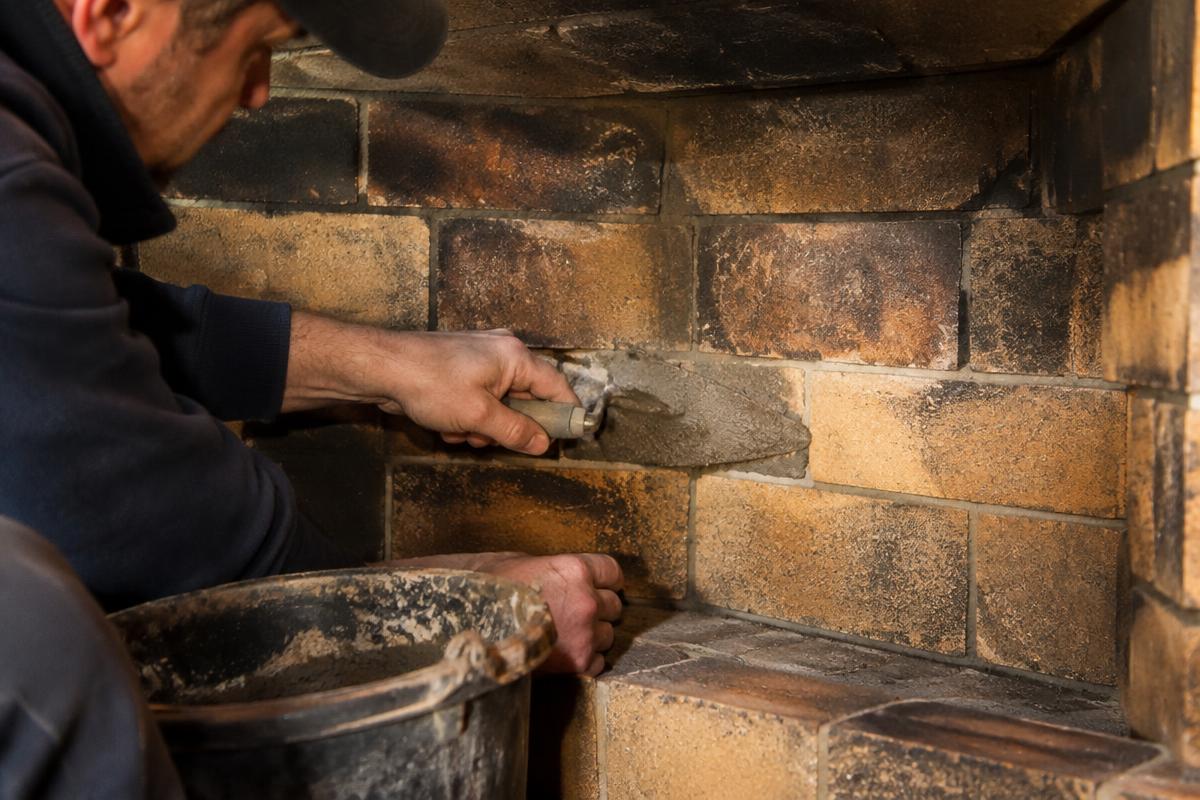
Restore your firebox masonry to protect your Markham home against hazardous heat transfer and structural decay.
Self-check
Warning signs you need cracked fireplace bricks repair
Visible Mortar Erosion Between Firebricks
Mortar joints recede, turn powdery, or leave visible gaps between bricks, allowing intense combustion heat and toxic flue gases to penetrate behind the protective refractory lining.
Hairline and Wide Through-Brick Cracks
Fissures running vertically or horizontally across individual firebrick faces indicate severe thermal stress, mechanical log impact, or foundation settlement requiring prompt structural mortar stabilization.
Spalling and Crumbling Brick Surfaces
Firebrick faces flake, pit, or drop sandy piles onto the hearth floor due to trapped moisture expanding during Ontario sub-zero winter freeze-thaw cycles.
Loosened or Shifting Firebox Bricks
Bricks that shift or feel loose when touched indicate bonding failure in the bedding mortar, threatening firebox stability and posing serious collapse risks during burning.
Rust Stains or Moisture Behind the Hearth
Water marks, damp soot, or rusting damper metal inside the firebox reveal chimney leaks that saturate masonry and accelerate freeze-thaw cracking during cold weather.
Persistent Odours Near Chimney Breast Walls
Acrid smoke or stale creosote smells escaping into your room suggest combustion gases are travelling through hidden brick fractures instead of drafting straight up the chimney flue.
Why Ontario Winters Accelerate Firebox Masonry Damage
The climate across Southern Ontario presents distinct challenges for residential chimney and fireplace systems. During late autumn and winter, our region undergoes frequent freeze-thaw cycles where outdoor temperatures swing wildly above and below the freezing mark within hours. When exterior chimney caps, crowns, or flashings develop small leaks, liquid precipitation and melting snow enter the flue cavity and migrate downward toward the fireplace interior.
Porous masonry readily absorbs this moisture like a dense sponge. When a cold front drops temperatures well below freezing, trapped water within the firebricks freezes and expands by approximately nine percent. This internal hydrostatic pressure fractures the internal crystalline structure of the brick from within, resulting in flaking surfaces known as spalling. When you subsequently light a hot fire, the rapid expansion of remaining trapped water creates steam pockets that widen existing cracks.
This punishing combination of exterior sub-zero drafts and interior fireplace heat creates steep temperature differentials across the masonry structure. Exterior-facing chimney breasts on outer house walls suffer the most extreme stress, as the cold exterior face fights the blistering heat of the hearth. Routine inspections help Markham residents catch moisture migration before winter weather turns modest hairline cracks into complete firebox rebuilds.
- Rapid temperature swings expand trapped water inside porous firebrick materials.
- Spalling causes brick faces to flake, crumble, and deposit sandy debris onto the hearth floor.
- Damaged chimney crowns allow rain and snow runoff to seep straight into firebox walls.
- Exterior wall fireplaces experience sharper thermal gradients than centrally located interior chimneys.
The Hidden Dangers of Firebox Cracks and Heat Transfer
The primary hazard associated with cracked firebricks is dangerous heat transfer, often called pyrolysis. When intense firebox temperatures pass through fractured bricks and missing mortar, heat directly contacts the house framing hidden behind the masonry cavity. Over extended periods of exposure, dry wooden studs, headers, and floor joists undergo chemical changes that progressively lower their ignition temperature, meaning the wood can ignite unexpectedly without direct flame contact.
Beyond structural fire risks, broken firebox bricks permit toxic combustion by-products to leak into living areas. Flue gases contain hazardous compounds including soot particulates, nitrogen dioxide, sulphur dioxide, and colourless, odourless carbon monoxide. When cracks compromise the draft boundary, pressure changes inside the room can pull these dangerous emissions through gaps in the brickwork rather than venting them up the flue liner.
Cracks in the firebox can also compromise the stability of heavy components like the throat damper and lintel bar. If the supporting brickwork around the lintel settles or loosens due to mortar loss, the entire front arch or throat assembly can shift. Repairing individual cracked bricks promptly eliminates these compounding structural and atmospheric safety hazards before they escalate into dangerous household emergencies.
- Pyrolysis gradually lowers the ignition threshold of wooden framing adjacent to the chimney.
- Carbon monoxide can seep through unsealed gaps into living areas and upper floor cavities.
- Loose bricks around the fireplace throat can cause heavy iron dampers to shift out of alignment.
- Unchecked gaps allow sparks and hot embers to slip behind the primary refractory envelope.
Root Causes Behind Broken Firebricks and Failing Mortar
While natural thermal cycling causes gradual wear, several specific factors accelerate firebrick failure in local residences. Improper initial installation remains widespread in older homes where masons occasionally used non-refractory mortar mixes to speed construction. Standard masonry cement lacks the chemical composition needed to withstand direct flame, causing joints to turn chalky, disintegrate, and fall out within a few seasons of regular heating.
Mechanical impact from everyday wood loading is another common catalyst for brick damage. Tossing heavy hardwood logs against the rear firebox wall or banging iron pokers against brick joints causes sudden stress fractures. Over time, these localized impact fractures spread vertically and horizontally under ongoing thermal expansion, eventually causing whole brick faces to separate and drop forward onto the hearth floor.
Foundation movement and soil settlement in Markham neighbourhoods also contribute to masonry shifts. Clay-heavy soils expand and contract with seasonal moisture levels, which can introduce minor settlement across heavy masonry footings. Even slight shifts at the foundation level transmit structural tension upward through the chimney base, manifesting as diagonal stepped cracks through the firebox mortar joints and bricks.
- Use of non-refractory Portland cement that breaks down under direct flame temperatures.
- Physical impacts from tossing heavy firewood or mishandling steel fireplace grates.
- Foundation settlement that creates structural tension across the hearth foundation.
- Corrosive chemical deposits from unburned creosote that weaken mortar binders over time.
"After noticing smoke backing into the room, I called for an inspection in Buttonville. Their technician diagnosed a minor blockage quickly, cleared it thoroughly, and explained how to avoid future issues. Excellent service."

Our process
How we handle your cracked fireplace bricks repair, step by step
- 1
Site Preparation and Soot Removal
We lay drop cloths around your hearth and mechanically clean soot and creosote from all firebox brick surfaces to reveal hidden cracks.
- 2
Diagnostic Mapping and Structural Assessment
Our specialists measure crack depth, test brick stability, and inspect underlying masonry to pinpoint thermal, moisture, or movement causes.
- 3
Joint Raking and Damaged Brick Extraction
We grind out failing mortar joints and carefully chisel away shattered firebricks without unsettling surrounding stable masonry structures.
- 4
Refractory Repair and Firebrick Replacement
We install new high-density firebricks and pack high-temperature refractory mortar into prepared joints, tooling seams flush and neat.
- 5
Site Clean-Up and Curing Protocol Briefing
We clean the work area with specialized vacuums and provide clear instructions on curing times and initial seasoning fires.
How We Diagnose Firebrick Damage and Structural Soundness
Every successful firebox repair begins with a methodical assessment of the entire combustion chamber and surrounding masonry. When Markham Chimney Services visits your home, we start by clearing loose ash, soot, and creosote build-up from all brick surfaces. Removing this surface accumulation exposes hidden stress fractures, minor mortar erosion, and subtle spalling that would otherwise go unnoticed during a casual glance.
We evaluate the depth, direction, and width of every visible crack using precision diagnostic gauges. A shallow surface fracture often requires a different repair approach than a deep fault line splitting the brick through its full depth. We also perform gentle physical stability tests on individual bricks, checking whether the firebox wall retains its structural integrity or if loose units require complete extraction and replacement.
Our assessment extends beyond the visible firebox to pinpoint root causes, including chimney cap integrity, damper operation, and flue alignment. We examine moisture levels around the chimney breast to determine whether freeze-thaw cycles or water leaks caused the deterioration. Following this detailed examination, we explain our findings in clear language and recommend practical restoration options tailored to your home and budget.
- Thorough soot removal reveals hidden hairline fractures across the back wall and sidewalls.
- Crack width and depth measurements differentiate harmless crazing from structural failures.
- Stability tapping identifies loosened bricks that have detached from their backing bed.
- Draft and moisture evaluations ensure underlying moisture entry points get identified.
Professional Restoration Using High-Temperature Refractory Mortar
Repairing firebox masonry demands materials engineered specifically for high-heat environments. Standard patching compounds and regular hardware store cement crumble when exposed to active flames, making professional-grade refractory mortars essential. We use premium premixed and hydraulic-setting refractory mortars rated for temperatures well beyond standard residential wood combustion thresholds, ensuring long-lasting bonding performance.
For narrow cracks where the brick remains solidly anchored, we use specialized joint preparation tools to grind away deteriorated mortar and widen the fracture slightly. This preparation ensures the new refractory compound bonds deeply rather than sitting loosely on the surface. We then pack the repair mortar firmly into the fissure, tooling the joint smooth to match the natural contour and historic texture of your existing firebox.
When individual firebricks are shattered, crumbly, or loose, we carefully chisel them out without disturbing adjacent masonry. We clean the structural cavity, install brand new high-density firebricks, and set them into fresh refractory bedding mortar with tight joints. Once the masonry work is complete, we leave clear instructions regarding proper curing times, allowing the mortar to dry thoroughly before you light your first gentle seasoning fire.
- Application of true high-heat refractory mortar rated for intense wood-burning temperatures.
- Precision joint cleaning and dampening to ensure maximum mortar adhesion to dry brick.
- Individual brick extraction and replacement using durable, high-density refractory units.
- Guidance on controlled curing fires to prevent thermal shock to freshly placed mortar joints.

Essential Fireplace Care and Safety Protocols for Homeowners
Maintaining your repaired firebox requires consistent habits that reduce thermal shock and physical wear. When starting a fire, build it gradually with small kindling rather than instantly loading massive hardwood logs. Fast, roaring fires produce sudden thermal gradients that stress cold masonry. Always place firewood on a properly sized grate rather than directly on the firebox floor, and leave a few inches of clearance between logs and the rear refractory wall.
Household safety requires working carbon monoxide alarms and smoke detectors installed on every level of your home, especially near sleeping areas. Because small masonry fissures can leak invisible gases into wall spaces, reliable early detection remains vital for household safety. We strongly recommend testing alarm batteries monthly and replacing older alarm units according to the manufacturer schedule stamped on the device casing.
Schedule an annual hearth inspection prior to each winter heating season. Catching fine hairline cracks early allows for minor mortar tuckpointing before moisture infiltration and intense heat turn modest repairs into costly structural overhauls. Keep ash buildup to a reasonable depth of roughly two centimetres, as a thin ash layer protects hearth bricks, while excessive ash holds moisture against metal grates and mortar joints.
- Burn only seasoned dry hardwood with moisture content below twenty percent to reduce creosote.
- Install and test carbon monoxide alarms near all bedrooms and living spaces on your hearth floor.
- Avoid building oversized fires that overwhelm the thermal capacity of residential fireboxes.
- Clear excess ash regularly while maintaining a thin bed to insulate the bottom hearth bricks.
Selecting the Right Independent Chimney and Masonry Contractor
Fireplace repair is a specialized masonry trade requiring distinct knowledge of thermodynamics, refractory materials, and residential building fire codes. General handymen and non-specialist trades often make the mistake of using standard mortar or aesthetic patching plaster inside fireboxes, creating hazardous conditions for unsuspecting homeowners. Choosing an experienced hearth professional guarantees the correct high-temperature materials and techniques are utilized.
When vetting contractors across the Greater Toronto Area, look for transparent business practices, local street addresses, and comprehensive liability insurance coverage. Reputable tradespeople provide clear, written estimates explaining the scope of repair, the specific refractory materials being installed, and the diagnostic findings. They should communicate clearly, answer your practical questions without pressure, and treat your living room with cleanliness and care.
At Markham Chimney Services, we take pride in being an independent service provider dedicated to our local community. Operating from 4418 Highway 7 East, we deliver honest diagnostic evaluations, transparent quotes, and meticulous masonry restorations. We adhere strictly to solid wood-burning safety principles and Canadian building code standards, ensuring that every fireplace we restore performs safely and dependably for your family.
- Verify that your contractor uses true refractory compounds rather than standard Portland mortar.
- Confirm valid commercial general liability insurance and active workplace safety coverage.
- Demand a written itemized estimate detailing brick replacements and joint tuckpointing.
- Look for local Markham community presence and dedicated customer service accountability.
Average pricing in Markham
$295 – $895 CAD
- Inspection / diagnostic
- $125 – $175 CAD (credited toward major repairs)
- Typical time on site
- 2 to 4 hours on site
- Parts and materials
- Replacement refractory firebricks, specialized refractory bonding mortar, heat-resistant sealants
- What moves the price
- Total number of cracked bricks needing replacement · Depth and extent of refractory mortar joint deterioration · Underlying moisture damage requiring flue or crown attention
Estimated local market range, not a quote. All estimates are in Canadian dollars and exclude 13% Ontario HST. Your exact price is confirmed before any work begins.