

The firebox is the literal beating heart of your fireplace, serving as the front line of containment against roaring flames and extreme temperatures. Whenever you ignite seasoned hardwood or run a modern gas burner inside your Markham home, this reinforced chamber absorbs the brunt of direct thermal stress while guiding toxic exhaust upward into the smoke chamber and flue. Because the firebox operates under unrelenting thermal punishment, even minor gaps, hairline fissures, or decaying mortar joints can expose combustible wooden framing hidden directly behind your walls. Keeping this enclosure in pristine condition is essential for residential safety, air quality, and steady heating performance throughout the winter.
At Markham Chimney Services, located at 4418 Highway 7 East, we provide dedicated fireplace firebox services tailored to the specific construction styles and microclimates of local properties. From classic mid-century brick bungalows in Unionville and Cornell to custom builds across Angus Glen, our focus centres on restoring structural stability and combustion safety without compromise. We evaluate heat distress, replace spalling firebricks, install replacement refractory panels, and repoint degraded joints using heat-tolerant refractory mortar engineered to withstand intense thermal cycles. Our careful restoration process ensures your family enjoys comforting hearth fires with absolute peace of mind through every deep Canadian cold snap.
Fireplace Firebox Services: visit summary
Fireplace Firebox Services in Markham: fireboxes, surrounds and smoke chambers repaired or restored to safe working order. Serving Markham and the Greater Toronto Area (GTA). The estimated local market range is $380 – $1,850, not a fixed company rate. The final scope and quote are confirmed before work begins.
| Estimated market range | $380 – $1,850. All estimates are in Canadian dollars and exclude 13% Ontario HST. |
|---|---|
| Typical time | 2 to 6 hours depending on scope |
| Price factors | Masonry tuckpointing versus full refractory panel replacement; Number of individual spalled or broken firebricks requiring removal; Extent of underlying water damage or chimney settling repairs required |
| Routine signs to discuss | Hairline Cracks in Mortar Joints; Flaking or Spalling Firebricks; Cracked Factory Refractory Panels; Rust Stains on Metal or Firebrick; Smoke Spillage into the Living Room; Loose or Shifting Firebricks |
Understanding Your Firebox: The Hearth's Primary Combustion Chamber
The firebox is the reinforced interior compartment where active combustion takes place. Unlike the exterior facade or the decorative hearth extension extending into your living room, the firebox is constructed exclusively with materials engineered to tolerate continuous temperatures exceeding one thousand degrees Celsius. In traditional masonry fireplaces, this assembly consists of high-density yellow or buff fireclay bricks bound by specialized non-water-soluble refractory mortar. In factory-built or zero-clearance fireplaces, the chamber features heavy-gauge steel lined with precast ceramic refractory panels that absorb radiant heat and reflect warmth into your living space.
Beyond housing firewood or gas burners, the geometry of your firebox dictates how efficiently smoke moves into the chimney. The rear wall usually tapers inward toward the front as it rises, a design known as the throat reflection angle. This angled slope acts as a natural radiator, reflecting infrared heat back into your home while simultaneously channelling rising combustion gases cleanly through the damper opening. When cracks develop or surfaces degrade, this aerodynamic thermal flow is disrupted, causing smoke spillage, cold air drafts, and inefficient fuel consumption during regular heating use.
Because the firebox sits at the core of the fireplace structure, its physical health dictates the integrity of surrounding wall assemblies. Wood framing, drywall studs, and electrical conduits frequently sit merely centimetres away from the exterior boundary of the firebox masonry. Without sound refractory containment, radiant heat easily transfers into adjacent cavities through thermal bridging. Professional firebox maintenance ensures that this thermal barrier remains solid, fully isolating open flames and dangerous combustion gases from the structural framework of your Markham residence.
- Constructed with specialized fireclay bricks and refractory mortar
- Reflects radiant heat into living areas while channelling exhaust gases
- Protects adjacent structural studs and hidden framing from extreme thermal transfer
- Operates as the primary barrier against sparks, ember intrusion, and carbon monoxide leakage
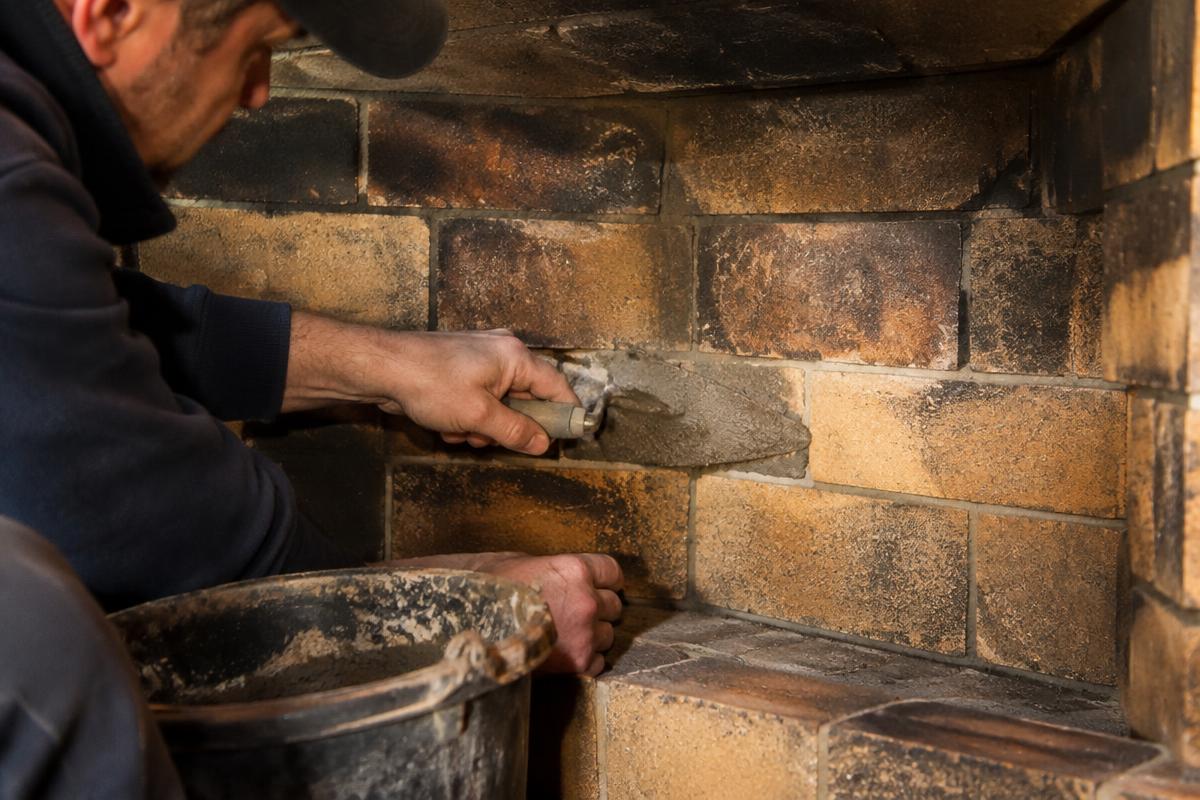
Restoring the heat-shielding heart of your fireplace for safer, warmer Markham winters.
Self-check
Warning signs you need fireplace firebox services
Hairline Cracks in Mortar Joints
Thin cracks running through the mortar lines indicate early thermal breakdown. If left unsealed, heat and combustion gases penetrate these openings, gradually eroding the masonry from behind and creating potential structural fire hazards.
Flaking or Spalling Firebricks
When brick faces chip, flake, or crumble into the hearth, moisture has penetrated the porous clay and frozen. Spalling weakens the structural thickness of the firebox, reducing its capacity to contain intense combustion temperatures.
Cracked Factory Refractory Panels
Gaps or visible fractures in prefabricated panels allow direct flame contact against the outer sheet-metal casing. Any fracture wider than the edge of a five-cent coin requires immediate replacement to protect surrounding wall framing.
Rust Stains on Metal or Firebrick
Reddish rust streaks running down the back firebox wall indicate water entering from the chimney top or flashing. Water compromises mortar bonds and leads to rapid freeze-thaw deterioration throughout cold Markham winters.
Smoke Spillage into the Living Room
Puffs of smoke escaping into the room often point to damaged throat geometry or rough, eroded firebox surfaces that disrupt aerodynamic exhaust draw. Deteriorated walls create turbulent airflow that forces smoke backward into your home.
Loose or Shifting Firebricks
Bricks that wiggle when pressed indicate that surrounding mortar has completely disintegrated into dust. This structural failure requires immediate professional tuckpointing or partial rebuilding before lighting another fire in the home.
The Impact of Markham's Freeze-Thaw Weather on Firebox Masonry
Southern Ontario experiences one of the most demanding climatic environments for residential masonry. Across Markham and the Greater Toronto Area (GTA), winter temperatures regularly swing above and below the freezing mark within single twenty-four-hour windows. When an aging chimney cap, worn exterior flashing, or porous crown allows melting snow and rain to seep down the interior chimney structure, moisture collects directly behind the firebox brickwork. This trapped water expands by roughly nine percent as it freezes, placing immense outward pressure against fireclay bricks and interior refractory joints.
When homeowners light a roaring fire on a frigid January evening, the problem worsens dramatically. Rapid heating subjects cold, moisture-saturated firebricks to intense thermal shock. The water trapped within the pores vaporizes rapidly into steam, seeking an immediate exit path through the dense clay matrix. This sudden expansion blows off the hardened face of the bricks, a destructive process known as spalling, and reduces structural mortar to loose sand. Over several seasons, modest hairline cracks transform into deep fissures that can breach the protective containment envelope entirely.
Furthermore, our humid summer months combine with acidic combustion residues left inside the chimney to accelerate chemical degradation. Creosote and sulfur deposits turn acidic when exposed to summer moisture, slowly corroding metal firebox fire grates, deteriorating zero-clearance steel outer shells, and eating away at mortar lines. Timely inspection and prompt seasonal restoration help prevent this hidden freeze-thaw decay from undermining your hearth before the cold weather returns.
- Rapid temperature swings expand trapped moisture behind the firebox walls
- Thermal shock from lighting fires against cold masonry causes brick spalling
- Creosote mixes with ambient summer humidity to form corrosive acidic compounds
- Hidden moisture ingress deteriorates refractory joints from the outside inward
Common Root Causes of Firebox Deterioration in Urban Homes
While weather plays a dominant role, several indoor conditions and mechanical factors contribute to firebox degradation in Markham residences. One frequent issue stems from past masonry repairs carried out with standard Portland-based mortar rather than dedicated refractory mortar. Standard masonry mortar expands and contracts at a rate mismatched to fireclay bricks, and it quickly crumbles under sustained heat exposure. Once this inappropriate mortar disintegrates, bricks loosen, leaving wide voids directly adjacent to residential framing cavities.
Another primary catalyst for firebox decay is the burning of wet or unseasoned firewood. Firewood containing high moisture levels burns inefficiently at cooler hearth temperatures, producing heavy volumes of moisture-laden smoke along with volatile creosote compounds. These sticky deposits cling to the firebrick surface, trapping water against the masonry and promoting long-term acid erosion. In contrast, burning construction lumber, cardboard, or garbage generates brief, uncontrollable heat spikes that subject refractory surfaces to severe thermal expansion stress.
Natural structural settling in older residential neighbourhoods across Markham also introduces gradual movement within the hearth foundation. Because chimneys are exceptionally heavy masonry structures, minor foundation shifting can place uneven shear forces on the firebox assembly. Over decades, this settling manifests as stair-step cracking along vertical mortar joints or slight separations between the firebox side walls and the adjoining lintel bar.
- Previous repairs executed with non-refractory Portland mortar mixtures
- Burning wet, unseasoned wood that generates moisture and creosote buildup
- Over-firing caused by burning synthetic items or construction lumber
- Natural structural settling of the home foundation and heavy chimney base
Prefabricated Fireboxes: Refractory Panel Maintenance and Replacement
Many homes built from the late 1970s onward feature factory-built zero-clearance fireplaces rather than traditional solid masonry hearths. These appliances rely on engineered refractory panels composed of compressed ceramic fibres or reinforced refractory cement to line the rear and side walls of the firebox. These panels absorb extreme thermal energy, preventing the outer steel containment box from overheating, warping, or compromising adjacent interior drywall and timber wall framing.
Factory-built panels degrade naturally over years of routine heating. As logs are loaded or shifted, direct physical impacts from wood can cause chips, cracks, and surface fractures. Industry safety standards recommend replacement whenever a crack opens wide enough to insert the edge of a Canadian five-cent coin, or when erosion thins the panel surface by more than six millimetres. Once a crack penetrates through to the underlying metal casing, extreme heat can warp the structural frame, turning a simple panel repair into an expensive full fireplace replacement.
Because we operate as an independent chimney service company, we source and custom-fit replacement refractory panels designed to meet the exact dimensions and heat ratings of your specific appliance model. We remove worn panels, inspect the underlying steel chassis for thermal warping or rust, vacuum out decades of trapped debris, and install heavy-duty refractory panels properly seated against original factory mounting brackets.
- Ceramic and refractory panels shield outer steel housings from direct flames
- Cracks wider than a five-cent coin require prompt panel replacement
- Independent sourcing ensures precise dimensional matches for vintage and modern units
- Inspection of underlying steel framing catches concealed corrosion and warping
"When a storm loosened some bricks, I called for emergency repair in Thornhill. Their crew arrived within hours, secured the chimney crown, and restored its integrity without any mess. Truly impressive expertise."

Our process
How we handle your fireplace firebox services, step by step
- 1
Visual Inspection and Surface Cleaning
We vacuum away soot, creosote, and ash deposits to expose bare masonry. We then inspect every brick, joint, and panel using high-output lighting to identify cracks, spalling, and movement.
- 2
Joint Raking and Preparation
Our technicians carefully chisel away failed, sandy mortar down to sound masonry without damaging the surrounding firebricks. We clear out loose dust and prepare the joints for fresh refractory material adhesion.
- 3
Refractory Repointing or Brick Replacement
We pack high-temperature refractory mortar tightly into prepared joints. Any cracked or broken firebricks are removed and replaced with new heavy-duty fireclay bricks aligned to match existing bond patterns.
- 4
Panel Replacement for Prefab Units
For factory-built fireplaces, we remove cracked panels, vacuum the underlying steel frame, inspect for hidden rust or warping, and install precision-cut refractory panels seated securely onto manufacturer-approved mounting brackets.
- 5
Curing Guidance and Safety Verification
We clean the hearth, perform a final clearance check, verify nearby carbon monoxide alarms, and provide specific curing instructions for low-heat startup fires to let the new refractory materials cure fully.
Traditional Masonry Restoration: Repointing and Rebuilding
Restoring an authentic brick firebox requires traditional craftsmanship combined with modern material science. When inspecting older homes in neighbourhoods like Bayview Glen or Langstaff, we often find that while the exterior facing looks pristine, the interior firebricks have shifted or lost their mortar bonds. Our firebox restoration process begins by carefully removing loose, degraded mortar down to a solid base using non-destructive chiselling methods that safeguard the surrounding historic masonry.
Once joints are prepared and cleaned of soot, we perform precision tuckpointing using premium refractory mortar. This specialized bonding material is specifically formulated with calcium aluminate cements and heat-resistant aggregates, allowing it to withstand temperatures over thirteen hundred degrees Celsius without shrinking, cracking, or off-gassing toxic fumes. Where individual firebricks have spalled or cracked beyond repair, we remove them cleanly and lay new high-duty fireclay bricks in classic running bond or herringbone patterns.
In situations where long-term water damage or structural settling has displaced the entire back wall, a partial or complete firebox rebuild becomes necessary. We rebuild the chamber from the hearth level upward, ensuring exact alignment with the smoke shelf and throat damper. This meticulous reconstruction restores proper draft mechanics, eliminates hazardous thermal gaps, and provides decades of reliable fireplace enjoyment.
- Safe extraction of crumbling, non-compliant joint mortar without damaging bricks
- Repointing with specialized high-temperature calcium aluminate refractory mortar
- Individual brick replacement matching original running or herringbone bond patterns
- Full or partial back-wall rebuilding to re-establish draft geometry and clearance
Essential Safety Protocols: Carbon Monoxide and Building Clearances
A compromised firebox introduces serious life safety hazards into a home. When gaps appear in the firebox walls, dangerous combustion byproducts including carbon monoxide, microscopic soot particles, and unburned hydrocarbons can migrate through wall cavities into bedrooms and living spaces. Carbon monoxide is entirely colourless and odourless, making proactive containment and regular equipment verification essential components of responsible homeownership.
Every residential fireplace must maintain strict non-combustible clearances. In accordance with safety principles established in Canadian heating standards such as CSA B365 and National Building Code guidelines, a specific protective buffer of non-combustible material must separate the firebox chamber from structural framing. When mortar joints crumble or firebricks split, this necessary thermal barrier is breached. Radiance can cause internal framing wood to dry out over years, lowering its spontaneous ignition temperature through a dangerous chemical process called pyrolysis.
During every firebox service call in Markham, our technicians assess environmental safety across the entire hearth zone. We verify the placement and functionality of working carbon monoxide and smoke alarms on every level of your home, check the hearth extension dimensions for proper spark protection, and examine the integrity of the lintel bar overhead to confirm that the weight of the chimney breast is fully supported.
- Prevents deadly carbon monoxide from migrating into residential wall cavities
- Eliminates the threat of wood pyrolysis in structural studs behind the hearth
- Aligns fireplace conditions with established Canadian building safety best practices
- Includes verification of operational carbon monoxide alarms and hearth extensions

Proactive Care and Season-to-Season Maintenance Practices
Routine homeowner upkeep goes a long way toward extending the working life of your firebox between professional services. One of the most effective habits is managing ash accumulation correctly during the burning season. While maintaining a small bed of ash roughly two centimetres deep can insulate coals and improve combustion efficiency, allowing deep piles of ash to sit against firebricks for extended periods draws ambient moisture from the air. This damp ash reacts with residual wood salts to form lye, an alkaline substance that eats away at mortar joints.
When removing ash, always allow coals to cool for at least thirty-six hours before transferring them into a dedicated metal container with a tight-fitting lid, keeping the container away from combustible flooring. Avoid throwing cold water onto active fires to extinguish them, as this abrupt temperature drop induces extreme thermal shock that fractures fireclay bricks and shatters refractory panels instantly. Instead, let fires burn down gradually to natural embers.
Finally, make a habit of visually scanning your firebox walls every autumn before lighting your first seasonal fire. Use a strong flashlight to check the back wall for fresh spiderweb cracks, crumbly mortar lines, or signs of water streaking. Catching small hairline cracks early allows for simple, affordable refractory mortar touch-ups before winter freezes expand the damage into major structural rebuilds.
- Avoid leaving deep, damp ash beds against firebricks during off-season periods
- Never extinguish active fires with cold water to prevent catastrophic thermal shock
- Store removed ash in covered metal bins placed exclusively on non-combustible surfaces
- Conduct a thorough flashlight inspection of mortar lines every autumn before use
Selecting a Reliable Firebox and Masonry Contractor in Markham
Fireplace repair is a specialized trade combining structural masonry, heat transfer physics, and rigorous building safety principles. When seeking a service provider for your Markham home, look for an experienced local chimney specialist rather than a general handyman. A qualified technician understands the specific requirements of refractory cements, understands regional building traditions from Markham Village to the Rouge Valley corridor, and respects the thermal forces at play inside an active fireplace.
A trustworthy contractor always begins with an honest, transparent evaluation of your firebox condition. They will document their findings with clear photographs, walk you through the structural implications of any cracking, and explain why a specific refractory product or repair method is required. Be cautious of contractors who recommend quick fixes using ordinary exterior cement or who push complete rebuilds when localized tuckpointing and brick replacement would safely resolve the problem.
At Markham Chimney Services, our team brings dependable, practical expertise to every hearth project. We operate transparently from our base at 4418 Highway 7 East, providing clear itemized estimates, respectful in-home service with heavy drop cloths and dust control, and craftsmanship that adheres to the highest Canadian building standards. We take pride in keeping our neighbours' fireplaces safe, efficient, and beautifully maintained throughout the cold months.
- Ensure the contractor uses certified high-heat refractory mortars, not standard Portland cement
- Look for clear photographic documentation and transparent diagnostic explanations
- Confirm comprehensive commercial liability insurance and protective in-home work practices
- Choose an established local Markham team dedicated exclusively to chimney and hearth care
Average pricing in Markham
$380 – $1,850
- Inspection / diagnostic
- $149 – $249
- Typical time on site
- 2 to 6 hours depending on scope
- Parts and materials
- Fireclay bricks, precast refractory panels, and specialized refractory mortar
- What moves the price
- Masonry tuckpointing versus full refractory panel replacement · Number of individual spalled or broken firebricks requiring removal · Extent of underlying water damage or chimney settling repairs required
Estimated local market range, not a quote. All estimates are in Canadian dollars and exclude 13% Ontario HST. Your exact price is confirmed before any work begins.