A cozy hearth provides welcome relief during bitter Ontario winters, but a damaged or malfunctioning fireplace creates real safety hazards for your household. When your hearth fills the living room with smoke, displays crumbling firebricks, or allows icy winter drafts to drop indoor temperatures, running a fire becomes stressful rather than comforting. Markham Chimney Services operates from 4418 Highway 7 East, offering attentive, neighborhood-focused fireplace repair across local communities. We diagnose structural, mechanical, and airflow defects with meticulous care, ensuring your system runs cleanly, retains heat properly, and protects your home from smoke intrusion and toxic fumes.
Fireplace repair is about more than cosmetic improvements; it protects your home investment against structural degradation and fire danger. Our team operates as an independent service company, bringing practical masonry restoration, component rebuilding, and draft correction directly to local homeowners. From mid-century bungalows in Unionville to newer custom builds in Bayview Glen, we evaluate each unique venting system and firebox build thoroughly. Prompt repairs resolve minor deterioration before seasonal freeze-thaw cycles convert small mortar fractures into costly masonry rebuilds, keeping your family secure and warm throughout the coldest months across the Greater Toronto Area (GTA).
Fireplace Repair: visit summary
Fireplace Repair in Markham: fireboxes, surrounds and smoke chambers repaired or restored to safe working order. Serving Markham and the Greater Toronto Area (GTA). The estimated local market range is $279 – $1,850, not a fixed company rate. The final scope and quote are confirmed before work begins.
| Estimated market range | $279 – $1,850. All estimates are in Canadian dollars and exclude 13% Ontario HST. |
|---|---|
| Typical time | 2 to 6 hours depending on scope |
| Price factors | Extent of masonry decay and volume of firebricks requiring replacement; Accessibility of the throat damper assembly and internal smoke chamber; Underlying draft corrections such as smoke guard fabrication or negative pressure fixes |
| Routine signs to discuss | Smoke Spilling Into the Living Room; Cracked or Missing Firebox Mortar; Warped or Jammed Throat Damper; Sandy Debris and Spalled Bricks; Soot Staining Above the Fireplace Opening; Unpleasant Acidic or Musty Odours |
What Complete Fireplace Repair Entails for Modern Homes
Fireplace repair encompasses a wide collection of mechanical, structural, and masonry corrections designed to return your hearth to safe working order. Inside your home, the firebox endures intense thermal stress that slowly degrades refractory mortar joints and cracks firebricks over regular heating cycles. When these protective barriers fail, extreme heat transfers directly toward adjacent framing walls, posing serious fire hazards. Professional fireplace repair rebuilds these refractory walls, seals vulnerable gaps, and repoints decaying mortar beds using high-temperature bonding materials specially formulated to withstand repeated intense heating without shrinking or separating.
Beyond the refractory firebox itself, mechanical components require precise alignment to control airflow and ventilation effectively throughout your home. The throat damper, positioned directly above the firebox opening, must open fully to exhaust combustion gases and seal tightly when the hearth rests idle to block cold drafts. Warped cast iron plates, rusted linkage rods, and broken ratchet handles frequently prevent proper closure, wasting heated indoor air throughout winter. Repairing or replacing these mechanisms restores positive control over household ventilation, lowering your utility costs while keeping unwanted downdrafts out of living spaces.
A thorough repair project also assesses the smoke chamber and surrounding hearth extension to ensure combustion byproducts exit smoothly. Mortar corbelling within older unlined smoke chambers often deteriorates, creating turbulent airflow that pushes smoke outward past the lintel instead of drawing upward into the flue. Parging the smoke chamber with smooth refractory insulating cement eliminates jagged ledges and accelerates draft velocity. Restoring these internal transition zones ensures that every fire you light drafts predictably, keeping toxic emissions safely contained and traveling outside your living space as originally intended.
Our comprehensive fireplace repair work systematically addresses every component of your burning system to ensure long-term performance and complete structural safety.
- Rebuilding cracked firebox walls and repointing failing refractory mortar joints
- Straightening, freeing, or replacing warped throat dampers and top-sealing assemblies
- Parging rough smoke chambers smooth with insulating refractory mortar
- Securing loose hearth stones and reinforcing deteriorating brick lintels
- Remediating smoke spillage issues caused by incorrect firebox-to-flue ratios
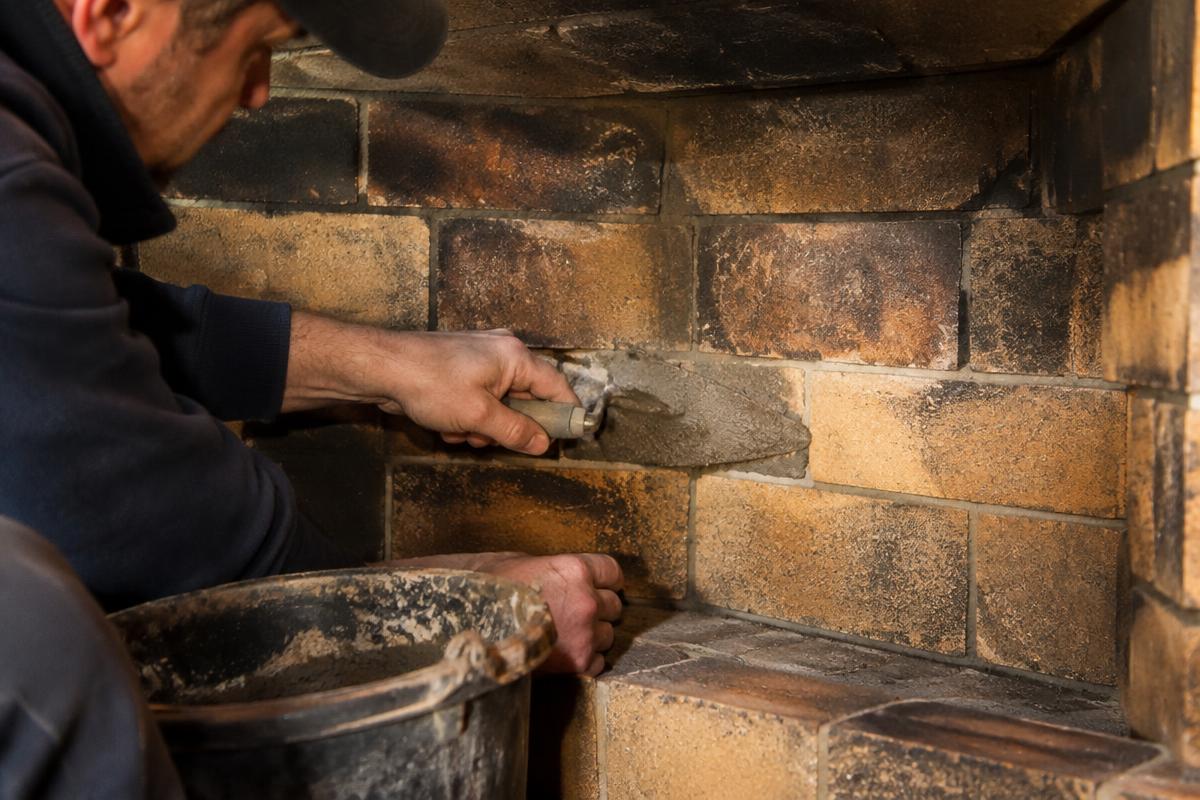
Restoring the safety, comfort, and heating performance of your home fireplace with honest local craftsmanship.
Self-check
Warning signs you need fireplace repair
Smoke Spilling Into the Living Room
Smoke rolling past the lintel into your home indicates poor draft, restricted flue passages, a warped throat damper, or home depressurization requiring prompt professional correction.
Cracked or Missing Firebox Mortar
Gaps and fissures between refractory bricks expose house framing to extreme combustion heat, creating significant structural fire hazards that worsen every time you build a fire.
Warped or Jammed Throat Damper
A damper that will not open fully chokes combustion exhaust, while a damper that fails to seal tightly lets costly indoor heat escape and allows freezing downdrafts inside.
Sandy Debris and Spalled Bricks
Finding masonry grit, flaking brick faces, or sand piled on the hearth indicates moisture has penetrated the structure and is steadily crumbling internal mortar beds.
Soot Staining Above the Fireplace Opening
Dark black staining across the exterior brick lintel signals chronic smoke rollout caused by improper firebox dimensions, a parging breakdown, or incorrect smoke chamber design.
Unpleasant Acidic or Musty Odours
Strong acidic or acrid smells entering your home suggest creosote accumulation mixed with trapped moisture, often made worse by negative indoor air pressure pulling stagnant chimney air downward.
Why the Ontario Freeze-Thaw Cycle Accelerates Fireplace Damage
The climate across Southern Ontario presents distinct challenges for residential fireplace systems due to violent seasonal temperature swings. During our lengthy transition seasons, temperatures frequently hover above freezing during daytime sunshine before plunging well below zero overnight. Moisture that penetrates porous masonry structures expands by roughly nine percent as it turns to solid ice within internal voids. This physical expansion exerts immense hydraulic pressure against brick faces and mortar joints, causing micro-fractures that widen rapidly with every recurring freeze-thaw cycle throughout late autumn, winter, and early spring.
External moisture entering an uncapped or poorly sealed chimney flue eventually migrates down into the interior fireplace structure. When damp chimney flues meet cold exterior brickwork, water settles into the throat damper area and the upper firebox rows. Homeowners often notice sandy debris or gritty mortar dust collecting on the hearth floor after wet weather, which indicates internal water damage is actively destabilizing the masonry. Ignoring this moisture intrusion allows water to rust iron dampers shut, corrode structural lintels, and soften interior refractory mortar until individual bricks break free.
Furthermore, lighting a hot fire in a freezing, moisture-saturated masonry structure creates severe thermal shock. The rapid expansion of hot internal firebricks clashing against cold, damp outer masonry produces significant shear stress that cracks rigid brickwork. Timely fireplace repair stops this destructive cycle by addressing underlying water pathways, repairing spalled brick surfaces, and sealing vulnerability points before winter deepens. Implementing breathable masonry water repellents and durable chimney top caps safeguards your interior fireplace against the compounding destruction triggered by our aggressive local climate.
Understanding how seasonal humidity and deep freezes compromise your hearth helps you take proactive measures before winter weather causes irreversible masonry failure.
- Rapid freeze-thaw cycles cause trapped chimney moisture to expand and shatter bricks
- Water penetration rusts iron throat dampers and structural steel lintels
- Thermal shock from rapid fires cracks moisture-compromised firebox mortar
- Efflorescence and white salt deposits signal ongoing moisture migration through walls
- Spring thaws frequently expose crumbling mortar beds that loosened over winter
Essential Safety Protocols: Carbon Monoxide and Draft Control
Operating an impaired fireplace introduces substantial health risks, with carbon monoxide exposure presenting the most dangerous threat to your household. Carbon monoxide is an invisible, odourless, and tasteless toxic gas produced by incomplete combustion of organic fuels. When chimney draft stalls or internal flue passages suffer structural breeches, this lethal gas easily seeps through damaged mortar joints and wall cavities into upper bedrooms. Maintaining intact masonry walls, smooth internal transition chambers, and fully functional exhaust pathways is essential to ensure toxic combustion gases vent outdoors safely.
In accordance with established Canadian safety standards, working carbon monoxide alarms must be installed on every sleeping level of your home. However, physical detection alarms serve as your final line of defense, not a substitute for sound structural integrity and regular maintenance. When our technicians evaluate your fireplace, we adhere strictly to CSA and WETT-style safety principles to verify clearance distances to combustible walls, mantels, and flooring. We inspect every boundary to verify that radiant heat cannot ignite concealed framing studs behind your decorative hearth facade.
Smoke rollout also releases hazardous particulate matter, volatile organic compounds, and irritating ash into your indoor air environment. Long-term exposure to wood smoke can irritate respiratory tracts, aggravate asthma, and cause persistent headaches for vulnerable family members. Fireplace repairs target drafting deficiencies by sealing air leaks, eliminating internal turbulence, and verifying adequate air supply. Restoring a strong, reliable draft ensures your fireplace draws combustion gases away cleanly from the moment you strike a match until the remaining embers burn out completely.
Protecting your home and family requires strict attention to clear safety baselines that eliminate both fire risks and toxic indoor air contamination.
- Maintaining seamless masonry walls to keep toxic carbon monoxide out of living spaces
- Installing certified carbon monoxide alarms adjacent to all primary sleeping quarters
- Verifying non-combustible clearance margins around mantels, trims, and hearth floors
- Eliminating smoke rollout to protect family members from irritating wood smoke particulates
- Establishing positive draft flow to prevent sudden backdrafts during shifting weather
"I discovered odd odours coming from my chimney and booked a deodorizing treatment Downtown. They applied a specialized solution, sealed minor cracks, and eliminated the smell completely. My living room feels fresh again."
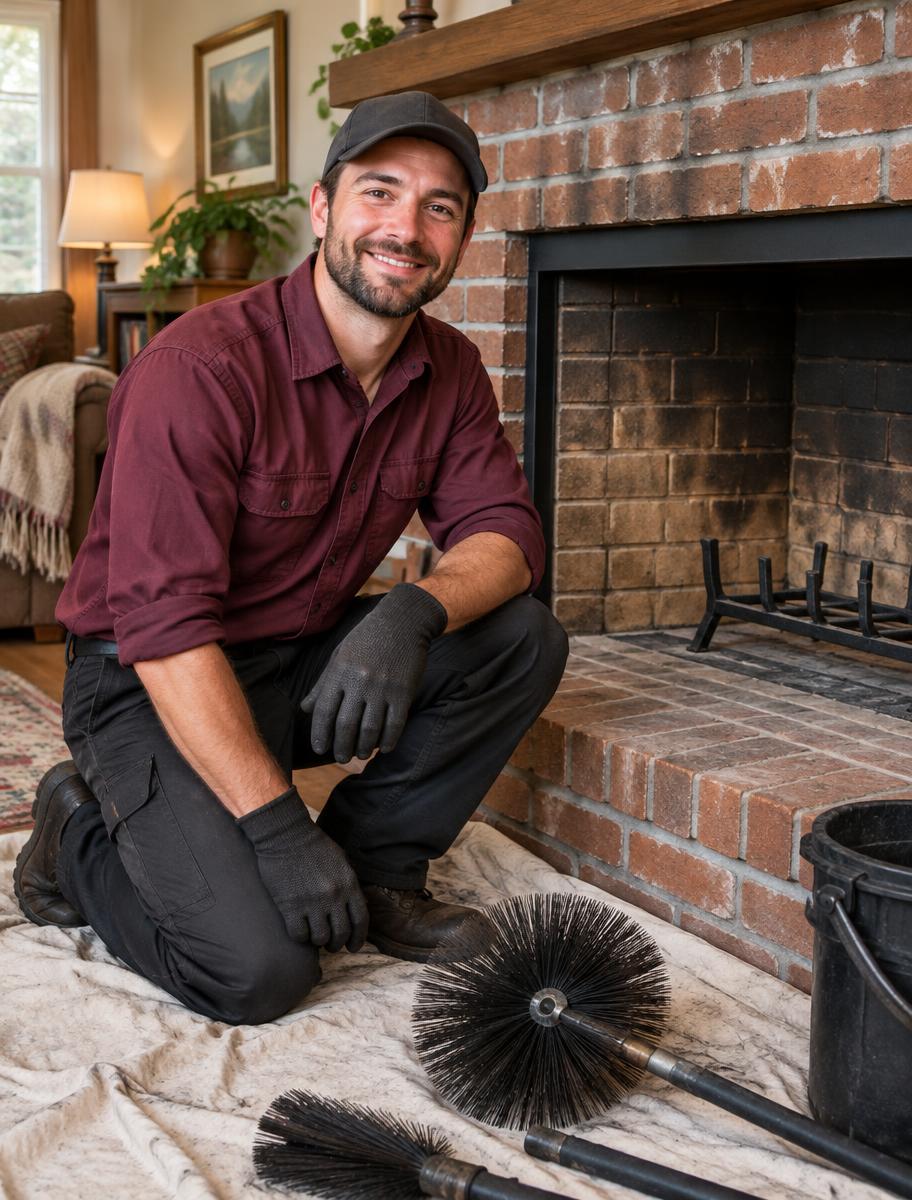
Our process
How we handle your fireplace repair, step by step
- 1
Initial Visual and Clearance Assessment
We examine the firebox, hearth extension, lintel, and visible throat area, checking for structural cracks, loose bricks, and safe clearance margins to combustible wall materials.
- 2
Mechanical and Draft Performance Testing
Our technicians test damper movement, measure air pressure balances, and conduct smoke tracer checks to pinpoint the exact source of draft restrictions or indoor smoke rollout.
- 3
Detailed Diagnostic Review and Itemized Quote
We walk you through our findings, show photographic evidence of any internal damage, and deliver an honest, transparent written quote outlining the necessary repairs without hidden extras.
- 4
Precision Masonry and Component Repairs
After setting up complete dust control and floor protection, we tuckpoint joints with high-temperature refractory mortar, rebuild broken firebrick, and install durable replacement components.
- 5
Final Operational Verification and Workspace Cleanup
We carry out a concluding smoke test to verify positive draft draw and proper damper closure, vacuum the hearth spotless, and leave your fireplace safe and ready to light.
Our Thorough Fireplace Inspection and Repair Methodology
Effective fireplace repair starts with a comprehensive diagnostic assessment rather than fast assumptions or superficial cosmetic patches. Our technicians arrive equipped to examine the entire fireplace assembly, inspecting the firebox, hearth extension, lintel, throat damper, and accessible flue components. We look closely for hairline fractures, crumbling mortar lines, signs of moisture intrusion, and heat discoloration that reveal underlying structural stress. We also discuss any specific drafting problems, unusual odours, or smoke spillage issues you have observed during regular use to build an accurate diagnostic picture.
Next, we conduct functional testing to evaluate draft performance, damper sealing efficiency, and airflow balance within your living area. Using specialized draft gauges and non-toxic smoke testing pens, we trace airflow patterns around the firebox opening and identify localized pressure drops. We check the structural alignment of the firebox back wall and measure clearances against combustible finishes to identify potential building code violations. Once our evaluation is complete, we present a straightforward, itemized written estimate detailing required structural repairs, mechanical replacements, and preventative improvements.
Upon your approval, our technicians carry out the repair work with high attention to cleanliness, craftsmanship, and household protection. We lay heavy drop cloths across your living space and set up dust-control systems before removing damaged refractory bricks or chipping away deteriorated mortar. We use professional-grade refractory cements, castable compounds, and durable replacement components designed for prolonged thermal endurance. After repairs are finished, we perform final draft verifications and clean the hearth thoroughly, leaving your living room neat and your fireplace ready for use.
Our systematic repair process guarantees clear communication, meticulous craftsmanship, and dependable results from initial diagnosis to final test burn.
- Detailed visual and mechanical inspection of all accessible firebox and hearth elements
- Functional smoke and pressure testing to identify draft deficiencies and room depressurization
- Clear, itemized diagnostic proposals outlining repairs without unexpected hidden fees
- Full living room floor and furniture protection using heavy-duty drop cloths and vacuums
- Final operational checks to confirm positive draft draw and clean damper closure
Servicing Masonry Wood-Burning and Factory-Built Fireplaces
Traditional site-built masonry fireplaces and modern factory-built metal fireplaces operate under very different structural rules, each demanding specific repair techniques. Traditional masonry hearths rely on solid brick, clay flue tiles, and heavy mortar beds that require skilled trowel work when deterioration occurs. Rebuilding a masonry firebox involves setting specialized refractory firebricks in thin, uniform refractory mortar joints to prevent heat degradation. Because masonry units are intimately tied to the home structure, settling foundations or exterior freeze-thaw damage requires careful structural shoring and sympathetic brickwork matching.
Conversely, prefabricated or zero-clearance factory-built metal fireplaces rely on engineered sheet metal combustion chambers and specialized refractory panel inserts. When the interior refractory panels in these units develop cracks wider than the thickness of a Canadian dime, or when the metal firebox warps, replacement is essential to maintain safety. Factory-built units operate with specific air-cooled or insulated metal chimneys that must remain free of corrosion. Repairing these systems requires sourcing compatible refractory panels and ensuring internal baffles, blowers, and air controls function smoothly.
As an independent service company, we focus on objective, customer-first craftsmanship without brand bias or manufacturer quotas driving our repair assessments. Whether your home features an expansive century-old brick hearth or a modern modular fireplace installation, we focus exclusively on restoring safe operation and structural longevity. We understand how different firebox architectures behave under thermal loads, allowing us to select the appropriate repair methods, sealants, and replacement materials that match your specific fireplace system precisely.
Every style of fireplace requires an informed, tailored approach to repair that respects its unique mechanical engineering and thermal limitations.
- Masonry firebox repointing utilizing specialized non-water-soluble refractory mortars
- Replacing damaged refractory side and rear panels inside factory-built metal fireplaces
- Straightening warped metal baffles and securing structural firebox support frames
- Independent servicing focused entirely on safety, reliability, and cost-effective restoration
- Addressing distinct draft dynamics for both traditional masonry and modular installations
Practical Maintenance Habits to Prolong Fireplace Lifespan
While professional repairs address major structural and mechanical failures, everyday operating habits play a massive role in preserving your fireplace between service visits. The most critical factor is burning exclusively clean, dry hardwood that has seasoned for at least eight to twelve months. Dense woods like sugar maple, oak, and ash provide high heat output with minimal smoke when moisture levels sit below twenty percent. Burning damp or green wood lowers combustion temperatures dramatically, generating heavy smoke and corrosive creosote that rapidly degrades mortar joints and chokes flue draft.
Managing the ash bed inside your firebox also protects your grate and refractory bricks from unnecessary thermal wear. While maintaining a shallow one-inch bed of ash helps insulate hot coals and sustain clean burning temperatures, allowing deep piles of ash to accumulate traps moisture and blocks bottom airflow. When ash contacts hot cast-iron grates continuously, the metal cannot cool properly, leading to warped or broken grate bars. Always shovel cooled ash into a dedicated metal bucket with a tight lid, placing it outside on concrete away from combustible decks.
Make a habit of performing brief monthly checks on your damper, firebox joints, and hearth opening throughout the active heating season. Inspect the firebox walls with a flashlight to spot any fresh cracks, crumbling mortar joints, or loose bricks before they spread. Check that your damper lever moves freely through its entire arc without binding, grinding, or sticking. If you notice persistent chemical odours, soot stains above the opening, or resistance in damper controls, pause fireplace use and arrange a professional evaluation.
Adopting simple, consistent maintenance habits keeps your fireplace burning cleanly while drastically reducing the need for costly emergency repairs.
- Burn exclusively seasoned hardwoods with moisture levels measured below twenty percent
- Maintain a shallow one-inch ash bed to insulate coals while avoiding excessive buildup
- Dispose of cooled ashes strictly in covered metal containers set on non-combustible ground
- Inspect firebox mortar joints regularly using a strong flashlight to spot emerging cracks
- Test damper movement frequently to ensure smooth mechanical travel and complete closure
Choosing the Right Fireplace Repair Contractor in Markham
Selecting a trustworthy fireplace repair contractor requires looking beyond glossy advertisements to find proven local craftsmanship and transparent business practices. Fireplace systems involve active combustion, high heat levels, and toxic gases, meaning that substandard patch jobs can create genuine household dangers. A qualified repair professional will gladly provide clear explanations of detected issues, walk you through photographic evidence of damaged areas, and provide transparent written quotes without high-pressure sales tactics or vague verbal estimates. Honest technicians focus on repairing what is damaged rather than unnecessarily pushing full replacements.
Local experience matters tremendously when repairing fireplaces in our corner of Ontario. A contractor familiar with local building styles understands how post-war brick construction, mid-century ranch layouts, and modern custom infill homes perform through seasonal temperature shifts. They recognize localized soil settling patterns and understand the impact of lake-effect weather and cold winds on chimney draw across local neighbourhoods. Working with an established local provider based at 4418 Highway 7 East guarantees that your service team is close at hand whenever seasonal maintenance or follow-up support is required.
Always confirm that your contractor carries comprehensive commercial general liability insurance and active provincial workplace safety coverage before letting work begin on your property. Inquire about the exact materials they plan to use, ensuring they select specialized refractory mortars and commercial-grade replacement hardware rather than standard masonry mix. Choosing an independent service partner dedicated to sound safety guidelines ensures your fireplace receives meticulous, reliable restoration that protects your family and home for many seasons to come.
Prioritizing transparency, local building knowledge, and proper safety practices guarantees a stress-free fireplace repair experience and lasting peace of mind.
- Insist on transparent written quotes featuring itemized labor, materials, and diagnostic fees
- Choose contractors with direct, hands-on experience in local home building styles
- Confirm active commercial general liability insurance and provincial workplace safety coverage
- Verify that only proper high-heat refractory cements and quality hardware are utilized
- Work with an independent local company focused on practical repairs over aggressive sales
Average pricing in Markham
$279 – $1,850
- Inspection / diagnostic
- $149 – $249
- Typical time on site
- 2 to 6 hours depending on scope
- Parts and materials
- Replacement cast-iron dampers, precast refractory panels, custom smoke guards, and specialty hardware quoted separately
- What moves the price
- Extent of masonry decay and volume of firebricks requiring replacement · Accessibility of the throat damper assembly and internal smoke chamber · Underlying draft corrections such as smoke guard fabrication or negative pressure fixes
Estimated local market range, not a quote. All estimates are in Canadian dollars and exclude 13% Ontario HST. Your exact price is confirmed before any work begins.