

A crackling fire should bring comfort and warmth to your home, but a damaged smoke shaft turns a cozy evening into an irritating, smoky ordeal. The smoke shaft, often referred to by masons as the smoke chamber, is the vital corbelled transition zone located directly above your firebox damper and below the main vertical flue. When this passage develops corbelled voids, missing mortar, or rough jagged surfaces, rising heat eddies violently instead of drifting upward smoothly. Smoke backs up past the fireplace opening into your living room, carrying unpleasant odours, soot, and dangerous combustion byproducts that degrade your indoor air quality.
Homes across Markham neighbourhoods such as Unionville, Angus Glen, and Milliken frequently feature traditional masonry fireplaces built several decades ago. Over years of regular seasonal heating, the intense thermal cycles take a heavy toll on unparged or deteriorated brickwork inside the smoke shaft. Markham Chimney Services operates from 4418 Highway 7 East, offering independent, dedicated masonry restoration to rebuild and parge damaged smoke shafts. We diagnose hidden fractures, smooth turbulent airflow pathways, and seal dangerous structural compromises so your fireplace draws efficiently and operates with complete safety throughout cold Ontario winters.
Fireplace Smoke Shaft Repair: visit summary
Fireplace Smoke Shaft Repair in Markham: fireboxes, surrounds and smoke chambers repaired or restored to safe working order. Serving Markham and the Greater Toronto Area (GTA). The estimated local market range is $650 – $2,400, not a fixed company rate. The final scope and quote are confirmed before work begins.
| Estimated market range | $650 – $2,400. All estimates are in Canadian dollars and exclude 13% Ontario HST. |
|---|---|
| Typical time | 4 to 8 hours depending on chamber access and structural damage |
| Price factors | Extent of internal masonry deterioration and missing brick courses; Accessibility through the damper throat versus opening the breast; Need for combined damper replacement or smoke shelf rebuilding |
| Routine signs to discuss | Smoke Roll-Out at Fireplace Opening; Sandy Debris on the Firebox Floor; Pungent, Lingering Soot Odours; Persistent Staining Above Hearth; Damper Mechanism Binding or Sticking; Visible Mortar Voids Above Damper |
Understanding Your Fireplace Smoke Shaft and How It Functions
The smoke shaft serves as an aerodynamic funnel connecting your broad fireplace opening to the narrower vertical flue liner. In a properly engineered masonry fireplace, the side walls and back wall of the smoke shaft slope inward at an angle no steeper than forty-five degrees. This funnel shape gently compresses rising combustion gases, accelerating their velocity so they push cleanly upward past the throat. When the interior surface is smooth and free from obstructions, natural convection takes over quickly, pulling fresh air into the fire and venting exhaust outdoors without hesitation.
Unfortunately, many older homes throughout Markham were originally constructed with corbelled step-brick smoke shafts that were never smoothly parged with refractory mortar. When the hot exhaust encounters exposed step-brick corbelling, it hits square masonry ledges instead of a gentle, uniform slope. Each stepped brick generates microscopic air eddies and turbulent back-curling vortexes. This turbulence dramatically slows the ascent of hot gases, cooling the smoke prematurely and creating heavy thermal resistance that stalls drafting across the entire chimney column.
Beyond aerodynamic turbulence, an unprotected smoke shaft allows acidic combustion byproducts to attack the structural brickwork directly. Wood smoke contains water vapour, volatile organic compounds, and sulfur dioxide, which combine during cooling to form mild acids. These acids eat into regular Portland-based mortar, turning firm joints into sandy, crumbling powder. Smooth refractory parging acts as a protective shield, sealing the underlying brick structure from acidic condensation and ensuring exhaust exits smoothly without lingering inside your home.
- Funnel-shaped geometry accelerates combustion gases into the upper flue liner.
- Smooth interior parging eliminates draft-killing turbulence caused by corbelled bricks.
- Refractory mortar shields outer masonry from extreme heat and acidic condensation.
- Proper draft velocity prevents smoke roll-out into living areas during startup.
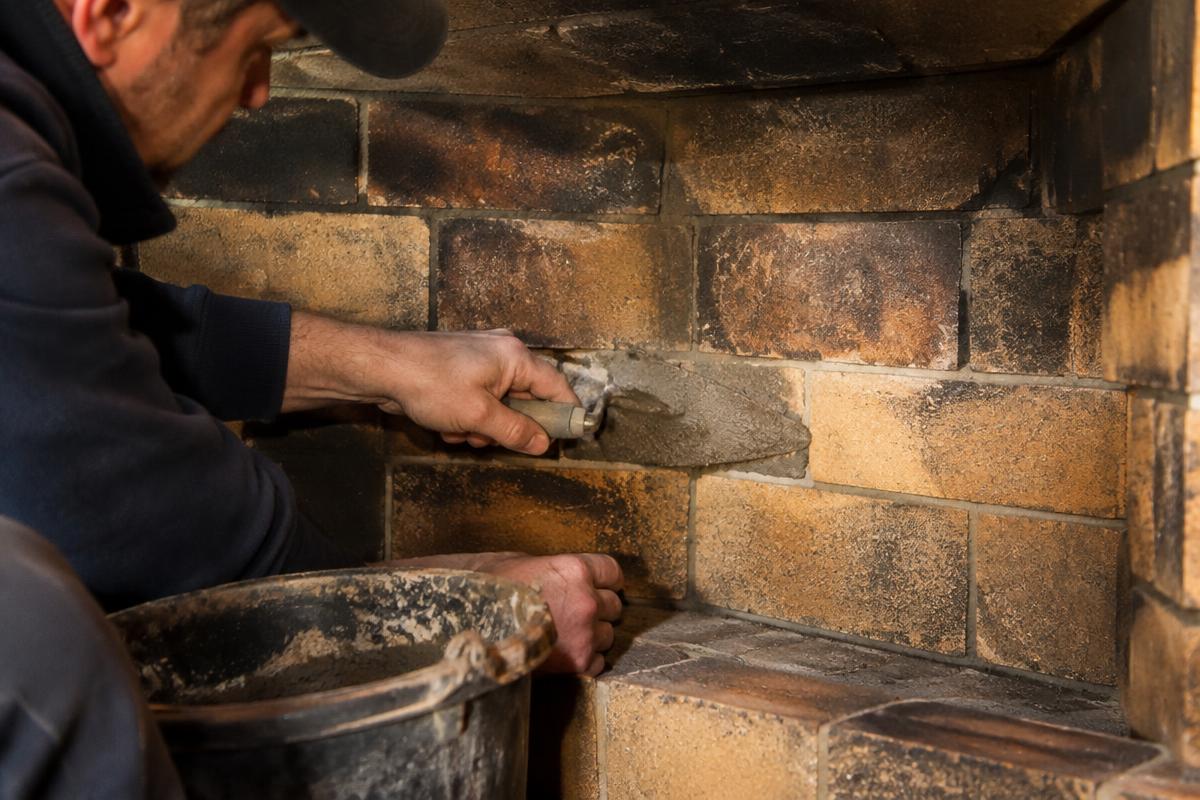
Restore safe venting, smooth draft, and quiet warmth to your living room with expert smoke shaft parging.
Self-check
Warning signs you need fireplace smoke shaft repair
Smoke Roll-Out at Fireplace Opening
Smoke consistently billows or curls past the top of the fireplace opening into your living room, signaling severe aerodynamic resistance or turbulent eddy currents within the corbelled smoke chamber walls.
Sandy Debris on the Firebox Floor
Finding piles of crumbled mortar, sandy dust, or small chips of red brick on your firebox floor or damper plate indicates decaying masonry joints inside the smoke shaft requiring immediate stabilization.
Pungent, Lingering Soot Odours
A strong, acrid barbecue or creosote smell permeating your room during humid weather or rain indicates that acidic moisture has soaked deeply into deteriorated, porous smoke shaft mortar joints.
Persistent Staining Above Hearth
Dark, oily soot stains developing along your fireplace mantel or the exterior brick face above the opening confirm that combustion exhaust is regularly failing to enter the smoke shaft cleanly.
Damper Mechanism Binding or Sticking
Difficulty opening or closing your cast-iron damper plate often occurs when deteriorating smoke shaft mortar falls into the damper track, warping the framework or preventing a complete smoke seal.
Visible Mortar Voids Above Damper
Shining a light through an open damper reveals visible gaps, missing joint filler, or jagged corbelled bricks, confirming your smoke shaft lacks the smooth refractory parging required for safe venting.
The Harsh Impact of Ontario Freeze-Thaw Cycles on Smoke Shafts
The climate across Markham and the Greater Toronto Area presents one of the most punishing environments for residential masonry chimneys. Throughout November to April, local weather swings wildly between sub-zero freezes and sudden midday thaws. When external moisture from winter snow, freezing rain, or autumn downpours seeps into the chimney crown or exterior brick veneer, that moisture inevitably migrates inward toward the smoke shaft through porous joints and capillary action.
As temperatures drop rapidly below zero, water trapped within the mortar joints expands by approximately nine percent. This internal hydrostatic pressure fractures the bond between bricks, popping off mortar faces and creating deep structural crevices within the smoke shaft walls. When you ignite a roaring fire, the internal temperature of the smoke shaft leaps from freezing to hundreds of degrees in minutes. This extreme thermal shock accelerates spalling, causing inner bricks to crack, flake, and drop into the damper area.
By late winter, repeated thermal shock and moisture expansion can hollow out substantial cavities behind the smoke shaft surface. These cavities allow radiant heat to transfer dangerously close to adjacent structural framing members behind the masonry wall. Timely repair and moisture sealing prevent these seasonal weather cycles from turning minor surface settling into widespread structural breakdown that threatens your living space.
- Rapid seasonal temperature swings cause continuous freeze-thaw expansion inside mortar joints.
- Trapped moisture breaks the hydraulic bond between bricks and interior lining.
- Thermal shock from rapid heating fractures water-saturated masonry components.
- Deep voids permit hazardous heat transfer toward hidden wooden house framing.
Primary Causes of Structural Smoke Shaft Breakdown
Structural deterioration inside a smoke shaft rarely stems from a single isolated problem. In many properties, the root cause dates back to original construction shortcuts. Decades ago, builders frequently skipped the labour-intensive step of parging the smoke chamber smooth, leaving raw, stepped corbels exposed. Even when parging was originally applied, builders sometimes used standard masonry cement rather than specialized, heat-resistant refractory mortar designed to withstand intense thermal radiation.
Another leading cause of smoke shaft failure is water infiltration originating from neglected exterior components. Deteriorated chimney caps, cracked concrete wash crowns, or failing roof flashings allow rainwater to cascade straight down the chimney interior. This water collects on the smoke shelf behind the damper, forming a corrosive slurry with soot and creosote. The resulting acidic mixture rapidly decomposes the surrounding brickwork, dissolving joint integrity from the inside out.
Thirdly, previous chimney fires or sustained overfiring can permanently ruin smoke shaft integrity. When accumulated creosote ignites, temperatures inside the shaft can quickly exceed one thousand degrees Celsius. This sudden, violent heat spike splits clay liners, fractures surrounding brick courses, and vitrifies old mortar, leaving behind brittle, crumbling walls that can no longer safely contain hot flue gases or sparks.
- Historic building practices that left corbelled step-brick surfaces completely unparged.
- Use of non-refractory mortar that breaks down under direct exposure to heat.
- Rainwater leaks from damaged chimney crowns mixing with acidic soot deposits.
- Past creosote fires causing severe thermal cracking throughout the brick structure.
Critical Household Safety: Fire Hazards and Carbon Monoxide Prevention
A compromised smoke shaft is not merely an aesthetic nuisance; it represents an active safety hazard for your entire household. Because the smoke shaft sits directly behind combustible interior walls, floor joists, and drywall framing, any breach in the masonry envelope allows radiant heat to reach combustible lumber. Over decades of exposure, wood undergoes pyrolysis, a chemical breakdown that permanently lowers its ignition temperature until it can catch fire unexpectedly.
Equally concerning is the silent threat of carbon monoxide infiltration. When a smoke shaft suffers from loose joints, missing bricks, or heavy turbulence, combustion gases lose upward momentum. Instead of venting cleanly through the roof, dangerous levels of invisible, odourless carbon monoxide can spill into your living room, basement, or ceiling plenums. These gases slowly disperse into bedrooms and living spaces while your family is asleep.
While we work strictly to CSA-level installation principles and WETT-style safety clearances without claiming formal accreditations, we prioritize practical home protection at every step. We advocate for the immediate placement of working carbon monoxide alarms on every living level of your home, especially near sleeping quarters. Addressing structural shaft cracks ensures that deadly gases are evacuated out the top of the flue where they belong.
- Pyrolysis of hidden wooden studs caused by continuous radiant heat penetration.
- Carbon monoxide back-drafting into indoor living areas due to broken flow dynamics.
- Sparks escaping through cracked masonry joints into interior wall cavities.
- Strategic placement of certified carbon monoxide detectors near all sleeping areas.
"When a storm loosened some bricks, I called for emergency repair in Thornhill. Their crew arrived within hours, secured the chimney crown, and restored its integrity without any mess. Truly impressive expertise."
Our process
How we handle your fireplace smoke shaft repair, step by step
- 1
Hearth Protection and Dust Setup
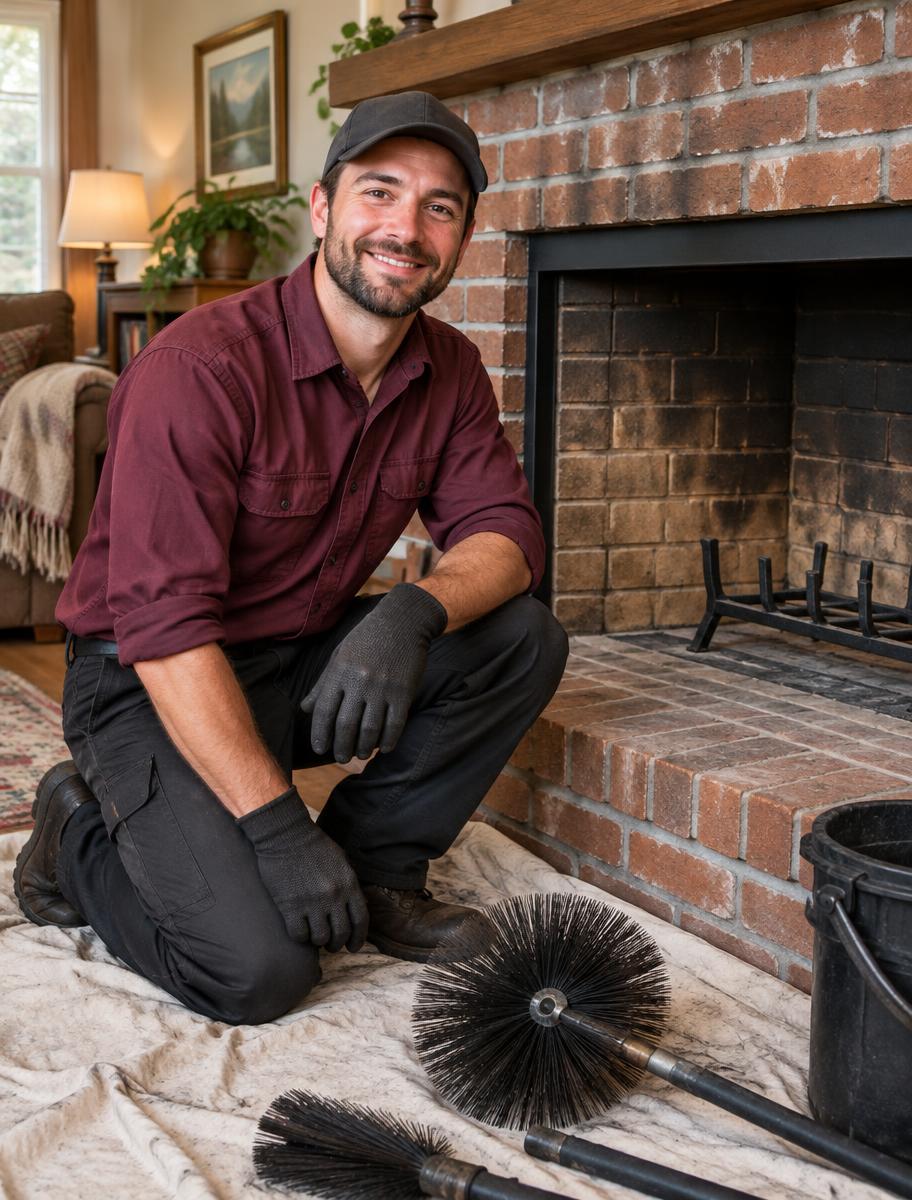
We seal the surrounding living area with drop cloths, tape protective plastic barriers, and activate negative-air containment equipment to keep soot and airborne dust safely isolated.
- 2
Mechanical Scraping and Surface Prep
Using hand tools and wire brushes, we remove hardened creosote, soot glaze, and damaged mortar down to solid masonry, providing a clean surface for new bonding.
- 3
Structural Re-Pointing and Brickwork
We rebuild loose or spalled brick courses using high-density firebrick and thermal mortar, closing large structural voids and ensuring the transition funnel is structurally sound.
- 4
Refractory Parge Application
We hand-trowel a continuous, smooth layer of insulating refractory mortar across the entire chamber, eliminating stepped corbels and shaping an aerodynamic, heat-resistant exhaust funnel.
- 5
Final Curing Review and Site Cleanup
We verify smooth draft transitions, check damper operation, remove all containment protection, and leave your hearth pristine, providing detailed curing guidelines before your next fire.
Our Detailed Smoke Shaft Inspection and Diagnostic Process
Accurate restoration begins with thorough, meticulous inspection before any tools or mortar are applied. Because the smoke shaft is tucked tightly behind the damper assembly, it cannot be evaluated adequately by simply glancing upward from the hearth with a standard flashlight. Our diagnostic visit begins with an exhaustive visual assessment of the firebox, damper blade, and surrounding lintel to identify obvious movement, water staining, or soot marks.
We then deploy specialized close-range inspection lighting and high-resolution camera equipment through the damper opening. This allows us to inspect every square inch of the internal shaft walls, evaluating the condition of the corbels, checking the slope angle, and searching for hairline thermal fractures. We thoroughly examine the smoke shelf behind the damper plate to assess moisture accumulation, collapsed mortar piles, and corroded metal components that signal ongoing water leaks.
Once our physical and visual review is complete, we provide you with a clear, honest explanation of our findings. We document whether the smoke shaft needs basic spot-tuckpointing, a complete refractory parge coating, or deeper structural brick rebuilding. You receive plain-language recommendations tailored to the age and specific layout of your Markham home, allowing you to make confident, well-informed decisions for your property.
- In-depth inspection of the throat, lintel bar, and cast-iron damper mechanism.
- High-output internal lighting and camera imaging of tight smoke chamber walls.
- Thorough evaluation of the smoke shelf for hidden debris, moisture, and corrosion.
- Clear, written overview of structural issues accompanied by direct recommendations.
Precision Masonry Repair and Smoke Shaft Parging Techniques
Restoring a compromised smoke shaft requires patience, specialized tools, and genuine masonry craftsmanship. We begin every project by protecting your living space, sealing off the hearth with heavy-duty drop cloths, and running negative-pressure dust management systems to keep soot and airborne dust out of your home. We then manually scrape away hardened creosote, glaze, and failing historic mortar down to sound, clean brick using specialized wire brushes and pneumatic tools.
If our diagnostic identified loose, shifted, or spalled bricks within the corbelled funnel, we carefully rebuild those sections using dense firebrick and high-temperature refractory mortar. We secure loose masonry and fill deep voids completely, restoring structural continuity across the entire transition zone. Once the foundational brickwork is solid and stable, we apply a continuous coat of specialized insulating refractory mortar, carefully hand-troweling the material from the damper throat up to the flue liner base.
This parging process creates a glass-smooth, seamless interior surface that eliminates jagged stepped edges and fills microscopic porosity. The high-temperature refractory parge coat is rated to withstand temperatures surpassing one thousand degrees Celsius, providing superior thermal protection and dramatically reducing boundary-layer friction. The result is an aerodynamic, heat-reflective funnel that accelerates drafting, resists creosote adhesion, and protects your home for years to come.
- Complete home protection using containment sheeting and high-efficiency filtration.
- Pneumatic scraping and mechanical removal of degraded mortar and creosote glaze.
- Precision brick replacement using heavy-duty firebrick and refractory setting compounds.
- Hand-troweled insulating parge coating creating a smooth, aerodynamically optimized funnel.
Essential Maintenance to Prolong Smoke Shaft Longevity
Once your smoke shaft has been professionally restored and parged smooth, proactive maintenance helps maintain its integrity indefinitely. The single most important practice is burning only well-seasoned, dense hardwoods such as sugar maple, oak, or ash that have dried for at least twelve months. Wet, unseasoned firewood burns at much lower temperatures, producing heavy water vapour that condenses on cold masonry surfaces, forming highly acidic creosote deposits that attack mortar.
You should also monitor damper operation regularly. If your damper plate binds, rusts, or fails to open fully, it creates artificial turbulence right at the base of the smoke shaft, leading to soot accumulation and sluggish draft. Inspect the perimeter of your hearth periodically for tiny chips of fallen brick or sandy mortar grit. Finding debris on the firebox floor is an early warning sign that moisture is entering the chimney column and requires immediate attention.
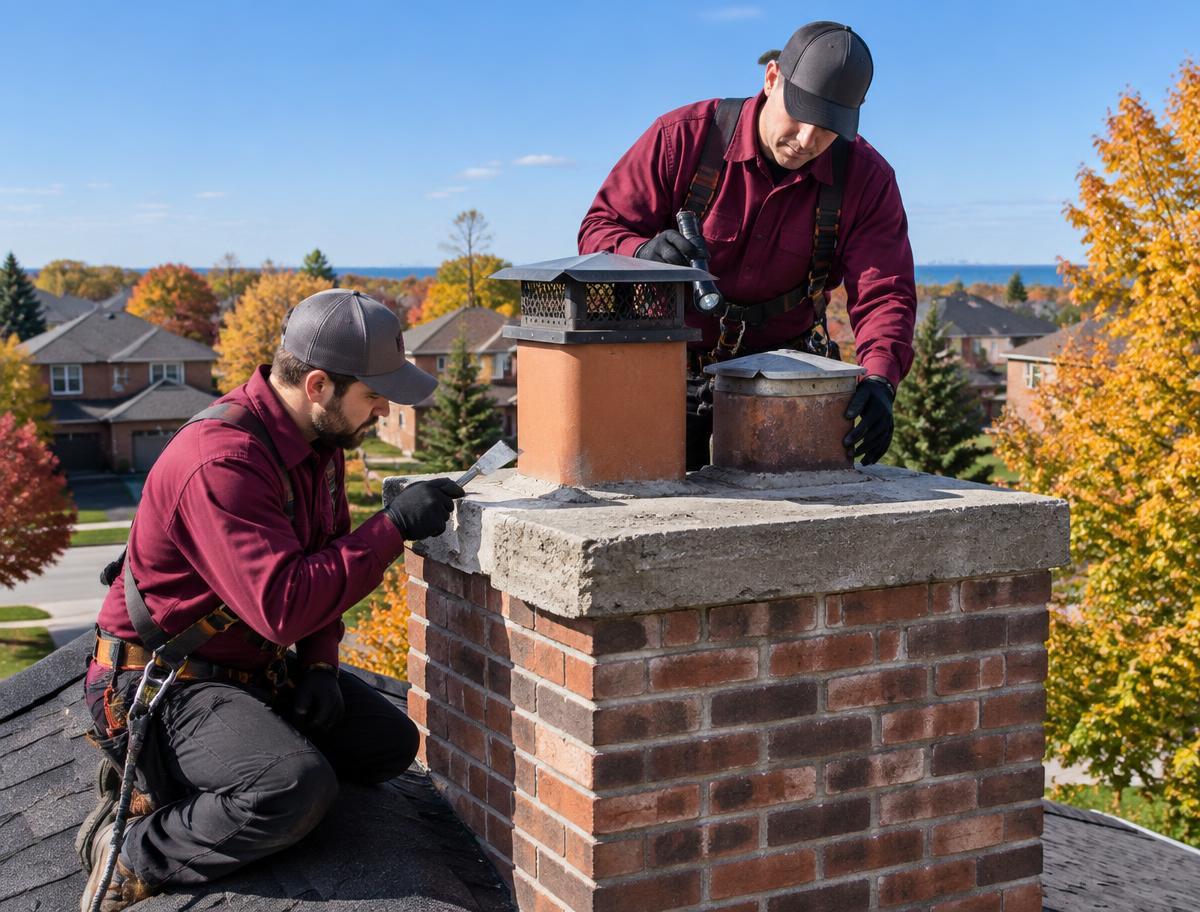
Finally, ensure your chimney cap remains securely fastened and that its spark arrestor mesh stays free from bird nests or leaf debris. A tightly fitted stainless steel cap keeps driving rain and curious wildlife out of the smoke shaft. Pair these habits with an annual seasonal sweep and visual inspection, and your restored smoke shaft will deliver reliable, smoke-free performance winter after winter.
- Burn only properly seasoned hardwood with moisture content below twenty percent.
- Never burn treated lumber, household garbage, or coloured paper containing toxic chemicals.
- Verify that your throat damper opens smoothly and seals completely between uses.
- Maintain a robust exterior chimney cap to block water infiltration and wildlife entry.
Choosing the Right Independent Masonry Specialist in Markham
Selecting the right contractor to work on your fireplace can be challenging. Because the smoke shaft is completely hidden from view inside the chimney breast, it is easy for low-quality operators to cut corners by applying thin coats of standard mortar that crack after a few fires. When hiring a contractor, always ask specifically about the materials they intend to use, ensuring they specify true refractory parging mixes rather than basic bag cement.
It is equally important to work with an independent local business that understands the specific architectural nuances of Markham homes. Mid-century split-levels in Cornell, solid brick bungalows in Unionville, and modern custom rebuilds in Bayview Glen all present distinct venting dynamics and construction styles. A contractor with deep local familiarity will anticipate these quirks and recommend practical, enduring repairs that match your home layout.
Look for clear communication, transparent written estimates, and a clean, courteous approach to in-home work. A quality technician will treat your home with total respect, explaining each step of the diagnosis clearly and answering your questions openly. Investing in a meticulous, independent professional ensures your fireplace operates with dependable safety, lasting efficiency, and complete peace of mind.
- Insist on true high-temperature refractory mortar rated for direct thermal contact.
- Choose an independent specialist who understands regional Markham building styles.
- Expect complete transparency regarding diagnostic findings and clear written estimates.
- Prioritize contractors who implement meticulous clean-home dust containment protocols.
Average pricing in Markham
$650 – $2,400
- Inspection / diagnostic
- $160 – $280
- Typical time on site
- 4 to 8 hours depending on chamber access and structural damage
- Parts and materials
- Refractory mortar, firebrick, replacement damper plate, thermal insulation
- What moves the price
- Extent of internal masonry deterioration and missing brick courses · Accessibility through the damper throat versus opening the breast · Need for combined damper replacement or smoke shelf rebuilding
Estimated local market range, not a quote. All estimates are in Canadian dollars and exclude 13% Ontario HST. Your exact price is confirmed before any work begins.