

A smoky living room, sluggish draught, or persistent odour of soot often traces back to an overlooked area within your chimney system: the fireplace throat. Situated directly above the firebox and just below the smoke chamber, the throat acts as the critical aerodynamic transition zone for rising combustion gases. When heat stress, moisture intrusion, or crumbling refractory mortar distorts this passage, exhaust gases struggle to escape upward into the flue. Instead of enjoying a warm, comforting hearth, Markham homeowners find themselves opening windows to clear stinging smoke and worrying about carbon monoxide entering their living spaces.
At Markham Chimney Services, situated at 4418 Highway 7 East, we provide dedicated fireplace throat restoration, damper repair, and refractory masonry parging tailored to local residential architecture. From mid-century post-war brick bungalows in Unionville and Markham Village to custom two-storey homes in Box Grove Park and the Angus Glen, we understand the specific challenges posed by regional building traditions. Our independent specialists diagnose smoke rollout, rebuild degraded throat geometry, and eliminate structural heat bridges so your wood-burning or converted hearth operates with exceptional safety, dependable efficiency, and clean, effortless venting throughout our demanding Canadian winters.
Fireplace Throat Services: visit summary
Fireplace Throat Services in Markham: fireboxes, surrounds and smoke chambers repaired or restored to safe working order. Serving Markham and the Greater Toronto Area (GTA). The estimated local market range is $325 – $895, not a fixed company rate. The final scope and quote are confirmed before work begins.
| Estimated market range | $325 – $895. All estimates are in Canadian dollars and exclude 13% Ontario HST. |
|---|---|
| Typical time | 2 to 4 hours on site |
| Price factors | Extent of refractory mortar deterioration and joint reconstruction required; Accessibility and operational condition of the original throat damper frame; Whether converting from a damaged throat damper to a modern top-sealing unit |
| Routine signs to discuss | Smoke Spilling Into Living Room; Damper Handle Stuck or Binding; Sandy Mortar Crumbling on Hearth; Persistent Cold Downward Drafts; Visible Gaps Behind Lintel; Rattling or Loose Damper Plate |
Understanding the Fireplace Throat and Its Essential Function
The fireplace throat serves as the aerodynamic funnel of your hearth system. As wood burns in the firebox, hot gases, unburned particulates, and water vapour rise rapidly toward the open room air above. The throat constricts this flow slightly to accelerate exhaust velocity, drawing room air into the fire while preventing smoke from spilling back under the mantel. Directly behind or within the throat sits the throat damper, a cast-iron or steel flap designed to regulate drafting during burns and seal out freezing drafts when the hearth remains idle.
Beyond its aerodynamic duties, the throat establishes a necessary thermal barrier between high-heat combustion zones and surrounding structural framing. Masonry fireplace throats are traditionally built from refractory firebrick bonded with specialized hydraulic fireclay mortar, shaped into a gentle slope known as the throat breast. If this contour is built with irregular angles, rough mortar projections, or improper proportions, the smooth laminar flow of exhaust breaks down. Turbulent air currents form immediately above the fire, trapping soot and driving pungent smoke out into your living room.
When the throat functions properly, you barely notice its existence. It smoothly accepts rising smoke, compresses the updraught, and sends combustion byproducts cleanly across the smoke shelf and through the smoke chamber toward the flue tile. However, because this zone bears the brunt of intense radiant heat alongside corrosive combustion byproducts, it experiences some of the most aggressive physical wear anywhere in your chimney. Preserving this passage ensures your entire fireplace system maintains optimal drafting performance without compromising household safety.
- Accelerates rising exhaust velocity to prevent room spillage
- Houses the cast-iron throat damper plate and control lever mechanism
- Provides a structural thermal buffer shielding wooden framing
- Directs flue gases smoothly toward the smoke chamber and shelf
- Balances indoor air intake with chimney exhaust draft
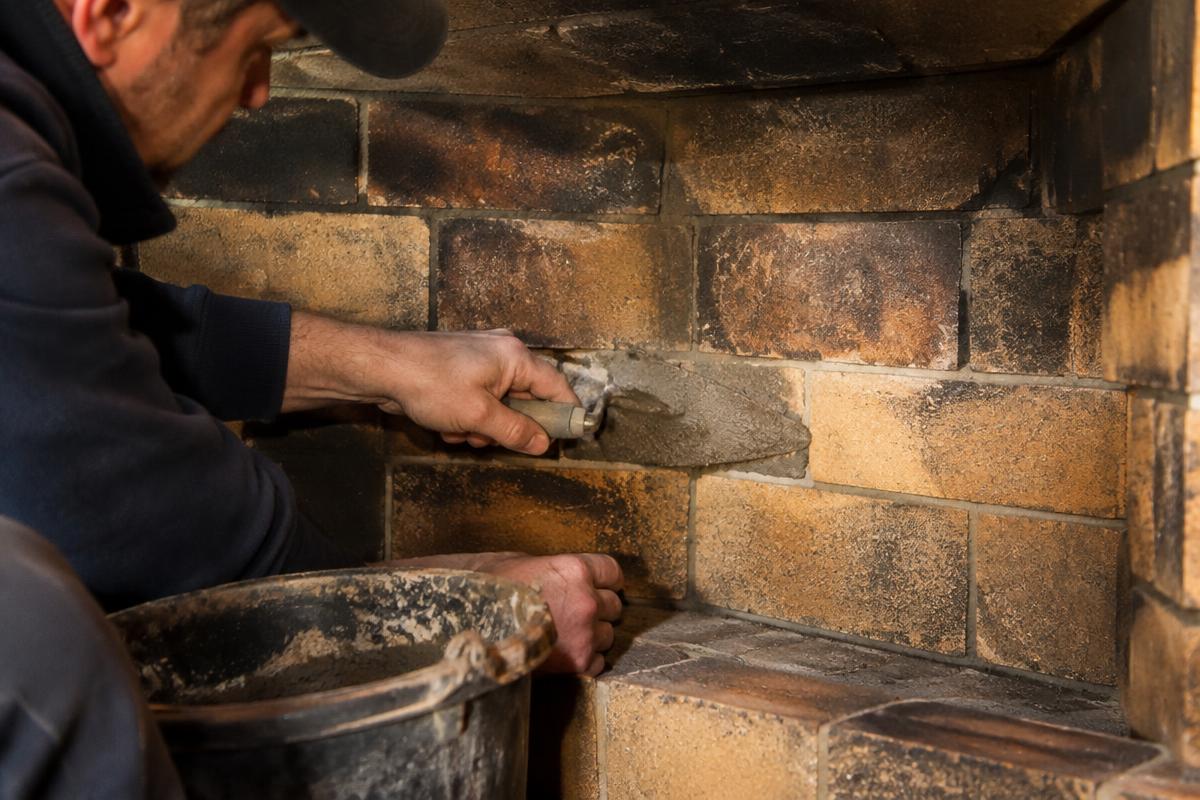
Restoring smooth airflow, sound masonry, and reliable draft to wood-burning fireplaces across Markham.
Self-check
Warning signs you need fireplace throat services
Smoke Spilling Into Living Room
When lighting or maintaining a fire, smoke curls under the mantel rather than drawing smoothly upward into the flue, pointing to a choked, damaged, or misaligned throat opening.
Damper Handle Stuck or Binding
The damper control lever resists movement, grinds, or will not lock into position, indicating rust build-up, heat warping, or fallen masonry wedged inside the throat frame.
Sandy Mortar Crumbling on Hearth
Small piles of sandy, powdery mortar or loose red brick fragments collect on the firebox floor, signalling advanced deterioration of the fireclay joints directly above in the throat.
Persistent Cold Downward Drafts
A noticeable chill or sour soot smell enters your home even when the fireplace is not burning, caused by a distorted damper plate that fails to seal against its frame.
Visible Gaps Behind Lintel
Clear separations appear between the horizontal steel lintel bar supporting the exterior brickwork and the internal refractory firebrick throat, allowing dangerous heat migration into wall spaces.
Rattling or Loose Damper Plate
The cast-iron plate rattles loosely in windy weather or shifts out of its mounting socket, risking accidental closure while burning and threatening immediate smoke backup.
Why Markham Freeze-Thaw Cycles Damage Fireplace Throats
Southern Ontario weather places immense physical stress on exterior and interior chimney structures. Markham experiences rapid temperature swings where winter daytime thaws push damp air into the flue, followed by overnight freezes that plunge temperatures well below zero. When moisture penetrates unsealed chimney crowns, degraded exterior brickwork, or top flues, water trickles down the interior masonry walls. It inevitably pools on the smoke shelf and saturates the porous fireclay mortar lining the fireplace throat, setting the stage for serious winter degradation.
As trapped moisture freezes, it expands by roughly nine percent, fracturing mortar joints and spalling interior brick surfaces within the throat. When you light a fire the following evening, the sudden thermal shock from freezing temperatures to several hundred degrees Celsius causes rapid, uneven material expansion. This violent transition shatters weakened mortar, loosens throat bricks, and causes iron damper frames to twist out of alignment. Over several seasons, what began as a hairline hairline separation evolves into dislodged masonry and dangerous gaps behind the firebox lintel.
Furthermore, combustion gases contain acidic moisture that condenses when meeting chilly throat masonry during early burn stages. Sulphur and nitrogen compounds combine with water vapour to form mild acids that actively dissolve traditional lime-based or crumbling Portland cement mortars. In neighbourhoods throughout Markham, older homes with original masonry throats frequently exhibit eroded joints where the mortar has turned to loose, sandy powder. Addressing this deterioration before cold weather sets in protects your home from flue gas infiltration and expensive structural masonry rebuilds.
- Rapid freeze-thaw cycles crack moisture-saturated throat mortar joints
- Thermal shock from rapid fires shatters frost-weakened firebrick
- Condensing flue acids corrode metal dampers and dissolve lime mortar
- Water running down exterior chimney walls pools behind the throat breast
- Deep winter temperature differentials strain interior chimney masonry
Common Throat Failures: Deterioration, Warping, and Obstructions
Fireplace throat problems generally manifest in three distinct forms: joint deterioration, metal component failure, and aerodynamic design flaws. In older Toronto residences, bricklayers sometimes used standard non-refractory mortar to assemble the throat area. Under relentless open-flame exposure, this standard mortar crumbles, leaving open crevices that expose structural framing to extreme heat. Embers and superheated gases can infiltrate these concealed voids, creating hidden fire hazards that cannot be seen from the room below without a detailed inspection.
The second widespread failure involves the throat damper. Traditional cast-iron dampers sit in an unforgiving environment of soot, moisture, and intense heat. Over decades of operation, pivot pins rust through, operator ratchets strip, and the heavy damper plate warps from localized heat spikes. A warped damper no longer closes completely, allowing expensive conditioned indoor air to escape up the chimney during heating months. Conversely, a seized damper may fail to open fully, choking the throat aperture and guaranteeing heavy smoke rollout whenever a fire is lit.
The third common issue stems from improper masonry profile or historic alterations. If the throat opening is too narrow, exhaust cannot pass through quickly enough to evacuate the volume of smoke produced by a lively fire. If it is too wide or lacks an adequate breast angle, downdraughts sweep into the firebox unchecked. Similarly, creosote accumulations and fallen debris on the smoke shelf can cascade down into the throat, causing physical blockages that severely restrict exhaust flow and create volatile chimney fire risks.
- Crumbled, missing refractory mortar between firebricks in the throat breast
- Rusted, seized, or heat-warped cast-iron damper plates and handles
- Loose or dropped bricks hanging precarious above the fire opening
- Thick deposits of glazed creosote constricting the passage diameter
- Gaps opening between the steel lintel angle iron and masonry front
Our Markham Inspection and Diagnostic Process
Every successful fireplace throat restoration begins with a meticulous diagnostic evaluation. When our technician arrives at your Markham residence, we start by setting up durable drop cloths and industrial floor protection to preserve your living space. We conduct a hands-on physical and optical examination of the firebox, throat opening, damper assembly, and the transitional area entering the smoke chamber. Using high-output task lighting and specialized inspection mirrors, we evaluate the condition of mortar joints, looking for hollow voids, crumbling material, or signs of movement.
We also examine damper operation throughout its complete mechanical stroke. We confirm that the plate swings freely without binding, sits flush against its perimeter casting when closed, and locks securely in the wide-open position without threatening to drop shut unexpectedly. If drafting concerns or unknown structural histories exist, we employ digital flue imaging systems to view the blind spots above the throat damper, including the smoke shelf and chamber walls, ensuring hidden creosote deposits or cracked clay liners are accurately identified.
Following our thorough physical evaluation, we explain our findings in clear, practical language without technical jargon. We provide straightforward recommendations detailing whether your fireplace throat requires minor joint repointing with refractory mortar, complete parging of the throat walls to improve airflow, damper mechanical rebuilding, or a retrofit conversion. You receive transparent estimates outlining labour and materials, ensuring you understand exactly what work is needed to restore complete safety and peak venting performance to your hearth.
- Careful visual review of throat geometry and structural lintel support
- Mechanical testing of the throat damper linkage and seal alignment
- Assessment of refractory mortar integrity using tactile probing tools
- Clear photography of concealed voids above the damper frame
- Detailed, plain-language written diagnosis and transparent repair proposal
"I needed a new chimney cap. The installer arrived in Angus Glen, walked me through cap options, and fitted the perfect one with care. Cleanup was spotless and now I feel protected against rain and pests."

Our process
How we handle your fireplace throat services, step by step
- 1
Drop Cloth Setup and Area Protection
We lay heavy protective runners and canvas drop cloths across your hearth and flooring, sealing the workspace to protect your home from soot and debris.
- 2
Detailed Throat and Damper Inspection
Our technician examines firebrick joints, lintel support, damper alignment, and the smoke shelf using high-intensity illumination to diagnose all structural and mechanical defects.
- 3
Removal of Loose Mortar and Soot
We scrape away failed, crumbly mortar, vacuum out carbon accumulation, and clean all bonding surfaces to prepare the masonry substrate for durable refractory bonding.
- 4
Refractory Repair and Damper Alignment
We pack high-heat refractory mortar into all open joints, parge uneven surfaces for smooth airflow, and adjust or rebuild the throat damper mechanism.
- 5
Draft Testing and Final Cleanup
We test mechanical damper operation, verify smooth airflow dynamics, clean the hearth spotless, and provide maintenance advice for safe, dependable operation.
Precision Throat Repair and Refractory Masonry Techniques
Restoring a damaged fireplace throat requires specialized materials designed to withstand continuous operating temperatures exceeding one thousand degrees Celsius. Standard masonry mortar or pre-mixed hardware store patch compounds disintegrate quickly in this zone. Markham Chimney Services utilizes premium high-heat hydraulic refractory mortars and specialized insulating castables engineered specifically for zero-clearance and masonry fireplace repairs. These materials form a tenacious bond with existing firebrick and cure to exceptional strength, matching the thermal expansion properties of the surrounding masonry.
When repairing deteriorated joints, we begin by raking out loose, degraded mortar down to solid substrate. We clean the exposed brick surfaces to remove soot, creosote glaze, and dust that would prevent proper adhesion. We then pack fresh refractory mortar deep into the voids, tooling the joints flush to re-establish an impermeable barrier against heat and gases. If the throat contours are rough or stepped from original construction, we can parge the transition zone smooth, creating an aerodynamic ramp that reduces turbulence and dramatically improves updraught performance.
When original cast-iron throat dampers are warped beyond repair or have broken mounting housings embedded in the masonry, we provide two proven solutions. We can carefully cut out the defective plate and rebuild the mechanical assembly with heavy-gauge replacement components, or we can decommission the failed throat flap and install a precision top-sealing damper at the chimney crown. A top-sealing damper, operated by a stainless steel cable running down into the firebox, seals the entire chimney against winter drafts, completely eliminating the chilly down-rush often felt around older throat frames.
- Deep joint raking and packing with high-temperature refractory hydraulic mortar
- Aerodynamic parging of rough masonry to optimize smoke draft velocity
- Rebuilding or replacing warped, seized, or cracked cast-iron dampers
- Installation of energy-saving top-sealing dampers to replace ruined throat units
- Lintel stabilization and structural reinforcement above the opening
Carbon Monoxide and Fireplace Safety Standards
A compromised fireplace throat represents far more than an annoying drafting defect; it poses real life-safety hazards to your household. The throat area must maintain complete containment of hot exhaust gases containing carbon monoxide, nitrogen dioxide, and volatile organic compounds. When mortar joints crumble or lintel separations develop, these toxic byproducts can seep behind the facing wall, moving into hollow wall cavities and spreading into upper-level bedrooms. Carbon monoxide is completely invisible and odourless, making intact masonry containment your first physical line of defence.
In accordance with established Canadian home heating safety principles and Ontario building guidelines, every home with a fuel-burning appliance must be equipped with working carbon monoxide alarms. We strongly advise Markham homeowners to install approved carbon monoxide detectors on every sleeping level and outside the immediate room containing your fireplace. Never ignore an alarm or assume it is a false trigger, especially while burning a fire; erratic drafting caused by a choked throat or sudden cold backdraught can push lethal concentrations of gas into the room within minutes.
Our throat restoration practices adhere strictly to recognized solid-fuel appliance and masonry building conventions, mirroring the rigorous performance expectations established by CSA standards and WETT inspection guidelines. We do not cut corners by applying superficial heat-resistant silicone or improper building pastes. Every repair is executed using non-combustible materials installed with correct clearances to combustible framing, ensuring your fireplace satisfies the careful safety criteria expected by home insurance providers and regional building inspectors.
- Adherence to Canadian solid-fuel safety and masonry construction best practices
- Verification of absolute physical separation between flue exhaust and wall cavities
- Recommendation for CSA-listed carbon monoxide alarms on all living levels
- Non-combustible refractory materials rated for extreme cyclic thermal exposure
- Elimination of hot ember traps and combustible framing proximity hazards
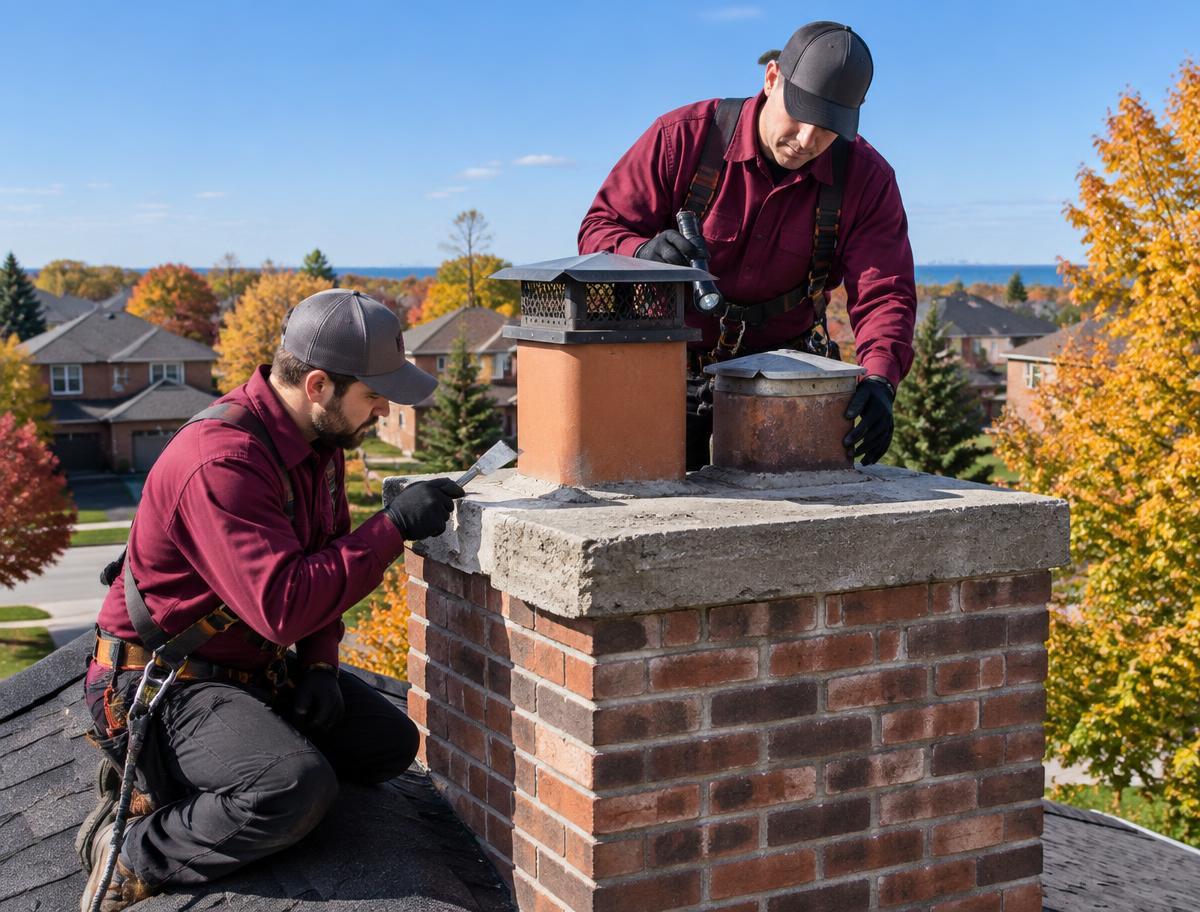
Preventive Throat Maintenance for Markham Homeowners
Maintaining your fireplace throat throughout the year requires minimal effort but pays tremendous dividends in safety, appliance longevity, and heating comfort. The single most important practice is burning only clean, well-seasoned hardwood. Softwoods, green unseasoned timber, and construction scraps contain excess moisture and pitch that generate heavy volumes of acidic smoke and creosote. This tacky soot clings directly to the throat breast and damper mechanism, hardening over time into a combustible glaze that is difficult to remove and highly corrosive to cast iron.
At the end of each burning season in spring, Markham homeowners should perform a gentle cleaning of the throat area. Vacuum out loose ash from the firebox and check the throat damper for freedom of movement. Applying a light misting of high-heat lubricant to the damper pivot pins prevents them from seizing due to summer humidity. Keeping the damper closed during the humid summer months also prevents humid outdoor air from drawing musty chimney smells down into the living space, while preventing moist air from accelerating damper corrosion.
Schedule an annual visual review and sweep before cold weather arrives. Having an independent chimney specialist inspect the throat before your first autumn fire ensures that any winter freeze-thaw damage or nesting bird debris accumulated over summer is caught and remedied early. Prompt attention to minor mortar cracks or loose damper hardware keeps repair costs modest and ensures that your fireplace is fully ready to provide reliable warmth the moment freezing temperatures return to Southern Ontario.
- Burn only dry, seasoned hardwood with moisture levels below twenty percent
- Never burn painted lumber, pressure-treated wood, or household garbage
- Lubricate cast-iron damper pivot linkages each spring with appropriate high-heat lubricant
- Close dampers in summer to reduce humidity intrusion and soot odours
- Book an annual professional chimney evaluation before lighting autumn fires
Choosing the Right Independent Masonry Specialist in Markham
Fireplace repair is a specialized craft that sits at the intersection of historic bricklaying and combustion physics. Many general handymen or roofing contractors offer chimney repairs, but they often lack the deep understanding of drafting dynamics and high-heat refractory materials needed to properly rebuild a fireplace throat. When seeking a service provider in Markham, look for an established independent chimney company that specializes specifically in interior hearth masonry, smoke chamber design, and damper restoration.
Always inquire about the specific repair materials the contractor intends to use. A qualified fireplace specialist will readily explain their use of high-temperature hydraulic refractory mortar, premixed fireclay formulations, and castable refractory cements rather than standard exterior mortar or hardware caulking. Ask about their diagnostic approach: a trustworthy contractor will take the time to inspect above the damper, photograph underlying structural conditions, and provide a clear, itemized proposal detailing the exact scope of masonry work required before touching a single brick.
Markham Chimney Services operates as an independent service company proudly serving property owners across Markham neighbourhoods and the Greater Toronto Area. We focus strictly on honest evaluations, durable craftsmanship, and long-term hearth safety without aggressive upselling or misleading promises. By taking the time to select a local, dedicated masonry specialist, you protect your home investment, safeguard your family against combustion hazards, and secure years of dependable comfort around your hearth.
- Look for deep expertise in interior hearth restoration and refractory masonry
- Ensure the contractor uses true high-temperature refractory bonding materials
- Demand clear, transparent written diagnostic estimates before work commences
- Confirm detailed knowledge of regional building styles and masonry framing
- Choose an independent local specialist focused on craftsmanship and safety
Average pricing in Markham
$325 – $895
- Inspection / diagnostic
- $140 – $190
- Typical time on site
- 2 to 4 hours on site
- Parts and materials
- Replacement cast-iron damper plates, top-sealing damper kits, custom steel lintel brackets, and specialty castable refractories quoted separately
- What moves the price
- Extent of refractory mortar deterioration and joint reconstruction required · Accessibility and operational condition of the original throat damper frame · Whether converting from a damaged throat damper to a modern top-sealing unit
Estimated local market range, not a quote. All estimates are in Canadian dollars and exclude 13% Ontario HST. Your exact price is confirmed before any work begins.