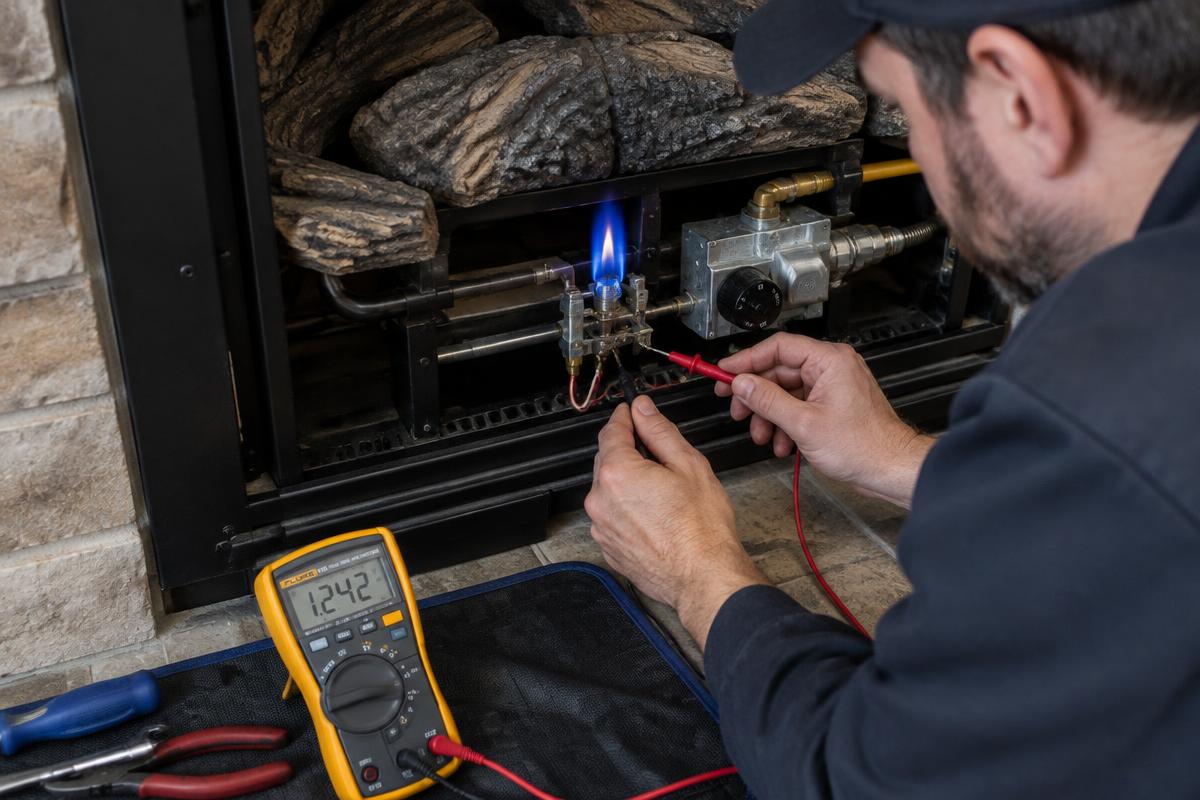

Markham winters bring relentless cold, making your gas fireplace an essential hearth for comfort and auxiliary warmth. Over months of steady use, dust, pet dander, ceramic fibre degradation, and combustion byproducts accumulate within the firebox and burner assembly. Homeowners across Unionville, Bayview Glen, and Angus Glen often assume gas units are maintenance-free because they do not produce wood ash. However, unburned fuel residues and household air pollutants create hidden deposits that compromise efficiency and indoor air quality. Regular seasonal cleaning keeps the system running reliably during freezing Ontario nights.
At Markham Chimney Services, operating from our central hub at 4418 Highway 7 East, we deliver comprehensive gas fireplace cleaning tailored to local living conditions. Our technicians treat your home with total care, addressing everything from cloudy ceramic glass and clogged pilot orifices to restricted venting. Whether your home is a mid-century bungalow or a modern multi-storey residence in the Greater Toronto Area, our hands-on service restores peak heat output and safeguards your family against carbon monoxide risks. A clean gas fireplace delivers dependable comfort, lower fuel waste, and genuine peace of mind throughout the winter season.
Gas Fireplace Cleaning: visit summary
Gas Fireplace Cleaning: glass, burners, pilots and controls cleaned and serviced, then relit and flame-checked. Serving Markham and the Greater Toronto Area (GTA). The estimated local market range is $199 – $389, not a fixed company rate. The final scope and quote are confirmed before work begins.
| Estimated market range | $199 – $389. All estimates are in Canadian dollars and exclude 13% Ontario HST. |
|---|---|
| Typical time | 1 to 2 hours on site |
| Price factors | Appliance style, log complexity, and physical accessibility; Accumulation level of carbon soot and baked-on glass mineral haze; Need for mechanical replacement parts like gaskets or safety sensors |
| Routine signs to discuss | Cloudy or Etched Fireplace Glass; Delayed or Loud Burner Ignition; Excessive Black Soot on Logs; Weak or Yellow Pilot Flame; Unpleasant Chemical or Musty Odours; Unresponsive Wall Switch or Remote |
What Gas Fireplace Cleaning Truly Involves
Many homeowners view a gas fireplace as an appliance that simply turns on with the flick of a wall switch. Beneath that straightforward convenience lies an intricate assembly of delicate gas valves, thermopiles, pilot tubes, and burner ports. Gas fireplace cleaning is not merely a quick wipe of the outer hearth or decorative surround. It is an intentional technical servicing procedure that targets the interior workings of the firebox, removing corrosive grime and restoring balanced fuel combustion.
During a standard cleaning appointment, our technicians carefully disassemble the burner tray, media bed, and glass front. We clear microscopic lint and hair that gets pulled into the air shutter by convection currents. When these internal air openings become clogged, the gas flame starves for oxygen, causing lazy yellow flames that generate thick black carbon soot. Thorough cleaning restores the ideal air to fuel ratio, ensuring your unit burns cleanly, brightly, and efficiently without producing harmful fumes.
We also inspect the heat exchanger passages and the condition of the ceramic log set. Ceramic logs are engineered to disperse flames naturally, but when they shift or collect dust, they misdirect heat and disrupt thermal sensors. By brushing, vacuuming, and precisely repositioning every internal component, we return your unit to its proper operating specifications, preventing unnecessary wear on sensitive mechanical parts and prolonging the operating lifespan of the entire heating appliance.
- Deep vacuuming of the firebox and lower blower housing
- Precision cleaning of burner ports and pilot assemblies
- Chemical-free restoration of cloudy ceramic glass
- Careful repositioning of ceramic logs and glowing embers
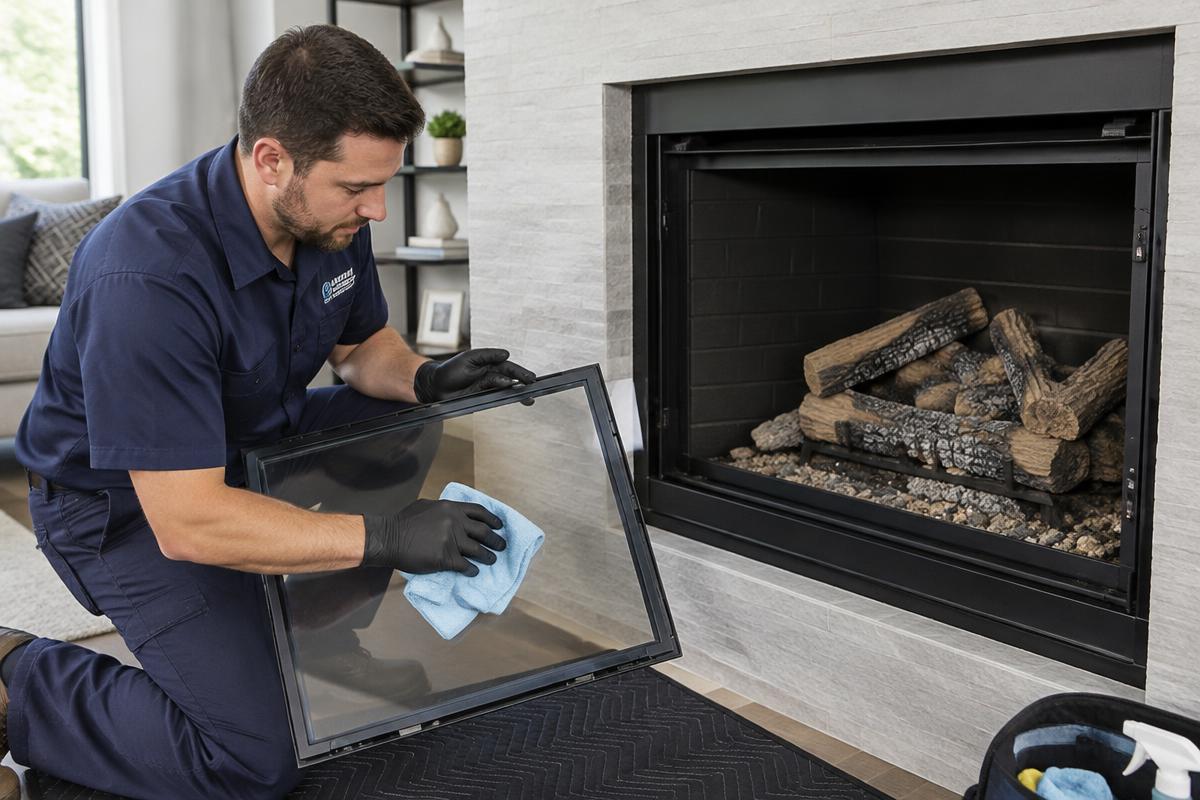
Expert gas fireplace cleaning and safety maintenance for comfortable, worry-free Markham living.
Self-check
Warning signs you need gas fireplace cleaning
Cloudy or Etched Fireplace Glass
A white, hazy film coats the interior glass surface. Over time, heat bakes these sulfur and mineral byproducts directly into the ceramic material, creating permanent cloudy damage if not removed promptly with professional non-scratch compounds.
Delayed or Loud Burner Ignition
When you activate the fireplace, you notice a pause followed by a sudden soft boom or whoosh. This dangerous delay indicates clogged burner ports or a fouled pilot light allowing gas to pool before catching flame.
Excessive Black Soot on Logs
Soot deposits accumulating on ceramic logs or firebox walls signal incomplete combustion. The burner is not receiving adequate combustion air, producing messy carbon residue and elevating carbon monoxide risks inside the home.
Weak or Yellow Pilot Flame
A healthy pilot burns crisp blue against the sensor. A weak, flickering, or predominantly yellow flame indicates dirt in the pilot orifice or low fuel pressure, leading to sudden shutdowns and unignited pilot cycles.
Unpleasant Chemical or Musty Odours
Smelling dust, burning lint, or sour metallic fumes whenever the unit runs means debris is cooking against internal heat shields or the convection channels are choked with household pet hair and household lint.
Unresponsive Wall Switch or Remote
If the switch clicks but the burner fails to ignite, oxidized thermopile connections or soot-coated sensors cannot generate the millivolts needed to open the internal gas valve, requiring careful component cleaning.
Why Ontario Climate Demands Routine Maintenance
Living in Markham means experiencing drastic temperature swings between November and April. Our freeze-thaw cycles create severe challenges for direct-vent and natural-draft fireplace terminations mounted on exterior walls or roofs. Sub-zero temperatures chill the venting pipes, which can cause heavy thermal shock and condensation buildup inside the flue. When warm combustion moisture contacts freezing metal, acidic water droplets condense, running back downward toward the appliance and initiating corrosion on unprotected internal steel components.
Extreme winter cold also changes the pressure dynamics of your household. Modern, tightly sealed homes in neighbourhoods like Langstaff and St. Andrew-Windfields can develop negative air pressure when kitchen exhausts and bathroom fans run simultaneously. If a gas fireplace burner is burdened with dust or weak draft conditions, exhaust gases can struggle to exit cleanly through exterior venting. Routine cleaning ensures that air passageways remain clear, enabling smooth natural draft displacement even during bitter polar vortex events.
Snow accumulation and ice dams present additional seasonal hazards around exterior terminal caps. Heavy winter snowdrifts can partially obstruct low-clearance side wall vents, altering combustion intake and increasing carbon buildup within the firebox. By pairing physical cleaning with seasonal exterior terminal assessments, we ensure that external atmospheric conditions do not disrupt your interior comfort. Keeping your appliance tuned prevents emergency heating failures on nights when you depend most heavily on cozy domestic warmth.
- Condensation and acid corrosion management
- Negative pressure mitigation in airtight homes
- Vent termination checks after heavy snowfall
- Reliable pilot ignition during extreme sub-zero cold
Carbon Monoxide and Indoor Air Quality Protection
Safety is the primary reason to schedule routine gas fireplace servicing. Natural gas and propane burn relatively cleanly under optimal conditions, producing carbon dioxide and water vapour. However, when burner ports become obstructed with dust or when the pilot flame burns weakly, incomplete combustion takes place. This incomplete burn produces carbon monoxide, a colourless, odourless, and potentially lethal gas that cannot be detected by human senses alone without proper instrumentation and working alarms.
Our cleaning protocol adheres closely to established CSA standards and industry-wide heating practices to minimize environmental hazards inside your living areas. We meticulously clean the safety thermocouple and thermopile, which monitor flame presence and shut off the main gas supply if the pilot blows out. If these sensors are blanketed in carbon soot, they can fail to react properly or cause the system to shut down intermittently, leaving your home without supplemental heat.
We also confirm that your glass gasket creates a continuous, airtight seal against the room. Over years of thermal expansion and contraction, silicone and fiberglass gaskets can dry out, crack, or pull away from the metal frame. A compromised gasket allows fireplace emissions and tiny airborne particles to seep directly into your family room. We inspect gasket integrity on every visit, ensuring combustion gases exhaust entirely outside where they belong.
- Elimination of incomplete combustion hazards
- Cleaning and testing of safety thermocouples and thermopiles
- Inspection of high-temperature door gasket seals
- Verification of residential carbon monoxide detector placement
Our Step-by-Step Cleaning and Inspection Workflow
When Markham Chimney Services arrives at your home, we protect your flooring and surrounding furnishings with clean drop cloths before unpacking our specialized service equipment. We begin by shutting down the gas valve and allowing the appliance to cool down completely. Our technician carefully removes the glass assembly, inspecting the retaining clips, frame alignment, and perimeter gasket for evidence of wear, thermal distortion, or micro-cracking that could compromise safety during regular operation.
Next, we map the exact layout of the glowing embers and decorative log components before removing them from the chamber. We use fine-bristle hand brushes and high-efficiency particulate air vacuums to remove accumulated pet dander, lint, and loose carbon soot from the floor, walls, and burner channels. We never use abrasive scrapers that could scratch ceramic finishes or damage delicate metallic burner ports, ensuring the integrity of every factory component remains intact.
Once the burner and firebox are spotless, we clean the pilot hood, ignition sparker, and millivolt generator. We treat the ceramic glass pane with a specialized non-scratch solvent formulated specifically for fireplace mineral hazing, which removes stubborn sulfur films without scratching. After reassembling the logs to precise factory specifications, we perform a live combustion test, monitoring the flame colour, ignition speed, and steady draft flow to verify proper heating performance.
- Safe shutdown and full visual glass inspection
- Systematic removal and vacuuming of burner media
- Non-abrasive chemical-free ceramic glass polishing
- Reassembly with live ignition and draft testing
"I booked an annual chimney sweep in Unionville and they arrived right on time. They cleared all creosote, inspected the flue draft, and shared simple maintenance tips. My fireplace runs smoother and safer now."
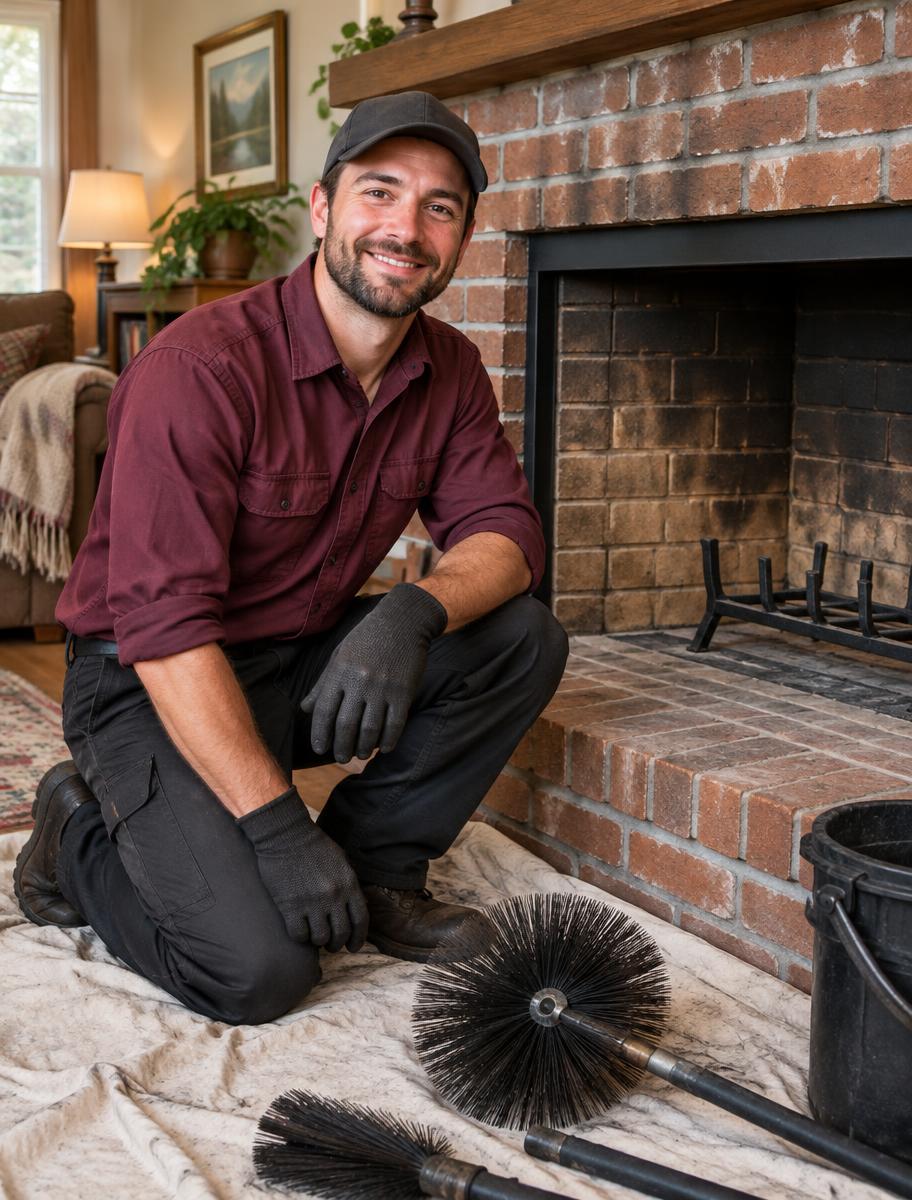
Our process
How we handle your gas fireplace cleaning, step by step
- 1
Initial Safety Isolation and Disassembly
We shut off the gas supply, disconnect electrical power, and remove the outer protective barrier and glass assembly, inspecting perimeter gaskets and mechanical latches for thermal damage or air leakage.
- 2
Deep Vacuuming and Debris Extraction
Using a HEPA-filtered vacuum and delicate bristle brushes, we extract pet fur, dust, and loose carbon soot from the firebox floor, heat exchanger fins, and convection blower housing.
- 3
Burner and Pilot Orifice Servicing
We disassemble and clean the main burner ports, pilot hood, spark electrode, and thermocouple sensor, clearing microscopic obstructions to restore a clean, blue, balanced flame pattern.
- 4
Ceramic Log Restyling and Glass Restoration
We polish the ceramic glass pane using specialized non-abrasive cleaners to eliminate white mineral haze, then reposition the decorative logs and fresh glowing embers to exact specifications.
- 5
Live Combustion and Safety Testing
We reassemble the unit, restore gas flow, and run a live combustion test to check draft flow, flame colour, pilot stability, and zero gas leakage around all primary fittings.
Recognizing When Your Fireplace Demands Professional Care
Gas fireplaces often give subtle visual and auditory signals when dirt and debris begin to compromise performance. One of the most common early indicators is a white or milky haze coating the inside of the viewing glass. This haze is caused by chemical reactions between combustion moisture, sulfur compounds in natural gas, and ambient minerals. If ignored, these mineral deposits can bake permanently into the glass matrix, causing irreversible etching that ruins the clear view.
Another telling symptom is a persistent delay when igniting the main burner. If you hear a click followed by a noticeable pause before a sudden whoosh of flame lights the logs, delayed ignition is occurring. This happens when the pilot light is weak or burner ports near the ignition zone are blocked with dust. Fuel pools momentarily before catching, creating a small internal pop that puts undue stress on the firebox and the glass seal.
You may also notice odd smells circulating whenever the fireplace runs. A brief dust scent during the very first autumn lighting can be normal, but ongoing chemical, metallic, or burning scents suggest restricted air movement or melting dust on the heat exchanger. Unusual whistling sounds, sputtering pilot flames, or excessive black soot accumulating on the ceramic logs also serve as unmistakable warnings that your appliance requires an immediate, comprehensive service visit.
- Persistent milky or white mineral residue on the glass
- Delayed burner ignition accompanied by a soft pop
- Irregular sooty flames accumulating on ceramic logs
- Lingering burning dust or chemical odours in the living area
Safe Everyday Practices Between Service Visits
While deep mechanical servicing and gas adjustments must be left to experienced professionals, Markham homeowners can adopt several safe maintenance habits throughout the winter season. The most beneficial habit is keeping the immediate perimeter around the fireplace floor clean and clutter-free. Pet fur, dust bunnies, and textile fibers naturally gravitate toward the convection louvers under the firebox. Regular vacuuming around the base louvers prevents stray fibers from being drawn into the burner tray.
We strongly advise against using everyday household window cleaners on your fireplace glass. Standard blue glass cleaners contain ammonia and harsh chemicals that react violently to extreme heat, creating toxic fumes and permanently burning chemical marks into the ceramic surface. If you choose to clean surface dust from the outside of the glass, do so only when the unit is entirely cold, using a soft microfibre cloth dampened with plain water.
Always pay close attention to your pilot flame behaviour if your fireplace features a standing pilot. A healthy pilot flame should be sharp, steady, and predominantly blue with minimal yellow flickering, directly enveloping the tip of the thermopile sensor. If the flame appears weak, fluttery, or yellow, do not poke wires or needles into the orifice. Contact our team to perform a proper cleaning and orifice clearance using gentle, calibrated technical tools.
Finally, ensure that your household smoke alarms and carbon monoxide detectors are tested every month and have fresh batteries installed before each heating season. Carbon monoxide detectors should be positioned on every level of the home, especially near sleeping quarters. If you notice this, stop using the appliance and call Markham Chimney Services at (365) 362-5190.
- Keep low-level convection air louvers free of pet hair
- Never clean hot glass or use ammonia-based window sprays
- Monitor standing pilot flame colour and stability regularly
- Test nearby home carbon monoxide alarms at least once a month
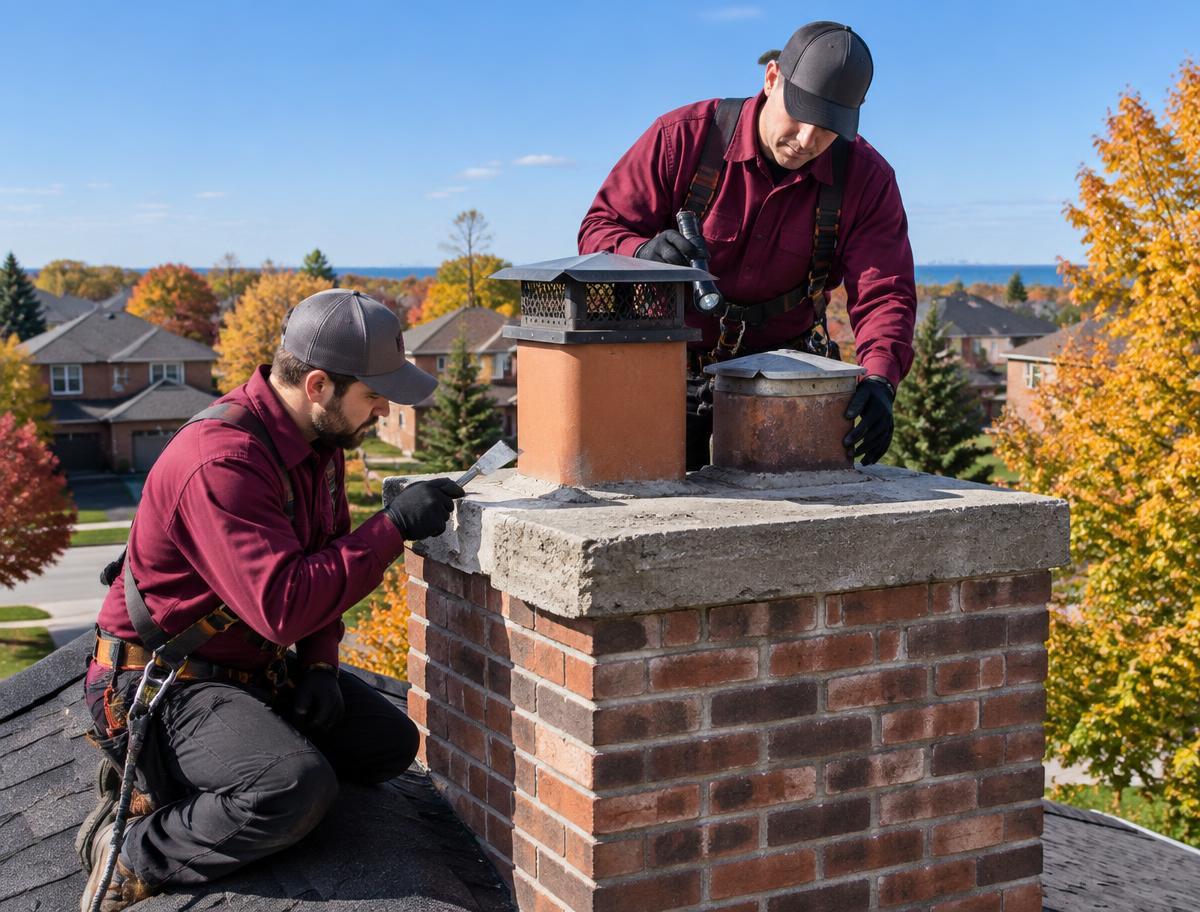
Understanding Service Pricing and Repair Variables
Transparent pricing helps homeowners budget appropriately for annual fireplace maintenance. The cost of a professional gas fireplace cleaning in Markham reflects the thoroughness of the service, the accessibility of the venting components, and the physical condition of the appliance. A unit that has received annual care typically requires standard cleaning and adjustment, whereas an appliance that has been neglected for many years demands significantly more labour to remove stubborn soot and mineral buildup.
Appliance design also plays a direct role in the time required for a complete servicing. Traditional direct-vent units with easily removable front grilles allow swift access to the burner assembly. Conversely, custom contemporary linear fireplaces, double-sided peninsula models, or units with delicate stone surrounds require meticulous handling and extra disassembly time. If secondary blowers or motorized thermostatic accessories are installed beneath the unit, cleaning those electrical components will naturally expand the scope of work.
Replacement parts represent a separate category when mechanical wear is identified during the cleaning appointment. Common replacement items include aged ceramic ember fibers, deteriorated glass gaskets, thermocouple sensors, and pilot assemblies. Our technicians always evaluate your system thoroughly before recommending component replacements, providing clear explanations and itemized pricing so you can make confident, informed decisions without unexpected surprises on your final invoice.
- Appliance age, configuration, and past maintenance history
- Physical accessibility of internal blowers and wiring trays
- Time required to safely remove baked-on glass mineral haze
- Necessity of replacement consumable parts like gaskets or embers
Selecting the Right Local Fireplace Professional
When hiring a service provider to work on gas appliances in your Markham home, selecting the right contractor makes a profound difference in safety and workmanship. Look for an independent business with a verifiable physical presence in the community and a transparent approach to technical service. Reputable technicians demonstrate deep familiarity with local building styles, common heating setups, and the unique winter draft challenges experienced across neighbourhoods from Milliken down to Angus Glen.
Ensure that any contractor you invite into your home carries comprehensive commercial liability insurance and strictly follows recognized Canadian heating guidelines, including CSA codes and WETT-style safety principles. Reliable tradespeople never cut corners by skipping flame tests or leaving dirty glass unaddressed. They take the time to answer your technical questions, explain how their diagnostic procedures work, and treat your living space with pristine cleanliness from arrival through final cleanup.
Beware of bargain contractors who promise full fireplace tune-ups in twenty minutes for rock-bottom prices. A proper gas fireplace cleaning and safety check requires meticulous attention to detail, precision vacuuming, careful glass restoration, and detailed flame analysis. Choosing Markham Chimney Services means choosing dedicated local craftspeople who value your family comfort and peace of mind above quick sales, delivering dependable results built on honesty, care, and practical heating expertise.
- Verified local presence and dedicated regional experience
- Comprehensive commercial liability and workplace insurance
- Adherence to CSA-informed safety and combustion protocols
- Clear written estimates and transparent itemized service breakdowns
Average pricing in Markham
$199 – $389
- Inspection / diagnostic
- $129 – $169
- Typical time on site
- 1 to 2 hours on site
- Parts and materials
- Replacement door gaskets, thermopiles, pilot assemblies, and remote receivers are quoted separately before installation.
- What moves the price
- Appliance style, log complexity, and physical accessibility · Accumulation level of carbon soot and baked-on glass mineral haze · Need for mechanical replacement parts like gaskets or safety sensors
Estimated local market range, not a quote. All estimates are in Canadian dollars and exclude 13% Ontario HST. Your exact price is confirmed before any work begins.