A gas fireplace brings comforting, instant warmth to your Markham home during the darkest winter months, but mechanical components degrade under continuous use. When your unit fails to ignite, emits strange odours, or shuts down intermittently, you need prompt and knowledgeable assistance. Markham Chimney Services operates from 4418 Highway 7 East, delivering meticulous troubleshooting and repairs for modern inserts, traditional logs, and direct-vent appliances. We understand that your fireplace is both an aesthetic focal point and an essential supplementary heat source, especially during sudden deep freezes. Our team focuses on restoring safety, efficiency, and comfort with straightforward communication and practical workmanship.
Southern Ontario winters subject residential heating equipment to demanding cycles of heavy burning, thermal expansion, and damp cold. When venting mechanisms frost over or pilot assemblies gather carbon crusts, your appliance cannot perform as engineered. We arrive prepared to test electrical connections, calibrate gas pressure, replace worn pilot generators, and clear venting pathways. As an independent chimney and fireplace company, we evaluate every system objectively, ensuring gas valves seal tightly and combustion by-products vent outdoors properly. Whether you live in Unionville, Bayview Glen, or nearby areas across the Greater Toronto Area, we help you enjoy reliable, worry-free warmth throughout the cold season.
Gas Fireplace Repair: visit summary
Gas Fireplace Repair: glass, burners, pilots and controls cleaned and serviced, then relit and flame-checked. Serving Markham and the Greater Toronto Area (GTA). The estimated local market range is $229 – $689 CAD, not a fixed company rate. The final scope and quote are confirmed before work begins.
| Estimated market range | $229 – $689 CAD. All estimates are in Canadian dollars and exclude 13% Ontario HST. |
|---|---|
| Typical time | 1 to 2.5 hours typical |
| Price factors | Specific components needing replacement, such as safety valves versus simple thermopiles.; Venting accessibility and complexity of diagnosing older or discontinued fireplace models.; Presence of corrosion, carbon buildup, or masonry chimney draft complications. |
| Routine signs to discuss | Pilot Light Refuses to Stay Lit; Persistent Odour of Rotten Eggs; Soot Accumulating on Glass and Logs; Loud Popping or Delayed Ignition Bang; Main Burner Shuts Down After Minutes; Unusual Screeching or Grinding Sounds |
What Gas Fireplace Repair Involves for Homeowners
Gas fireplace repair addresses mechanical failures, electrical faults, and ventilation issues that stop your fireplace from operating safely and efficiently. Unlike basic cleaning, professional repair targets the operational mechanisms tucked beneath the firebox and inside the chase. This work involves testing the milli-volt wiring, evaluating the safety pilot valve, checking thermocouple integrity, and ensuring that fuel flows smoothly through the burner orifice. Technicians verify that combustion occurs cleanly and that the exhaust clears the home completely.
Homeowners often believe that gas appliances require zero attention because they produce no ash or soot. However, dust, pet hair, chemical off-gassing, and thermal fatigue gradually degrade inner switches, blowers, and sensors. When a component weakens, safety mechanisms intentionally shut down the system to prevent fuel leaks or carbon monoxide back-drafting. Our repair services identify the underlying cause behind these automatic shutdowns rather than applying temporary patches that leave you stranded in cold weather.
Repair work also encompasses physical components such as ceramic glass assemblies, burner trays, and refractory brick panels. Damaged gaskets around the glass frame can allow room air to distort combustion flames or allow exhaust fumes into living spaces. Our technicians inspect the complete operational loop, replacing compromised seals, testing ignition modules, and confirming that flame patterns match manufacturer specifications for clean, balanced heat generation throughout your Markham residence.
- Testing and calibrating thermopiles, thermocouples, and electronic ignition modules.
- Diagnosing intermittent burner cut-offs, delayed ignition, and weak pilot flames.
- Replacing worn gas control valves, wall switches, and wireless remote receivers.
- Resealing firebox glass frames and replacing damaged ceramic fiber logs.
Keep your home warm, safe, and comfortable with dependable gas fireplace diagnostics and repairs.
Self-check
Warning signs you need gas fireplace repair
Pilot Light Refuses to Stay Lit
A standing pilot that extinguishes immediately when you release the knob usually indicates a failing thermocouple, a carbon-coated thermopile, or a faulty safety magnet inside the main gas control valve requiring professional service.
Persistent Odour of Rotten Eggs
The smell of sulfur or rotten eggs indicates unburned natural gas leaking from supply fittings, valves, or shutoffs. Turn off the gas supply immediately, open windows, evacuate the premises, and call for emergency assistance.
Soot Accumulating on Glass and Logs
Black velvety soot forming on the ceramic logs or inside glass indicates incomplete combustion. This happens when burner air shutters are misaligned, fuel ports are clogged, or venting is restricted, posing a potential carbon monoxide risk.
Loud Popping or Delayed Ignition Bang
If you hear a startling bang or mini-explosion when the burner ignites, fuel gas is pooling before catching the spark. This delayed ignition strains the firebox glass and requires immediate mechanical adjustment and burner port cleaning.
Main Burner Shuts Down After Minutes
When your fireplace starts normally but cuts out after five to fifteen minutes, a weak thermopile, overheating safety switch, or blocked chimney vent is interrupting the circuit. Professional diagnostics can isolate the failing safety sensor.
Unusual Screeching or Grinding Sounds
Loud squealing, grinding, or vibrating sounds typically point to a failing convection blower motor. Dry bearings, dust accumulation, or bent fan blades restrict air circulation around the firebox and demand mechanical servicing or replacement.
Why Freeze-Thaw Cycles Challenge Markham Fireplaces
Markham experiences severe temperature swings, shifting rapidly between sub-zero blizzards and damp, mild thaws. These harsh freeze-thaw cycles create significant condensation within chimney chases, metal venting pipes, and exterior termination caps. Direct-vent fireplaces draw combustion air from outside while exhausting hot gases through a coaxial pipe. When exterior temperatures drop suddenly, condensation forms and freezes against cold pipe walls, occasionally blocking incoming air supplies and choking off the burner flame.
Moisture intrusion during winter thaws can also promote premature corrosion on venting brackets, terminal screens, and internal firebox metal. Rust flakes can tumble down the venting run directly onto the burner tray, clogging sensitive gas ports and preventing complete flame distribution. In older brick masonry chimneys converted to gas inserts, freeze-thaw expansion can loosen mortar joints, compromising the structural stability of the flue lining and allowing frigid drafts to chill the fireplace cavity.
Furthermore, rapid outdoor temperature fluctuations disrupt natural draft pressures in b-vent systems. When barometric pressure plunges during an Ontario winter storm, cold air can push downward into the chimney flue. A gas fireplace attempting to ignite against a stubborn cold air plug may suffer from delayed ignition, soot buildup, or persistent pilot blow-outs. Understanding these regional climate factors allows us to deliver durable repairs tailored specifically to local weather conditions.
- Ice buildup on exterior direct-vent termination caps restricting intake air.
- Corrosive condensation damaging draft hoods and internal exhaust pipes.
- Cold air downdrafts extinguishing standing pilot lights during blizzards.
- Thermal expansion fatiguing gas supply lines and structural mounting hardware.
Frequent Causes of Gas Fireplace Malfunctions
The most common cause of gas fireplace breakdown is the buildup of airborne contaminants within the pilot assembly and burner orifice. Markham homes circulate dust, pet dander, lint, and carpet fibers through their heating systems, all of which get pulled into the lower fireplace louvers. Over time, these particles bake onto the thermopile and thermocouple, creating an insulating layer of soot that prevents sensors from detecting heat and maintaining the safety valve open.
Electrical component degradation represents another frequent point of failure. Wall switches, remote receiver boxes, and low-voltage wiring harnesses undergo thousands of heat cycles over years of service. Corroded wire terminals, loose connections, or depleted backup batteries can disrupt the tiny millivolt current required to trip the main gas solenoid. When electrical resistance climbs too high, the wall switch clicks, but the firebox remains dark and cold.
Mechanical fatigue within the gas control valve itself can also cause system failure. The internal diaphragms and springs inside a combination gas valve operate under precise tolerances. Sticky solenoids, dried internal grease, or foreign debris in the gas line can prevent the valve from shifting between pilot and main burner modes. When these internal valves fail, they cannot be rebuilt on-site and must be replaced with matching components to preserve safety.
- Oxidation and carbon deposits coating thermopiles and spark igniters.
- Low millivolt output caused by loose wiring terminals and corroded switches.
- Insect nesting or spiderwebs obstructing burner orifices and air shutters.
- Mechanical binding in combination gas control valves and blowers.
Our Detailed Inspection and Diagnostic Procedure
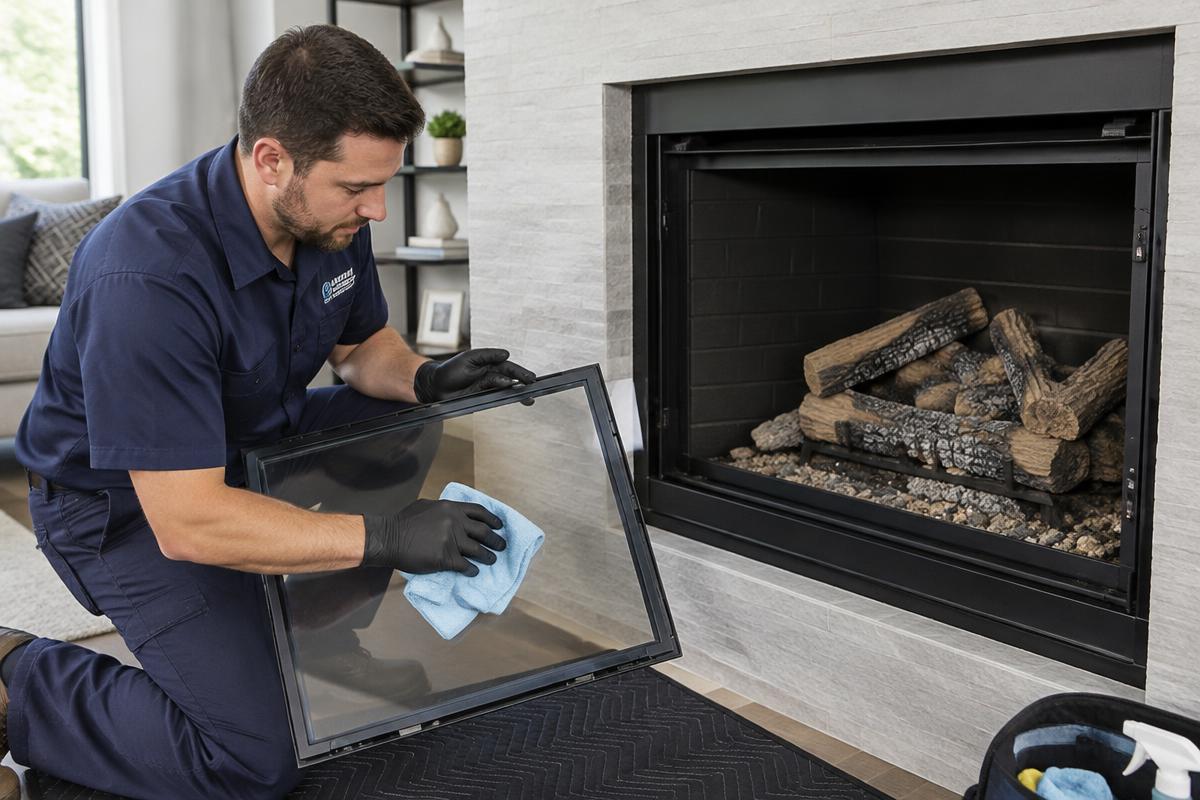
Every service visit begins with a systematic, safety-first diagnostic evaluation. We do not guess or swap parts randomly; we follow a methodical process to identify the exact point of failure. Our technicians protect your living room with heavy drop cloths before removing protective safety screens and glass panels. We check for gas leaks using calibrated electronic sniffers around shutoff valves, supply flares, and manifold connections to ensure complete baseline safety before starting work.
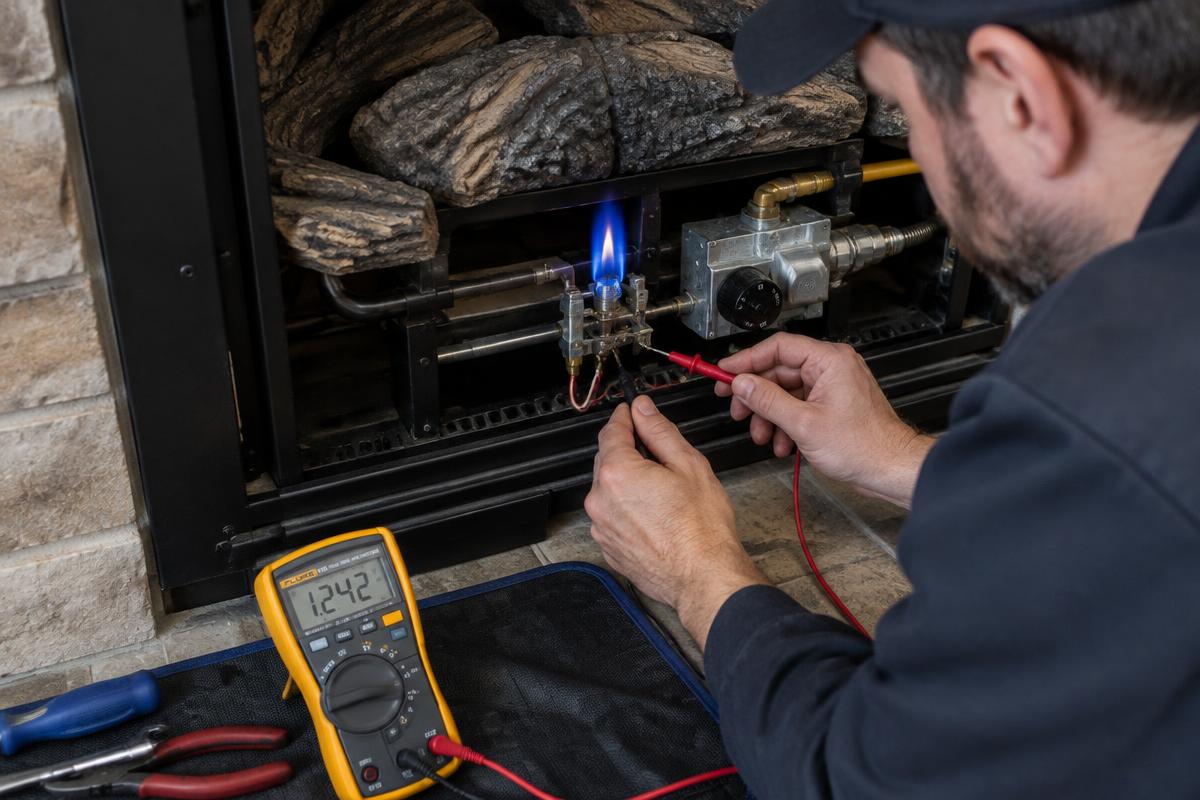
Next, we isolate the electrical and gas delivery circuits to measure operational values against strict engineering parameters. Using precision multimeters, we test the open-circuit and closed-circuit millivolt output of the pilot generator, verify electrical resistance across the wall switch loop, and evaluate primary gas line pressure. We inspect the ceramic glass for micro-fractures, examine the condition of the gasket rope, and review the positioning of ceramic logs to ensure flame impingement is minimal.
Once we pinpoint the root cause, we explain our findings clearly, outline the required repairs, and present straightforward solutions. After completing the mechanical adjustments or part replacements, we run the fireplace through multiple complete heating cycles. We monitor flame stability, verify that blowers activate smoothly at temperature thresholds, and ensure that safety shut-offs engage instantly when simulated errors occur. We leave your hearth clean, safe, and ready for daily use.
- Comprehensive electronic gas leak detection across all internal connections.
- Precision multimeter testing of thermocouples, thermopiles, and switches.
- Detailed inspection of ceramic glass gaskets, logs, and combustion chambers.
- Full operational burn testing through multiple automatic cycles.
"I discovered odd odours coming from my chimney and booked a deodorizing treatment Downtown. They applied a specialized solution, sealed minor cracks, and eliminated the smell completely. My living room feels fresh again."

Our process
How we handle your gas fireplace repair, step by step
- 1
Initial Safety and Pressure Assessment
We lay drop cloths, test surrounding air for combustible gas leaks, and measure baseline gas supply pressure to confirm fuel delivery meets required operating levels.
- 2
Electrical and Sensor Diagnostics
Using calibrated multimeters, we measure millivolt output from the thermopile and thermocouple, inspect wire harnesses, and check wall switches and remotes for excessive electrical resistance.
- 3
Burner and Venting Inspection
We remove the glass assembly, inspect ceramic logs, clear burner orifices of dust and carbon, and evaluate chimney or direct-vent draft paths for obstructions and ice.
- 4
Component Repair or Replacement
We clean or replace faulty components such as pilot assemblies, gas control valves, blower motors, and glass gaskets, ensuring all parts match original system specifications.
- 5
Safety Verification and Test Burn
We complete rigorous leak checks, reassemble the firebox glass securely, and run multiple burn cycles to verify clean flame presentation, proper venting, and safe shutdown functionality.
Critical Combustion Safety and Ventilation Standards
Natural gas and propane burn cleanly when supplied with adequate oxygen, but improper fuel-air mixtures produce deadly, odorless carbon monoxide. A gas fireplace with a restricted exhaust pipe, dirty burner ports, or cracked heat exchange surfaces can spill combustion by-products into your living space. We conduct our work in alignment with CSA safety principles and industry-standard WETT practices, ensuring that your installation maintains proper draft clearance, safe venting integrity, and tight combustion seals.
Carbon monoxide alarms are non-negotiable safety devices for any household operating gas heating appliances. Ontario regulations mandate functional carbon monoxide alarms adjacent to all sleeping areas, but we strongly advise maintaining an alarm in the same room as your gas fireplace. If an exhaust flue becomes blocked by nesting wildlife, fallen brick debris, or external ice dams, an early warning alarm can save lives before toxic gas levels accumulate.
We also evaluate the condition of direct-vent glass assemblies during every repair appointment. Operating a gas fireplace with a chipped glass pane, missing latch spring, or loose perimeter gasket breaks the sealed combustion envelope. This failure allows room air to enter unchecked, altering burner physics and potentially permitting flue gases to migrate into your family room. We inspect and reseal these critical barriers to keep toxic exhaust traveling strictly outside.
- Verifying sealed combustion integrity on all direct-vent glass enclosures.
- Checking room clearance distances around warm glass and radiant louvers.
- Testing for carbon monoxide spillage around draft hoods and relief panels.
- Confirming optimal placement and functionality of home carbon monoxide alarms.
Proactive Maintenance to Prevent Heating Emergencies
While complex repairs and gas line adjustments require qualified professionals, Markham homeowners can perform simple preventive tasks to extend appliance lifespan. Regularly vacuuming the lower control compartment beneath the firebox prevents dust bunnies and pet fur from insulating electrical components and choking pilot air intakes. Make sure the unit is completely turned off and cool to the touch before gently vacuuming around the metal controls with a soft brush attachment.
Inspect the pilot flame periodically if your system uses a standing pilot configuration. A healthy pilot flame is strong, steady, and sharp blue, wrapping around the top third of the thermocouple and thermopile probes. If you notice a weak, lazy yellow flame that flickers or dances away from the sensors, dust or draft issues may be developing. Catching this early prevents sudden ignition failures during a mid-winter weekend when service demand across the area is at its peak.
Never use household glass cleaners containing ammonia or harsh abrasives on fireplace glass. These chemicals etch the ceramic surface under intense heat, causing permanent cloudiness and structural weakness. Use specially formulated fireplace glass cleaners designed to dissolve white mineral hazes safely. Finally, replace remote control batteries annually before the winter heating season begins, as weak batteries are responsible for a surprising number of service calls.
- Vacuuming lower mechanical louvers twice per season to eliminate dust.
- Monitoring pilot flame colour and stability for early signs of contamination.
- Using approved non-ammonia ceramic glass cleaners to prevent micro-etching.
- Replacing remote transmitter and receiver batteries every autumn.

Transparent Cost Factors for Gas Fireplace Services
Understanding how fireplace repair costs are calculated helps Markham homeowners make informed decisions about their heating appliances. The total cost of a repair depends on the age of the unit, the accessibility of its components, and whether replacement parts are readily available. Basic issues, such as cleaning a fouled pilot assembly, clearing dirty burner ports, or adjusting loose switch wiring, require less diagnostic time and standard consumable supplies, keeping overall expenses modest.
More complex repairs, such as replacing a seized combination gas valve, swapping out a cracked ceramic glass panel, or replacing an electronic ignition control board, carry higher expenses due to specialized components. Proprietary parts for older, discontinued models can require thorough sourcing efforts, whereas modern standardized millivolt valves are generally easier to procure. We provide clear, itemized quotes before carrying out any major component replacements, ensuring you never face unexpected billing surprises.
Venting repairs and chimney liner adjustments also influence the final investment. If your fireplace failure stems from a compromised chimney liner, water damage inside the chase, or an unsealed roof termination, resolving those structural issues is vital to protect the new fireplace parts from rapid failure. Investing in complete, high-quality repairs prevents repeated service visits, optimizes fuel consumption, and safeguards your home against fire and carbon monoxide hazards.
- Nature of the problem, ranging from simple pilot adjustments to valve replacements.
- Availability and cost of brand-specific replacement parts or glass panels.
- Accessibility of chimney venting runs, chase caps, and crawlspace gas piping.
- Age and physical condition of the firebox, refractory brick, and burner assembly.
Selecting a Trustworthy Markham Fireplace Specialist
Choosing the right contractor to work on your gas fireplace is an essential safety decision for your household. Gas appliances combine pressurized combustible fuel, electrical igniters, and toxic exhaust paths inside living quarters. Homeowners should work with established, independent chimney and fireplace companies that demonstrate deep familiarity with local building styles, masonry conditions, and regional climate challenges. Experienced specialists take the time to answer questions thoroughly and inspect every aspect of the heating system.
Look for contractors who carry comprehensive commercial general liability insurance and provide clear, upfront pricing structures. A dependable technician arrives with proper diagnostic equipment, including digital multimeters, gas leak sniffers, and draft measurement gauges. Beware of service companies that immediately recommend replacing an entire fireplace unit without conducting a thorough diagnostic investigation, as many ignition and operational problems can be solved with skilled component repairs.
At Markham Chimney Services, located at 4418 Highway 7 East, we are proud to serve our local community with integrity, careful attention to detail, and practical expertise. As an independent service company, we focus entirely on what is best for your specific appliance and home layout. We take pride in delivering honest advice, clean work sites, and long-lasting repair solutions that keep your home warm and secure through every winter storm.
- Choose contractors with extensive experience in both gas systems and chimney venting.
- Ensure the company carries comprehensive liability insurance for fuel gas work.
- Demand clear, upfront diagnostic quotes before any major components are replaced.
- Verify that technicians use proper electronic diagnostic and leak detection tools.
Average pricing in Markham
$229 – $689 CAD
- Inspection / diagnostic
- $149 – $199 CAD
- Typical time on site
- 1 to 2.5 hours typical
- Parts and materials
- Gas valves, thermopiles, blowers, pilot assemblies, and replacement ceramic glass quoted separately
- What moves the price
- Specific components needing replacement, such as safety valves versus simple thermopiles. · Venting accessibility and complexity of diagnosing older or discontinued fireplace models. · Presence of corrosion, carbon buildup, or masonry chimney draft complications.
Estimated local market range, not a quote. All estimates are in Canadian dollars and exclude 13% Ontario HST. Your exact price is confirmed before any work begins.