
A gas fireplace brings dependable warmth and comfort to your Markham home, yet many homeowners assume these heating appliances operate indefinitely without routine attention. Unlike wood-burning systems that produce obvious ash and creosote, a natural gas fireplace works quietly behind glass, making early mechanical issues and combustion problems difficult to detect with the naked eye. Over months of regular use, dust, pet hair, and airborne particles coat the internal burner ports and convection fans. Concurrently, thermal expansion and fuel impurities take a toll on valves, pilot assemblies, and electrical sensors. Scheduling regular maintenance ensures your unit continues to run efficiently, preserves your indoor air quality, and protects your household from avoidable safety hazards.
Our team at Markham Chimney Services, located at 4418 Highway 7 East, provides meticulous, independent gas fireplace maintenance designed specifically for the unique heating demands of local homes. Whether you live in a modern townhouse in Bayview Glen, a classic detached home in Unionville, or a bungalow in Markham Village, your heating equipment contends with long winter stretches and challenging seasonal transitions. We thoroughly clean internal assemblies, verify tight gas connections, test safety shut-off systems, and clear exhaust pathways. Our honest, practical approach keeps your gas hearth running safely, smoothly, and economically through every deep freeze across Markham and the Greater Toronto Area (GTA).
Gas Fireplace Maintenance: visit summary
Gas Fireplace Maintenance: glass, burners, pilots and controls cleaned and serviced, then relit and flame-checked. Serving Markham and the Greater Toronto Area (GTA). The estimated local market range is $189 – $389, not a fixed company rate. The final scope and quote are confirmed before work begins.
| Estimated market range | $189 – $389. All estimates are in Canadian dollars and exclude 13% Ontario HST. |
|---|---|
| Typical time | 1 to 2 hours typical appointment duration |
| Price factors | Appliance age and overall level of soot or rust buildup; Accessibility of the firebox, venting, and exterior termination cap; Need for mechanical or electrical replacement parts |
| Routine signs to discuss | Persistent Soot on Logs or Glass; Pilot Light Frequently Drops Out; Delayed Ignition with Loud Bang; Pungent or Burning Odours; Lethargic, Dull Flame Colour; Cloudy, Etched Glass Panels |
What Professional Gas Fireplace Maintenance Entails
Gas fireplace maintenance is a systematic, preventative process that evaluates every mechanical, electrical, and structural component of your heating unit. While turning on a wall switch or holding a remote seems simple, the underlying process relies on a precise balance of fuel pressure, oxygen intake, electrical continuity, and flue ventilation. Over time, soot residues, mineral deposits, and common household dust disrupt this calibration. A proper service visit focuses on restoring factory operating conditions so the appliance burns cleanly without wasting fuel or placing undue strain on internal electronics.
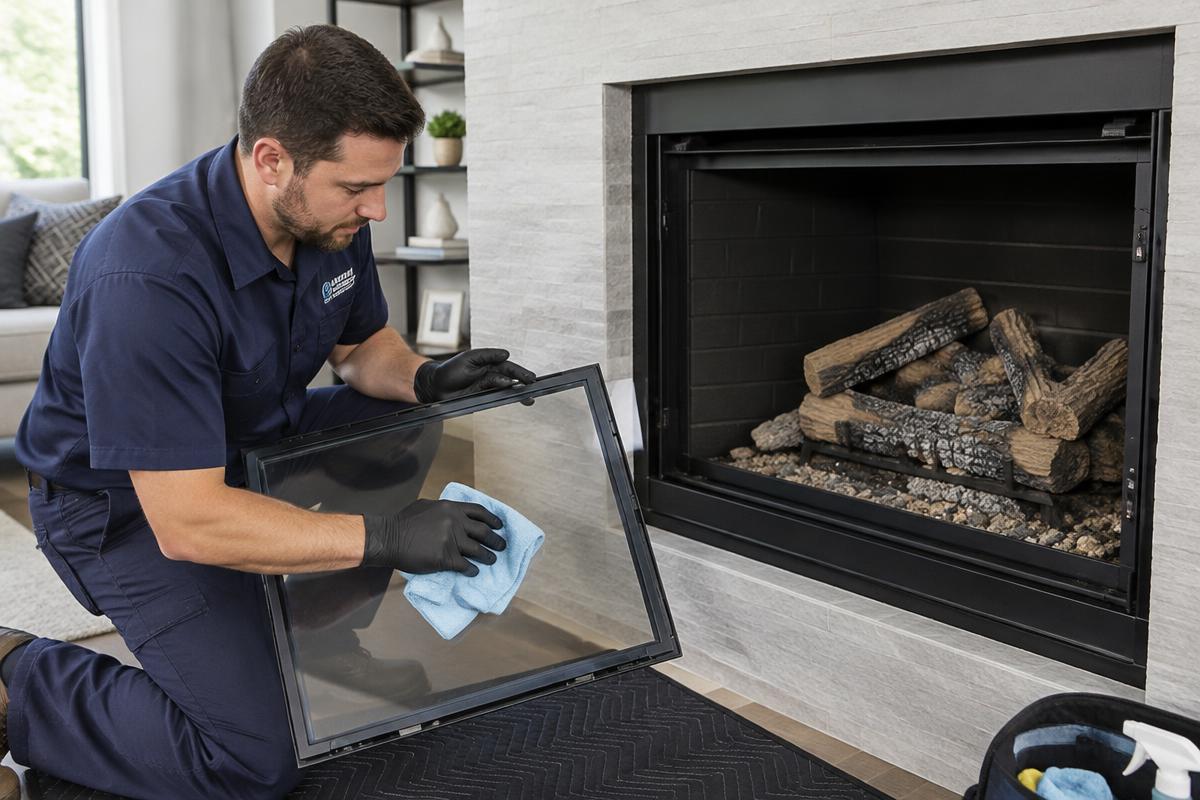
During a typical appointment, our technicians remove and clean the safety glass, carefully extract and inspect the ceramic log set, and vacuum out the lower control compartment. We dislodge lint and fine pet hair that inevitably settle around the burner tray and blower fan, which can otherwise trigger unpleasant burning odours or cause motor bearings to overheat. Furthermore, we assess the structural integrity of the burner ports, ensuring that the tiny openings delivering gas remain completely clear of carbon deposits or corrosion. This attention to detail restores balanced flame presentation across the full burner.
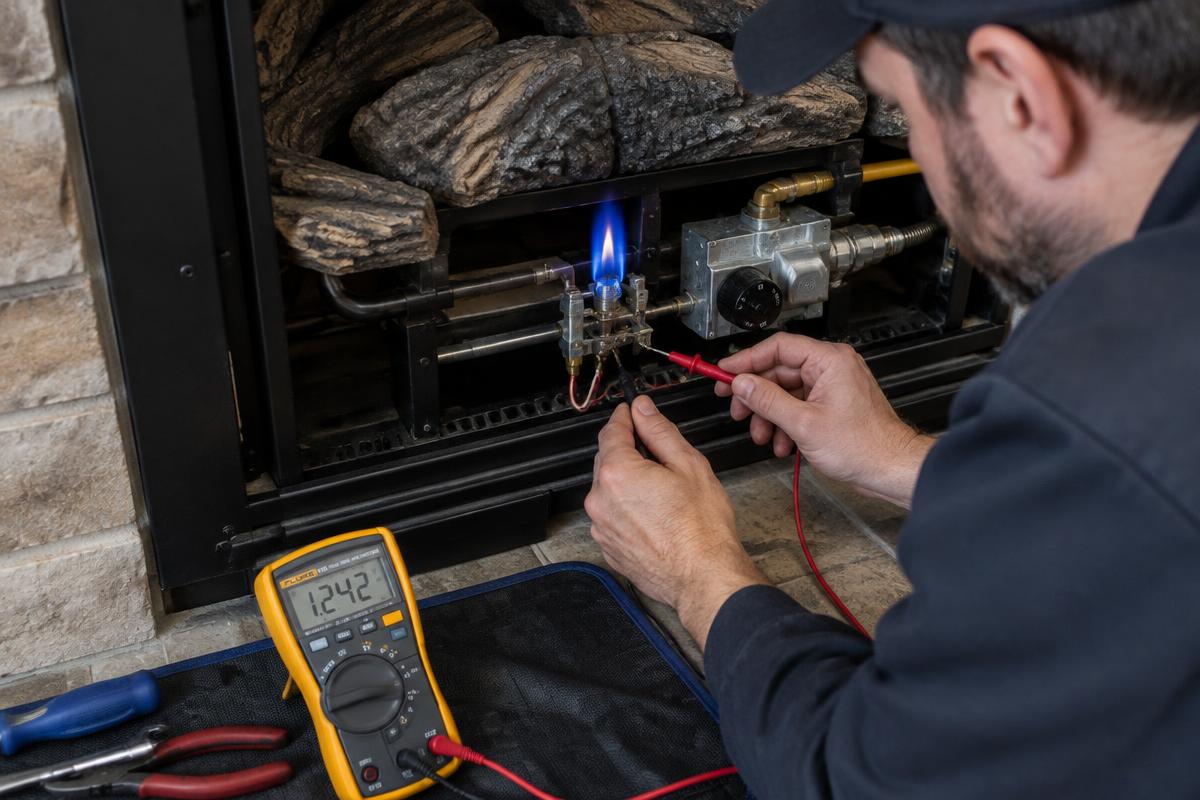
We also test your pilot assembly, ignition switch, and electrical safety circuits using sensitive diagnostic meters. Even tiny fluctuations in millivolt production from a heating thermocouple or thermopile can cause annoying intermittent shutdowns or total pilot dropouts. By measuring these components under active load, we catch weakening components before they leave you without heat during a freezing weekend. Our work concludes with a comprehensive check of all shut-off valves, gas fittings, and safety limit switches, leaving you with complete peace of mind.
- Deep mechanical cleaning of the burner pan, air mixer, and pilot hood.
- Removal and treatment of cloudy white mineral film from the ceramic glass panel.
- Inspection and electrical testing of the thermocouple, thermopile, and electronic ignition.
- Clearing lint, dust, and pet dander from convection blowers and control bays.
- Verification of main gas supply pressures and safety shut-off valves.
Professional care to keep your hearth heating efficiently, safely, and cleanly throughout the coldest Ontario winters.
Self-check
Warning signs you need gas fireplace maintenance
Persistent Soot on Logs or Glass
Black carbon powder collecting on the ceramic logs or viewing glass indicates incomplete combustion. This happens when the fuel-air mixture is miscalibrated or burner ports are choked, wasting gas and generating elevated carbon monoxide.
Pilot Light Frequently Drops Out
A standing pilot that repeatedly snuffs out usually signals a failing thermocouple, a weak thermopile, or a drafts issue. When voltage drops below safe operational thresholds, the safety valve immediately shuts down fuel delivery.
Delayed Ignition with Loud Bang
If your fireplace hesitates for several seconds after switching it on before igniting with an audible thump, gas is pooling inside the chamber before catching flame. This dangerous condition requires prompt professional adjustment.
Pungent or Burning Odours
While a slight dusty smell is normal during the first autumn startup, sharp, acrid, or sulfur-like smells during regular operation signal problem areas like scorching dust on blower motors, wiring insulation damage, or gas leaks.
Lethargic, Dull Flame Colour
Healthy natural gas flames show a vibrant mixture of lively yellow tips grounded by strong blue bases. If your flame burns entirely dull orange, floats lazily off the burner, or flickers weakly, airflow is restricted.
Cloudy, Etched Glass Panels
A persistent white film on the glass is caused by sulfur and mineral byproducts in burning gas. If left untreated, heat bakes these minerals into the ceramic matrix permanently, ruining glass clarity and weakening the pane.
Why Markham Winters Demand Rigorous Hearth Care
The freeze and thaw cycles characteristic of Markham create harsh conditions for exterior venting systems and building envelopes. Rapid temperature swings in late autumn and mid-winter introduce significant moisture through condensation inside direct-vent termination caps mounted on exterior walls or roofs. When freezing temperatures follow an afternoon thaw, trapped moisture forms ice around vent hoods, restricting combustion air intake or impeding exhaust flow. These hidden blockages can smother your burner flame or cause dangerous exhaust spillbacks.
Cold external air also produces strong downdrafts in chimney chases, especially on older brick homes in neighbourhoods such as Berczy Village or Langstaff. When sub-zero air presses down an uninsulated chase, your gas appliance must work significantly harder to establish a stable draft when starting up. Cold drafts can also cool the pilot light flame below the minimum threshold required to signal the gas valve, causing the entire appliance to lock out automatically. Routine maintenance checks ensure that exterior vent caps, termination screens, and chase seals withstand these seasonal pressures.
Additionally, indoor air during an Ontario winter is continuously recirculated through central furnaces and heat recovery ventilators. Dust, pet fur, and aerosol particles migrate into the open louvres beneath your gas fireplace, settling on high-temperature surfaces. When you fire up the hearth on the first bitter November evening, these accumulated particles cook onto the firebox metal, causing acrid smells and impeding air movement. An annual autumn service eliminates this debris before your heating season kicks into high gear.
- Freeze-thaw cycling can form moisture and ice blockages around outdoor vent terminations.
- Severe temperature drops intensify chimney chase downdrafts and slow down exhaust evacuation.
- Recirculated winter indoor air deposits heavy dust and hair into the lower mechanical bays.
- Thermal expansion and contraction can loosen exhaust collar clamps and mounting brackets.
- Exterior wall termination caps require checking for driving rain and drifting snow intrusion.
Common Root Causes of Gas Hearth Deterioration
Many homeowners believe natural gas burns without leaving any residue, but this is a common misconception. Commercial fuel delivery contains trace hydrocarbons, microscopic particulates, and chemical odorants like mercaptan that gradually leave a thin film over burners and ignition assemblies. If the air shutter setting drifts slightly out of adjustment due to vibration or thermal shifting, the fuel mixture runs overly rich, generating carbon soot that covers logs and coats the internal refractory brick lining.
Another frequent culprit behind sudden system failures is household pests. During the warm summer months when your gas fireplace sits dormant, small spiders and insects crawl into the primary air shutter and burner venturi tubes, drawn by the residual scent of natural gas. Even a tiny cobweb inside an air mixer tube restricts primary air volume, turning a crisp blue flame into a dirty, sooty yellow flare. Without disassembly and vacuuming, this obstruction causes severe soot accumulation and elevated carbon monoxide generation.
Component fatigue also plays a major role in system decline. Thermocouples and thermopiles sit directly inside a hot pilot flame, enduring extreme thermal stress day after day. Over several heating cycles, their protective metallic sheathing oxidizes and their electrical output drops below the threshold required to hold open the internal electromagnetic gas valve. Gaskets sealing the glass front also dry out, become brittle, and lose their airtight seal, drawing uncontrolled room air into the combustion chamber and throwing off the factory burn ratio.
- Air shutter misalignment causing incomplete combustion and thick soot deposits.
- Insect and spider nests obstructing burner venturi tubes during off-season months.
- Thermal wear and oxidation degrading thermocouple and thermopile millivolt generation.
- Worn glass gaskets permitting excess room air to breach the sealed combustion chamber.
- Dust accumulation choking convection fan bearings and reducing room heat distribution.
Our Methodical Inspection and Diagnostic Process
When our technician arrives at your Markham residence, we begin with a comprehensive visual and operational assessment before disassembling any parts. We test the initial flame cycle using your existing thermostat, wall switch, or handheld remote, listening carefully for delayed ignition pops, erratic valve clicks, or motor vibration. We inspect the ceramic glass for hairline stress cracks, clouding, or loose mounting hardware, taking careful notes on the overall operating condition of the appliance.
Once the system is powered down and the gas supply isolated, we open the firebox to examine each internal component. We check the condition of the ceramic fiber logs, looking for signs of cracking or improper placement that could disrupt the intended flame pattern. The burner pan is carefully unbolted so we can evaluate the air mixing chamber underneath. Using calibrated multimeters, we measure both open and closed-circuit voltages produced by your pilot generator, identifying components that are beginning to drift out of acceptable operational limits.
Following internal diagnostics, we turn our attention to the ventilation path and external integrity. We verify that venting runs are properly supported, that clearances to combustible wall framings meet manufacturer requirements, and that termination seals prevent water penetration. Finally, after all cleaning and component servicing is complete, we run a soap bubble leak test on all gas joints and check combustion exhaust with electronic sniffers to guarantee that the system operates cleanly, reliably, and safely.
- Baseline operational testing of switches, remote controls, and pilot ignition timing.
- Careful disassembly and visual inspection of firebox refractory panels and log placement.
- Multimeter analysis of millivolt circuits, thermopiles, switches, and safety sensors.
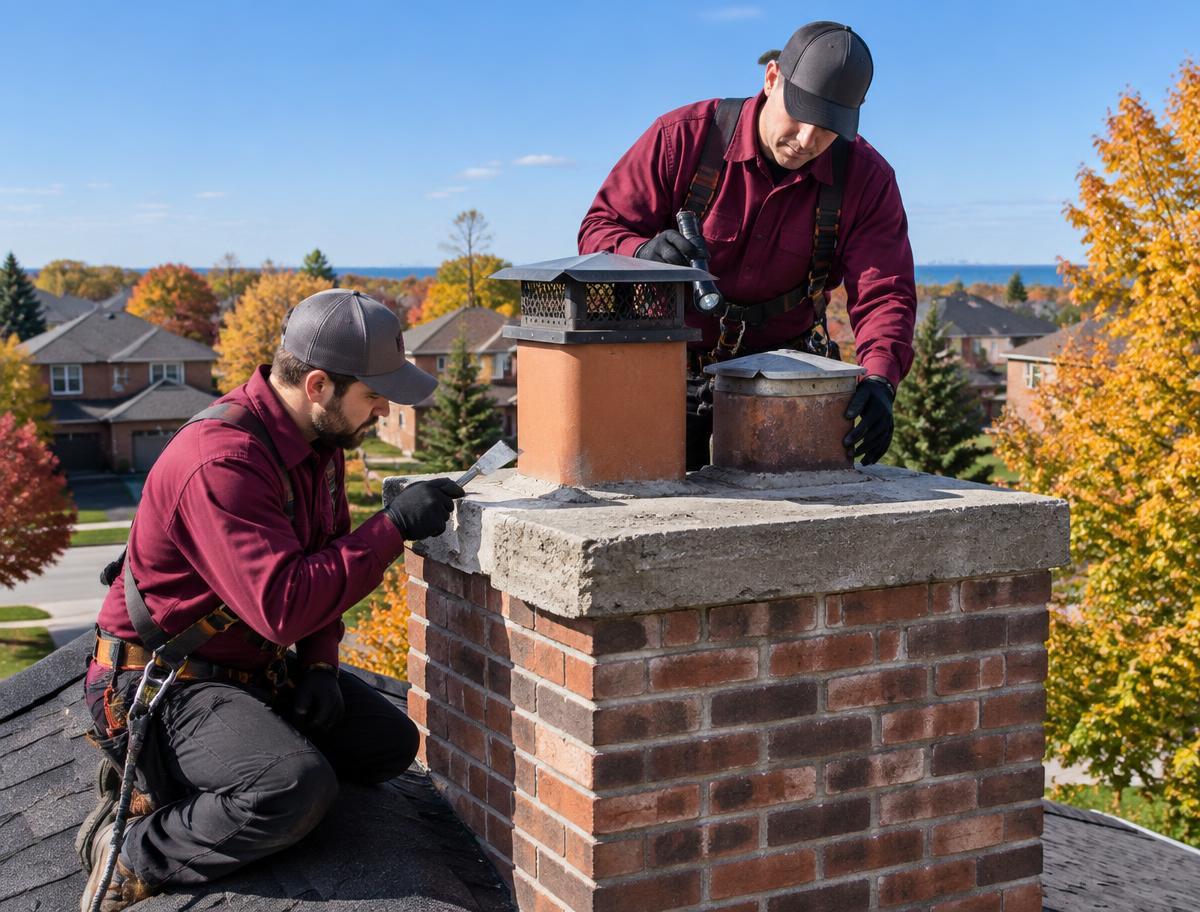
- Inspection of termination caps, venting joints, and exterior building envelope penetrations.
- Gas leak checks at all internal unions, pilot tubing lines, and main control valves.
"I needed a new chimney cap. The installer arrived in Angus Glen, walked me through cap options, and fitted the perfect one with care. Cleanup was spotless and now I feel protected against rain and pests."
Our process
How we handle your gas fireplace maintenance, step by step
- 1
Initial Safety and Functional Assessment
We test run the fireplace, check electrical controls, inspect the glass for structural flaws, and evaluate draft stability prior to beginning disassembly.
- 2
Disassembly and Deep Interior Cleaning
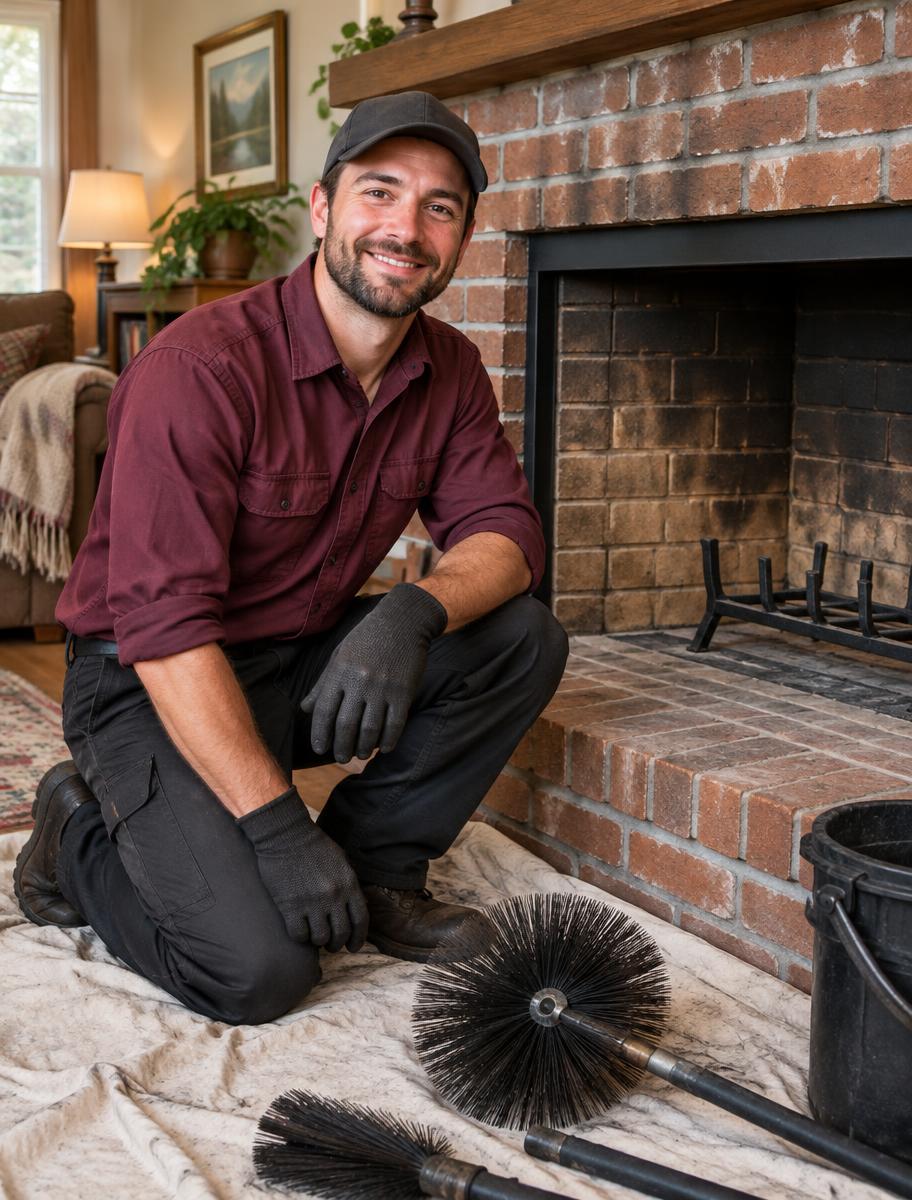
We remove the glass, extract ceramic logs, and thoroughly clean the burner tray, air shutter, and lower convection blower with specialized vacuums and brushes.
- 3
Diagnostic Electrical and Pressure Testing
Using digital multimeters, we test millivolt production across the thermocouple and thermopile, verify safety shut-off sensors, and test gas line integrity under pressure.
- 4
Venting and External Termination Check
We inspect exhaust runs, verify building clearances, and ensure the outdoor termination cap remains completely free of ice, debris, animal nesting, or corrosion.
- 5
Reassembly, Glass Polishing, and Final Test
We polish the ceramic glass, position logs to factory specifications, verify gasket compression, and perform electronic gas leak sweeps during full burner operation.
Safety Protocols, Gas Tightness, and Carbon Monoxide Prevention
Your family's safety is the primary objective of every maintenance service we carry out. Natural gas is an outstanding, reliable heating fuel, but it requires strict containment and proper combustion air management. An untended fireplace with dirty burner ports or restricted venting can produce elevated levels of carbon monoxide, an odourless, invisible, and toxic gas. By maintaining clean burner orifices and verifying flue draft paths, our service drastically reduces the possibility of incomplete combustion.
We also scrutinize the critical perimeter gasket surrounding your viewing glass. Direct-vent fireplaces rely entirely on a hermetically sealed combustion chamber, drawing intake air from outside and exhausting all combustion products outdoors without interacting with your living room air. If the glass gasket dries out or gets pinched during a past cleaning, toxic combustion byproducts can slowly seep into your living space. We inspect this seal meticulously, ensuring the glass clips apply even tension along all edges.
In addition to mechanical checks, we discuss the proper placement and age of carbon monoxide detectors in your home. Ontario building codes mandate working carbon monoxide alarms near sleeping quarters, but having a working detector in the immediate vicinity of your gas hearth provides an essential early line of defence. We follow the highest trade safety best practices on every visit, testing manual gas shut-off valves to confirm they turn smoothly and seal completely when an emergency requires shutting off the line.
- Assessing glass perimeter gaskets to maintain direct-vent airtight integrity.
- Checking for complete combustion to stop the formation of toxic carbon monoxide.
- Verifying manual gas shut-off valve responsiveness and immediate line isolation.
- Advising on optimal carbon monoxide alarm placement throughout your Markham residence.
- Testing spill switches, thermal overload sensors, and pilot flame safety interlocks.
Practical Maintenance Tips for Markham Homeowners
While complex diagnostic tasks and gas pressure adjustments must always be left to experienced professionals, you can take simple steps to keep your gas fireplace in prime condition between service appointments. First, inspect the clear glass front regularly. If you notice a faint white haze forming on the interior glass, schedule a cleaning or use a specialized, non-abrasive gas fireplace glass cleaner. Never use standard ammonia-based window sprays, as the chemical film permanently etches into ceramic glass when subjected to high heat.
Keep the floor area around the lower fireplace louvres vacuumed and free from pet hair, dust bunnies, and children's toys. The lower cavity houses sensitive gas valves, spark modules, and the electrical wiring harness. When thick dust accumulates across these wires, it creates a fire hazard and insulates the valve body, trapping heat and shortening the lifespan of delicate electronic solenoids. Running a soft vacuum brush along the intake louvres once a month keeps this compartment clean.
During warm summer months, consider your pilot light setting. If your fireplace features a standing pilot, leaving it lit helps keep the firebox dry and deters spiders from spinning webs in the burner tubes. However, if your room runs hot or you wish to conserve fuel, you may shut it down, but make sure to schedule a seasonal inspection before firing it up in October. Finally, replace remote control batteries every autumn to prevent battery acid leakage from ruining expensive handheld transmitters.
- Clean glass only with approved, non-ammonia fireplace ceramic glass cream.
- Vacuum lower decorative louvres regularly to prevent dust buildup on gas controls.
- Replace thermostat and remote transmitter batteries at the start of every heating season.
- Never rearrange or reposition ceramic logs from their original factory locator pins.
- Promptly address any flickering pilot lights or lingering fuel odours.
Understanding Maintenance Pricing and Cost Factors
Investing in proactive gas fireplace maintenance is far more economical than dealing with emergency service calls in the middle of a January cold snap. The cost of a thorough maintenance appointment generally reflects the time, technical precision, and specialized diagnostic tools required to evaluate a complex gas appliance. Basic annual servicing that includes safety inspections, burner cleaning, and glass polishing typically falls into a predictable, budget-friendly range for Markham homeowners.
Several key factors influence the overall service cost, beginning with the age and mechanical condition of the unit. A well-maintained fireplace that receives regular care requires less labour time than an older, neglected unit caked in heavy soot and rust scale. If a component like a thermopile, pilot tubing, spark igniter, or fan motor has failed completely, the cost of genuine replacement parts will be quoted separately from the standard maintenance labour rate.
Access and installation design also play a role in pricing. Free-standing gas stoves and standard direct-vent built-ins are generally straightforward to access, whereas custom contemporary fireplaces with large panoramic glass walls, double-sided viewports, or custom architectural surrounds require additional handling care and time to dismantle safely. We provide clear, transparent quotes before any replacement work begins, ensuring you never encounter unexpected charges on your final invoice.
- Appliance condition and whether the system has suffered from chronic soot buildup.
- Need for mechanical part replacements such as thermocouples, switches, or blowers.
- Complexity of the fireplace design, including multi-sided or oversized glass panels.
- Accessibility of exterior termination caps for venting and chase inspections.
- Urgency of the service request during peak early winter heating demand.
Selecting a Reputable Gas Hearth Specialist in Markham
When inviting a technician into your home to work on a gas appliance, selecting a knowledgeable, dedicated professional is essential. Because gas fireplaces involve volatile fuels, household electrical currents, and dangerous exhaust gases, you should never entrust maintenance to an unvetted general handyman. Look for an established local business with a verifiable physical footprint right here in Markham that understands the regional housing stock and local building practices.
A trustworthy service contractor communicates clearly, arrives with proper diagnostic gear, and takes time to answer your questions thoroughly. They should treat your home with total respect, laying down protective drop cloths across hardwood flooring and wearing boot covers to protect your carpets. Be wary of contractors offering extremely cheap, ten-minute quick checkups, as these rarely involve pulling the burner assembly, measuring electrical circuits, or checking exterior vent integrity.
As an independent service company based at 4418 Highway 7 East, Markham Chimney Services focuses entirely on delivering meticulous craftsmanship, unbiased advice, and personalized care. We do not rush through appointments to hit sales quotas, nor do we push high-pressure replacements when a straightforward cleaning or tune-up will safely resolve your issue. Choosing a local, dedicated neighbourhood specialist guarantees honest service and dependable warmth for your home year after year.
- Select dedicated hearth and chimney specialists over general property handymen.
- Confirm the contractor utilizes precision diagnostic meters and leak-detection equipment.
- Ensure the team uses drop cloths and floor protection to keep your home spotless.
- Seek clear, upfront price estimates without hidden fees or high-pressure upselling.
- Value independent local companies with deep ties to the Markham community.
Average pricing in Markham
$189 – $389
- Inspection / diagnostic
- $129 – $189
- Typical time on site
- 1 to 2 hours typical appointment duration
- Parts and materials
- Replacement thermocouples, thermopiles, blowers, gaskets, and remote receivers quoted separately
- What moves the price
- Appliance age and overall level of soot or rust buildup · Accessibility of the firebox, venting, and exterior termination cap · Need for mechanical or electrical replacement parts
Estimated local market range, not a quote. All estimates are in Canadian dollars and exclude 13% Ontario HST. Your exact price is confirmed before any work begins.