When your Heat & Glo gas fireplace fails on a frigid January evening in Markham, your home loses both its coziest gathering spot and an essential auxiliary heat source. Heat & Glo units are renowned for their sophisticated engineering, featuring advanced intermittent pilot ignition systems, sealed combustion chambers, and delicate electronic controls. However, complex gas appliances require dedicated attention when electrical components fail, pilots refuse to ignite, or ceramic glass clouds over. As an independent chimney and fireplace maintenance company located at 4418 Highway 7 East, Markham Chimney Services delivers meticulous troubleshooting, cleaning, and component repair tailored specifically to the design nuances of these popular heating units.
Our team treats gas fireplace repair as an uncompromising safety discipline. Whether your fireplace sits in a mid-century bungalow in Unionville, a multi-storey home in Bayview Glen, or an executive residence in Angus Glen, we focus on safe operation, thermal efficiency, and long-term durability. We are not an equipment dealership or manufacturer-authorized franchise; we are an independent service provider focused purely on diagnosing your system accurately, sourcing quality replacement parts, and restoring your comfort without high-pressure sales tactics. From clearing clogged pilot orifices to fixing intermittent remote receiver communication, we ensure your living space stays warm, secure, and worry-free throughout Ontario's harshest winter months.
Heat & Glo Fireplace Repair: visit summary
Heat & Glo Fireplace Repair: glass, burners, pilots and controls cleaned and serviced, then relit and flame-checked. Serving Markham and the Greater Toronto Area (GTA). The estimated local market range is $229 – $649, not a fixed company rate. The final scope and quote are confirmed before work begins.
| Estimated market range | $229 – $649. All estimates are in Canadian dollars and exclude 13% Ontario HST. |
|---|---|
| Typical time | 1 to 2.5 hours typical |
| Price factors | Whether the issue requires basic sensor cleaning versus full ignition module replacement; Accessibility of the firebox, control compartment, and exterior direct-vent terminal; Specific age and electronic complexity of the Heat & Glo ignition architecture |
| Routine signs to discuss | Continuous Ignition Clicking Without Flame; Pilot Lights but Main Burner Drops Out; Soot Deposition on Logs and Glass; Unpleasant Gas or Burning Odours; Unusual Screeching or Vibrating Blower; Unresponsive Wall Switch or Remote |
Understanding Heat & Glo Gas Fireplace Technology in Your Home
Heat & Glo pioneered direct-vent gas technology, changing the way modern houses vent combustion by-products without needing a traditional masonry chimney. Inside your Markham living room, a direct-vent Heat & Glo fireplace draws outdoor air for combustion through an outer coaxial pipe, while expelling exhaust gases safely outdoors through an inner pipe. This balanced flue design preserves indoor air quality and stops drafts from entering your home. Understanding this sealed ecosystem is crucial when troubleshooting, because even a minor imbalance in venting air pressure or a faulty gasket can prevent the main burner from lighting.
Many local residences feature units fitted with proprietary IntelliFire or IntelliFire Plus ignition modules. Unlike traditional fireplaces that maintain a continuously burning standing pilot light, these electronic systems spark only on demand to conserve natural gas. While highly efficient, electronic control modules rely on precise electrical resistance, clean flame-sensing rods, and dependable household power. When dust builds up around the pilot assembly or low-voltage wiring loosens, the module shuts down gas delivery as a safety precaution. Resolving these issues requires systematic testing of electrical currents, microamp signals, and gas supply pressure.
Beyond the burner assembly and electronic controls, Heat & Glo fireplaces incorporate heat-resistant ceramic glass, multi-speed convection blowers, and decorative ceramic fiber logs. Each component must work in harmony to produce the gentle, radiant heat homeowners expect. If soot coats the refractory brick panels or the variable-speed blower rattles against its housing, heating performance degrades quickly. Our independent repair services address every mechanical, electrical, and aesthetic detail, helping your fireplace operate just as the engineers originally intended.
- Direct-vent coaxial pipe configurations ensuring dedicated room-sealed combustion
- IntelliFire and intermittent pilot ignition circuits requiring specialized testing
- Convection blowers and heat exchangers designed for rapid room warming
- Flame rectification sensors that automatically safeguard against gas leaks
Restoring the warmth, efficiency, and quiet reliability of your Heat & Glo gas fireplace across Markham.
Self-check
Warning signs you need heat & glo fireplace repair
Continuous Ignition Clicking Without Flame
The electronic igniter sparks repeatedly against the pilot hood, but no flame ignites or the spark stops after several attempts due to a clogged pilot orifice or closed fuel solenoid.
Pilot Lights but Main Burner Drops Out
The pilot flame ignites successfully, but the main burner extinguishes within three to ten seconds because a dirty or oxidized flame sensor fails to transmit its microamp signal.
Soot Deposition on Logs and Glass
Dark, velvety carbon soot coats the ceramic fiber logs or clouds the inner glass, signaling incomplete fuel combustion, misaligned log placement, or insufficient combustion air intake.
Unpleasant Gas or Burning Odours
A lingering smell of rotten egg mercaptan or persistent burning dust indicates unburnt fuel escaping or overheated electrical wiring beneath the firebox, requiring an immediate shutdown.
Unusual Screeching or Vibrating Blower
The convection circulation fan emits loud squealing, grinding, or rattling sounds, pointing to worn motor bearings, unbalanced fan blades, or heavy debris buildup inside the housing.
Unresponsive Wall Switch or Remote
Flipping the wall switch or pressing your handheld remote produces no response from the control valve, indicating corroded low-voltage wire connections, dying receivers, or dead backup batteries.
Why the Markham Freeze-Thaw Climate Challenges Gas Fireplaces
Markham experiences dramatic weather shifts between late autumn and early spring, with outdoor temperatures frequently cycling above and below the freezing mark. This relentless freeze-thaw cycle directly influences the direct-vent terminals mounted on the exterior brick or siding of your home. Heavy snowfall, freezing rain, and wind-driven sleet can ice over venting caps, restricting the intake of fresh combustion air or trapping exhaust gases. When air movement is restricted, built-in vacuum switches or thermal safety limiters instantly disable your Heat & Glo fireplace.
Moisture also takes a heavy toll on cold metal components. During rapid temperature swings, condensation naturally forms inside the exterior termination cap and runs backward down the vent run toward the appliance chassis. Over several seasons, this corrosive moisture causes oxidation on flame sensor pins, ignition electrodes, and internal structural brackets. If moisture penetrates the pilot bracket, rust flakes can fall directly into the tiny gas orifice, obstructing fuel flow and causing persistent clicking noises without actual ignition.
Furthermore, cold Canadian winter drafts can plunge through vent pipes when an electronic pilot is off, creating a heavy column of dense, chilled air inside the firebox. When you call for heat on a sub-zero morning, the rising warm exhaust can struggle to push through this cold plug, producing delayed ignition or weak, lifting flames. Understanding these regional climate patterns enables us to diagnose ignition delays, draft lockouts, and pilot corrosion with local precision rather than applying generic troubleshooting rules.
- Exterior termination caps prone to frost, ice dams, and wind obstruction
- Condensation runoff accelerating rust on internal pilot and burner parts
- Cold chimney effect stalling flue draft during sudden sub-zero snaps
- Thermal expansion stressing ceramic glass gaskets and metal seams
Root Causes of Heat & Glo Gas Fireplace Breakdowns
Fireplace failures rarely occur spontaneously; they usually stem from gradual wear, environmental contamination, or electrical degradation. A primary culprit in Markham homes is dust, pet dander, and household lint accumulating beneath the firebox floor. Heat & Glo units place electronic modules, valve wiring harnesses, and blower fans in the lower control compartment. When household debris insulates these electrical boards, components overheat, circuit paths fail, and blower motor bearings seize up under mechanical strain.
Another frequent source of trouble involves chemical oxidation on the flame rectification sensor rod. As natural gas burns, microscopic mineral deposits form a thin, non-conductive ceramic barrier on the metal rod. The ignition control module must detect a faint microamp electrical current passing through the flame back to ground. Once the sensor becomes coated with oxidation, the system fails to verify the flame is lit, prompting the gas valve to shut off within seconds to prevent raw fuel accumulation.
Aging mechanical components also play a significant role. Gas control valves contain delicate internal diaphragms and solenoids that move every time the fireplace cycles on and off. Over years of steady operation, rubber seals stiffen and electrical solenoids develop high resistance, preventing the valve from opening reliably. Similarly, wall switches and remote receiver boxes suffer from contact corrosion, leading to intermittent power interruptions that leave homeowners tapping the switch repeatedly in search of warmth.
- Contaminant buildup on the flame sensor preventing ignition confirmation
- Household debris restricting air circulation around control modules
- Stiffening valve diaphragms and failing 24-volt or 3-volt solenoids
- Corroded wall switch contacts and degraded remote control receivers
Our Methodical Diagnostic and Repair Process
When our technicians arrive at your Markham residence, we begin with a thorough visual survey and baseline safety check. We inspect the exterior vent termination for blockages, examine the surrounding clearances, and check the unit for gas odour or soot deposits on the ceramic glass. Before opening any sealed panels, we shut down electrical power and isolate the fuel supply to create a completely safe work environment, protecting your home's flooring and adjacent furnishings with protective drop cloths.
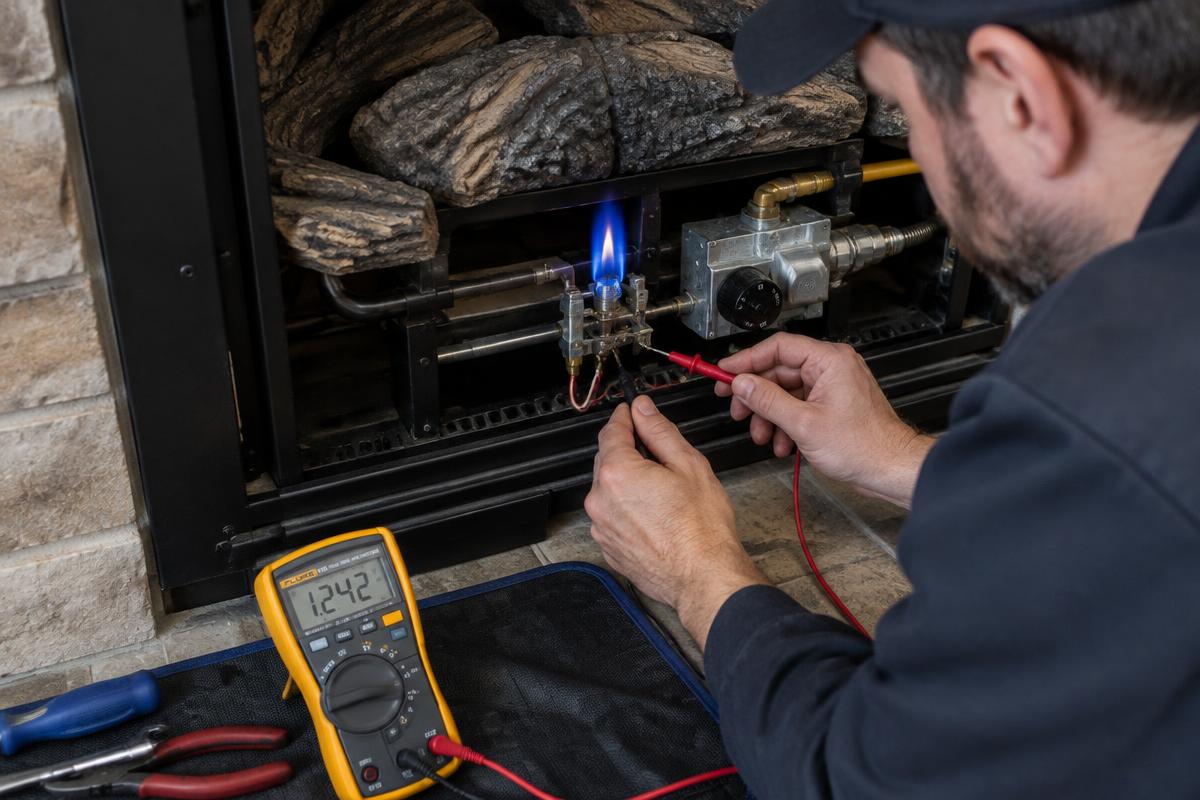
Next, we methodically test the electrical and mechanical circuits using sensitive diagnostic meters. We verify that incoming line voltage matches factory tolerances, test the ignition control module's spark generation, and measure the electrical resistance across valve solenoids. If your unit utilizes a standing pilot with a thermocouple or thermopile, we record exact millivolt outputs under load. We also evaluate the gas pressure at both the inlet and manifold ports using a digital manometer to guarantee the burner receives the correct volume of natural gas.
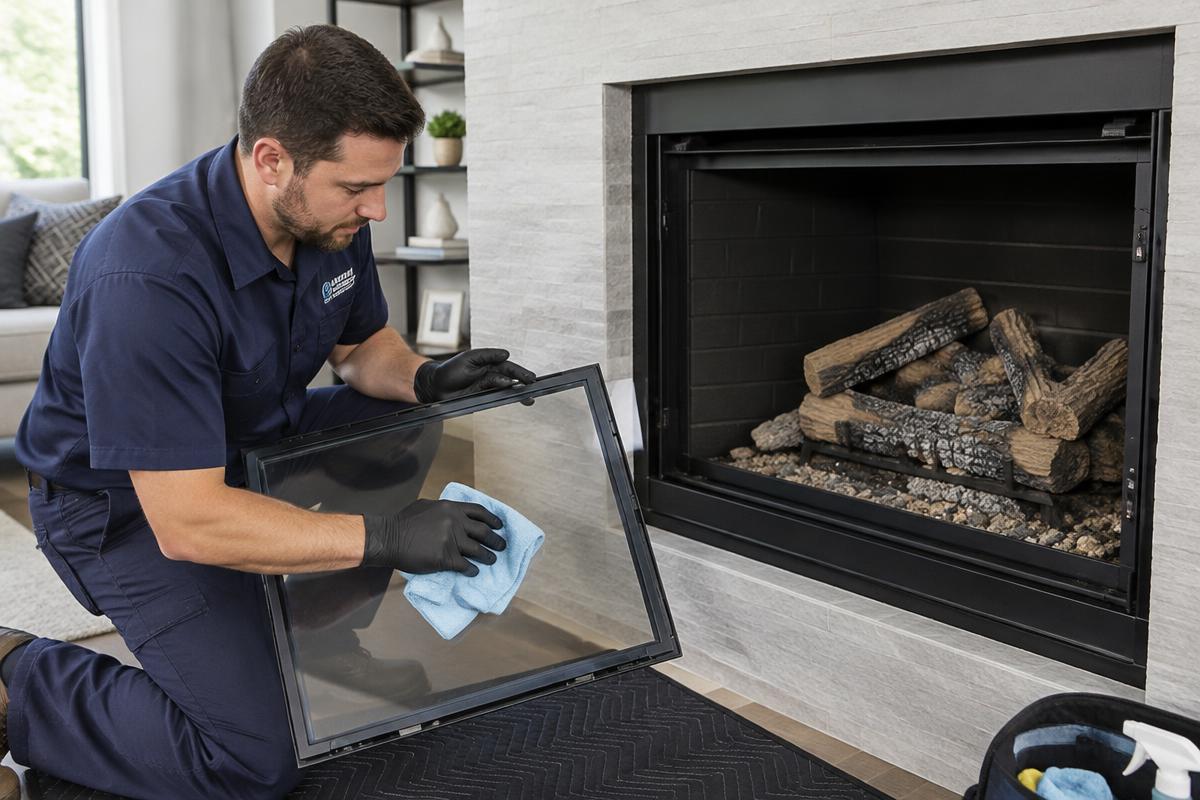
Once we pinpoint the underlying fault, we clean, rebuild, or replace the damaged parts using components engineered to match your specific model. Burner ports are cleaned of debris, the pilot orifice is carefully cleared without enlarging the opening, and electrical terminals are treated to prevent corrosion. Before buttoning up the unit, we clean the heat-resistant glass, align the decorative logs precisely to prevent soot buildup, reseal the firebox door with its high-temperature gasket, and run complete operational combustion cycles.
- Safe isolation of gas supply lines and line-voltage electrical power
- Digital manometer checks for accurate incoming and manifold fuel pressure
- Multimeter testing of flame sensor microamps, coils, and switches
- Complete combustion verification and multi-cycle operational testing
"I booked an annual chimney sweep in Unionville and they arrived right on time. They cleared all creosote, inspected the flue draft, and shared simple maintenance tips. My fireplace runs smoother and safer now."

Our process
How we handle your heat & glo fireplace repair, step by step
- 1
Comprehensive Visual and Safety Survey
We examine the overall fireplace condition, inspect the exterior vent termination for blockages, and shut off electrical power and gas lines before commencing any interior work.
- 2
Diagnostic Electrical and Manometer Testing
Our technicians check incoming line voltage, measure pilot sensor signals, test valve coil resistance, and verify natural gas pressure at both inlet and manifold points with digital instruments.
- 3
Component Cleaning and Precision Repair
We clear blocked pilot orifices, polish oxidized flame rods, vacuum debris from lower valve compartments, and replace worn electronic modules or mechanical valves using compatible components.
- 4
Glass Servicing and Firebox Reassembly
The heat-resistant ceramic glass is treated with specialty gas appliance cream, burner logs are re-indexed to factory layouts, and the glass gasket is verified for airtight containment.
- 5
Combustion Testing and Final Safety Sign-Off
We ignite the system through multiple heating cycles, perform combustible gas leak checks, evaluate carbon monoxide levels, and ensure proper remote and wall-switch operation.
Safety Protocols, Carbon Monoxide, and Best Practices
Natural gas fireplaces deliver exceptional comfort, but they involve combustible fuel, high operating temperatures, and exhaust gases that demand total respect. Carbon monoxide is an invisible, odorless by-product of incomplete combustion. If a Heat & Glo unit develops a cracked heat exchanger, a cracked ceramic glass panel, or a compromised flue gasket, carbon monoxide can migrate into your living space. We advocate adopting CSA-standard and WETT-style safety practices across all maintenance tasks, verifying that every combustion seal remains airtight.
Every household operating a gas appliance should maintain working carbon monoxide alarms on every level of the home, particularly near sleeping quarters. During our service visits, we encourage homeowners to test these detectors routinely and replace units older than five to seven years. When evaluating your fireplace, we use sensitive combustible gas sniffers around all flare fittings, pilot tubes, and internal shut-off valves to ensure no trace of unburnt natural gas escapes into your living room.
Proper venting clearance forms another critical pillar of residential safety. We inspect the perimeter around direct-vent terminations outside your home, confirming that shrubbery, patio furniture, or recent building renovations have not encroached on clearance zones. Ensuring unhindered airflow stops hot exhaust gases from re-entering your home through soffits or nearby windows, protecting both your indoor air quality and the long-term health of your family.
- Thorough combustible gas leak testing at every joint and connection
- Rigorous inspection of ceramic glass assemblies and heat-resistant gaskets
- Verification of exterior clearance zones away from doors and operable windows
- Practical guidance on carbon monoxide detector placement and testing schedules
Practical Maintenance Tips for Markham Homeowners
While complex gas work and internal electrical troubleshooting must always be handled by experienced technicians, homeowners can take several practical steps to keep their Heat & Glo fireplaces running smoothly. First, keep the lower compartment beneath the firebox completely clear. Many homeowners mistakenly store matchboxes, manuals, or decorative items next to the gas valve, blocking airflow and creating fire hazards. Regularly running a gentle vacuum wand along the bottom louvers prevents pet hair from suffocating the electronic module.
Second, monitor the condition of the ceramic viewing glass. A light white or hazy film naturally develops on the glass over time due to mineral release from curing ceramic logs and fuel moisture. If left uncleaned for an entire winter, heat bakes these minerals permanently into the glass surface. Never use ordinary household window sprays containing ammonia, as harsh chemicals can etch the hot glass or release harmful vapours. Use only specialty gas fireplace cream cleaners applied to completely cool glass.
Finally, run your fireplace periodically during the off-season. In damp late-spring or humid summer weeks, turning the fireplace on for five minutes burns off ambient moisture that gathers inside the firebox and keeps internal valve solenoids moving smoothly. If your unit features battery backup packs for power outages, inspect and remove expired AA batteries annually so leaky acid does not corrode the battery holder terminals.
- Vacuum the lower control cavity twice each heating season to remove dust
- Clean hazy viewing glass with specialized gas appliance cream only
- Cycle the burner briefly during summer months to combat humidity and rust
- Replace backup ignition batteries annually before cold weather sets in

Understanding the Factors Behind Fireplace Repair Costs
When planning for fireplace repairs in Markham, understanding how costs are calculated helps you make informed choices. The overall price is shaped primarily by the nature of the failed component, the physical accessibility of the appliance, and the depth of diagnostics required. Simple issues like replacing a thermocouple or clearing a blocked pilot orifice require modest labour and minimal hardware, keeping repairs on the budget-friendly side.
Conversely, failures involving proprietary control boards, variable-speed blowers, or entire gas valve assemblies carry higher component costs. Heat & Glo units utilize specialized electronic modules engineered for distinct ignition timings and safety interlocks. When replacing these boards, sourcing compatible parts ensures reliable operation, but factory replacement components cost more than generic aftermarket hardware. If your fireplace is built into elaborate custom millwork or stone mantels that limit access, service technicians also require additional time to work safely.
Venting repairs or resolving chronic draft failures also affect overall project costs. When direct-vent pipes travel long distances through finished basements or multistory chase walls, tracing air leaks or dislodged pipe sections requires careful investigation. We believe in providing clear, itemized price outlines before any repair work begins, so Markham homeowners never face surprise charges on their final invoice.
- Component category ranging from basic sensors to advanced digital modules
- Ease of physical access to lower valves, blowers, and wall chase runs
- Model age and the current availability of exact manufacturer parts
- Need for secondary venting adjustments or glass gasket replacements
Choosing the Right Fireplace Repair Contractor in Markham
Selecting the right professional to service your gas fireplace is an important choice for household safety and indoor comfort. Because natural gas involves combustion and ventilation risks, you want technicians who approach diagnostics with patience rather than racing through appointments. Look for an independent specialist with a dedicated physical presence in Markham who takes the time to listen to the specific noises, error codes, and operational symptoms your fireplace exhibits.
An established local service provider understands the typical construction styles found across the Greater Toronto Area (GTA), from classic mid-century homes with retrofitted chimneys to modern custom builds featuring horizontal direct-vent pipes. This architectural familiarity enables accurate diagnosis of drafting challenges and electrical issues without unnecessary trial and error. Furthermore, reputable contractors maintain complete transparency regarding their independent status, never misrepresenting their business as a factory dealership while still demonstrating deep technical skill on brand-specific systems.
Always seek out professionals who provide transparent written quotes, practice clean work habits, and prioritize your household's safety above rapid part-swapping. A true specialist will thoroughly check for gas leaks, test carbon monoxide margins, explain the repair process in plain language, and leave your living room as tidy as they found it. Choosing an independent local company guarantees personalized attention and genuine accountability whenever winter weather challenges your heating system.
- A grounded local presence rooted in the Markham community
- Transparent explanations without technical jargon or hard-sell tactics
- Careful diagnostic steps backed by digital pressure and electrical testing
- Meticulous respect for your home using clean mats and careful cleanup
Average pricing in Markham
$229 – $649
- Inspection / diagnostic
- $149 – $199
- Typical time on site
- 1 to 2.5 hours typical
- Parts and materials
- Gas valves, control modules, blowers, pilot assemblies, and glass gaskets
- What moves the price
- Whether the issue requires basic sensor cleaning versus full ignition module replacement · Accessibility of the firebox, control compartment, and exterior direct-vent terminal · Specific age and electronic complexity of the Heat & Glo ignition architecture
Estimated local market range, not a quote. All estimates are in Canadian dollars and exclude 13% Ontario HST. Your exact price is confirmed before any work begins.