
A malfunctioning gas fireplace can turn an inviting living room into a chilly frustration during a blustery Ontario cold snap. Markham Chimney Services provides specialized diagnosis and repair for Majestic gas fireplaces across local neighbourhoods. While Majestic units are celebrated for their strong heat output and durable firebox construction, age, dust accumulation, and routine wear can lead to stubborn pilots, unresponsive wall switches, or unusual soot formation. Operating as an independent chimney and fireplace maintenance company located at 4418 Highway 7 East, we deliver transparent, community-centred solutions tailored to the practical needs of Markham homeowners who rely on supplemental gas heat throughout the colder months.
Our approach focuses on identifying the root cause of mechanical and electrical faults rather than recommending hasty, costly replacements. We understand the specific venting layouts, architectural variations, and seasonal temperature swings that affect homes in our corner of the Greater Toronto Area (GTA). Whether your fireplace utilizes a standing pilot light or an electronic intermittent pilot ignition system, our goal is to restore optimal heat transfer, balance your fuel-to-air combustion mixture, and ensure that exhaust gases vent completely outdoors. Through careful troubleshooting, quality replacement components, and meticulous safety protocols, we help you enjoy steady warmth with complete peace of mind.
Majestic Fireplace Repair: visit summary
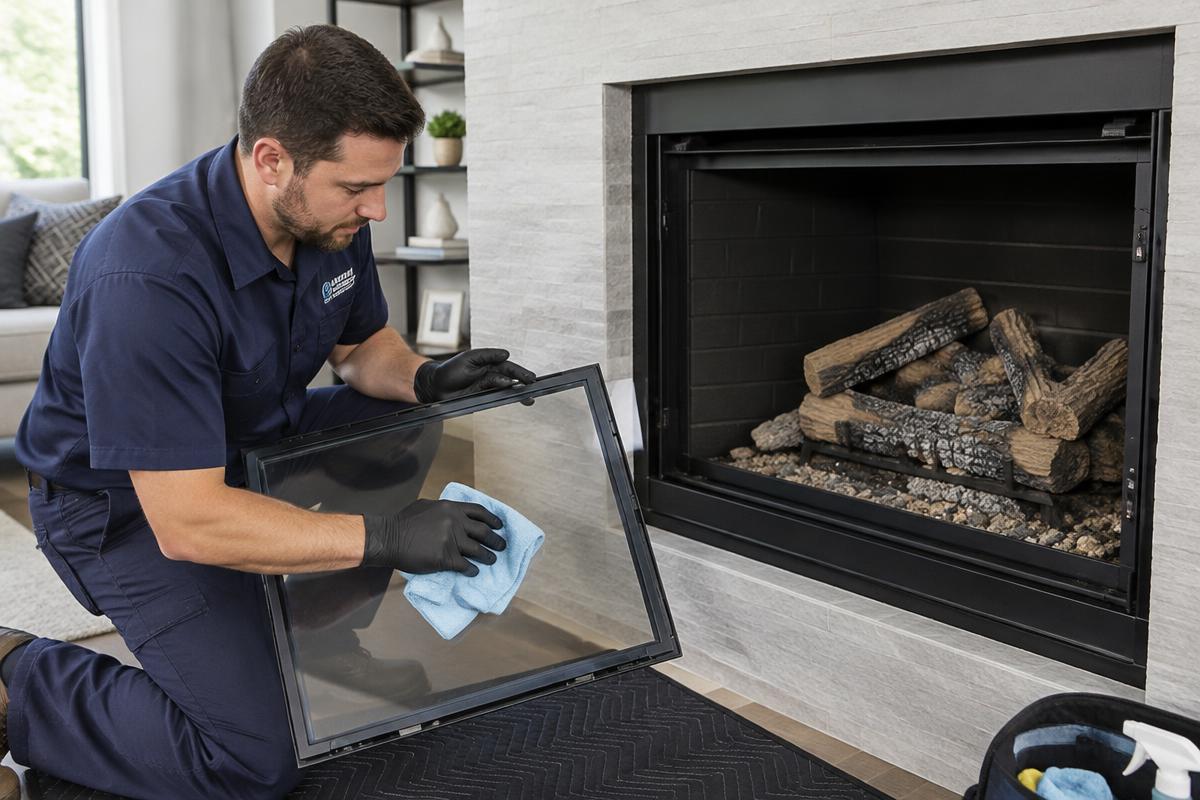
Majestic Fireplace Repair: glass, burners, pilots and controls cleaned and serviced, then relit and flame-checked. Serving Markham and the Greater Toronto Area (GTA). The estimated local market range is $189 – $549, not a fixed company rate. The final scope and quote are confirmed before work begins.
| Estimated market range | $189 – $549. All estimates are in Canadian dollars and exclude 13% Ontario HST. |
|---|---|
| Typical time | 1 to 2.5 hours typical |
| Price factors | Whether the issue requires basic pilot servicing or complete valve replacement; Direct-vent accessibility and condition of exterior wall terminations; Availability and cost of specific mechanical or electrical replacement parts |
| Routine signs to discuss | Pilot Flame Won't Stay Lit; Main Burner Delayed Ignition; Soot Accumulating on Glass and Logs; Unresponsive Wall Switch or Remote; Rattling or Screeching Blower Noise; Faint Gas Odour Near Firebox |
Understanding Your Majestic Gas Fireplace System
Majestic has produced gas fireplaces for decades, spanning traditional builder-grade installations in suburban developments to high-efficiency decorative focal points in modern renovations. As an independent service company, Markham Chimney Services works directly on these specialized heating appliances without brand bias. Most residential Majestic systems operate either as direct-vent installations, pulling outdoor combustion air through a coaxial pipe while venting exhaust through the outer sleeve, or as natural draft vented units connected to a dedicated chimney. Familiarity with these distinct configurations allows us to accurately diagnose operational irregularities.
The internal workings of a Majestic gas fireplace rely on a carefully balanced network of safety sensors, gas control valves, electrical switches, and combustion chambers. In older standing pilot systems, a continuously burning miniature flame heats a thermocouple or thermopile, generating tiny amounts of millivoltage to hold the internal magnetic gas valve open. Modern electronic ignition designs instead utilize control boards, flame-sensing rods, and spark modules that require stable electrical connections and clean contact surfaces. When dust, corrosion, or thermal stress compromises any of these delicate parts, the appliance may shut down completely as a protective measure.
Understanding how your specific unit is built is essential for lasting repairs. We take the time to evaluate the model plate, verify input ratings, inspect the burn pattern across the ceramic logs, and evaluate burner tube integrity. Because Majestic models often feature proprietary bracket configurations or specific millivolt ratings, attempting generic repairs without understanding system specifications can produce poor flame quality or intermittent operation. Our practical, knowledge-based methodology ensures that every adjustment or component swap aligns with original manufacturer tolerances for safe and dependable daily operation.
- Independent servicing for direct-vent, B-vent, and natural draft Majestic models
- Verification of standing pilot assemblies and modern intermittent pilot ignitions
- Detailed examination of ceramic log placement to prevent carbon buildup
- Evaluation of control modules, millivolt valves, and low-voltage wall switches
Practical diagnostics and dependable repairs to keep your Majestic gas fireplace heating your home safely.
Self-check
Warning signs you need majestic fireplace repair
Pilot Flame Won't Stay Lit
If the pilot flame extinguishes the moment you release the control knob, the thermocouple or thermopile is likely oxidized or defective, preventing the internal safety magnet from holding the gas valve open.
Main Burner Delayed Ignition
A noticeable pop, boom, or sudden flash when the main burner lights indicates delayed ignition, usually caused by clogged burner ports, incorrect air shutter adjustments, or a dirty pilot flame failing to transfer fire smoothly.
Soot Accumulating on Glass and Logs
Heavy black soot coating the ceramic logs or viewing window points to incomplete combustion. This issue often results from misplaced logs, restricted air intakes, or venting blockages that trap carbon inside the combustion firebox.
Unresponsive Wall Switch or Remote
When the pilot burns bright but flipping the wall switch produces no flame, the low-voltage millivolt circuit is suffering from high resistance, dirty switch terminals, loose wiring connections, or a weakened thermopile.
Rattling or Screeching Blower Noise
Unusual high-pitched squealing, vibration, or grinding sounds from beneath the firebox indicate that the convection blower bearings are worn, clogged with pet dander, or unbalanced by heavy dust coatings.
Faint Gas Odour Near Firebox
Smelling raw or unburned natural gas near the appliance is an urgent safety concern. This suggests an unseated flare fitting, a leaking control valve seal, or an extinguished pilot venting raw fuel into the living space.
Why the Ontario Freeze-Thaw Cycle Challenges Fireplaces
The climate in Markham presents severe seasonal extremes, oscillating from humid summer heat to sub-zero winter blasts punctuated by frequent freeze-thaw cycles. These rapid temperature changes directly affect the metal components, venting pipes, and exterior terminations of your Majestic gas fireplace. Metal venting contracts and expands repeatedly as the outdoor temperature swings, which can loosen seams, strain gasket seals, or degrade caulking around roof flashings and side-wall termination caps. Over time, moisture intrusion from melting snow can seep into flue terminations, triggering localized corrosion.
Cold snaps also create intense draft dynamics known as the stack effect. In multi-storey Markham homes, cold outdoor air pushes downward against venting pathways when the fireplace is inactive, creating dense pockets of chill inside the firebox. If the venting or pilot assembly is sluggish, lighting the unit on a freezing January evening can cause delayed ignition or pilot outages because the rising warm air struggles to displace the cold plug inside the flue. Furthermore, condensation forms rapidly when hot water vapour, an inevitable byproduct of gas combustion, encounters freezing exterior venting pipe sections.
This condensation is slightly acidic and can attack the galvanized or stainless steel alloys within termination caps, blower assemblies, and pilot brackets if drainage pathways become obstructed. Regular winter cycling also draws fine household dust, pet hair, and airborne fibres across the hot burner chamber, baking residues onto burner ports and primary air shutters. Understanding these local atmospheric conditions enables us to winterize, adjust, and repair your heating appliance so that exterior weather changes do not compromise indoor comfort or mechanical reliability.
- Thermal expansion and contraction loosening exterior vent seals and termination caps
- Stack effect pressure causing downdrafts and difficult cold-weather ignition
- Acidic combustion moisture accelerating wear on uninsulated or exposed metal joints
- Heavy snowfall drifting against low-clearance wall vents and choking combustion intake
Common Mechanical and Electrical Failures in Majestic Units
When a Majestic fireplace ceases to light or hold a flame, the underlying cause is typically traceable to one of several well-documented failure points. In millivolt standing pilot models, degraded thermopiles are a frequent culprit. A thermopile must generate roughly 400 to 750 millivolts to energize the main valve operator; as it oxidizes from continuous flame exposure, its electrical output steadily drops. Once it falls below the minimum operating threshold, the main burner will refuse to ignite, even though the pilot flame remains visibly active.
Another widespread issue involves the accumulation of microscopic carbon deposits and mineral oxides on pilot orifices and flame sensors. When an orifice becomes partially blocked by lint or spider webbing, the pilot flame shrinks, bends away from the sensor, or burns a lazy yellow instead of a sharp, pencil-tip blue. In intermittent pilot systems, an oxidized flame rod cannot rectify the low-amperage alternating current signal back to the ignition board, causing the safety circuit to lock out the system after several failed ignition attempts.
Mechanical switches, remote receivers, and convection blowers also suffer from mechanical wear. Wall-mounted switches can develop high electrical resistance across their contacts, which easily starves a low-voltage millivolt circuit of sufficient current to open the gas valve. Similarly, circulating fan bearings attract carpet dust and pet dander, leading to annoying squealing noises, overheating, or total motor seizure. By testing individual components with precision multimeters and gas pressure gauges, we isolate the exact weak point rather than replacing functional parts unnecessarily.
- Weakened thermopiles and thermocouples failing to open safety gas valves
- Clogged pilot orifices creating small, misdirected, or fluttering flames
- Corroded ignition electrodes or dirty flame rectifiers in electronic systems
- Failing fan motors and dusty thermostatic switches generating loud friction noise
Our Methodical Inspection and Repair Work Process
We believe that every thorough repair starts with clear, step-by-step diagnostics. When our technician arrives at your Markham home, the first step is an initial system assessment, checking the overall physical condition of the fireplace, the glass assembly, and the surrounding clearance to combustibles. We evaluate the homeowner's description of the problem, whether it involves an intermittent shutdown, unusual odours, or poor flame presentation. We then carefully remove the protective safety barrier and tempered or ceramic viewing glass, using proper handling techniques to avoid stress fractures.
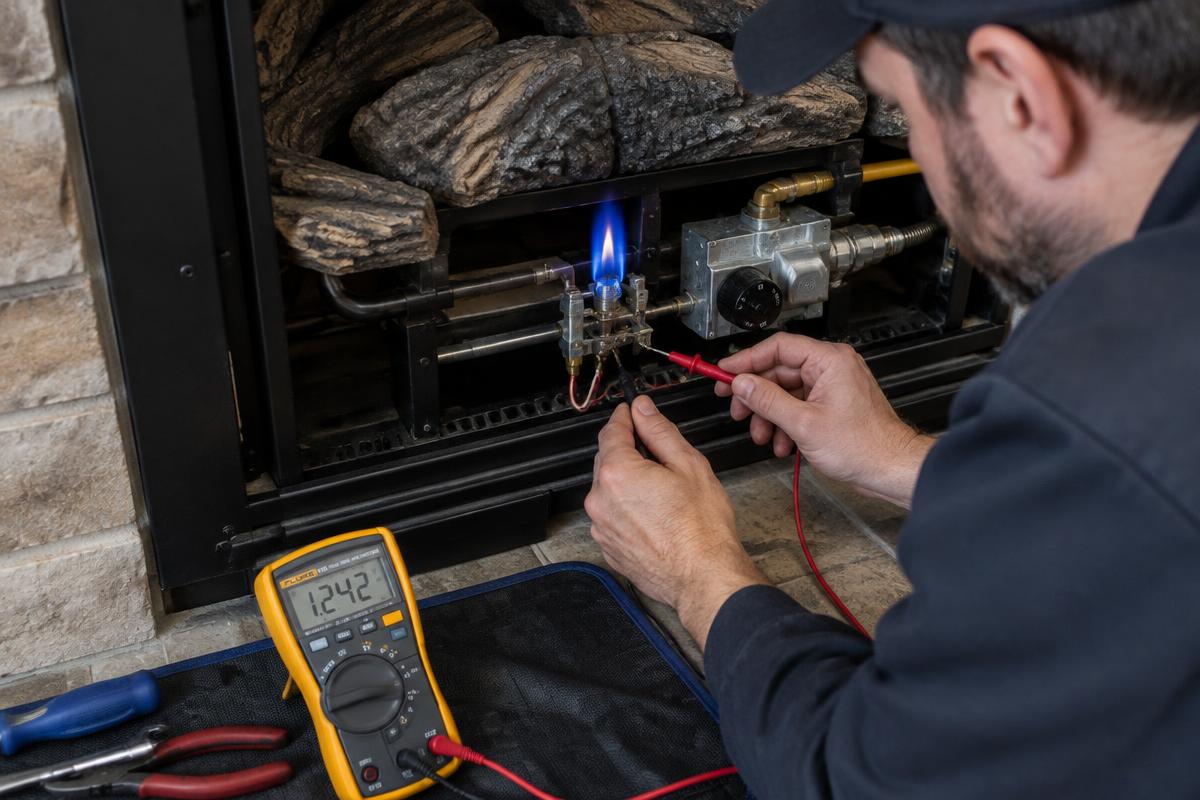
Next, we conduct detailed electrical and mechanical testing. Using a digital multimeter, we measure open and closed-circuit voltages across the thermocouple, thermopile, wall switch, and safety limits. We also verify incoming and manifold gas pressures using a digital manometer, comparing the readings against the specific Majestic rating plate located beneath the burner pan. If the pilot or burner is functioning, we observe the flame pattern, assessing primary air shutter settings to ensure clean, soot-free combustion without dangerous lifting or ghosting off the burner ports.
Once the diagnosis is confirmed, we communicate our findings in plain language before proceeding with repairs. Whether the job requires cleaning the pilot assembly, rewiring a corroded switch, replacing a faulty gas valve, or installing a replacement convection fan, we carry out the work with precision and respect for your home. After installing new components, we reassemble the unit, renew worn door gaskets if needed, polish the heat-resistant glass, and execute a full burn-in test to confirm that all automatic shut-off safety circuits respond without delay.
- Initial clearance, glass seal, and physical firebox condition evaluation
- Manometer testing of natural gas delivery pressure and burner manifold output
- Multimeter analysis of safety sensors, control circuits, and wall switches
- Comprehensive operational burn test to confirm safety shut-off cycling
"I scheduled a full fireplace cleaning before winter. They used professional-grade tools to remove every trace of soot, tested airflow, and provided clear advice on maintenance. My hearth looks brand new and works flawlessly."
Our process
How we handle your majestic fireplace repair, step by step
- 1
Step 1: Safety Assessment & Initial Inspection
We disconnect power, shut off gas supply if needed, inspect glass gaskets, and check firebox clearances to ensure safe working conditions.
- 2
Step 2: Diagnostic Meter & Pressure Testing
Our technician tests millivolt electrical outputs across safety switches and measures gas manifold pressure using a digital manometer to uncover operational faults.
- 3
Step 3: Component Cleaning & Fault Isolation
We remove dust from the pilot assembly, clean the burner tubes, inspect wiring continuity, and confirm which specific component requires adjustment or replacement.
- 4
Step 4: Precision Repair & Reassembly
Faulty sensors, valves, blowers, or switches are replaced with suitable parts, venting seals are verified, and the glass assembly is securely reinstalled.
- 5
Step 5: Full Cycle Safety & Burn Verification
We light the fireplace, monitor flame stability, test safety shut-off circuits, and use handheld instruments to verify that no combustion gases escape into the home.
Venting Passages, Draft Integrity, and Combustion Air
A gas fireplace is only as dependable as the flue pipe that carries its combustion byproducts outside. For direct-vent Majestic fireplaces, proper venting integrity is crucial because the appliance draws outside air for combustion while expelling carbon dioxide, water vapour, and trace combustion gases through an internal pipe. Any separation in the venting joints or degradation of the outer pipe can pull exhaust back into the flame chamber, causing flame smothering, soot buildup on the faux logs, or unburned fuel odours inside your living space.
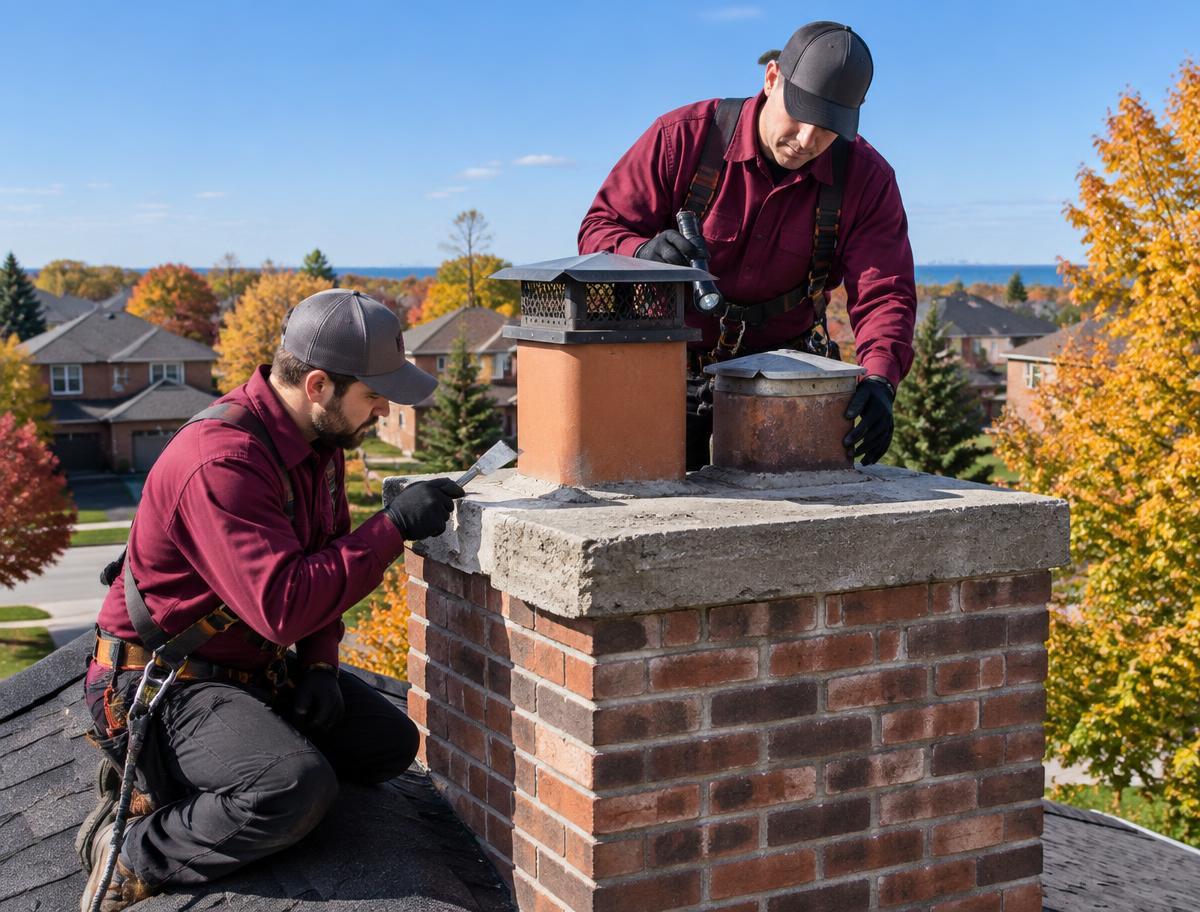
In older Markham residences with natural draft B-vent systems, chimney draft relies entirely on natural thermal buoyancy. When cold outdoor air settles heavily into an uninsulated brick chase or exterior chimney, natural draft can reverse, allowing combustion gases to linger in the firebox or trigger the spill switch safety mechanism. We examine the full visible run of the flue system, inspecting exterior wall caps and roof terminations for debris, bird nests, wasp hives, or physical damage caused by falling branches or heavy winter ice sheets.
Venting clearances must also be maintained according to strict safety principles. Over the years, exterior landscaping may grow too close to sidewall vent terminations, or newly installed deck additions might infringe upon minimum clearance boundaries. We verify that exhaust terminations maintain proper clearance from openable windows, doors, meters, and inside corners. Ensuring that air intake and exhaust routes are clear protects your family from venting compromises and guarantees that your Majestic fireplace operates with maximum heating efficiency.
- Inspection of direct-vent coaxial pipe runs for secure mechanical joints
- Verification of termination cap clearances from snow drifts and building openings
- Checking natural draft B-vent flues for thermal downdrafts or blockages
- Evaluation of safety spill switches and internal flue restrictor plates
Home Safety Protocols and Carbon Monoxide Prevention
Carbon monoxide is a colourless, odourless, and tasteless gas produced by the incomplete combustion of hydrocarbon fuels like natural gas. In a properly maintained Majestic gas fireplace, fuel burns cleanly and all combustion gases are securely routed to the outdoor environment. However, if burner ports become clogged with debris, primary air shutters become misaligned, or the firebox glass gasket fails, carbon monoxide can escape into your living space. Safety is the central pillar of our repair philosophy, guiding every adjustment we perform.
While we work strictly as an independent service provider without claiming manufacturer authorization, our repair techniques adhere to recognized CSA and WETT-style safety principles. We scrutinize the firebox sheet metal for stress cracks, inspect gasket ropes for airtight compression, and confirm that the mechanical pressure relief latches on the top or bottom of the glass frame function correctly. These latches are engineered to relieve pressure in the rare event of delayed ignition, preventing the glass panel from shattering violently into the living room.
We also urge every Markham homeowner to treat carbon monoxide alarms as essential safety partners to their heating appliances. Detectors should be installed on every sleeping level of the home and positioned outside bedroom hallways, as well as in the general vicinity of the fireplace room. During our service visits, we test ambient air conditions using sensitive handheld detectors to verify that no trace combustion gases leak into the room while the fireplace reaches its full operating temperature.
- Airtight inspection of firebox gaskets, viewing glass, and relief spring latches
- Handheld ambient testing for trace combustion gas leaks during operation
- Adherence to proven CSA and WETT-style safety standards and clearance rules
- Homeowner guidance on optimal carbon monoxide alarm placement and battery testing
Proactive Maintenance Tips for Markham Homeowners
While complex mechanical repairs and electrical troubleshooting must always be handled by qualified heating professionals, homeowners can take straightforward steps to preserve their Majestic fireplace between service calls. One of the most effective practices is keeping the lower control compartment clean. This louvered or hinged cavity beneath the firebox houses delicate gas valves, wiring harnesses, and blower impellers. Vacuuming this area with a soft brush attachment every autumn removes dust bunnies and pet fur before they can be sucked into fan bearings.
Observing the appearance of your pilot and main burner flames is another practical habit. A healthy pilot flame should burn a steady, crisp blue, wrapping neatly around the upper tip of the thermocouple or thermopile. If you notice the pilot flickering, turning mostly yellow, or lifting off the burner base, shut down the system and schedule a service visit. Similarly, check the ceramic glass panel regularly; a faint white haze is normal and can be cleaned with ammonia-free gas fireplace glass cleaner, but thick black soot indicates a serious air-fuel imbalance.
Finally, be mindful of battery-powered components. Many Majestic models equipped with remote controls or electronic ignition systems rely on standard AA or AAA battery packs located in the lower compartment or wall receiver. Replace these batteries at the beginning of each heating season to prevent acid leaks from corroding the circuit terminals. Sticking to these minor preventative habits ensures smoother startups on freezing winter nights and prolongs the service life of major mechanical assemblies.
- Gently vacuum the lower control compartment and blower housing each autumn
- Clean ceramic glass exclusively with approved non-abrasive, ammonia-free polish
- Replace remote control and battery backup cells every autumn before freeze-up
- Monitor flame colour, watching for heavy yellow tipping or unusual soot patterns
Choosing a Dependable Local Fireplace Repair Specialist
Finding an honest, skilled technician to repair your Majestic fireplace should not feel like a gamble. When selecting a service company in Markham, prioritize firms that operate with full transparency, provide upfront pricing, and hold permanent roots in your community. A dependable technician should possess a comprehensive understanding of gas appliance mechanics, electrical circuitry, and chimney venting dynamics, explaining exactly why a component failed rather than immediately pushing for an expensive whole-unit replacement.
Be cautious of companies that offer unrealistically low diagnostic rates only to invent multiple inflated repair requirements once they enter your home. A professional provider conducts thorough diagnostic testing with calibrated instruments, explains the readings to you, and presents clear repair options with itemized parts and labour costs. Furthermore, selecting a local contractor rooted along Highway 7 guarantees prompt response times when an emergency cold front strikes and your supplemental heat source suddenly gives out.
Markham Chimney Services takes pride in being an accessible, independent service partner for our neighbours. We do not engage in high-pressure sales tactics or push unneeded modernizations. Instead, our objective is to provide objective technical assessments, replace worn Majestic parts with dependable components, and ensure that your home stays safe, warm, and comfortable throughout our long Canadian winters. Reliable warmth comes from careful craftsmanship, practical expertise, and a genuine commitment to safety.
- Clear, itemized quotes outlining diagnostic fees, labour, and replacement parts
- Local technicians familiar with Markham housing styles and local building codes
- Transparent explanations of component wear supported by meter test readings
- Focus on cost-effective repairs rather than aggressive unit replacement sales
Average pricing in Markham
$189 – $549
- Inspection / diagnostic
- $129 – $169
- Typical time on site
- 1 to 2.5 hours typical
- Parts and materials
- Replacement thermopiles, pilot assemblies, gas valves, blowers, and wall switches
- What moves the price
- Whether the issue requires basic pilot servicing or complete valve replacement · Direct-vent accessibility and condition of exterior wall terminations · Availability and cost of specific mechanical or electrical replacement parts
Estimated local market range, not a quote. All estimates are in Canadian dollars and exclude 13% Ontario HST. Your exact price is confirmed before any work begins.