
A cold winter evening in Markham is precisely the wrong time to discover that your fireplace refuses to light. When an Osburn gas fireplace begins short-cycling, producing strange odours, or failing to ignite, your living space loses its primary source of cosy warmth and peace of mind. Markham Chimney Services operates from our central location at 4418 Highway 7 East, bringing dedicated diagnostic evaluation and restorative repairs straight to your doorstep. We are an independent service company focused on diagnosing mechanical faults, resolving ignition failures, and restoring balanced venting performance so your hearth operates smoothly throughout the coldest stretches of the year.
Operating a gas hearth in Ontario requires an appreciation for how shifting weather conditions and mechanical wear interact over time. Freeze-thaw cycles stress venting joints, seasonal humidity corrodes delicate electrical contacts, and dust accumulation can smother pilot assemblies. Whether your home is a mid-century bungalow in Unionville, a split-level residence in Cornell, or a modern build along Avenue Road, our team understands local housing styles and heating demands. We bring careful hands, respectful service, and systematic troubleshooting to every appointment, making sure your Osburn heating system operates with true efficiency and strict adherence to residential combustion safety standards across Markham and the Greater Toronto Area.
Osburn Fireplace Repair: visit summary
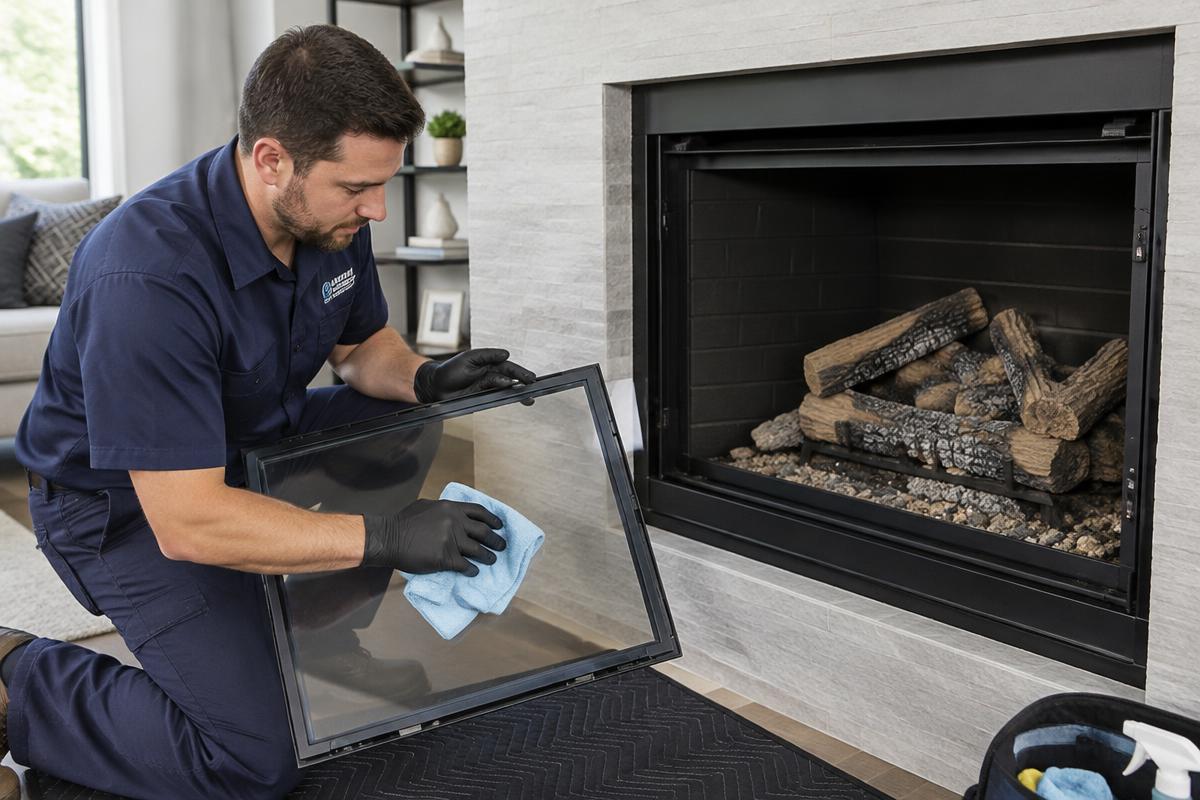
Osburn Fireplace Repair: glass, burners, pilots and controls cleaned and serviced, then relit and flame-checked. Serving Markham and the Greater Toronto Area (GTA). The estimated local market range is $229 – $589, not a fixed company rate. The final scope and quote are confirmed before work begins.
| Estimated market range | $229 – $589. All estimates are in Canadian dollars and exclude 13% Ontario HST. |
|---|---|
| Typical time | 1 to 2.5 hours typical service duration |
| Price factors | Nature of the failure: simple mechanical cleaning versus specialized electronic or gas valve component replacement; Accessibility of the fireplace chassis, insert installation depth, and complex custom surround configurations; Condition of venting components, requirement for replacement direct-vent gaskets, or exterior termination service |
| Routine signs to discuss | Pilot Flame Won't Stay Lit; Soot Accumulating on Glass or Logs; Unusual Sulphur or Burning Odours; Convection Blower Grinding or Humming; Delayed or Explosive Burner Ignition; Burner Shuts Off After Brief Operation |
Understanding Your Osburn Fireplace System
Osburn fireplaces are celebrated for their robust steel construction, heavy ceramic glass assemblies, and efficient heat output. These appliances combine balanced draft venting with finely calibrated gas valves and burner trays designed to deliver dependable supplemental heating. Because Osburn units often feature intricate pilot generators, thermopiles, and variable blowers, an issue in one small component can disrupt the entire heating sequence. When a fireplace fails to turn on, the issue is rarely random; it is usually an electrical millivolt drop, a blocked air shutter, or an unseated thermocouple.
Gas fireplaces function as precision closed-loop appliances where air intake, fuel delivery, and exhaust clearance must exist in total harmony. Direct-vent Osburn systems pull fresh combustion air from outside while exhausting spent gases through a co-axial or co-linear pipe system. If the pressure within this loop alters due to gasket deterioration or outer pipe movement, the burner will sputter or trip safety cut-off switches. Recognizing how each sub-system interacts allows our technicians to pinpoint root causes rather than simply treating surface symptoms.
As an independent service company, Markham Chimney Services provides objective, thorough assessments of your Osburn unit. We do not represent the factory, which means our loyalty rests entirely with you, the homeowner. We evaluate the true mechanical health of the burner pan, gas control valve, thermal sensors, and wiring harness to determine whether a straightforward cleaning, an electrical adjustment, or a component replacement is the most practical and lasting solution for your household.
- Precision millivolt and electronic ignition modules controlling fuel flow
- Direct-vent co-axial flue channels balancing intake air and exhaust exit
- Heat-circulating variable convection fans distributing warmed room air
- Ceramic fiber ember beds and heavy log sets engineered for thermal radiation
Reliable, independent Osburn fireplace repairs keeping Markham homes safe, comfortable, and warm all winter long.
Self-check
Warning signs you need osburn fireplace repair
Pilot Flame Won't Stay Lit
When releasing the control knob extinguishes the pilot flame immediately, the thermocouple or thermopile is likely oxidized, misaligned, or failing to generate sufficient millivoltage to hold the internal gas safety valve open.
Soot Accumulating on Glass or Logs
Dark, velvety carbon deposits forming on the ceramic glass or logs indicate incomplete combustion, typically caused by blocked burner air shutters, shifted log arrangements, or restricted exhaust venting within the flue.
Unusual Sulphur or Burning Odours
While mild dust burn-off during the autumn's first lighting is common, persistent chemical, acrid, or raw fuel odours during operation suggest compromised flue seals, severe lint accumulation, or unburned combustion gases escaping.
Convection Blower Grinding or Humming
Loud screeching, vibrating, or humming sounds coming from the bottom of the fireplace indicate worn sleeve bearings, imbalanced fan wheels caked with dust, or a failing motor assembly that needs attention.
Delayed or Explosive Burner Ignition
A distinct thud, pop, or delayed flash when the main burner lights means fuel gas is pooling in the firebox before reaching the pilot flame, pointing to dirty burner ports or weak pilot flame coverage.
Burner Shuts Off After Brief Operation
If the fireplace ignites smoothly but shuts down unexpectedly after several minutes, a weak thermopile, an overheating limit switch, or a restricted direct-vent run is interrupting the safety circuit.
Why Freeze-Thaw Weather Challenges Fireplace Performance
Markham experiences intense seasonal shifts, swinging from humid summer air to deep winter freezes with rapid temperature fluctuations in between. These abrupt changes create rapid expansion and contraction across exterior chimney chases, brick veneer, and metal termination caps. When metal vent pipes repeatedly contract in sub-zero winds and expand under fireplace heat, structural connections can loosen, compromising the drafting balance necessary for clean combustion in your Osburn appliance.
Cold air is dense and heavy, which can create a stubborn thermal block inside exterior chimney vents during sudden cold snaps. If your Osburn fireplace utilizes a direct-vent terminal on an exposed north-facing wall, high winter winds and heavy snowdrifts can also disrupt the delicate pressure differential required to vent exhaust safely. This can lead to delayed burner ignition, fluctuating flame patterns, or safety shut-offs triggered by draft limit switches.
Summer humidity followed by autumn dampness creates its own set of challenges, particularly oxidation on pilot brackets and electrical terminals. Moisture within the room or drafting down the flue leads to micro-corrosion on pilot burners, thermocouple tips, and wire spade connectors. By the time November arrives and you flip the wall switch, the tiny electrical current generated by the heating system can no longer bridge the corroded contacts, leaving your fireplace completely unresponsive.
- Exterior vent termination caps subjected to heavy ice dams and snowpack
- Chimney chase thermal movement that loosens intake and exhaust slip-joints
- Cold flue air dams resisting natural buoyant draft on freezing mornings
- Humidity-induced oxidation that degrades low-voltage millivolt circuits
Root Causes of Pilot, Burner, and Blower Failures
When an Osburn fireplace refuses to operate, the failure can usually be traced back to electrical resistance, fuel restriction, or air movement blockages. A common culprit is a degraded thermopile or thermocouple. The pilot flame must heat this sensor continuously to generate enough millivolts to hold the internal gas safety magnet open. If the pilot flame drifts, becomes weak due to dust, or the sensor surface becomes oxidized with carbon, the safety valve snaps shut to prevent unburned fuel leakage.
Burner trays and burner orifices also face chronic wear from household dust, pet hair, and airborne lint pulled into the lower appliance cavity by natural convection. As room air circulates through the louvres, lint gathers around the primary air mixer shutter. This accumulation chokes oxygen intake, resulting in sooty orange flames, uneven flame distribution across the ember bed, and unpleasant sulfurous odours caused by incomplete combustion of the natural gas or propane.
Convection distribution fans endure significant thermal stress and mechanical dust fouling. Over years of use, the fan squirrel cage blades collect thick layers of household lint and debris, unbalancing the motor bearings. This leads to loud humming, metallic rattling, or complete motor seizure. When the blower fails, heat remains trapped inside the chassis, activating high-limit safety switches that turn the burner off prematurely to protect your wall framing from thermal damage.
- Low millivolt output from aged or sooted thermal sensor elements
- Lint accumulation restricting burner throat air shutter apertures
- Worn convection fan sleeve bearings producing vibrations or screeching
- Stuck or worn internal magnetic solenoids within the main gas valve
Our Markham Inspection and Diagnostic Protocol
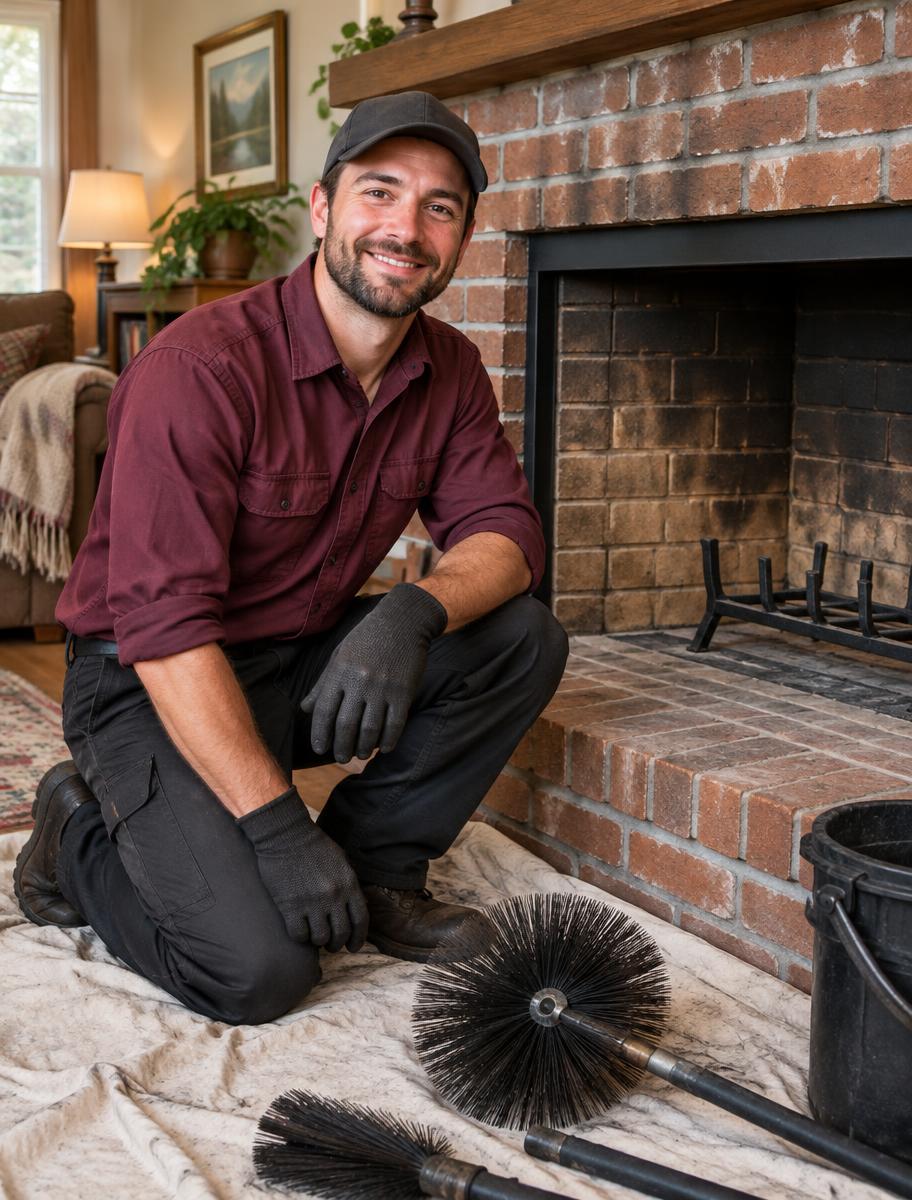
Markham Chimney Services approaches every Osburn repair visit with a structured diagnostic protocol. When our technician arrives at your home, we begin with a comprehensive visual check of the hearth area, glass condition, and external control switches. We place clean protective drop cloths around your hearth to ensure your flooring and furnishings remain pristine throughout the service appointment. Every assessment begins with safety first, checking surrounding clearances and checking for any faint fuel odours.
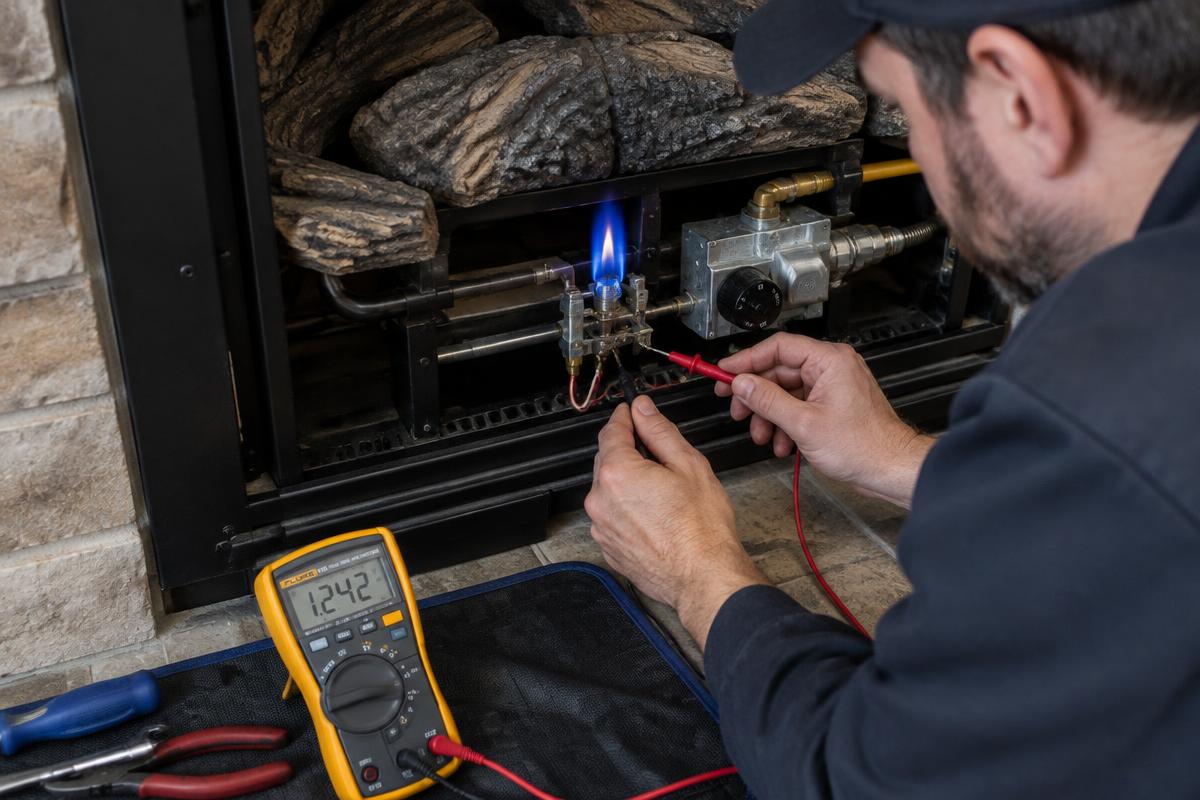
Next, we open the access cavity to measure electrical and gas pressures with dedicated testing equipment. Using a digital multimeter, we test the open-circuit and closed-circuit millivolt outputs of the thermocouple and thermopile to verify whether they meet operating parameters. We also conduct gas pressure testing at both the manifold and inlet taps when necessary, confirming that your home supply line delivers the precise fuel volume specified on the Osburn rating plate.
We conclude the diagnostic phase by examining the condition of the glass gasket, firebox liner panels, and burner port alignment. Ceramic glass gaskets can harden, flatten, or fray over time, allowing unmetered room air to infiltrate the combustion box and upsetting flame physics. Our technicians document our findings thoroughly and explain every recommended repair in straightforward terms, outlining what is necessary for safety and what is recommended for long-term operational reliability.
- Detailed inspection of hearth clearances, glass integrity, and chassis condition
- Precision multimeter testing of pilot sensors, switches, and wiring harnesses
- Manifold and inlet gas pressure verification against equipment nameplates
- Airtight glass seal assessment to eliminate unmetered room air leakage
"I needed a new chimney cap. The installer arrived in Angus Glen, walked me through cap options, and fitted the perfect one with care. Cleanup was spotless and now I feel protected against rain and pests."
Our process
How we handle your osburn fireplace repair, step by step
- 1
Initial Safety and Site Setup
We place clean protective drop cloths across your hearth and living room floor, conduct an initial fuel leak check, and confirm safe electrical supply to the appliance.
- 2
Comprehensive Diagnostic Testing
Our technician tests thermocouple and thermopile millivolt output using a digital multimeter, checks inlet and manifold gas pressure, and inspects wiring connections for resistance.
- 3
Combustion Chamber Disassembly
We carefully remove the glass panel, inspect gaskets, catalogue and extract the ceramic log set, and access the burner pan and pilot bracket for close inspection.
- 4
Component Cleaning and Restoration
We clear burner ports, adjust primary air shutters, clean the pilot assembly orifice, vacuum the lower cabinet cavity, and service blower bearings to restore original operating balance.
- 5
Reassembly and Operational Verification
We reassemble the firebox with correct log placements, seal the glass assembly, perform electronic gas leak tests, and monitor a complete burn cycle to confirm flawless operation.
Professional Repair and Component Restoration Work
Once we diagnose the root failure in your Osburn fireplace, our independent technicians perform targeted mechanical repairs using proven techniques. If the pilot assembly is corroded or producing erratic output, we carefully disassemble the pilot bracket, clean the orifice using brass-safe cleaning tools, brush clean the spark electrode, or replace failing sensor probes. We ensure the flame envelops the upper third of the sensor precisely, guaranteeing strong, continuous voltage to the control valve.
Burner tray servicing involves carefully removing the heavy artificial ceramic logs and ember wool, cataloguing their exact positions for correct reassembly. We vacuum and brush away all carbon deposits, clean the burner tube ports, and adjust the primary air shutter to achieve an optimal balance between blue flame efficiency and gentle aesthetic yellow tips. We test every gas connection disturbed during service using calibrated electronic combustible gas detectors and bubbling leak-detection solution.
When dealing with blower or electrical problems, we remove the convection fan assembly to clean the motor housing, lubricate accessible bearings, and clear accumulated lint from the squirrel cage impellers. We replace faulty wall switches, recalibrate remote receiver modules, and replace damaged wiring harnesses with high-temperature insulated leads. Every step is executed methodically to restore smooth, quiet, and dependable fireplace heating performance.
- Pilot bracket overhaul including orifice cleaning and sensor renewal
- Burner port de-carbonization and air shutter air-fuel ratio adjustments
- Blower assembly extraction, deep cleaning, and thermal switch testing
- High-temperature wiring repair and remote control signal recalibration
Combustion Safety and Home Health Guidelines
A gas fireplace is a controlled combustion engine operating inside your living room, making safety considerations paramount. Incomplete combustion produces toxic byproducts, most notably carbon monoxide, a colourless, odourless, and tasteless gas. We recommend that every Markham home with a gas appliance maintain functioning carbon monoxide alarms on every living level and directly outside sleeping quarters. We encourage testing these alarms monthly and replacing units according to the manufacturer expiry date stamped on the back.
While we are an independent service business, our technicians strictly respect industry standards patterned on CSA gas installation codes and WETT solid-fuel principles where applicable. This means ensuring that clearances to combustibles around the mantel, hearth trim, and drywall strictly meet safe spatial limits. Over years of home renovations, additions of custom millwork or decorative stone around the fireplace can accidentally infringe upon safe clearance perimeters, creating potential fire hazards.
Venting integrity remains the cornerstone of safe hearth operation. Direct-vent Osburn units rely on completely sealed exhaust pathways to isolate combustion gases from your indoor air. During our service visits, we examine the glass clamp retention system to verify that the spring-loaded safety latches release and reseat correctly under pressure. This pressure-relief mechanism is vital for relieving unexpected ignition puff-backs safely within the firebox cavity.
- Installation and regular testing of CSA-approved carbon monoxide detectors
- Rigorous verification of combustible clearances surrounding mantels and framing
- Inspection of spring-loaded safety glass clamps to ensure proper pressure release
- Comprehensive electronic testing for fuel leaks and flue gas spillage
Homeowner Maintenance Practices for Greater Longevity
While complex repairs and gas line adjustments should always be handled by experienced technicians, Markham homeowners can adopt several practical habits to keep their Osburn fireplaces running well between professional visits. First, keep the lower control compartment clean. Vacuuming the lower louvre cavity every couple of months with a soft brush attachment prevents household pet hair and dust bunnies from accumulating around the valve wiring, pilot bracket, and fan motor.
Second, manage your glass care correctly. The white haze that forms on the inner surface of direct-vent glass is a normal byproduct of gas combustion, caused by mineral content in the fuel reacting with moisture. Never clean your fireplace glass with standard ammonia-based window cleaner, as this can etch into the tempered or ceramic glass under intense operating heat. Always use a dedicated non-abrasive gas fireplace glass cleaner, and ensure the glass is completely cold before applying any product.
Finally, monitor how your pilot flame behaves before the severe cold arrives. In the early autumn, turn your fireplace on for thirty minutes to verify smooth ignition, steady flame presentation, and normal blower engagement. Identifying an intermittent ignition issue in October allows you to arrange repairs comfortably before freezing weather sets in, avoiding an urgent mid-winter service situation when technician schedules are heavily booked.
- Vacuum lower chassis louvres periodically to clear pet hair and debris
- Clean glass exclusively with non-abrasive specialty fireplace glass cream
- Perform pre-season test burns in early autumn to catch hidden problems early
- Never run the fireplace if the glass pane is cracked, loose, or unlatched
Choosing an Independent Fireplace Specialist in Markham
Finding the right contractor to repair your Osburn fireplace requires looking beyond general handymen or broad heating companies that treat fireplaces as afterthoughts. Gas hearth systems have unique electrical controls, balance requirements, and aesthetic factors that demand specialized knowledge. Selecting a focused hearth repair company ensures your technician arrives with the right tools, proper testing meters, and an understanding of how fireplace venting systems behave in multi-storey GTA homes.
Transparency is another crucial benchmark when hiring a hearth specialist. A reputable service provider will happily provide clear upfront pricing, detailed diagnostic explanations, and honest assessments regarding whether an older unit is practical to repair. Technicians should treat your home with complete care, utilizing work mats, wearing shoe covers, and leaving your living area as clean as they found it. Beware of vague estimates or contractors who push for complete unit replacement before checking simple sensors.
Markham Chimney Services has built its reputation on straightforward, reliable craftsmanship from our base at 4418 Highway 7 East. As an independent service company, we focus entirely on delivering thorough, dependable repairs tailored to the distinct needs of Markham neighbourhoods. We take the time to answer your questions, explain our work clearly, and ensure your Osburn fireplace delivers safe, radiant warmth to your home throughout every winter storm.
- Choose hearth-focused technicians familiar with low-voltage millivolt systems
- Demand upfront pricing models with clear distinctions between labour and parts
- Ensure the contractor respects your home with drop cloths and clean work protocols
- Rely on independent local professionals dedicated to restoring existing equipment
Average pricing in Markham
$229 – $589
- Inspection / diagnostic
- $149 – $199
- Typical time on site
- 1 to 2.5 hours typical service duration
- Parts and materials
- Replacement thermopiles, gas valves, blowers, pilot assemblies, and glass gaskets are quoted separately after diagnosis.
- What moves the price
- Nature of the failure: simple mechanical cleaning versus specialized electronic or gas valve component replacement · Accessibility of the fireplace chassis, insert installation depth, and complex custom surround configurations · Condition of venting components, requirement for replacement direct-vent gaskets, or exterior termination service
Estimated local market range, not a quote. All estimates are in Canadian dollars and exclude 13% Ontario HST. Your exact price is confirmed before any work begins.