

A dedicated wood stove brings deep, radiant warmth into a Markham home during bitter cold snaps, but the stove can only perform as well as the chimney system venting it. Unlike open masonry hearths, modern wood stoves operate under controlled combustion principles that demand precise airflow, appropriate flue sizing, and regular maintenance. Over a single winter, soot, unburned particulates, and condensed creosote settle along the flue pipe, restricting passage and increasing the risk of an unintended flue fire. Without proactive attention, minor venting flaws can quickly transform into hazardous conditions inside your living space.
Markham Chimney Services provides thorough wood stove chimney care tailored to the distinct climate challenges of our region. From mid-century bungalows in Unionville to newer developments across the Greater Toronto Area, we help local homeowners keep their heating systems safe, functional, and compliant with standard clearance guidelines. Our thorough inspection and cleaning procedures focus on early problem detection, ensuring that your stainless steel liner, connector pipes, rain caps, and masonry structures withstand the damp freeze-thaw cycles of an Ontario winter. We take the time to evaluate the complete installation so you can burn wood with total peace of mind.
Wood Stove Chimney Services: visit summary
Wood Stove Chimney Services: stove pipes, baffles, gaskets and flues cleaned and checked for safe, efficient burning. Serving Markham and the Greater Toronto Area (GTA). The estimated local market range is $229 – $489, not a fixed company rate. The final scope and quote are confirmed before work begins.
| Estimated market range | $229 – $489. All estimates are in Canadian dollars and exclude 13% Ontario HST. |
|---|---|
| Typical time | 1 to 2.5 hours |
| Price factors | Chimney access height, roof pitch, and severe weather conditions; Degree and hardness of creosote accumulation requiring mechanical rotary descaling; Chimney construction style, including factory-built insulated metal versus masonry relines |
| Routine signs to discuss | Sluggish Draft and Indoor Smoke Rollout; Blackened, Soot-Covered Ceramic Door Glass; Persistent Chemical or Tar Odours; Rusting Connector Pipes or Damp Ash; Rattling, Rumbling, or Roaring Sounds; Flaking Chimney Liner or Masonry Debris |
Understanding Your Wood Stove Chimney and Venting System
A wood-burning stove operates as a closed combustion appliance, meaning it relies on a carefully calibrated balance between incoming combustion air and outgoing exhaust gases. The chimney is not merely an exhaust pipe; it acts as the thermal engine driving the entire system. When hot flue gases rise, they create negative pressure that pulls fresh oxygen into the firebox, maintaining steady combustion. If the chimney is oversized, undersized, or obstructed by debris, that draft diminishes rapidly, leading to inefficient burns, glass sooting, and smoke spillage into the home.
Most residential wood stoves connect to one of two chimney configurations: an insulated factory-built stainless steel chimney system running through the interior ceiling and roof, or a rigid stainless steel liner installed inside an existing exterior masonry chimney. Factory-built systems use double-wall or triple-wall insulated sections to keep flue gas temperatures high as they travel upward. In masonry installations, the liner isolates the flue gases from cold exterior brickwork, preventing rapid condensation of volatile wood tars that otherwise stick to old clay tiles.
Connecting your stove to the chimney requires black or grey stovepipe, typically constructed from 22-gauge or 24-gauge cold-rolled steel. These connector pipes must maintain strict clearances to combustible drywall, framing, and baseboards, often requiring ninety-degree elbows or adjustable slip sections to achieve proper alignment. Because every seam, joint, and fastener plays a role in structural integrity, the entire venting pathway requires meticulous routine evaluation to ensure no gaps or corrosion compromise the exhaust route.
- Heavy-gauge black connector pipes channeling exhaust from stove collar to ceiling support
- Insulated stainless steel chimneys designed to retain internal heat and withstand thermal shock
- Rigid or flexible stainless liners inserted into traditional exterior clay masonry flues
- Draft-inducing rain caps with spark arrestors guarding the chimney termination point
- Combustion air intake channels delivering continuous oxygen to modern airtight fireboxes
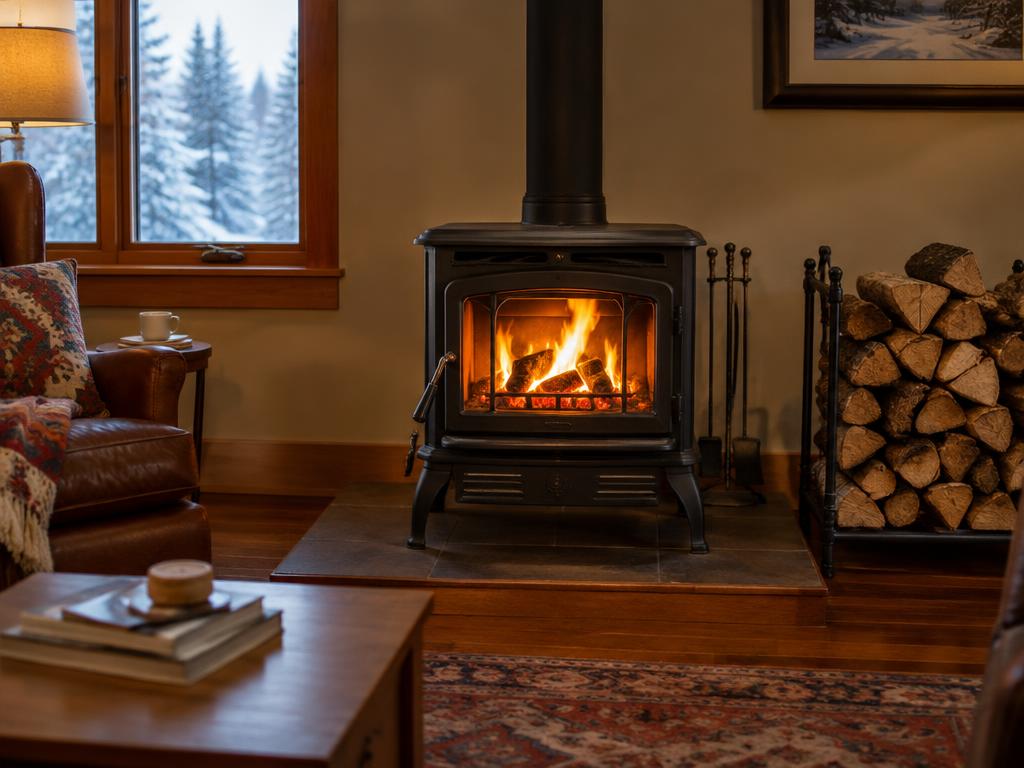
Keep your wood stove venting safely, drafting cleanly, and burning efficiently through every cold Ontario freeze.
Self-check
Warning signs you need wood stove chimney services
Sluggish Draft and Indoor Smoke Rollout
Smoke spilling into the living area whenever you open the stove door points to restricted airflow, heavy creosote accumulation, a blocked rain cap, or severe pressure competition within the home.
Blackened, Soot-Covered Ceramic Door Glass
Glass that clouds with dark, oily soot after only a few fires indicates low combustion temperatures, unseasoned wet firewood, or restricted exhaust flow failing to vent by-products effectively.
Persistent Chemical or Tar Odours
A pungent, barbecue-like, or acrid tar odour lingering around the stove during damp weather indicates creosote saturated with moisture inside the flue, needing prompt mechanical sweeping.
Rusting Connector Pipes or Damp Ash
Visible corrosion streaks on black stovepipe joints or damp clumping ash in the firebox signal water leaking down the chimney flue from failed exterior flashings or damaged storm caps.
Rattling, Rumbling, or Roaring Sounds
Unusual roaring or train-like noises inside the chimney pipe during high-temperature burns indicate an active flue fire. Shut stove air controls immediately and contact emergency fire services.
Flaking Chimney Liner or Masonry Debris
Bits of black scale, chipped clay tiles, or mortar dust falling onto stove baffles or behind connector pipes reveal structural degradation caused by thermal stress and moisture expansion.
How Ontario Freeze-Thaw Weather Stresses Stove Chimneys
Markham experiences intense weather shifts throughout late autumn, winter, and early spring, with outdoor temperatures swinging above and below the freezing mark on consecutive days. When moist exterior air, melting snow, and freezing rain seep into the microscopic cracks of exterior masonry or unsealed flashing seams, that trapped water expands as it freezes. Over repeated cycles, this hydraulic pressure breaks brick faces, loosens mortar joints around the chimney shoulder, and weakens roof flashings designed to keep moisture out of the attic.
For wood stove venting, cold exterior temperatures present a continuous operational hurdle known as cold hearth syndrome. When an exterior chimney sits in freezing air for hours without an active fire, a column of dense, heavy, sub-zero air settles inside the flue. If a homeowner attempts to light a fire without pre-warming the chimney, the rising smoke hits this thermal plug and rebounds into the room. Insulated flue liners mitigate this challenge by holding warmth longer, but prolonged exposure to Ontario dampness can still chill uninsulated runs.
Moisture mixed with wood exhaust creates a corrosive slurry that actively attacks chimney components. Wood smoke contains water vapour alongside acidic combustion by-products. When flue gases cool below their condensation point on cold pipe walls, they form liquid pyroligneous acid, which eats away at connector pipe seams, rain caps, and interior fasteners. Regular maintenance helps identify and mitigate this hidden deterioration before cold winter gusts exploit vulnerable structural points.
- Spalling brickwork and fractured mortar joints caused by expanding winter moisture
- Cold air blockages that reverse exhaust flow during initial stove ignition attempts
- Corrosion of metal components caused by acidic moisture condensing on cold flue walls
- Compromised roof flashings and storm collars allowing melted snow to enter the ceiling envelope
- Wind-driven freezing rain deteriorating chimney caps and spark-arrestor wire mesh
Creosote Accumulation and Internal Flue Fire Hazards
Creosote is a natural by-product of wood combustion, forming when unburned gases, tar droplets, and steam condense against the relatively cool internal surfaces of a chimney flue. It presents itself in three distinct stages, each progressively more dangerous and difficult to remove. Stage one resembles dry, flaky soot that sweeps away easily with a standard poly or wire brush. Stage two forms a sticky, crunchy, tar-like deposit that adheres stubbornly to liner walls. Stage three develops into a dense, rock-hard, glossy glaze.
Glazed stage-three creosote represents the greatest fire hazard for any wood-burning household. When a stove is operated with the air damper closed down too far for extended periods, or when unseasoned cordwood with high moisture content is burned, flue temperatures plummet. The unburned wood oils condense thick layers of glaze that become highly volatile. If a hot, roaring fire is subsequently built, the intense heat can ignite this glazed fuel bed, creating a self-sustaining flue fire that burns at temperatures exceeding one thousand degrees Celsius.
A chimney fire can crack ceramic flue tiles, warp stainless steel liners, blow rain caps off the roof, and ignite structural wood framing surrounding the chase. Professional chimney sweeps use specialized mechanical rotary tools, chemical glazing treatments, and tailored brushes to break down and eliminate creosote before it reaches an ignition-ready state. Regular cleanings are the primary defense against this preventable household emergency.
- Stage one flaky soot caused by balanced combustion and moderate flue gas temperatures
- Stage two tar deposits resulting from partially restricted airflow or damp firewood
- Stage three glazed creosote representing concentrated, highly combustible fuel
- Extreme thermal shock capable of warping stainless steel liners and igniting wood framing
- Restricted exhaust diameters that choke stove draft and push carbon monoxide indoors
Resolving Draft Deficiencies and Indoor Smoke Spillage
A poorly drafting wood stove turns what should be a cozy amenity into a frustrating, smoke-filled experience. Draft issues generally stem from one of three areas: structural flaws in the chimney layout, physical blockages within the pipe, or conflicting pressure dynamics inside the home. When a chimney run contains excessive horizontal offsets, sharp bends, or an improper height above the roof ridge, the buoyancy of warm exhaust gases struggles to overcome friction, stalling the exit velocity of the smoke.
Modern Markham homes are built or retrofitted to be exceptionally airtight, featuring energy-efficient windows, sealed entry doors, and heavy spray foam insulation. Powerful exhaust appliances, including kitchen range hoods, bathroom ventilation fans, and clothes dryers, constantly pump air out of the building envelope. This exhaust action creates negative pressure inside the living space, essentially competing with the wood stove for replacement air and sometimes pulling smoke right down the chimney into the basement or living room.
Diagnosing draft problems requires examining both the chimney and the home environment as an integrated system. We verify that the chimney reaches at least three feet above the roof penetration and two feet higher than any portion of the building within ten feet, commonly known as the standard ten-and-two rule. We also inspect for bird nests, leaves, fallen mortar fragments, or damaged internal baffles that impede steady, laminar airflow.
- Incorrect chimney height failing to clear nearby roof peaks and wind pressure zones
- Excessive horizontal connector runs that cool exhaust and reduce upward momentum
- Competing mechanical ventilation fans causing indoor negative pressure scenarios
- Internal physical obstructions such as wildlife nesting materials or creosote plugs
- Cracked or missing stove door gaskets admitting uncontrolled air that cools the exhaust
"When a storm loosened some bricks, I called for emergency repair in Thornhill. Their crew arrived within hours, secured the chimney crown, and restored its integrity without any mess. Truly impressive expertise."

Our process
How we handle your wood stove chimney services, step by step
- 1
Hearth Protection and Initial Assessment
We place clean drop cloths around the stove hearth, set up specialized HEPA dust containment equipment, and inspect clearances, door seals, firebricks, and internal combustion baffles.
- 2
Full Chimney and Stovepipe Sweeping
Using matching composite rods and brushes, we clean the full length of the flue pipe, scrubbing away soot, scale, and creosote while vacuum containment prevents dust migration.
- 3
Baffle Cleaning and Debris Extraction
We remove internal firebox baffles to vacuum dislodged creosote, soot, and ash deposits resting above secondary combustion tubes, restoring smooth exhaust paths through the appliance collar.
- 4
Rooftop and Flashing Inspection
We examine the chimney exterior, inspecting storm collars, roof flashings, spark-arrestor caps, and masonry joints to confirm that winter moisture and wildlife cannot enter the system.
- 5
Safety Review and Documentation
We reassemble all internal parts, test stove door latch seals, verify draft readiness, and provide you with a written assessment highlighting current condition and maintenance recommendations.
Clearance Requirements, Heat Shields, and Detection Devices
Because wood stoves radiate intense thermal energy over long hours, maintaining safe clearances between the hot steel surfaces and combustible building materials is critical. Standard unlisted stoves often require up to thirty-six inches of clearance from unprotected drywall, woodwork, and furnishings. While modern listed stoves feature built-in rear heat shields that permit significantly tighter installations, those clearances must be verified against the manufacturer specification plate attached to the rear of the unit.
When space is limited, properly installed wall and floor shielding can safely reduce required clearances while keeping framing temperatures within safe limits. A certified floor protector must offer adequate R-value thermal resistance and extend eighteen inches in front of the loading door to catch rolling embers during reloading. Wall shields require a one-inch air gap along the bottom and top edges, allowing natural room convection to draw cool air upward behind the shield, preventing heat transfer into wall studs.
Early warning detection systems are non-negotiable safety partners for any wood stove installation. Every floor of the home, particularly near sleeping quarters, must feature working smoke alarms alongside modern digital carbon monoxide detectors. Carbon monoxide is an invisible, odorless gas produced by incomplete combustion; if a flue becomes restricted or a stove door seal fails overnight, a dependable detector provides the vital alert necessary to protect your family from silent poisoning.
- Strict verification of stove-to-wall clearances against appliance data plates
- Correctly sized non-combustible floor pads extending beyond the front loading door
- Vented wall shields installed with proper air spacing to protect concealed framing
- Routine inspection of firebox gaskets, door latches, and ceramic glass integrity
- Interconnected smoke alarms and carbon monoxide detectors on every residential level
Our Markham Inspection and Cleaning Process
Our service protocol begins with a comprehensive visual assessment of the entire wood stove system, starting inside the living area and ending at the rooftop chimney termination. We examine the condition of the stove firebox, checking for warped cast iron panels, deteriorated ceramic baffle blankets, damaged secondary air tubes, and broken firebricks. We also inspect the door rope seals with the paper dollar bill test, verifying that the door closes firmly without allowing uncontrolled air leakage around the perimeter.
Before sweeping begins, we take great care to protect your home. We lay down heavy canvas drop cloths around the hearth, secure high-efficiency particulate air vacuum systems near the appliance opening, and isolate the stove intake dampers to prevent soot dust from escaping into your living space. Using flexible composite rods and custom-sized poly or wire brushes, we clean the full length of the chimney from top to bottom, dislodging soot, carbon scales, and loose creosote flakes into our contained collection zone.
Following mechanical cleaning, we conduct a close examination of the chimney interior. We check each connection joint, support bracket, ceiling thimble, and the exterior rain cap mesh for corrosion, thermal warping, or mechanical displacement. Once we collect all debris and confirm that the flue pathway is completely clear, we review our findings directly with you, offering transparent notes regarding component longevity, safe burning practices, and any minor repairs recommended for future seasons.
- Complete firebox and internal baffle evaluation to verify combustion chamber health
- Containment protocols utilizing commercial HEPA air filtration and floor drop cloths
- Full-length mechanical sweeping removing deposits from stove collar to rain cap
- Verification of support thimbles, roof flashing seals, and storm collars
- Clear verbal summary and written documentation outlining chimney condition

Seasonal Best Practices for Markham Homeowners
Safe and efficient wood burning begins long before a match is struck; it starts with the quality and seasoning of your cordwood. Burning green, damp, or recently felled firewood wastes enormous amounts of heat energy simply evaporating water. Furthermore, the resulting low-temperature smoke condenses rapidly into sticky creosote inside your chimney. For optimal results, only burn split hardwoods such as oak, maple, ash, or beech that have seasoned for at least twelve months under shelter, showing a moisture content below twenty percent on a digital moisture meter.
Your everyday firing habits directly impact how quickly deposits accumulate inside the chimney. Avoid smoldering low-temperature fires overnight by prematurely dampening the air intake; this practice drops flue temperatures below the creosote condensation threshold. Instead, allow the fire to establish high internal combustion heat before adjusting the dampers to a steady cruising level, and always run a brisk, hot burn for twenty minutes each morning to warm the flue and drive off minor overnight residues.
As spring arrives and the heating season winds down, do not leave accumulated ashes sitting inside the firebox over the humid summer months. Wood ash contains alkaline salts that absorb atmospheric moisture and chemically attack the steel or cast iron firebox walls, causing pitting and surface rust. Clean out the ash pan completely, inspect the chimney cap to ensure pests cannot enter during nesting season, and schedule your professional chimney sweeping early in the warmer months to avoid autumn service rushes.
- Burn only seasoned hardwoods with measured moisture levels below twenty percent
- Never burn treated lumber, painted boards, salt-water driftwood, or household trash
- Establish hot, bright fires before reducing primary air dampers for continuous heating
- Empty ash beds at season end to prevent humid summer moisture from causing rust
- Book seasonal maintenance during spring or summer to ensure winter readiness
Choosing the Right Independent Chimney Contractor
Entrusting your home heating safety to a service company requires confidence in their technical knowledge, practical background, and respect for your property. A knowledgeable chimney professional does not treat a wood stove as an ordinary open fireplace; they understand the complex drafting hydraulics, clearance requirements, and appliance-specific components that govern closed wood appliances. They carry proper equipment, such as rotary cleaning gear, industrial vacuums, and diagnostic tools suitable for both modern factory-built metal chimneys and lined masonry flues.
When evaluating local contractors in Markham, prioritize companies that practice thorough, transparent communication without resorting to high-pressure sales tactics. Reputable tradespeople are eager to explain their findings, walk you through the condition of your system, and provide clear explanations of what repairs are genuinely urgent versus what can be monitored over upcoming seasons. They should readily produce proof of active commercial liability insurance and show deep familiarization with Canadian solid-fuel installation standards, including CSA B365 and WETT-style safety guidelines.
Markham Chimney Services operates as an independent service company focused entirely on the safety, structural longevity, and operating efficiency of your venting systems. We do not push unnecessary appliance upgrades or make exaggerated claims; our objective is to deliver dependable, honest, and meticulous workmanship that keeps your home protected throughout the demanding Ontario winter. We take pride in building long-term relationships with homeowners throughout our community.
- Extensive practical experience evaluating wood stoves and dedicated flue systems
- Adherence to Canadian solid fuel safety best practices including CSA B365 guidelines
- Full commercial liability insurance protecting your property and family
- No high-pressure sales tactics or inflated estimates for unnecessary replacements
- Clean, respectful in-home service with dedicated containment and dust control
Average pricing in Markham
$229 – $489
- Inspection / diagnostic
- $149 – $199
- Typical time on site
- 1 to 2.5 hours
- Parts and materials
- Replacement ceramic baffle blankets, door rope gaskets, custom rain caps, and connector pipe sections quoted separately based on model specifications.
- What moves the price
- Chimney access height, roof pitch, and severe weather conditions · Degree and hardness of creosote accumulation requiring mechanical rotary descaling · Chimney construction style, including factory-built insulated metal versus masonry relines
Estimated local market range, not a quote. All estimates are in Canadian dollars and exclude 13% Ontario HST. Your exact price is confirmed before any work begins.