
When winter temperatures drop across Markham, a dependable wood stove serves as both an essential source of comforting heat and a reliable safeguard during seasonal power outages. However, continuous burning cycles, extreme thermal expansion, and intense heat output inevitably take a heavy toll on internal firebricks, baffle boards, door gaskets, and cast iron joints. Over time, air seals compress, metal components warp, and control dampers become stiff or unresponsive. Operating an inefficient or compromised stove wastes seasoned firewood and increases the risk of smoke spillage and hazardous flue gas leaks inside your home.
At Markham Chimney Services, located at 4418 Highway 7 East, we provide meticulous, independent wood stove repair services for residential properties throughout our local Markham neighbourhoods and the Greater Toronto Area (GTA). Whether your appliance is backdrafting into the living room, burning through cordwood too quickly because of deteriorated gaskets, or suffering from a cracked combustion liner, we diagnose the core issue promptly. Our practical, customer-first approach restores proper combustion balance, safeguards your family, and ensures your wood stove delivers clean, dependable heat when you need it most.
Wood Stove Repair: visit summary
Wood Stove Repair: stove pipes, baffles, gaskets and flues cleaned and checked for safe, efficient burning. Serving Markham and the Greater Toronto Area (GTA). The estimated local market range is $249 – $680, not a fixed company rate. The final scope and quote are confirmed before work begins.
| Estimated market range | $249 – $680. All estimates are in Canadian dollars and exclude 13% Ontario HST. |
|---|---|
| Typical time | 1 to 3 hours depending on repair complexity |
| Price factors | Extent of internal disassembly required to access warped baffles or hidden seams; Availability and type of replacement materials such as custom-cut firebricks or ceramic glass; Overall condition of the stove, including seized hinge bolts, corroded sliders, or distorted frames |
| Routine signs to discuss | Smoke Spillage into the Living Room; Uncontrollable Fire Burn Rate; Cracked or Sagging Baffle Plates; Broken or Dislodged Firebricks; Stiff or Seized Air Control Sliders; Heavily Sooted or Blackened Door Glass |
What Professional Wood Stove Repair Involves for Markham Homes
Wood stove repair addresses the structural, mechanical, and air-control failures that develop from repeated heating and cooling cycles. Unlike routine chimney sweeping, repair work focuses on restoring the airtight integrity of the firebox, secondary combustion systems, and exhaust collars. A modern wood stove functions as a carefully balanced, air-metered appliance where precise tolerances dictate how cleanly wood logs burn. When internal components deteriorate, the stove either starves for oxygen or burns uncontrollably hot, wasting fuel and stressing the entire heating assembly.
Our repair services encompass gasket renewal, firebrick replacement, baffle board repairs, damper adjustments, and cast iron seam resealing. We carefully assess door hinges, latch mechanisms, secondary air tubes, and glass retainers to ensure every working part functions smoothly. Because high-efficiency stoves rely on controlled air pathways to sustain secondary combustion, fixing subtle gaps prevents smoky burns and drastically reduces creosote accumulation in the chimney pipe. We focus on returning your appliance to safe operating condition without cutting corners on materials.
Homeowners in established Markham neighbourhoods frequently have classic freestanding cast iron stoves, while newer homes often feature heavy plate-steel units. Both designs require specific repair techniques to accommodate thermal movement. We source compatible, heavy-duty replacement materials suited to each appliance style, ensuring that new refractory panels and seals withstand intense seasonal use. By resolving the root cause of component degradation, we prevent recurring breakdowns and keep your living spaces comfortably warm even during severe cold snaps.
- Replacing flattened, brittle, or frayed fiberglass door and glass gaskets
- Rebuilding broken, chipped, or missing refractory firebrick chamber linings
- Straightening or replacing warped secondary air baffle boards and steel tubes
- Resealing separated cast iron joints using industrial high-temperature furnace cement
- Realigning sagging door hinges and lubricating seized air intake sliders
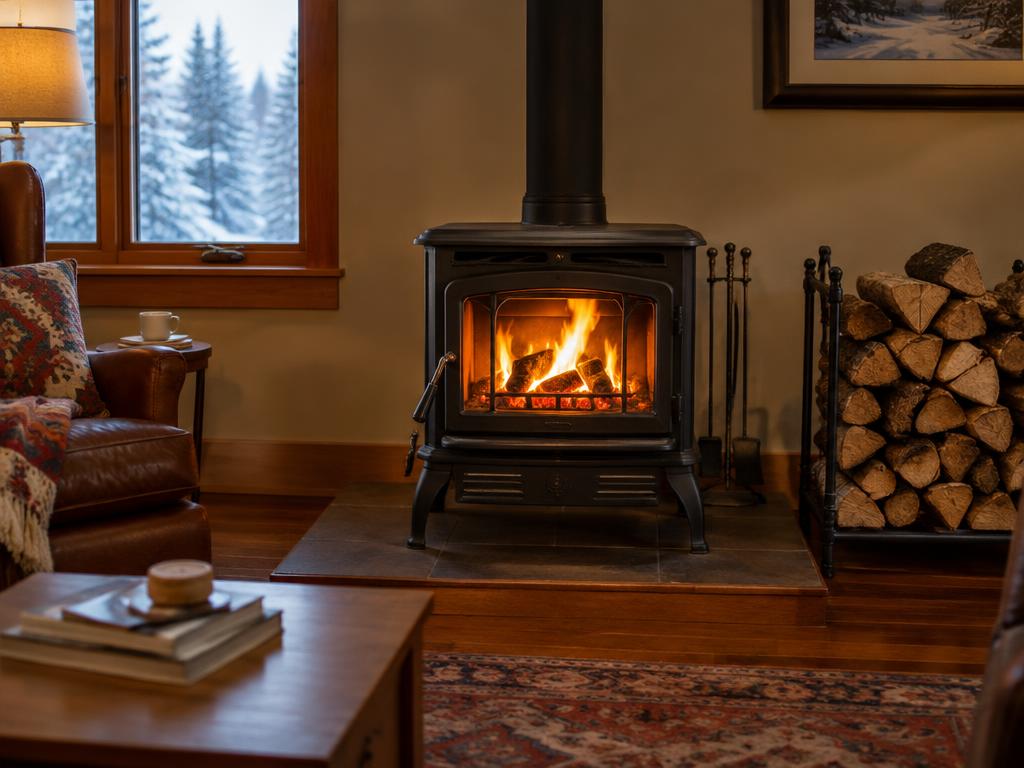
Keep your wood-burning stove heating safely and efficiently through the harshest Ontario winters.
Self-check
Warning signs you need wood stove repair
Smoke Spillage into the Living Room
Smoke escaping past closed doors or control slides points to worn gaskets or flue draft problems. This allows dangerous carbon monoxide and fine particulates into your home, reducing air quality and burning efficiency.
Uncontrollable Fire Burn Rate
When firewood burns too fast despite air dampers being completely shut, excess air is leaking into the firebox. This uncontrolled combustion can over-fire the stove, potentially warping metal panels and creating dangerous chimney heat.
Cracked or Sagging Baffle Plates
The upper baffle board reflects heat back into the firebox for secondary combustion. If it sags, cracks, or falls, unburned gases escape directly into the flue, wasting fuel and causing rapid creosote buildup.
Broken or Dislodged Firebricks
Refractory firebricks protect the stove's exterior steel or cast iron walls from direct flame contact. Fractured or missing bricks create concentrated hot spots that can warp outer panels and damage adjacent floor pads.
Stiff or Seized Air Control Sliders
Air intake sliders that stick or refuse to move prevent you from regulating the fire safely. Ash accumulation, thermal distortion, or corrosion can jam the control mechanism, resulting in smouldering fires or excessive wood consumption.
Heavily Sooted or Blackened Door Glass
Glass that blackens rapidly indicates poor combustion, faulty door seals, or restricted air-wash pathways. When cooler room air leaks in or the internal draft falters, sticky creosote deposits coat the glass within minutes.
The Impact of Markham's Freeze-Thaw Winter Climate
The climate across southern Ontario creates significant stress for solid-fuel appliances due to frequent freeze-thaw cycles. Rapid shifts between sub-zero cold and mild conditions cause building structures and exterior chimneys to expand and contract repeatedly. This constant movement can loosen stovepipe connections, dislodge chimney collar seals, and strain the seams of cast iron stoves. In basements and ground-floor rooms, dense cold air can push down the chimney flue, creating stubborn cold hearth conditions that make lighting fires difficult.
When outdoor temperatures swing wildly within a short timeframe, natural chimney draft fluctuates unpredictably. During milder spells, homeowners often damper down their wood stoves to prevent overheating the living area. This practice lowers firebox temperatures, causing incomplete combustion that produces heavy, acidic creosote. Over the course of a winter, moisture combining with creosote creates corrosive compounds that degrade steel baffle supports, bypass damper shafts, and stovepipe joints, accelerating metal fatigue and deterioration.
Preparing your heating system for unpredictable Ontario weather requires airtight construction and resilient seals. Stove components must expand evenly under rapid heat rises after sub-zero nights without cracking cast iron panels or dislodging refractory bricks. Our repairs prioritize durable thermal seals that withstand severe temperature swings, preventing cold outdoor drafts from infiltrating your home when the stove is idle while ensuring reliable, steady draft performance during bitter winter days.
- Stovepipe joint separation caused by structural thermal expansion and contraction
- Moisture accumulation inside the flue collar producing corrosive acidic creosote
- Cold flue air reversals that force smoke into living rooms during startup
- Thermal shock damage to brittle firebricks during fast heating cycles from freezing
Common Warning Signs That Your Wood Stove Needs Attention
Recognizing early warning signs of wood stove wear protects your household from indoor smoke pollution and accidental fire risks. One obvious symptom is smoke leaking around the door frame or control levers during normal operation. When fiberglass rope gaskets become brittle and compressed, unmetered air enters the firebox, causing wood to burn too quickly while allowing faint wisps of smoke to seep out into your living space whenever atmospheric pressure drops.
Another telltale sign is a fire that burns aggressively even when you push the primary air slide to the lowest setting. This indicates significant air leaks through damaged seams, warped door frames, or loose ash pan seals. Conversely, if your fire continuously smoulders, produces weak heat, or smothers itself unless the loading door stays slightly ajar, your internal baffle boards or secondary combustion tubes may be blocked, cracked, or completely collapsed inside the chamber.
Physical damage to internal components warrants immediate investigation. If you notice fractured firebricks exposing bare steel walls, sagging ceramic baffle boards, or a warped cast iron top plate, stop burning until a professional evaluates the unit. Operating a stove with damaged internal heat shields can lead to dangerous over-firing, hot spots on outer panels, and irreversible metal distortion that threatens surrounding combustible walls and floors.
- Visible smoke escaping around the door perimeter, glass edges, or pipe slip joints
- Inability to slow the burn rate when air control sliders are fully shut
- Ceramic door glass that rapidly turns pitch black with thick, tarry soot
- A loose door latch that no longer provides firm mechanical compression
- Rattling or fallen baffle boards inside the upper combustion zone
Underlying Causes of Wood Stove Deterioration and Breakdowns
Most wood stove problems stem from aggressive thermal stress, improper fuel use, and deferred seasonal maintenance. Burning green or unseasoned firewood with a high moisture content cools combustion temperatures dramatically. Instead of burning cleanly, the fire wastes thermal energy evaporating water, leaving behind acidic creosote and soot that attack internal metal parts. Over time, these corrosive deposits freeze damper shafts in place and rust away secondary air channels from the inside out.
Over-firing is equally destructive and represents a leading cause of severe cast iron and plate-steel damage. Loading oversized dry wood charges with air controls wide open allows temperatures to exceed factory engineering limits. This extreme heat warps steel baffle plates, cracks cast iron side panels, and burns out stainless steel burn tubes. Once a stove body warps, factory seams open up permanently, making controlled burning impossible and turning an efficient heater into a hazard.
Natural mechanical wear also accounts for many common service requests across Markham. Opening and latching the heavy firebox door hundreds of times each winter gradually flattens rope gaskets, loosening door hinges and wearing down latch pins. Furthermore, routine vibration and heat cycles cause traditional furnace cement along panel seams to dry out, crumble, and fall into the ash bed, breaking the critical airtight seal.
- Burning wet, green, or resinous wood that deposits corrosive creosote residues
- Excessive operating temperatures from over-firing that warp structural steel
- Repeated physical impacts from tossing heavy firewood splits against firebricks
- Normal compression and hardening of thermal fiberglass door seals over time
"I booked an annual chimney sweep in Unionville and they arrived right on time. They cleared all creosote, inspected the flue draft, and shared simple maintenance tips. My fireplace runs smoother and safer now."
Our process
How we handle your wood stove repair, step by step
- 1
Initial Visual Inspection and Seal Check
We examine the stove body, flue collar connection, and door latch tension, conducting dollar bill resistance tests around all door and window edges to pinpoint air leaks.
- 2
Internal Firebox Disassembly
Our technicians carefully remove baffle boards, insulation blankets, and firebricks to evaluate hidden structural walls, secondary air tubes, and cast iron joints for heat distortion or stress cracks.
- 3
Surface Preparation and Cleaning
We strip deteriorated rope gaskets, scrape away failing furnace cement, and wire-brush contact channels down to clean metal, ensuring replacement materials seat securely and form a durable, airtight seal.
- 4
Component Replacement and Resealing
We install fresh high-density fiberglass gaskets, fit replacement refractory bricks or baffle boards, repack cast iron seams with high-temperature cement, and calibrate the door latch mechanism for proper compression.
- 5
Final Draft and Safety Verification
We perform a smoke draft test to confirm that air controls modulate correctly, check flue collar draw, and verify that the stove safely contains combustion gases before completing the service.
Our Thorough Inspection, Diagnosis, and Repair Workflow
When our technician arrives at your Markham residence, the repair visit starts with a comprehensive visual and tactile assessment of your stove assembly. We examine the exterior body for stress fractures, check the flue collar connection, and test door gasket compression using the dollar bill resistance method around the entire perimeter. We also evaluate the damper linkages, ash drawer fit, and primary air control slides to detect mechanical binding.
Next, we look inside the firebox, removing the baffle boards, insulation blankets, and refractory bricks when necessary to inspect the concealed steel or cast iron walls. We inspect secondary burn tubes for warping, check cotter pins and retainers, and look for seam separations where panel joints meet. This diagnostic step ensures we identify hidden structural damage rather than simply replacing an obvious worn part while ignoring the underlying mechanical failure.
Once we explain the required repairs and provide a clear quote, we begin the restoration using high-grade, heat-resistant materials. We thoroughly clean gasket channels using wire brushes before setting fresh, high-density fiberglass rope with specialized cement. Broken firebricks are replaced with precision-cut refractory units, cast iron seams are repacked, and latch mechanisms are calibrated and lubricated. We finish with a practical smoke draft check to confirm your stove operates cleanly and safely.
- External casing examination, latch tension testing, and air slider inspection
- Internal firebox strip-down to assess firebricks, baffle plates, and burn tubes
- Thorough channel cleaning and installation of high-density fiberglass rope gaskets
- Precision seam resealing with industrial-grade high-temperature furnace cement
- Draft performance testing to verify proper exhaust flow and airtight operation
Critical Safety Standards, Carbon Monoxide, and Fire Prevention
Heating with wood requires strict adherence to solid-fuel safety principles and building standards. A compromised wood stove poses real hazards, notably the release of carbon monoxide (CO), a colourless, odourless byproduct of incomplete combustion. When door gaskets fail or stovepipe joints slip, house depressurization can draw toxic exhaust back into your living rooms. We urge all homeowners to install functioning carbon monoxide alarms on every floor and directly outside all bedroom areas.
Our repair procedures align with CSA B365 installation guidelines and WETT-style solid-fuel best practices, focusing on maintaining required clearances to combustible materials and ensuring stable venting connections. While we operate as an independent service company, we treat standard clearance distances with utmost seriousness. A repaired stove must maintain proper spacing from nearby drywall, wooden mantels, and furniture to prevent long-term thermal pyrolysis of structural framing materials.
We also assess floor protection beneath and around the stove to verify that ember pads and hearth extensions meet practical safety guidelines. Loose stovepipes, cracked connector elbows, or missing securing screws are corrected on the spot. Ensuring your stove operates as an airtight, fully controllable system gives you the ability to starve the fire of oxygen immediately if a chimney issue ever arises, providing essential peace of mind.
- Promoting dual-sensor smoke and carbon monoxide alarms on every level of the home
- Verifying safe clearances between hot stove surfaces and combustible framing
- Securing all single-wall and double-wall stovepipe slip joints with heat-resistant fasteners
- Checking non-combustible floor pads for sufficient size and thermal protection
Practical Maintenance Tips to Extend the Life of Your Stove
Consistent homeowner maintenance between professional service visits significantly extends the life of your wood stove and prevents premature repairs. Get into the habit of leaving about an inch of ash across the firebox floor during the heating season. This ash bed insulates the bottom refractory bricks from thermal shock and provides an ideal base for establishing new fires quickly, while keeping excess ash away from door frames and air sliders.
Fuel choice is the single most important factor in wood stove longevity. Burn only well-seasoned, untreated hardwoods like maple, oak, or beech that have dried for at least a full year and show moisture readings below twenty percent. Never burn construction lumber, painted wood, pallets, or household rubbish, as these fuels burn unpredictably hot and release caustic fumes that dissolve ceramic glass coatings and warp secondary air assemblies.
Inspect your door seal every month using a simple paper slip test. If a strip of paper slides out freely when clamped in the closed door, the gasket has compressed and needs replacement before you start burning heavily. Keep ceramic glass clean using a damp cloth dipped in fine wood ash rather than chemical abrasives, and never force a sticky air control handle with tools, as excessive force can snap internal linkages.
- Maintain a protective one-inch ash bed on the firebox floor throughout the winter
- Burn only seasoned split hardwood with moisture content tested under twenty percent
- Clean ceramic door glass gently using a damp cloth dipped in fine wood ash
- Perform regular paper-clamp tests around the door to monitor gasket compression
- Check firebricks monthly for deep structural fractures or loose support clips
Choosing an Independent Wood Stove Specialist in Markham
Selecting the right professional to repair your wood stove means finding an independent technician with practical, hands-on experience across a wide range of stove styles and ages. You want someone who understands the combustion dynamics of both classic cast iron heaters and modern EPA-certified plate-steel units. A competent specialist takes the time to diagnose why a component failed instead of just offering a quick patch that fails weeks later.
Clear pricing and open communication are vital when selecting a service provider. A reputable contractor provides written estimates before starting work, explaining clearly which parts can be reconditioned and which items need direct replacement. They should be transparent about labour rates, arrive equipped with the right high-density gaskets and refractory materials, and gladly answer your questions regarding safe, efficient burning practices for your specific floor plan.
Markham Chimney Services operates from 4418 Highway 7 East, giving us a deep connection to our local community. From the mid-century homes of Unionville and Cornell to residences in Markham Village and Bayview Glen, we understand the varied heating setups in our neighbourhoods. We treat every wood stove repair with care and precision, ensuring your heating appliance provides dependable, safe warmth all winter long.
- Demonstrated hands-on experience with both cast iron and modern steel wood stoves
- Clear, itemized quotes outlining diagnostic inspection, labour, and parts costs
- Strict adherence to Canadian solid-fuel safety codes and manufacturer clearances
- Established local presence offering dependable support across Markham communities
Average pricing in Markham
$249 – $680
- Inspection / diagnostic
- $129 – $189
- Typical time on site
- 1 to 3 hours depending on repair complexity
- Parts and materials
- Rope gaskets, refractory firebricks, baffle boards, ceramic glass, and secondary burn tubes quoted separately
- What moves the price
- Extent of internal disassembly required to access warped baffles or hidden seams · Availability and type of replacement materials such as custom-cut firebricks or ceramic glass · Overall condition of the stove, including seized hinge bolts, corroded sliders, or distorted frames
Estimated local market range, not a quote. All estimates are in Canadian dollars and exclude 13% Ontario HST. Your exact price is confirmed before any work begins.