

When winter arrives across Markham, nothing compares to the deep, radiant warmth of a well-maintained wood-burning stove. Whether your home is a classic bungalow in Unionville, a split-level near Cornell, or a quiet residence close to Toogood Pond, a wood stove serves as a beloved heating anchor. Over weeks of steady burning, wood smoke inevitably deposits volatile creosote, powdery soot, and fly ash along the interior baffles, connecting pipes, and chimney flue. Without periodic, methodical sweeping, this internal accumulation restricts natural venting, degrades heating efficiency, and introduces hazardous combustible fuel inside your exhaust system.
At Markham Chimney Services, operating from 4418 Highway 7 East, we deliver comprehensive wood stove cleaning designed around local home designs and regional weather demands. Our independent technicians treat your living room with meticulous care, deploying heavy-duty containment sheeting, specialized rotary brushes, and fine-filtration particulate vacuums. By eliminating corrosive deposits, verifying stove pipe integrity, and unblocking secondary air channels, we restore proper combustion draught and keep smoke out of your living areas. Regular cleaning safeguards your investment, protects your indoor air quality, and ensures peaceful, dependable warmth when exterior temperatures plunge below zero.
Wood Stove Cleaning: visit summary
Wood Stove Cleaning: stove pipes, baffles, gaskets and flues cleaned and checked for safe, efficient burning. Serving Markham and the Greater Toronto Area (GTA). The estimated local market range is $229 to $449, not a fixed company rate. The final scope and quote are confirmed before work begins.
| Estimated market range | $229 to $449. All estimates are in Canadian dollars and exclude 13% Ontario HST. |
|---|---|
| Typical time | 1.5 to 2.5 hours on site |
| Price factors | Accessibility of the roofline and vertical height of the chimney flue; Degree and severity of creosote deposits, particularly glazed stage three buildup; Condition and complexity of internal stove components such as catalytic combustors or baffles |
| Routine signs to discuss | Sluggish Draft and Back-Puffing Smoke; Black, Soot-Stained Door Glass; Strong Acrid Odours During Rainy Days; Visible Creosote Flakes on the Baffle; Rattling, Ticking, or Roaring Sounds; Sluggish Heat Output and High Wood Use |
Why Wood Stove Cleaning Is Essential in Ontario
Heating with wood in Southern Ontario requires close attention to how combustion byproducts behave inside cool venting systems. When unburned wood gases travel upward from the firebox, they hit colder metal surfaces and condense into flammable creosote. Left unattended, this residue thickens into an oily or glassy crust that can ignite at temperatures as low as two hundred degrees Celsius. A clean flue keeps fire within the steel or cast-iron combustion chamber where it belongs, preventing destructive house fires from sparking inside hidden ceiling or attic passages.
Beyond structural fire protection, a tidy wood stove operates with vastly superior fuel efficiency. Soot layers as thin as three millimetres act as an insulating barrier, preventing thermal energy from transferring into the stove body and radiating across your living spaces. When you burn cordwood in a stove congested with ash and soot, you end up consuming noticeably more firewood to produce the same comfort level. Cleaning clears air intakes, re-establishes optimal airflow, and ensures your appliance extracts the maximum heat output from every seasoned log you add.
Indoor air quality is another pressing consideration for modern homes across the region. When exhaust passages suffer from restrictive debris, wood smoke struggles to exit against exterior atmospheric resistance. This back-draughting pushes invisible carbon monoxide, microscopic particulate matter, and pungent wood smoke into family rooms and finished basements. Systematic sweeping eliminates these internal choke points, providing a clear path for combustion exhaust and protecting vulnerable family members from persistent respiratory irritants during long heating seasons.
- Reduces chimney fire hazards by clearing flammable deposits
- Improves stove heating efficiency and lowers seasonal cordwood consumption
- Prevents toxic smoke and carbon monoxide back-puffing indoors
- Extends the operational lifespan of steel pipes and cast-iron fireboxes
- Eliminates stale, acrid soot odours during humid weather periods
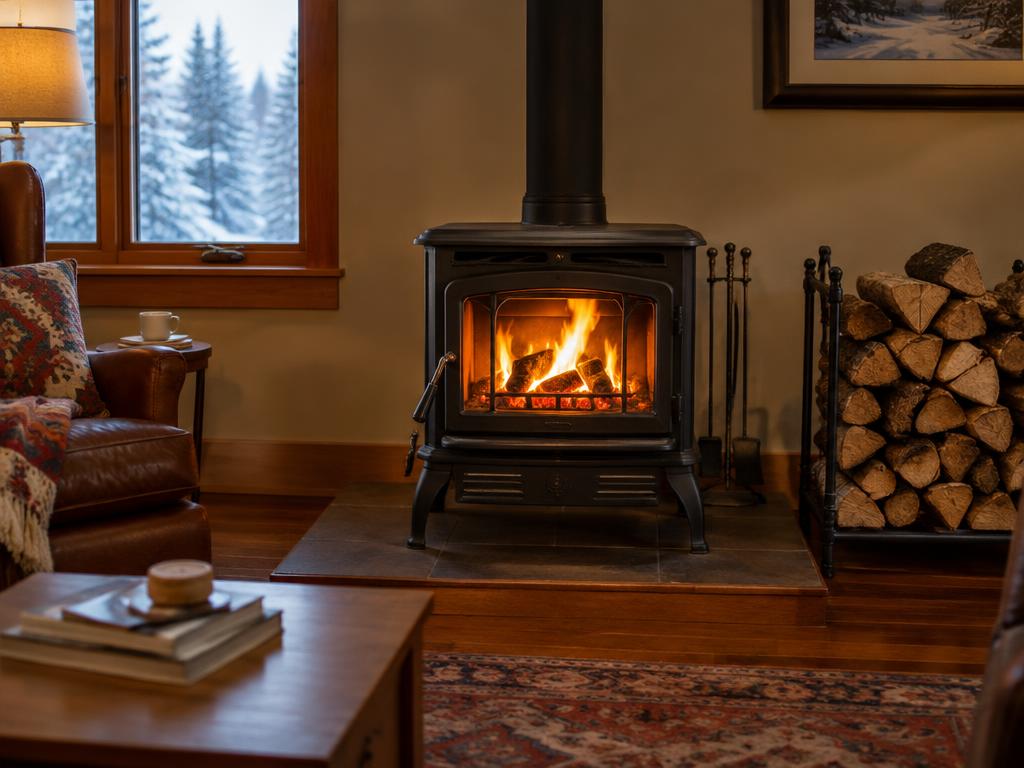
Keep your wood stove burning cleanly, safely, and efficiently through every cold Ontario winter.
Self-check
Warning signs you need wood stove cleaning
Sluggish Draft and Back-Puffing Smoke
When opening the stove door causes smoke to curl into your living room rather than drawing smoothly upward, your flue is suffering from restricted airflow. This points to thick creosote, soot accumulation, or an obstructed cap screen.
Black, Soot-Stained Door Glass
Modern air-wash systems should keep ceramic stove glass reasonably clear. If your glass quickly coats in dense, black, crusty soot, your stove is burning too cool or exhaust venting is restricted, leading to accelerated creosote formation.
Strong Acrid Odours During Rainy Days
A distinct, pungent odour resembling barbecue ash or stale chemical smoke coming from the firebox during wet or humid weather signals significant creosote accumulation inside the pipe. High humidity amplifies these unpleasant chemical odours indoors.
Visible Creosote Flakes on the Baffle
Peering inside the firebox above the internal baffle board or secondary burn tubes reveals whether soot flakes are falling downward. Piled soot on top of the baffle reduces draft space and can ignite under intense burn temperatures.
Rattling, Ticking, or Roaring Sounds
Unusual roaring sounds inside the chimney pipe resemble a low-flying aircraft and indicate a dangerous active chimney fire. Clicking or intense metal pinging during steady operation can also signify overheating caused by restrictive creosote blockage.
Sluggish Heat Output and High Wood Use
If your stove demands double the firewood to heat your rooms and fires burn lazy without vigorous flame, heavy soot has insulated the heat exchange surfaces. Cleaning clears the airflow and restores full heat transfer.
The Impact of Markham Freeze-Thaw Cycles on Stove Venting
Markham winters are notorious for rapid temperature swings, oscillating from biting sub-zero chills to mild, damp thaws within forty-eight hours. These abrupt thermal fluctuations heavily affect how wood stoves establish and maintain draft. When exterior temperatures hover near freezing, heavy, moisture-laden cold air settles into exposed exterior metal chimneys. If the flue contains soot and creosote build-up, the stove struggles to push past this cold air column, resulting in stubborn spillage into the home upon lighting.
The freeze-thaw dynamic also introduces persistent condensation inside stove pipes and chimneys. Warm, moist flue gases meet freezing exterior liner walls, producing acidic liquid runoff that mixes with dry soot. This slurry creates highly corrosive compounds that attack standard single-wall stove pipes, stainless steel liners, and exterior chimney rain caps. Over several seasons, unchecked moisture turns light soot into hardened third-degree creosote, which is significantly more difficult to scrape away without dedicated mechanical tooling.
Furthermore, melting roof snow can refreeze around flashing assemblies and exterior termination cones, occasionally obstructing spark arrestor screens. When combined with interior soot accumulation, restricted airflow starves the firebox of oxygen, forcing smouldering combustion that accelerates creosote development. Regular mid-season and pre-season servicing identifies these weather-induced stresses early, ensuring your stove pipe components remain structurally sound, well-sealed, and completely unobstructed despite the unpredictable swings of our local climate.
- Combats sluggish cold-flue draught caused by damp air inversions
- Neutralizes corrosive acidic runoff formed by condensation mixing with soot
- Clears exterior spark arrestors burdened by frozen slush and ash crusts
- Protects single-wall connector pipes from premature moisture corrosion
- Assesses exterior flue structural stability after intense winter storms
Understanding Creosote Accumulation and Internal Risks
Creosote is not uniform; it evolves through three distinct physical stages as heating habits and venting conditions change. Stage one creosote appears as a light, dry, flaky soot that brush bristles can sweep away easily. This material forms during hot, rapid fires with ample oxygen supply and dry cordwood. While stage one soot is relatively straightforward to remove, it still presents an ignition risk if allowed to accumulate along bends in the connector pipe.
Stage two creosote resembles shiny black flakes or hardened, sticky tar chips clinging tenaciously to the flue interior. It develops when the stove operates with restricted primary air or burns partially seasoned firewood with high moisture content. The unburned volatile compounds condense rapidly, forming dense clusters that simple hand brushes cannot dislodge. Removing stage two deposits requires specialized mechanical whipping gear and rigid scraping heads designed to fracture the sticky crust without warping the surrounding pipe.
Stage three creosote is the most dangerous form: a dense, rock-hard, glassy glaze baked directly onto the flue walls. This thick layer forms when flue gas temperatures consistently drop below the condensation threshold or after recurrent low-temperature smouldering. Glass creosote is exceptionally flammable, burning with explosive fury if a chimney fire ignites. It cannot be cleared through standard sweeping; it requires professional chemical modification treatments and intensive mechanical remediation to restore safe clearance.
- Stage One: Loose, powdery soot removed with standard wire or poly brushes
- Stage Two: Sticky, tar-like flakes requiring aggressive mechanical scraping
- Stage Three: Hard, glassy glaze demanding specialized remediation techniques
- Early discovery prevents irreversible thermal damage to metal exhaust liners
- Proper firewood seasoning prevents rapid progression into hazardous glaze stages
Our Methodical Stove and Flue Diagnostic Process
Before sweeping begins, we conduct a systematic evaluation of your complete wood-burning appliance and exhaust assembly. We examine the firebox interior, inspecting thermal firebricks for cracks, checking steel baffles for sagging, and inspecting secondary burn tubes for warping or clogged air orifices. We test the door latch mechanism and inspect the ceramic rope gasket with a tactile paper-clamp test, ensuring an airtight perimeter that prevents uncontrolled oxygen infiltration from over-firing the stove.
Next, we turn our attention to the connecting stove pipe and chimney flue connection. We check every slip joint, verifying that horizontal runs slope upward properly toward the chimney and that each connection point is secured with three equidistant self-tapping screws. We check for heat discolouration, surface corrosion, and clearance to combustible drywall or timber framing. If your stove features an insulated factory-built chimney or passes through a framed thimble, we examine those transition points thoroughly.
We also assess the termination point above your roofline. Our technicians check the condition of the rain cap, the spark arrestor mesh, and the exterior flashing seals around your roof penetration. By evaluating draft performance and checking for internal creosote thickness across the entire assembly, we build an accurate picture of how your appliance is operating. This allows us to offer practical burning advice and verify that every component satisfies safe operational clearances.
- Checks firebrick condition, steel baffles, and secondary air delivery tubes
- Tests door rope gaskets and glass seals for complete airtight closure
- Examines connector pipe joints, fasteners, and upward clearance angles
- Inspects wall thimbles, ceiling support boxes, and thermal clearances
- Evaluates rooftop chimney caps, storm collars, and spark arrestor screens
"I needed a new chimney cap. The installer arrived in Angus Glen, walked me through cap options, and fitted the perfect one with care. Cleanup was spotless and now I feel protected against rain and pests."
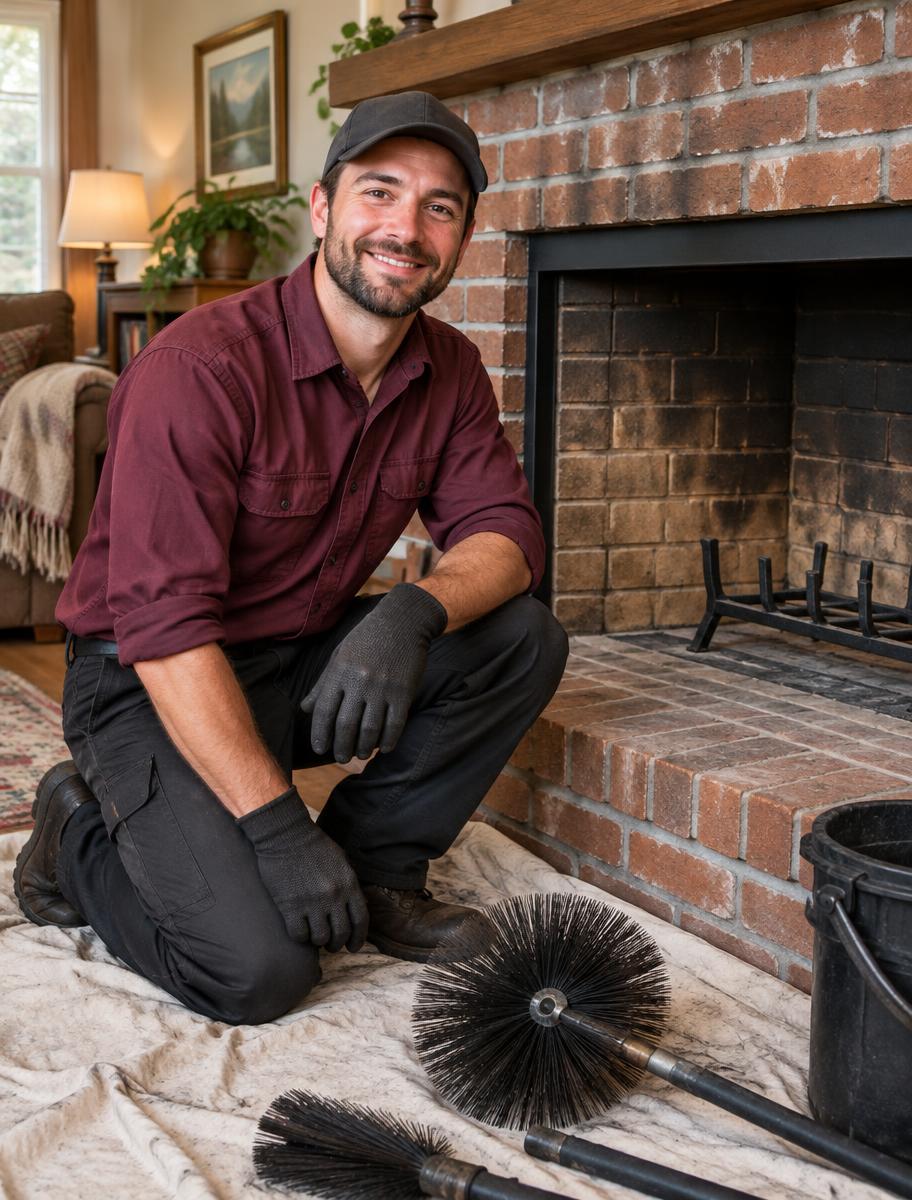
Our process
How we handle your wood stove cleaning, step by step
- 1
Hearth Protection and Dust Containment
We lay drop cloths around your hearth and attach sealed covers with a high-velocity HEPA vacuum, ensuring zero soot or ash escapes into your home.
- 2
Diagnostic Inspection and Flue Assessment
We examine the stove door gasket, firebricks, secondary air tubes, internal baffle, and stove pipe clearances to assess structural condition and deposit levels.
- 3
Rotary Mechanical Flue Sweeping
Using professional rotary whips and material-matched brushes, we scour the entire vertical flue from the rain cap to the appliance, clearing all deposits.
- 4
Internal Firebox and Baffle Servicing
We remove the baffle assembly, thoroughly clean the upper plate, vacuum hidden ash passages, clean air sliders, and polish the ceramic door glass.
- 5
Final Safety Review and Burn Report
We reassemble all stove components, test damper movement, review draught performance, and give you an honest condition report with practical firewood burning tips.
Clean Sweeping: Dust Containment and Systematic Soot Removal
Homeowners often worry that cleaning a wood stove will release black soot onto their furniture, hardwood floors, and area rugs. Our work process prioritizes immaculate containment from the moment we enter your home. We place heavy drop cloths across your flooring, establish an isolated perimeter around the hearth, and seal the stove loading door using specialized magnetic sheeting and secure containment baffles. An industrial HEPA-filtered vacuum runs continuously to maintain negative air pressure, preventing airborne particles from escaping.
Once containment is secured, we utilize professional rotary sweeping tools tailored to your specific flue system. For factory-built stainless steel liners, we employ non-abrasive poly-bristle sweeps or flexible nylon whip strands that clean thoroughly without scratching or gouging the protective stainless steel surface. For traditional clay-lined masonry passages, we use appropriately sized steel wire brushes. We sweep the entire vertical length of the chimney, breaking loose deposits from the rain cap down to the connector base.
Following vertical chimney sweeping, we dismantle interior connector pipes where necessary to clean horizontal elbows, collection tees, and bypass dampers. We clean the internal firebox, gently vacuuming loose ash behind firebricks, sweeping the upper face of vermiculite baffle boards, and clearing ash from air control slide valves. Finally, we clean the ceramic door glass with specialized non-abrasive soot cutters, reassemble all components, and leave your hearth spotless and ready for an immediate, safe fire.
- Full hearth containment using durable drop cloths and magnetic draft seals
- Continuous negative-pressure HEPA filtration to trap fine particulate dust
- Material-matched brushes that clean without damaging delicate stainless liners
- Thorough servicing of internal baffles, damper plates, and air manifolds
- Clear glass cleaning using specialized non-abrasive conditioning pastes
Safety Clearances, Carbon Monoxide, and Fire Prevention
A wood stove operates at exceptionally high temperatures, making clearance to combustible materials a paramount safety issue in any home. Building codes and manufacturer specifications require specific minimum distances between unshielded stove surfaces and nearby walls, wood storage alcoves, furniture, and mantelpieces. During every cleaning visit, we review these clearances, verifying that your floor protector extends far enough in front of the loading door to catch accidental falling embers during refuelling.
Carbon monoxide represents a silent hazard whenever solid fuel burns in a residential space. Wood stoves produce carbon monoxide naturally, but a clean, unobstructed flue draws this gas harmlessly out of the house. When pipes are choked with soot or the flue cap becomes plugged with creosote, these odourless fumes can pool indoors. We emphasize the necessity of functional carbon monoxide alarms on every living level, positioned near sleeping quarters in strict alignment with regional safety recommendations.
We also adhere strictly to solid-fuel installation and maintenance best practices modeled after CSA B365 guidelines. This means ensuring that pass-through assemblies maintain complete fire-stop integrity and that combustion air supplies remain unrestricted. By treating every stove cleaning as a thorough safety review, we give you the confidence that your heating system performs reliably without exposing your household to invisible gases, structural fire hazards, or unchecked heat transfer.
- Verification of clearances between stove walls, furniture, and combustibles
- Inspection of hearth floor pads for adequate ember-fall safety boundaries
- Guidance on optimal carbon monoxide detector placement across living areas
- Adherence to CSA B365 solid-fuel appliance maintenance principles
- Review of dedicated external combustion air kits where installed
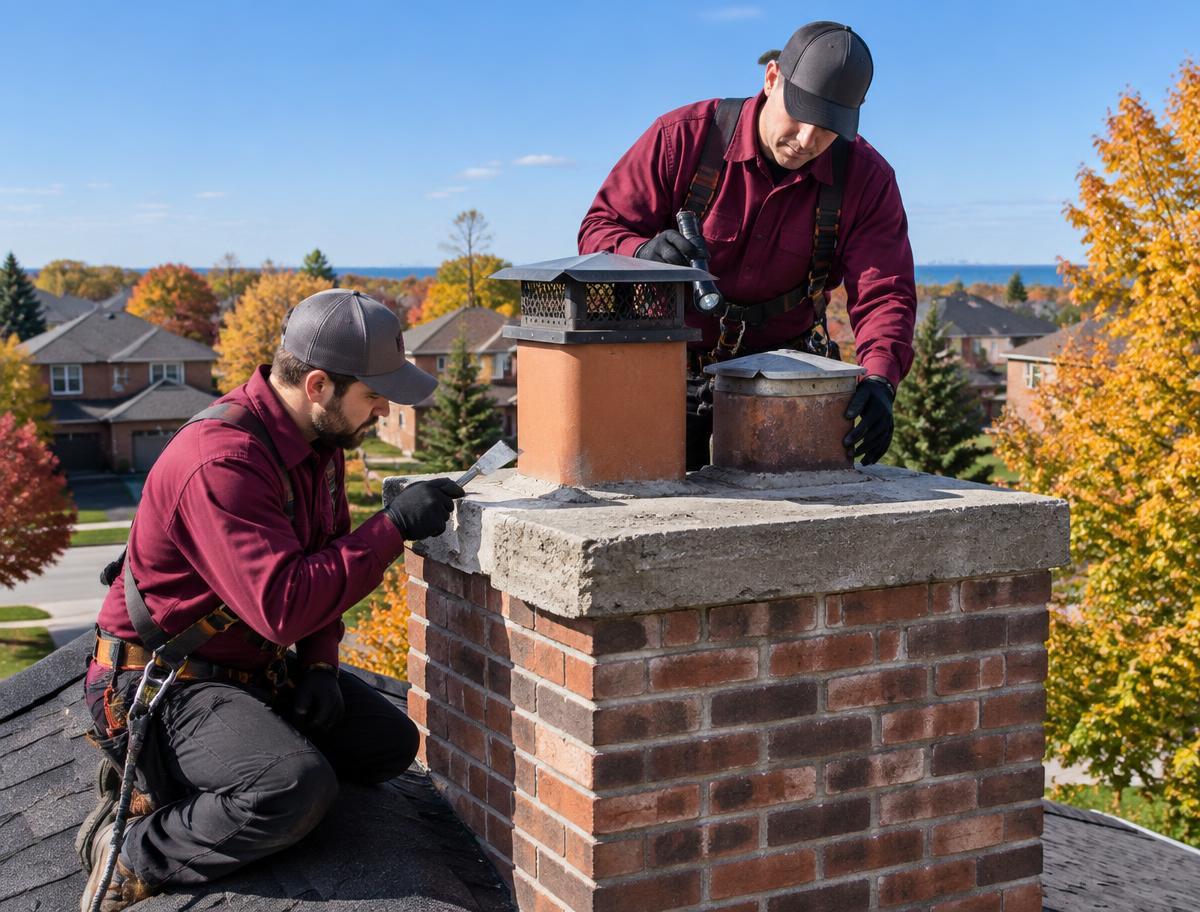
Homeowner Habits for Cleaner, Longer-Lasting Burns
The way you operate your wood stove between professional cleanings directly influences how quickly creosote accumulates in your flue. The single most important rule is burning only dry, seasoned hardwood with a moisture content between fifteen and twenty percent. Species like sugar maple, oak, and white ash burn hot and steady, leaving minimal unburned sap. Burning unseasoned or green wood wastes immense heat energy evaporating water, cooling the flue gases and creating heavy creosote deposits within weeks.
Operating technique matters just as much as firewood selection. Avoid the temptation to choke the primary air damper down completely overnight to stretch burn times. Starving a fire of oxygen creates an inefficient, smouldering burn that fills the stove pipe with uncombusted wood tar. Instead, build hot, bright fires using the top-down lighting method, letting the firebox reach operating temperature quickly before moderately dampening the air controls to a sustainable cruising level.
Keep a daily eye on what comes out of your chimney cap during a burn. After the initial fifteen-minute start-up period, your chimney should emit little more than faint heat ripples and clear vapour. Thick, dark grey or yellow-tinged smoke indicates poor combustion and accelerated creosote production. In addition, always empty ash pans before ash touches the lower grate, as piled ash restricts under-fire airflow and can cause cast-iron bottom grates to warp or burn out prematurely.
- Burn exclusively seasoned hardwoods with under twenty percent moisture content
- Use an inexpensive pin-type moisture meter to test split cordwood before burning
- Avoid low-oxygen smouldering burns that drastically accelerate creosote formation
- Adopt top-down fire building techniques to heat the flue quickly on start-up
- Empty ash receptacles frequently to preserve grates and lower combustion airpaths
Selecting the Right Independent Local Specialist
Choosing a chimney and stove specialist requires finding a team that respects your property, understands solid-fuel mechanics, and works transparently. When seeking a service contractor across Markham and surrounding neighbourhoods, look for independent professionals who specialize directly in venting systems rather than general handymen. Proper wood stove care requires dedicated rotary sweeps, HEPA extraction machinery, and deep familiarity with manufacturer clearances and local solid-fuel heating traditions.
A trustworthy technician provides clear, itemized quotes before turning a wrench and takes the time to explain their findings with photographic evidence. They should gladly inspect internal baffles and show you the volume and stage of creosote removed from your pipes. Furthermore, reputable local businesses carry comprehensive liability insurance and operate out of an established physical location, ensuring accountability, consistent communication, and dependable ongoing maintenance season after season.
At Markham Chimney Services, located on Highway 7, we are an independent service company focused entirely on top-tier chimney, stove, and fireplace care. We take pride in serving homeowners across the Greater Toronto Area (GTA) with honest, practical guidance. We never employ high-pressure sales tactics or invent phantom safety violations. Our objective is straightforward: to leave your wood-burning stove operating in its cleanest, safest, and most fuel-efficient condition, giving you complete peace of mind through every winter freeze.
- Choose dedicated chimney specialists equipped with commercial rotary sweeps
- Demand transparent, written quotes without surprise fees or aggressive upsells
- Verify full commercial general liability insurance coverage for indoor work
- Insist on comprehensive soot containment and HEPA-filtered vacuum extraction
- Look for clear photographic documentation of your flue and baffle condition
Average pricing in Markham
$229 to $449
- Inspection / diagnostic
- $119 to $189 standalone or credited toward service
- Typical time on site
- 1.5 to 2.5 hours on site
- Parts and materials
- Replacement door gaskets, baffle boards, secondary air tubes, or replacement stove pipes are quoted separately if needed
- What moves the price
- Accessibility of the roofline and vertical height of the chimney flue · Degree and severity of creosote deposits, particularly glazed stage three buildup · Condition and complexity of internal stove components such as catalytic combustors or baffles
Estimated local market range, not a quote. All estimates are in Canadian dollars and exclude 13% Ontario HST. Your exact price is confirmed before any work begins.