

A blocked chimney creates an immediate hazard for any household, transforming a comforting fireplace or heating appliance into a potential source of toxic fumes and fire danger. When leaves, twigs, animal nesting materials, or collapsed masonry obstruct your flue, smoke and poisonous gases cannot exit your home freely. At Markham Chimney Services, located at 4418 Highway 7 East, we specialise in resolving venting restrictions quickly and methodically. We carefully diagnose the root cause of the obstruction, clear the flue path using specialised equipment, and ensure your fireplace vents as intended so your family remains completely protected throughout the cold season.
Markham homes experience dramatic weather shifts that place exceptional physical strain on chimney systems, making periodic blockages a frequent reality for local homeowners. Whether you reside in Unionville, Langstaff, Berczy Village, or surrounding neighbourhoods across the Greater Toronto Area (GTA), our independent service team brings practical expertise straight to your doorstep. We address stubborn blockages, evaluate damper movement, eliminate lingering creosote odours, and restore full airflow without introducing dirt into your living spaces. Our goal is to provide honest assessments, dependable workmanship, and straightforward guidance so you can use your hearth with complete peace of mind.
Chimney Blockage Removal: visit summary
Chimney Blockage Removal: nests, debris and odour sources removed safely, then the flue tested for proper draft. Serving Markham and the Greater Toronto Area (GTA). The estimated local market range is $249 – $549, not a fixed company rate. The final scope and quote are confirmed before work begins.
| Estimated market range | $249 – $549. All estimates are in Canadian dollars and exclude 13% Ontario HST. |
|---|---|
| Typical time | Typically 1.5 to 3 hours depending on blockage severity and access |
| Price factors | Type and density of obstruction (loose leaves vs compressed animal nests or masonry); Chimney height, roof pitch, and external accessibility in winter conditions; Condition of existing flue liner and need for specialised containment or deodorising |
| Routine signs to discuss | Smoke Spilling Into the Room; Sluggish or Smothered Flames; Scratching or Fluttering Sounds; Foul or Sour Odours; Debris Falling Onto the Hearth; Carbon Monoxide Alarm Activation |
What Chimney Blockage Removal Entails for Local Homes
Chimney blockage removal is a specialised service dedicated to identifying and extracting physical barriers lodged inside your chimney flue or venting pipe. Over months of regular use or periods of summer disuse, flues can collect substantial debris that interrupts the natural upward draft. Removing these barriers requires specialised rods, scrapers, and high-powered vacuum containment systems designed to dislodge stubborn materials without allowing soot and contaminants to escape into your living space. The process restores the vital passage your heating appliance requires to exhaust combustion byproducts safely outdoors.
Beyond simply knocking debris loose, a proper clearing service involves evaluating how the blockage formed in the first place. Obstructions rarely occur in a vacuum; they frequently point to broken chimney caps, deteriorating interior liners, or structural shifts within the masonry column. Our technicians examine the entire length of the flue using high-intensity lighting and diagnostic cameras when necessary. This meticulous approach guarantees that we do not merely treat the visible symptom, but instead identify any underlying structural compromises that could cause repeated venting failures in subsequent months.
Odour control is another crucial aspect of our blockage clearing service. When animal matter, dead birds, or heavy soot mixtures remain trapped inside a damp flue, unpleasant smells quickly seep into your living room through the firebox. Clearing the physical obstruction and applying targeted, chimney-safe neutralising treatments neutralises stubborn sour odours. We focus on leaving your fireplace completely clean, functional, and neutral-smelling, ensuring your indoor air quality remains fresh and healthy regardless of the weather conditions outdoors.
- Mechanical extraction of leaves, branches, and organic forest debris
- Safe extraction of abandoned squirrel, raccoon, and bird nests
- Dislodgement of fallen masonry fragments, bricks, and mortar plugs
- Containment of soot and dust using industrial HEPA filtration systems
- Application of non-toxic flue deodorisers to neutralise stagnant smells
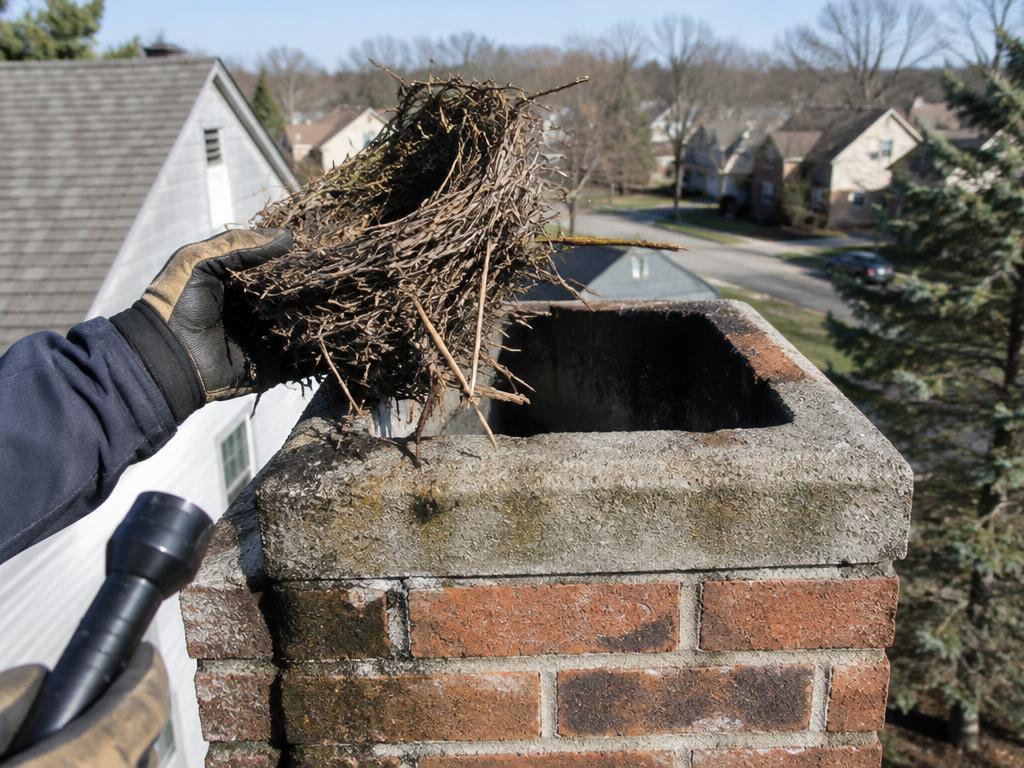
Clear dangerous chimney obstructions quickly to restore safe venting and stop smoke from entering your Markham home.
Self-check
Warning signs you need chimney blockage removal
Smoke Spilling Into the Room
When you light a fire, smoke curls out of the hearth opening instead of drafting upward. This direct rollout signals that the flue path is severely choked by nests, fallen bricks, or thick soot.
Sluggish or Smothered Flames
Fires struggle to ignite, smoulder weakly, or go out completely despite dry firewood and open draft controls. A blocked flue cannot draw the fresh oxygen required to sustain healthy, vibrant combustion in your hearth.
Scratching or Fluttering Sounds
Noises originating inside the chimney walls indicate trapped wildlife. Birds, squirrels, or raccoons nesting in the flue create physical obstacles that rapidly obstruct venting pathways and create severe fire hazards.
Foul or Sour Odours
Pungent, musty, or decaying smells drifting through the fireplace opening point to trapped animal matter or decomposing organic debris. These odours worsen during humid weather or when household exhaust fans operate.
Debris Falling Onto the Hearth
Finding twigs, leaves, mortar sand, or broken clay tile pieces inside your firebox indicates that an obstruction is developing overhead. Falling material confirms internal chimney deterioration or active wildlife intrusion.
Carbon Monoxide Alarm Activation
An sounding carbon monoxide alarm while using your fireplace or furnace is an urgent emergency. Flue blockages force hazardous, odourless combustion gases directly back into your home instead of discharging them outside.
The Impact of Ontario Freeze-Thaw Weather on Chimney Flues
Our local climate presents unique structural challenges for brick and stone chimneys across Markham. During the late autumn, winter, and early spring, temperatures regularly fluctuate above and below zero degrees Celsius, sometimes within a matter of hours. Moisture from driving rain, melting snow, and atmospheric condensation penetrates unsealed chimney crowns, exterior brick faces, and porous mortar joints. When that trapped water freezes, it expands by approximately nine percent, creating immense hydraulic pressure that breaks down masonry materials from within.
As internal clay tile liners and surrounding brickwork crack under this unrelenting freeze-thaw cycle, fragments separate and fall directly into the flue passage. These heavy chunks often catch on damper assemblies, smoke shelves, or intermediate offsets within the chimney structure. A single fallen tile shard can quickly create a collection ledge, catching soot flakes, pine needles, and windblown litter until the flue becomes entirely choked. Homeowners frequently assume their chimney is clear because the top looks intact, unaware of internal spalling below.
Furthermore, rapid temperature changes create dense cold air pockets within uninsulated masonry flues, especially on exterior wall installations. When cold exterior air pushes down the stack while hot gases attempt to rise, condensation spikes sharply along the interior flue walls. This persistent moisture accelerates the decomposition of old nesting matter or soot, producing acrid, damp odours that push into your home. Understanding our regional climate dynamics helps us implement durable clearing strategies that protect your chimney against moisture-driven structural failures.
- Repeated freezing and thawing breaks interior clay flue liners
- Fallen mortar and spalled brick create sudden interior blockages
- Heavy condensation combines with soot to create dense, sticky clogs
- Winter ice dams on chimney crowns drive water into interior joints
- Strong seasonal winds drive twigs and foliage into uncapped flues
Common Culprits Behind Blocked Chimney Flues
Wildlife activity ranks among the most frequent causes of blocked chimneys throughout Markham neighbourhoods. Mature trees lining residential streets provide ideal habitats for raccoons, grey squirrels, starlings, and chimney swifts seeking shelter. An uncapped or damaged chimney resembles a hollow tree trunk, offering an attractive, predator-free environment for nesting. Birds and small animals drag in leaves, dry grass, moss, and twigs, constructing deep, dense plugs that choke off the flue entirely and present severe, immediate fire hazards upon lighting a fire.
Creosote accumulation is another primary culprit behind flue restrictions. Whenever wood burns incompletely, volatile vapours cool as they ascend the chimney, condensing into sticky tar-like soot along the flue surfaces. If left neglected over several burning seasons, this glaze can expand into glazed creosote layers that narrow the effective cross-sectional area of the flue. In advanced stages, this expansion acts like plaque in an artery, severely restricting airflow and dramatically increasing the risk of an aggressive chimney fire.
Structural deterioration within the chimney column also accounts for serious blockages. Aging homes throughout our area often feature unlined brick chimneys or original clay tiles bonded with soft lime mortar. Over decades of service, acidic combustion gases deteriorate the mortar bonds, causing structural bricks or tile sections to collapse inwards. Construction accidents, improper historical renovations, and windborne debris can also introduce foreign objects into the venting chamber, requiring professional assessment and careful mechanical removal.
- Animal nesting materials including twigs, animal fur, feathers, and dry straw
- Glazed, stage-three creosote deposits that expand across the flue opening
- Spalled clay flue tiles that shatter and collect along the smoke shelf
- Fallen mortar collars and exterior brick pieces collapsing into the chamber
- Windblown organic rubbish, pinecones, and heavy autumn leaf accumulation
Health and Safety Risks of a Restricted Flue System
Operating a fireplace or fuel-burning appliance connected to an obstructed chimney poses immediate threats to human life and property. When combustion byproducts cannot vent freely outdoors, they follow the path of least resistance back into your living areas. Smoke quickly fills the room, damaging furniture, triggering respiratory distress, and irritating eyes. More dangerously, incomplete combustion generates carbon monoxide, an invisible, tasteless, and odourless toxic gas that can cause severe poisoning, neurological damage, or death without warning.
In addition to toxic gas exposure, organic blockages present extreme fire hazards. Bird and squirrel nests consist of exceptionally combustible materials like dried grass, pine needles, and paper scraps. If you ignite a fire beneath a nesting obstruction, radiant heat or wandering embers can ignite the mass instantly. A fire burning inside an obstructed flue generates extraordinary temperatures, often cracking masonry walls, setting attic timbers ablaze, or spreading destructive flames directly into adjacent household wall partitions.
Restricted venting also damages the heating appliance and flue structure over time. Backed-up heat and acidic moisture corrode metal dampers, rot stainless steel liners, and weaken masonry mortar joints. The stale, unvented atmosphere accelerates mould growth within the chimney column, sending musty odours into your home during humid summer weather. Ensuring your flue remains completely clear is an essential baseline requirement for maintaining home safety, healthy indoor air, and structural longevity.
- Carbon monoxide accumulation threatening household occupants
- Sudden chimney fires sparked by blazing organic nest matter
- Smoke rollout causing soot damage to drywall, furniture, and flooring
- Accelerated metal corrosion on dampers, lintels, and firebox panels
- Aggravation of household allergies and chronic respiratory conditions
"I needed a new chimney cap. The installer arrived in Angus Glen, walked me through cap options, and fitted the perfect one with care. Cleanup was spotless and now I feel protected against rain and pests."

Our process
How we handle your chimney blockage removal, step by step
- 1
Hearth Protection & Negative Air Containment
We lay heavy drop cloths across the living space, seal the firebox opening, and activate industrial HEPA vacuums to capture all airborne soot, dander, and debris safely.
- 2
Diagnostic Flue & Rooftop Assessment
Our technicians inspect the damper, smoke shelf, and chimney stack from top to bottom, pinpointing the blockage composition, depth, and structural stability before starting physical removal.
- 3
Mechanical Obstruction Extraction
Using flexible rods, specialised nest-clearing heads, and manual recovery tools, we systematically break down and extract organic plugs, fallen masonry fragments, and heavy debris.
- 4
Flue Wall Sweeping & Odour Treatment
We sweep residual soot from the flue walls, clear the smoke shelf thoroughly, and apply chimney-safe neutralising agents to eliminate lingering smells left by damp or decaying matter.
- 5
Draft Verification & Final Safety Check
We verify smooth damper operation, conduct smoke-draft airflow testing to confirm unrestricted venting, and review prevention options like heavy-duty protective caps with you.
How We Inspect and Diagnose Chimney Blockages
Our diagnostic process begins with a comprehensive visual assessment of the hearth, firebox, and damper mechanism. We verify whether the damper opens fully and sits correctly within its frame, checking for mechanical binding or fallen debris sitting on top of the plate. We inspect the smoke shelf behind the damper, as this flat horizontal area often collects bird droppings, mortar dust, and small animal carcasses that obstruct the bottom of the flue stack before debris reaches the main hearth.
Next, we conduct an internal evaluation of the flue passage. Using high-output LED inspection lights and, where necessary, internal camera systems, we examine the chimney column from the bottom up and from the rooftop down. This allows us to pinpoint the precise location, density, and composition of the obstruction without guesswork. We determine whether we are dealing with loose foliage, a dense animal nest, creosote narrowing, or broken clay liners that require careful stabilization before removal.
We also assess the chimney exterior, focusing on the cap, crown, flashing, and brickwork. An inspection of the roofline reveals how debris entered the system initially, whether through a missing spark arrestor, torn wire mesh, or cracked concrete crown. By pairing internal diagnostic observations with exterior evaluations, we build an accurate picture of your chimney system. We explain our findings in clear language and outline the exact clearing steps required to restore proper draft.
- Visual evaluation of damper mobility, throat integrity, and smoke shelf debris
- Internal lighting and camera examination of the full flue length
- Precise identification of obstruction composition and exact height
- Exterior rooftop examination of chimney caps, crowns, and masonry
- Air draft verification testing using non-toxic smoke pencils
Our Step-by-Step Blockage Clearing and Odour Control Process
Once we identify the obstruction, we prepare your home carefully before commencing any physical work. We place heavy protective drop cloths across the hearth and surrounding floor areas, sealing off the fireplace opening with containment barriers and connecting a high-filtration HEPA vacuum. This containment system maintains negative air pressure inside the firebox, capturing airborne soot, animal dander, and microscopic particulates so that not a speck of dust settles on your living room furniture during the clearing process.
With containment secure, we employ specialized mechanical clearing tools suited to the specific obstruction. For organic nests and stubborn debris, we utilize flexible rotary rods equipped with specialized breaking heads, gentle steel brushes, or manual nest hooks. Our technicians work progressively from the roof or firebox, breaking apart the obstruction methodically rather than forcing large plugs downward where they could wedge tighter. We extract all foreign matter piece by piece, dropping it safely into the containment zone for disposal.
After extracting the blockage, we brush down the entire flue column to remove lingering soot and residual nest debris. If decomposing matter has left foul smells behind, we apply chimney-safe, non-corrosive deodorizing washes to the smoke chamber and flue surfaces. Finally, we conduct a draft test to confirm that hot air and smoke draw freely through the chimney, leaving your hearth completely clean, safely venting, and ready for regular service.
- Full hearth containment using negative-pressure HEPA filtration units
- Progressive debris extraction using rotary clearing rods and nest hooks
- Removal and safe disposal of all organic nesting matter and animal residue
- Thorough soot sweeping along the entire flue wall perimeter
- Application of targeted odour neutralisers to eliminate lingering smells

Practical Maintenance Tips to Keep Your Flue Open Year-Round
The most effective way to prevent future chimney blockages is installing a durable, professional-grade chimney cap equipped with spark arrestor mesh. A properly fitted stainless steel or copper cap acts as a physical barrier against raccoons, squirrels, birds, and windblown branches. The mesh openings must be calibrated correctly: wide enough to allow hot exhaust gases and soot to escape without clogging, but narrow enough to exclude opportunistic urban wildlife seeking warm winter shelter.
Pruning nearby tree limbs is another practical step homeowners can take. Squirrels and raccoons use overhanging branches as natural bridges to reach your rooftop easily. Maintaining a clearance zone of at least three metres between tree canopies and your chimney stack significantly reduces animal access. Furthermore, trimming back dense foliage reduces the volume of autumn leaves, twigs, and seed pods that land on the chimney crown and eventually slide past damaged caps into the flue chamber.
Scheduling regular professional sweeps and inspections ensures minor issues are identified before they escalate into dangerous blockages. Routine inspections allow professionals to detect hairline fractures in flue tiles, mortar breakdown, or minor animal tampering early. By addressing small maintenance tasks promptly and establishing good burning practices, you protect your chimney investment, preserve healthy indoor air, and ensure your fireplace remains dependable throughout the coldest Ontario winters.
- Install high-grade stainless steel chimney caps with wildlife exclusion mesh
- Trim overhanging tree limbs back at least three metres from the roofline
- Schedule an annual professional chimney inspection before burning season
- Burn only seasoned, dry hardwood to minimise rapid creosote accumulation
- Keep the damper closed during the summer to prevent opportunistic insect nesting
Choosing the Right Chimney Professional in Markham
Selecting a qualified chimney contractor requires looking for clear indicators of professionalism, technical care, and local experience. Chimney systems involve complex physics, building codes, and significant fire safety considerations. A reputable contractor takes the time to explain what is happening inside your flue, presents clear before-and-after evidence of their work, and never pressures you into unnecessary structural rebuilds when a straightforward blockage removal or cap replacement will solve the issue safely.
Ensure the contractor you select adheres to recognized industry safety benchmarks, such as CSA standards and WETT-style inspection practices. While independent service professionals operate with autonomy, adhering to these established guidelines demonstrates a deep commitment to fire safety, proper clearances, and thorough workmanship. Always verify that the company carries comprehensive commercial general liability insurance and active workplace safety coverage so your property and the technicians working on your roof are fully protected.
Local familiarity matters immensely when dealing with masonry chimneys in our region. Markham features a mix of post-war bungalows, mid-century split-levels, and contemporary custom residences, each presenting distinct chimney designs, flue configurations, and exposure conditions. A local specialist understands how our specific freeze-thaw patterns impact these varied structures over time. Choosing a dedicated neighbourhood provider ensures accessible follow-up support, transparent pricing, and practical guidance tailored directly to your home.
- Demonstrated adherence to CSA standards and WETT-style safety principles
- Full commercial general liability insurance and provincial safety coverage
- Clear diagnostic explanations accompanied by transparent written estimates
- Use of modern dust containment, video cameras, and HEPA vacuums
- Deep familiarity with regional Markham architecture and climate conditions
Average pricing in Markham
$249 – $549
- Inspection / diagnostic
- $129 – $189 (waived or credited toward same-day blockage removal)
- Typical time on site
- Typically 1.5 to 3 hours depending on blockage severity and access
- Parts and materials
- Chimney caps, spark arrestors, top dampers, and replacement mesh quoted separately
- What moves the price
- Type and density of obstruction (loose leaves vs compressed animal nests or masonry) · Chimney height, roof pitch, and external accessibility in winter conditions · Condition of existing flue liner and need for specialised containment or deodorising
Estimated local market range, not a quote. All estimates are in Canadian dollars and exclude 13% Ontario HST. Your exact price is confirmed before any work begins.