
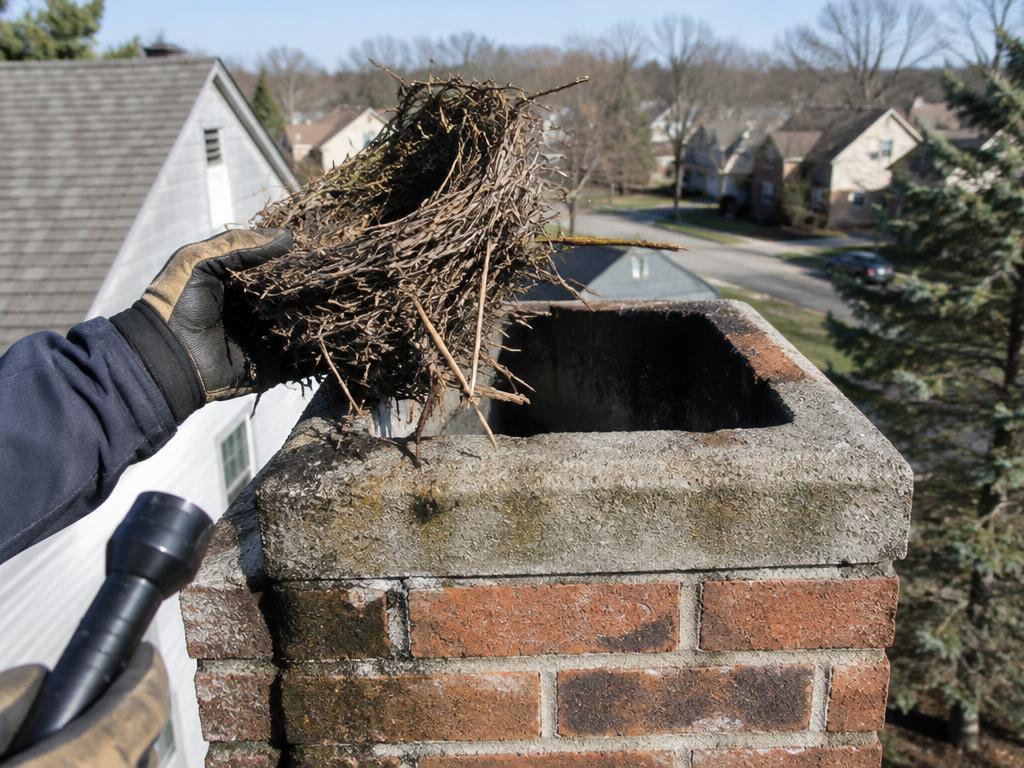
A working chimney should safely vent combustion gases, smoke, and excess moisture out of your living space. When wild animals view your masonry stack as a hollow, sheltered tree trunk, that essential venting pathway quickly becomes compromised. Birds, squirrels, and raccoons frequently construct nests directly inside Markham flues, using twigs, dried grass, leaves, and mud to create dense plugs. These blockages trap dangerous heat, collect moisture, and push toxic combustion gases backward into your rooms. Resolving this issue requires careful diagnostic inspection and specialized mechanical extraction to protect your flue tiles and restore balanced airflow.
Markham Chimney Services operates locally from 4418 Highway 7 East, helping homeowners across Markham neighbourhoods restore flue integrity and indoor air quality. Our dedicated nest removal and odour control procedures tackle both fresh animal intrusions and old, compacted nesting debris that has decayed over multiple seasons. We understand local building construction, whether you own a mid-century bungalow in Markham Village or a modern custom two-storey home in Unionville. Our team focuses on safe removal methods that prevent masonry abrasion, eliminate lingering organic odours, and ensure your home stays protected against the harsh seasonal weather patterns common across Southern Ontario.
Chimney Nest Removal: visit summary
Chimney Nest Removal: nests, debris and odour sources removed safely, then the flue tested for proper draft. Serving Markham and the Greater Toronto Area (GTA). The estimated local market range is $279 – $599, not a fixed company rate. The final scope and quote are confirmed before work begins.
| Estimated market range | $279 – $599. All estimates are in Canadian dollars and exclude 13% Ontario HST. |
|---|---|
| Typical time | 1.5 to 3.5 hours depending on nest density and roof access |
| Price factors | Depth, compaction, and physical height of the nest inside the chimney flue; Roof pitch, stack height, and accessibility considerations for technician safety; Need for specialized enzymatic biological sanitization and cap exclusion hardware |
| Routine signs to discuss | Rustling or Chirping Sounds in the Wall; Smoke Spilling Into the Living Room; Foul, Musty Odours Near the Fireplace; Twigs and Leaves Falling Onto the Hearth; Frequent Carbon Monoxide Alarm Triggers; Birds Entering and Exiting the Chimney Top |
Why Markham Chimneys Attract Nesting Wildlife
In nature, cavity-nesting birds and small mammals seek out hollow trees, deep rock crevices, and shaded tree canopies to raise their young away from predators. In developed suburban settings like Markham, mature hollow trees are scarce, but residential masonry chimneys are abundant. To a migrating bird or an urban squirrel, an uncapped chimney looks like an ideal substitute: a deep, vertical refuge protected from wind, predatory hawks, and driving rain. The warm air continually drafting upward from a heated basement or ground-floor fireplace makes the interior flue particularly inviting during unpredictable early spring weather.
Chimney swifts, starlings, northern flickers, and grey squirrels are the most frequent culprits found inside local flues. Swifts use natural saliva to glue twig nests directly to vertical clay flue tiles, while squirrels drag large quantities of dried leaves, oak branches, and shredded bark down onto smoke shelves or damper assemblies. Over just a few days, an industrious pair of animals can deposit enough flammable, moisture-retentive organic debris to completely choke a twelve-inch flue passageway. Without a secure, properly sized chimney cap, your heating exhaust system remains an open doorway to local wildlife looking for shelter.
The problem is compounded in neighbourhoods with mature tree canopies, such as Angus Glen, Bayview Glen, and Milliken. Overhanging branches provide easy highway access to your roofline, allowing squirrels and raccoons to inspect your chimney crown directly. Once an animal determines that a flue is warm and quiet, it often returns year after year to nest. Recognizing why wildlife targets your chimney helps you understand that removing the debris is only the first part of a complete solution; preventing seasonal returns through physical flue exclusions is equally crucial for long-term safety.
- Chimney flues mimic natural hollow cavities, offering shelter from wind, rain, and ground predators.
- Continuous warm upward draft from living spaces attracts animals during brisk spring and autumn days.
- Mature neighbourhood tree canopies provide squirrels and raccoons with direct pathways to your roof.
- Uncapped or damaged flue openings present zero resistance to enterprising birds and small mammals.
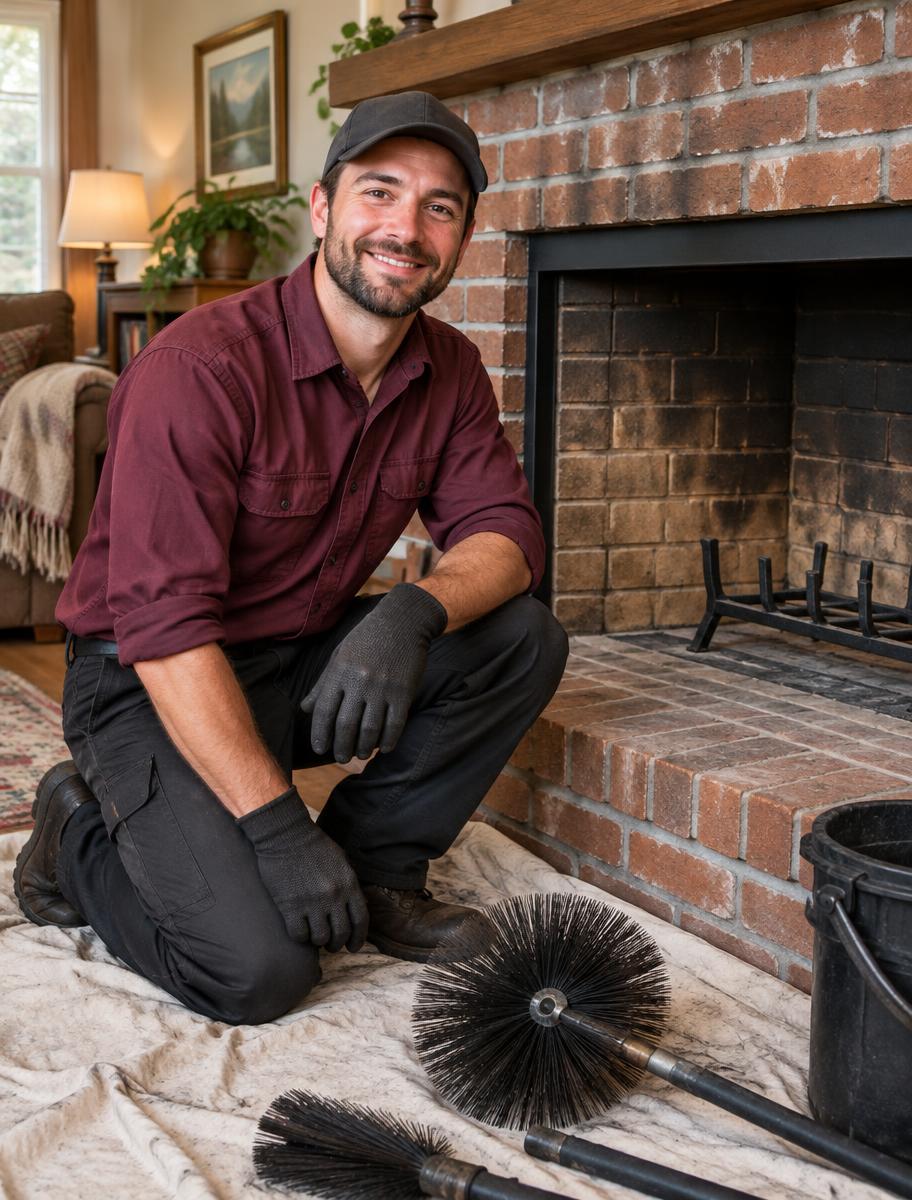
Gentle, thorough wildlife nest extraction and odour control designed for Markham homes and harsh Ontario winters.
Self-check
Warning signs you need chimney nest removal
Rustling or Chirping Sounds in the Wall
Hearing scratching, flapping, or high-pitched chirping sounds from inside the chimney or behind the fireplace wall indicates active wildlife, such as chimney swifts, starlings, or squirrels nesting on the smoke shelf or clinging to the clay flue walls.
Smoke Spilling Into the Living Room
When you light a fireplace fire and smoke billows out of the firebox opening rather than drafting upward, a physical blockage like an animal nest is likely preventing exhaust gases from traveling through the chimney flue.
Foul, Musty Odours Near the Fireplace
A persistent smell of damp rot, animal droppings, or decaying organic material coming from your hearth, especially on humid days or when your air conditioner runs, points to a waterlogged nest trapped inside your chimney.
Twigs and Leaves Falling Onto the Hearth
Finding dried twigs, leaves, straw, or small bits of animal fur on your firebox floor or behind the damper is concrete evidence that wildlife has been dragging nesting debris down from the chimney top.
Frequent Carbon Monoxide Alarm Triggers
If your home carbon monoxide detector sounds while your furnace, boiler, or water heater is running, venting gases may be blocked by a nest plug, forcing dangerous carbon monoxide backward into your living areas.
Birds Entering and Exiting the Chimney Top
Observing chimney swifts or starlings repeatedly diving into your chimney pot or circling directly above the stack during dawn or dusk is a clear visual sign of an established active nest inside the flue.
Ontario Freeze-Thaw Weather and Trapped Moisture Damage
Markham experiences dramatic climatic swings, transitioning from sweltering, humid summers to freezing winter conditions featuring dozens of rapid freeze-thaw cycles. Masonry is naturally porous, designed to absorb small amounts of moisture and release it harmlessly through unobstructed ventilation and sunshine. However, when an animal nest plugs the flue, it acts like a giant sponge suspended inside the core of your chimney. The nest traps rain, snowmelt, and condensation, holding moisture against the interior clay tiles, metal liners, and surrounding mortar joints for weeks without drying.
When winter temperatures plunge below freezing, this trapped moisture expands by approximately nine percent inside the microscopic pores of your flue system. The internal pressure generated by freezing water causes clay flue tiles to crack, spall, and flake apart, compromising the containment barrier that separates flue gases from combustible house framing. In metal chimneys or fireplace smoke chambers, prolonged moisture exposure accelerates galvanic corrosion, rusting out steel dampers, throat linkages, and stovepipes, which leads to expensive, preventable structural repairs.
As spring arrives, the combination of trapped moisture, warming temperatures, and decaying organic matter creates an ideal breeding ground for biological growth, including mould spores and bacteria. The damp smell of rotting wood and animal waste travels down the chimney shaft, filling ground-floor rooms with persistent, musty odours. Protecting your chimney from nesting materials is therefore a vital component of seasonal building maintenance, preserving the expensive brick, stone, and tile assemblies that keep your home warm and watertight through harsh Ontario winters.
- Nests hold snowmelt and rainwater against flue tiles, preventing standard seasonal drying.
- Freeze-thaw cycles cause trapped water to expand, spalling clay liners and crumbling mortar joints.
- Persistent dampness rusts out cast-iron dampers, smoke shelves, and metal appliance liners.
- Trapped humidity fosters stubborn indoor mould odours and degrades internal chimney masonry.
Identifying the Culprits: Birds, Squirrels, and Urban Wildlife
Different animal species construct nests in distinctly different manners, requiring tailored removal and management approaches. Chimney swifts are small, cigar-shaped migratory birds that spend their summers in Ontario. They cannot perch on tree branches due to their unique claw anatomy, so they rely entirely on vertical, textured surfaces like rough clay or brick flues to roost and build nests. Because chimney swifts are a protected species under federal and provincial wildlife legislation, their active nests cannot be disturbed while eggs or fledglings are present, requiring specialized timing and monitoring.
European starlings, pigeons, and northern flickers also frequent local chimneys, often packing flues with deep deposits of straw, twigs, feathers, and dried droppings. Starlings in particular are known for stacking nesting material several feet deep from the damper assembly upward, completely choking combustion paths. In contrast, eastern grey squirrels and black squirrels view the chimney as a safe winter den or springtime nursery. Squirrels pack flues with leaves, pine cones, and shredded roof materials, occasionally dropping acorns or walnut shells down into fireplace inserts, which rattle loudly during windy conditions.
Raccoons represent the largest and most destructive animals likely to invade a Markham flue. Mother raccoons frequently enter uncapped chimneys in early spring to give birth, resting directly on the fireplace smoke shelf just above the closed damper. Raccoons can dislodge flue tiles, tear apart rusted dampers, and deposit heavy biological waste that presents substantial health risks, including roundworm exposure. Understanding which creature is occupying your flue ensures that removal work is carried out humanely, legally, and with appropriate protective equipment to neutralize biological hazards.
- Chimney swifts build small, adhesive twig nests that adhere directly to vertical clay flue walls.
- European starlings pack dense, multi-foot accumulations of straw, feathers, and droppings.
- Squirrels drag large bundles of leafy branches, bark, and yard debris deep into chimney cavities.
- Raccoons establish birthing dens on smoke shelves, requiring specialized handling and sanitation.
"I discovered odd odours coming from my chimney and booked a deodorizing treatment Downtown. They applied a specialized solution, sealed minor cracks, and eliminated the smell completely. My living room feels fresh again."
Our process
How we handle your chimney nest removal, step by step
- 1
Diagnostic Camera Inspection
We examine the flue from the roof and hearth using high-resolution cameras to identify the nest depth, verify animal status, and assess masonry condition.
- 2
Interior Containment Setup
Our technicians lay heavy floor protection and install negative-pressure HEPA filtration at the hearth to prevent soot, dust, and biological particles from entering your home.
- 3
Careful Mechanical Extraction
Using specialized retrieval rods and brushes, we dislodge and remove the nesting debris section by section without scratching or cracking your delicate flue tiles.
- 4
Biological Sanitization and Deodorization
We vacuum the smoke shelf and apply non-corrosive, enzyme-based sanitizers to eliminate bacteria, bird droppings, animal parasites, and lingering foul odours.
- 5
Draft Testing and Exclusion Installation
We perform an airflow check to ensure full draft recovery and install a durable stainless steel cap to permanently prevent future animal entry.
Our Diagnostic Inspection and Gentle Removal Process
Every nest removal appointment begins with a thorough diagnostic inspection. We never blindly push poles or brushes down an unfamiliar flue, as this can compress the nest into an immovable, solid wedge or injure trapped animals. Instead, our technicians evaluate the exterior chimney stack, the roofline, and the crown before setting up internal containment. Using high-resolution digital cameras and powerful diagnostic lighting, we inspect the flue from both the top termination and the bottom hearth to pinpoint the exact location, density, and composition of the blockage.
Once we confirm the nest is inactive and safe to remove, we establish comprehensive dust containment inside your home. We use heavy drop cloths, sealed plastic barriers, and commercial HEPA-filtered vacuum systems to ensure that loose twigs, soot, bird lice, and dried biological dust cannot escape into your living space. We then use specialized extraction tools, including flexible mechanical rods, nest retrieval hooks, and rotary clearing sweeps, to break apart the structure gradually and extract it downward or upward depending on where the plug sits.
Following physical extraction, we clean the entire interior flue surface to remove residual organic residue, sticky swift saliva, and accumulated soot. We vacuum the smoke shelf, wash the damper plate, and inspect the exposed flue liner for underlying cracks or gaps that may have been hidden beneath the debris. Finally, we conduct a draft and airflow check to ensure that the flue draws properly and is completely prepared to vent combustion appliances or fireplaces safely once again.
- Comprehensive visual and camera assessment to pinpoint the nest location and verify animal activity.
- Full living room containment utilizing drop cloths, plastic sheeting, and HEPA-rated vacuums.
- Careful mechanical extraction using custom retrieval hooks that preserve flue tile surfaces.
- Detailed post-removal sweep and draft check to guarantee complete flue clearway and safety.
Eliminating Decay, Droppings, and Lingering Flue Odours
Removing the physical bulk of a nest often solves only half of the homeowner's complaint. In many instances, the lingering smell of decaying matter, stale feathers, accumulated bird droppings, or rodent urine continues to permeate the home, especially on hot, humid summer afternoons. When outside barometric pressure drops or indoor air conditioning runs, chimneys often reverse their natural draft, drawing air downward into the living space. If the flue surfaces remain coated in organic contaminants, that downward airflow carries pungent, sour odours straight into your living room.
Our odour control process relies on targeted biological sanitation and neutralizing agents rather than cheap masking fragrances that merely hide the stench temporarily. After all solid debris is extracted, we apply professional-grade, enzyme-based sanitizing washes and non-corrosive deodorizers formulated specifically for masonry environments. These solutions break down the proteins in animal droppings, saliva, and organic fluids at a microscopic level, rendering them inert and permanently eliminating the volatile compounds responsible for offensive odours.
We also pay close attention to the smoke shelf, a horizontal ledge located directly behind the damper in traditional masonry fireplaces. Debris, droppings, and dead insects frequently collect on this shelf out of sight, where damp chimney drafts keep them constantly moist. By scraping, vacuuming, and neutralizing this critical horizontal area, we ensure that the source of persistent smells is entirely eradicated, leaving your fireplace area smelling clean, neutral, and fresh regardless of seasonal changes in atmospheric humidity.
- Enzymatic treatments break down the organic proteins found in animal waste and biological fluids.
- Non-corrosive sanitizers neutralize bacteria without damaging clay flue tiles or mortar joints.
- Targeted deep vacuuming clears hidden debris and biological waste off the flat smoke shelf.
- Permanent odour eradication prevents reverse-draft air from carrying unpleasant smells indoors.
Safety Standards, Carbon Monoxide Detection, and Best Practices
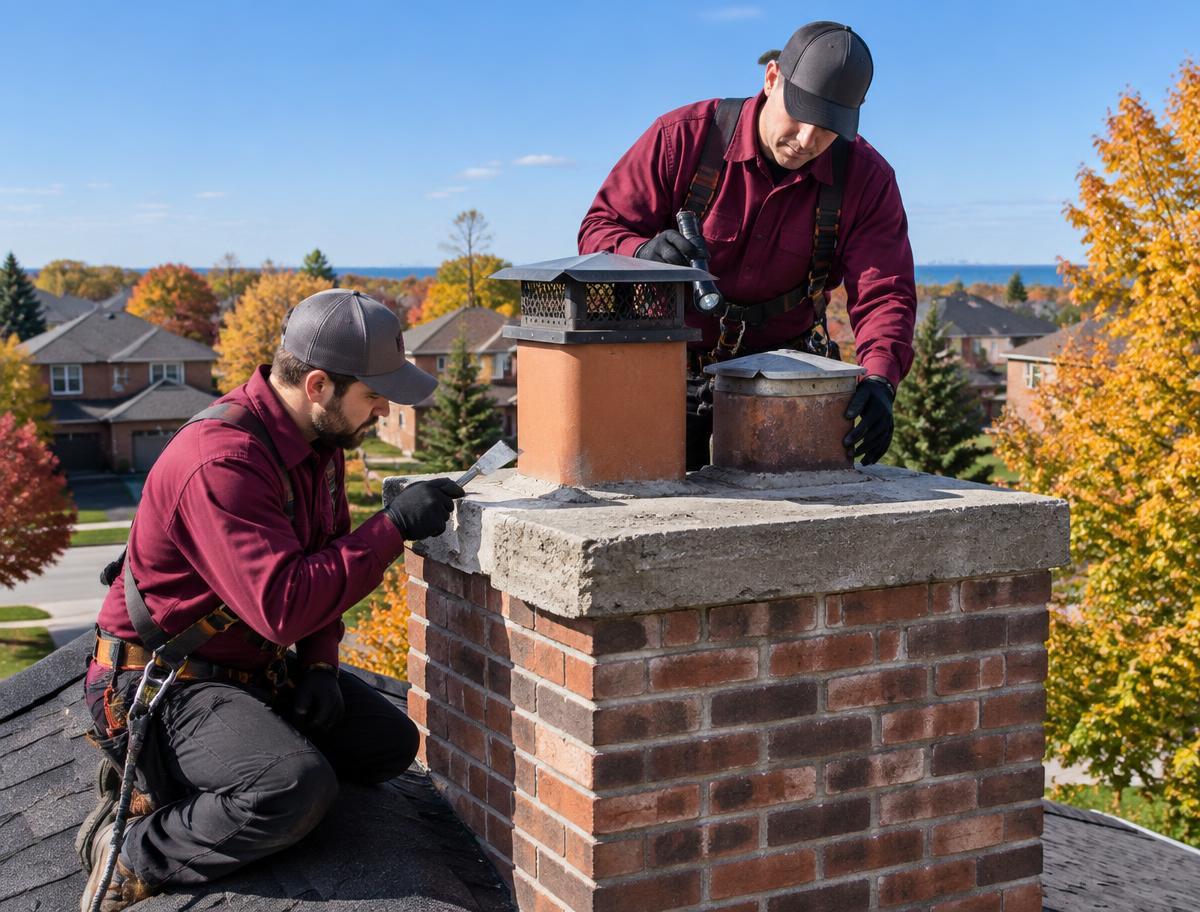
Working on chimneys involves complex safety considerations that touch on structural integrity, fire prevention, and indoor toxicology. Although our service approach is practical and straightforward, our procedures strictly align with recognized chimney service principles and industry benchmarks, including the safety guidelines set forth in Canadian national building codes and CSA standards. We treat every blocked flue as a critical safety situation that requires methodical handling, from proper fall-protection rigging on steep roofs to meticulous hazard containment at the fireplace hearth.
One of the most important recommendations we make to every Markham homeowner is the immediate verification of functioning carbon monoxide alarms. In Ontario, residential regulations require working carbon monoxide detectors outside all sleeping areas in homes with fuel-burning appliances or attached garages. When a chimney is compromised by an animal nest, that electronic detector serves as your final line of defense. We encourage homeowners to test these units monthly, replace backup batteries seasonally, and replace any detector that has exceeded its manufacturer expiration date.
Additionally, our technicians adhere to strict personal protective measures during nest removal. Animal nests frequently host microscopic parasites, fungal spores like histoplasmosis, and bacteria capable of causing respiratory illness. By using particulate respirators, disposable protective gear, and continuous negative-pressure HEPA filtration, we ensure that these airborne contaminants are completely contained and safely removed from your property, maintaining a healthy, sterile environment for you, your children, and your pets.
- Adherence to CSA venting principles and Canadian fire safety construction standards.
- Verification of functional carbon monoxide detectors adjacent to all residential sleeping areas.
- Commercial-grade HEPA negative-air filtration protects household air during extraction.
- Professional protective gear minimizes exposure to airborne allergens, fungi, and parasites.
Long-Term Prevention: Quality Caps and Routine Flue Care
Once your chimney flue has been cleared, sanitized, and inspected, the immediate next step must be permanent exclusion. Without a physical barrier installed over the chimney top, an open flue will almost certainly attract another bird or mammal during the very next migration or mating season. Animals remember successful nesting sites, and scent markers left behind can draw new visitors to the exact same opening within a matter of weeks.
Installing a durable, properly engineered chimney cap is the single most effective investment a homeowner can make to protect their flue system. We recommend heavy-gauge stainless steel or copper chimney caps equipped with spark-arresting mesh screening. The screen mesh must be small enough to prevent small birds, bats, and squirrels from squeezing through, yet open enough to permit healthy venting draft without clogging up with soot or frost. Unlike cheap galvanized metal caps that rust out after a few wet Toronto winters, high-grade stainless components resist harsh freeze-thaw cycles indefinitely.
Alongside installing a cap, maintaining your chimney requires basic preventive measures. We advise trimming back any tree branches that hang within three metres of your roofline, as these act as launchpads for squirrels and raccoons. Scheduling an annual visual inspection before the cold weather sets in ensures that caps remain securely fastened, crowns stay waterproof, and flues remain clear of windblown debris. Proactive care eliminates emergency calls, safeguards your heating appliances, and keeps your masonry sound for decades to come.
- Heavy-gauge stainless steel chimney caps provide permanent exclusion against birds and rodents.
- Precision mesh sizing prevents wildlife entry while preserving vital combustion exhaust draft.
- Trimming tree limbs within three metres of the chimney reduces roof access for urban wildlife.
- Annual autumn inspections catch loose hardware, windblown debris, and minor masonry defects.
Average pricing in Markham
$279 – $599
- Inspection / diagnostic
- $129 – $189 (credited toward full service upon approval)
- Typical time on site
- 1.5 to 3.5 hours depending on nest density and roof access
- Parts and materials
- Stainless steel chimney caps, spark arrestor screens, and replacement damper hardware quoted separately
- What moves the price
- Depth, compaction, and physical height of the nest inside the chimney flue · Roof pitch, stack height, and accessibility considerations for technician safety · Need for specialized enzymatic biological sanitization and cap exclusion hardware
Estimated local market range, not a quote. All estimates are in Canadian dollars and exclude 13% Ontario HST. Your exact price is confirmed before any work begins.