
A cozy fire inside your Markham living room offers genuine comfort during our long, freezing Ontario winters, but every log burned leaves behind hidden chemical residues inside the chimney flue. As unburned wood gases rise through the venting structure, they encounter cold brickwork and cool ambient air, condensing into a dark, combustible byproduct known as creosote. Left untreated over multiple burning seasons, this substance shifts from harmless flaky soot into a thick, tarry substance that chokes the draft, corrodes the masonry, and creates the primary fuel source for dangerous chimney fires. Maintaining a clean chimney flue is essential to preserving structural safety and household health.
Markham Chimney Services provides thorough, mess-free creosote cleaning for residential homeowners throughout Markham and surrounding communities across the Greater Toronto Area. Whether your property features a classic mid-century masonry chimney in Unionville or a zero-clearance prefabricated unit in Cornell, our methodical process identifies the exact stage of creosote buildup inside your flue and eliminates it safely. We believe in clear explanations, respectful customer care, and meticulous workmanship that protects your living space from airborne soot, keeping your heating system operating in dependable harmony with local building and fire safety expectations.
Chimney Creosote Cleaning: visit summary
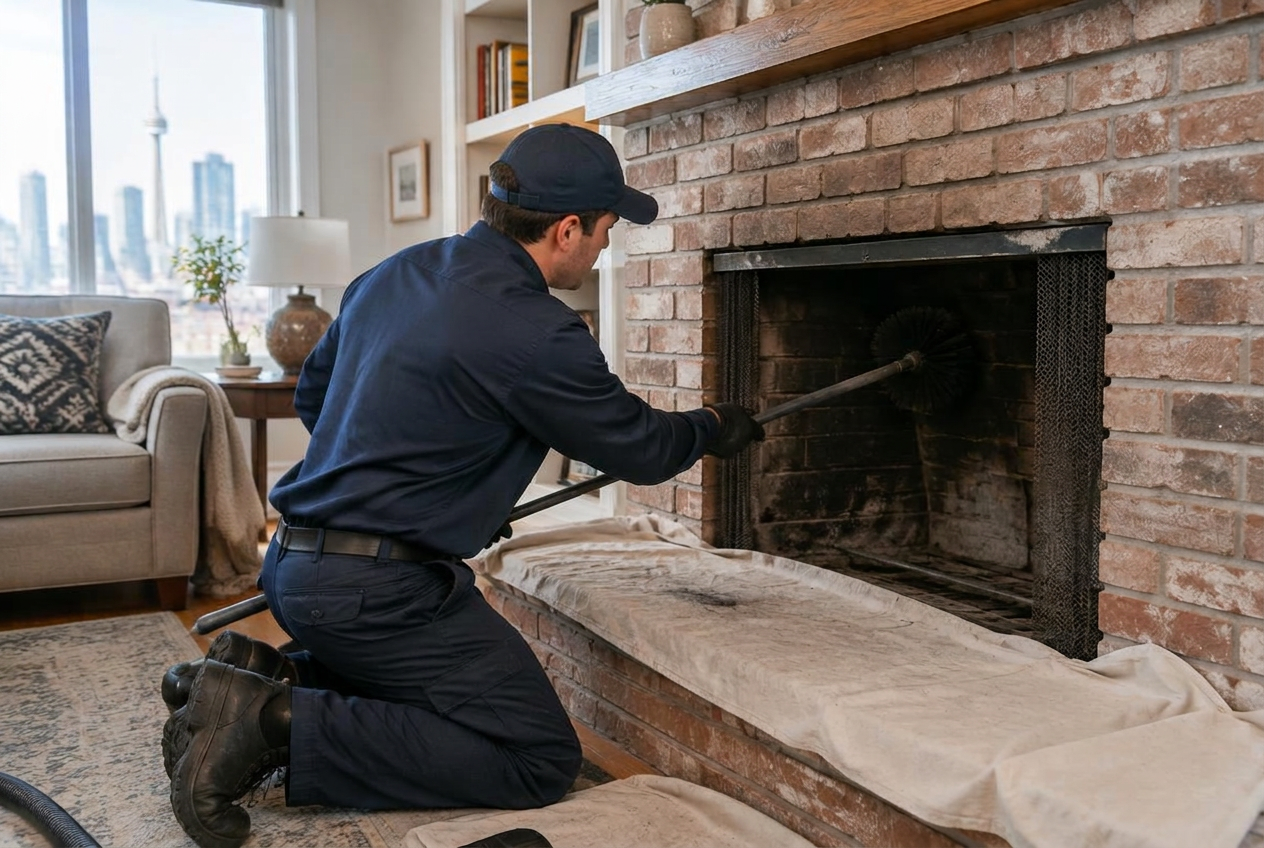
Chimney Creosote Cleaning for Markham homes: soot and creosote cleared with drop cloths down and a filtered vacuum running at the hearth. Serving Markham and the Greater Toronto Area (GTA). The estimated local market range is $229 – $549, not a fixed company rate. The final scope and quote are confirmed before work begins.
| Estimated market range | $229 – $549. All estimates are in Canadian dollars and exclude 13% Ontario HST. |
|---|---|
| Typical time | 1.5 to 3 hours |
| Price factors | The specific stage and physical hardness of the creosote deposits (powdery soot vs. hardened glazed tar).; The overall height, accessibility, and pitch of your roof and chimney stack.; Flue liner condition, configuration, and whether chemical pre-treatment is required for removal. |
| Routine signs to discuss | Visible Black Glaze Inside the Firebox; Sluggish Fireplace Draft and Smoke Spillage; Pungent Barbecue or Campfire Odours; Black Flakes Falling onto the Hearth; Audible Roaring or Whistling in the Flue; Sticky or Jammed Throat Damper |
Understanding Chimney Creosote and Its Three Destructive Stages
Creosote is the natural byproduct of incomplete wood combustion. When cordwood burns, it releases water vapour, volatile hydrocarbons, tar droplets, and various gases up the chimney flue. As these airborne particles rise toward the outdoors, they cool and settle along the inner walls of the flue liner, solidifying into creosote. The speed and intensity of this accumulation depend largely on the temperature of your fire, the moisture content of the firewood, and how rapidly smoke exits the chimney crown.
Chimney professionals classify creosote into three progressive stages, each presenting distinct challenges and risks. Stage one resembles light, dry, powdery soot that sweeps away relatively easily with standard polypropylene or wire brushes. Stage two develops when airflow is restricted or temperatures drop, forming sticky, tar-like flakes or hardened honeycombs that cling stubbornly to clay tiles. This second stage requires specialised scraping tools and rotary equipment to dislodge safely without damaging the underlying flue tiles.
Stage three represents the most dangerous condition: glazed creosote. This occurs when thick liquid tar cooks and hardens repeatedly under intense flue temperatures, forming a glassy, rock-hard, highly combustible layer along the flue surface. Glazed creosote resists ordinary sweeping entirely and acts like hardened fuel waiting for a spark. Removing third-stage deposits requires specialized chemical conditioning and rotary cable flails to fracture the glassy shell while preserving the delicate masonry beneath.
- Stage one forms light, feathery soot easily loosened during routine maintenance.
- Stage two creates sticky, crunchy flakes that signal reduced draft and incomplete combustion.
- Stage three produces a dense, glossy, tar-like crust that presents extreme ignition danger.
- Glazed deposits expand as they burn, capable of shattering clay liners during a chimney fire.
- Catching buildup early prevents expensive mechanical remediation down the line.
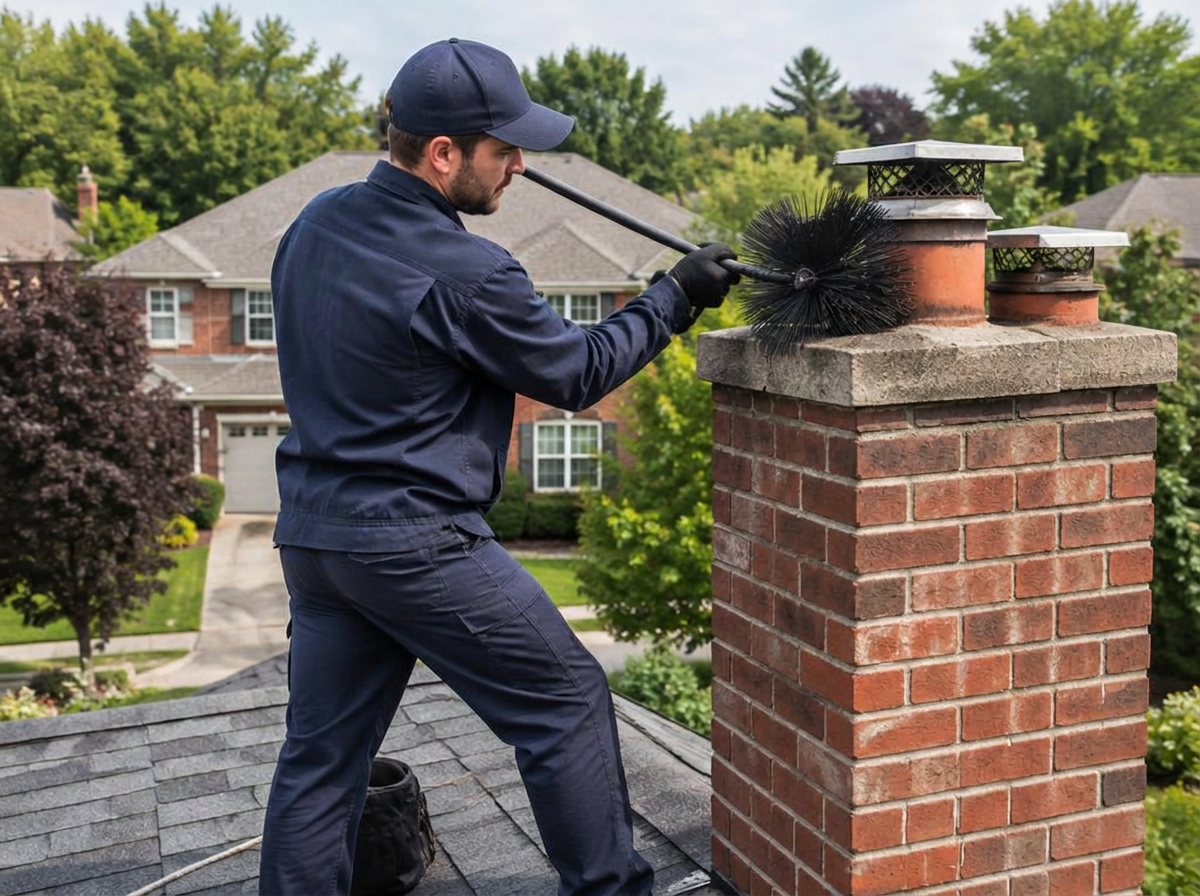
Thorough removal of hazardous creosote deposits to keep your Markham fireplace burning safely all winter.
Self-check
Warning signs you need chimney creosote cleaning
Visible Black Glaze Inside the Firebox
A dark, shiny, or glass-like coating lining the upper walls of the firebox or damper indicates dangerous stage-three glazed creosote that cannot be removed by simple brush sweeping.
Sluggish Fireplace Draft and Smoke Spillage
When smoke regularly rolls into your living room rather than rising cleanly up the flue, a heavy ring of creosote may be narrowing the exhaust path and choking off airflow.
Pungent Barbecue or Campfire Odours
A strong, acrid, asphalt-like odour coming from the fireplace during damp or humid weather signals that thick creosote deposits inside the chimney are absorbing indoor and outdoor moisture.
Black Flakes Falling onto the Hearth
Finding crusty, brittle black bits or honeycomb-textured chips on your fireplace floor or smoke shelf means stage-two creosote is actively expanding and peeling from the flue walls.
Audible Roaring or Whistling in the Flue
A roaring or intense wind-tunnel sound within the chimney structure indicates an active, highly dangerous creosote fire requiring immediate emergency response and fireplace evacuation.
Sticky or Jammed Throat Damper
If your metal damper feels gummy, resists smooth operation, or fails to seal tightly, thick creosote tar has likely coated the pivot points and structural seating framework.
Why the Markham Freeze-Thaw Cycle Accelerates Creosote Problems
Southern Ontario weather places tremendous thermal stress on residential chimneys. In Markham, winter days often swing wildly between deep sub-zero nights and milder afternoons above the freezing mark. When a cold exterior chimney wall cools rapidly, the smoke passing through the flue loses thermal buoyancy almost instantly. This rapid chilling causes volatile wood gases to condense directly onto the cold masonry instead of escaping cleanly into the open winter air, causing rapid creosote accumulation.
Furthermore, our regional freeze-thaw cycles drive moisture into the chimney structure through microscopic cracks in the exterior mortar, flashing, and concrete crown. When water penetrates masonry joints and freezes, it expands, causing clay tiles to crack, spall, and shift out of alignment. These rough, spalled interior surfaces create turbulent air patterns and rough catch points where sticky creosote deposits grab hold much faster than on smooth surfaces, compounding venting problems over time.
Spring thawing and autumn humidity also combine with acidic creosote deposits to accelerate chemical deterioration within the chimney. Creosote contains concentrated sulfur and nitrogen compounds that become mildly acidic when exposed to ambient atmospheric dampness. Over prolonged periods, this acidic mixture eats away at clay tile liners and mortar joints from the inside out, weakening the physical barrier that protects your home framing from flue heat and fire sparks.
- Drastic outdoor temperature swings chill external chimney flues and trigger rapid condensation.
- Moisture intrusion causes clay flue tiles to spall, creating rough catching surfaces for soot.
- Acidic creosote mixed with winter moisture corrodes mortar joints and metallic liners.
- Cold flue drafts make starting fires difficult, leading to smouldering fires that generate heavy tar.
- Sealing external masonry helps maintain warmer internal flue temperatures for cleaner burns.
Fire Hazards, Carbon Monoxide Risks, and Indoor Air Quality
A chimney fire is one of the most frightening emergencies a homeowner can face. Creosote ignites at temperatures as low as two hundred and thirty degrees Celsius, which is easily reached when a hot fire burns beneath a dirty flue. Once ignited, creosote burns furiously, often roaring like a freight train, shooting flames out the chimney top, and reaching internal temperatures exceeding one thousand degrees Celsius, which easily cracks clay liners and ignites adjacent wooden framing.
Beyond active fire dangers, accumulated creosote severely impairs proper chimney draft, increasing the risk of deadly carbon monoxide entering your home. Carbon monoxide is an odourless, colourless gas produced by wood and fossil fuel combustion. When thick creosote deposits narrow the flue opening, exhaust gases cannot exit freely, causing toxic smoke and invisible combustion byproducts to roll back into living areas through fireplace openings and damper seals.
Indoor air quality suffers significantly when dirty chimneys are left unserviced between heating seasons. Fine particulate matter and pungent creosote odours often drift downward during summer months when atmospheric pressure pushes warm air down cooler chimneys. For households with young children, elderly family members, or individuals living with respiratory sensitivities, breathing in residual creosote dust and airborne hydrocarbons can aggravate asthma, irritate eyes, and produce chronic indoor odours.
- Creosote fires burn at extreme temperatures capable of spreading into ceiling joists and roofs.
- Constricted flues force dangerous combustion gases including carbon monoxide into living quarters.
- Pungent tar odours drift into homes during warm weather when downdrafts occur.
- Damaged flue liners allow heat transfer directly into combustible home framing structures.
- Clean chimney passages protect your family from silent, invisible carbon monoxide build-up.
Our Detailed Diagnostic Flue Evaluation and Workspace Preparation
Before touching a single brush or scraper, our technicians prioritize the absolute cleanliness of your Markham home. We lay heavy-duty drop cloths across your hearth, floor, and nearby furniture, and we set up specialized high-efficiency particulate air (HEPA) vacuum systems designed specifically to capture soot particles without letting them escape into room air. Sealing the fireplace opening creates a controlled negative-pressure environment that guarantees soot stays inside the flue system throughout the cleaning.
Next, we conduct a comprehensive diagnostic assessment of the entire venting corridor. Using high-output inspection lights and specialized digital chimney inspection cameras, we examine the flue liner from the smoke chamber all the way up to the rain cap. We check for cracked flue tiles, missing mortar joints, broken dampers, animal nests, and the exact physical stage of creosote buildup so we can choose the precise mechanical tools needed for the job.
We also assess the firebox, throat damper, smoke shelf, and structural clearances around the appliance. Documenting our findings allows us to show you clear, real-time images of the interior walls of your chimney, explaining where creosote is thickest and highlighting any structural vulnerabilities that require attention before you light your next fire. Transparent reporting gives you total clarity regarding the safety and physical condition of your heating system.
- Full floor protection and hearth sealing prevent soot tracking through your living space.
- Industrial HEPA vacuum systems run continuously to capture microscopic airborne particles.
- Internal digital cameras evaluate the full length of the flue from hearth to crown.
- Evaluation identifies whether you are dealing with powdery soot, tar, or glazed creosote.
- Comprehensive visual reports keep you fully informed about your fireplace's internal condition.
"When a storm loosened some bricks, I called for emergency repair in Thornhill. Their crew arrived within hours, secured the chimney crown, and restored its integrity without any mess. Truly impressive expertise."
Our process
How we handle your chimney creosote cleaning, step by step
- 1
Site Protection and Containment
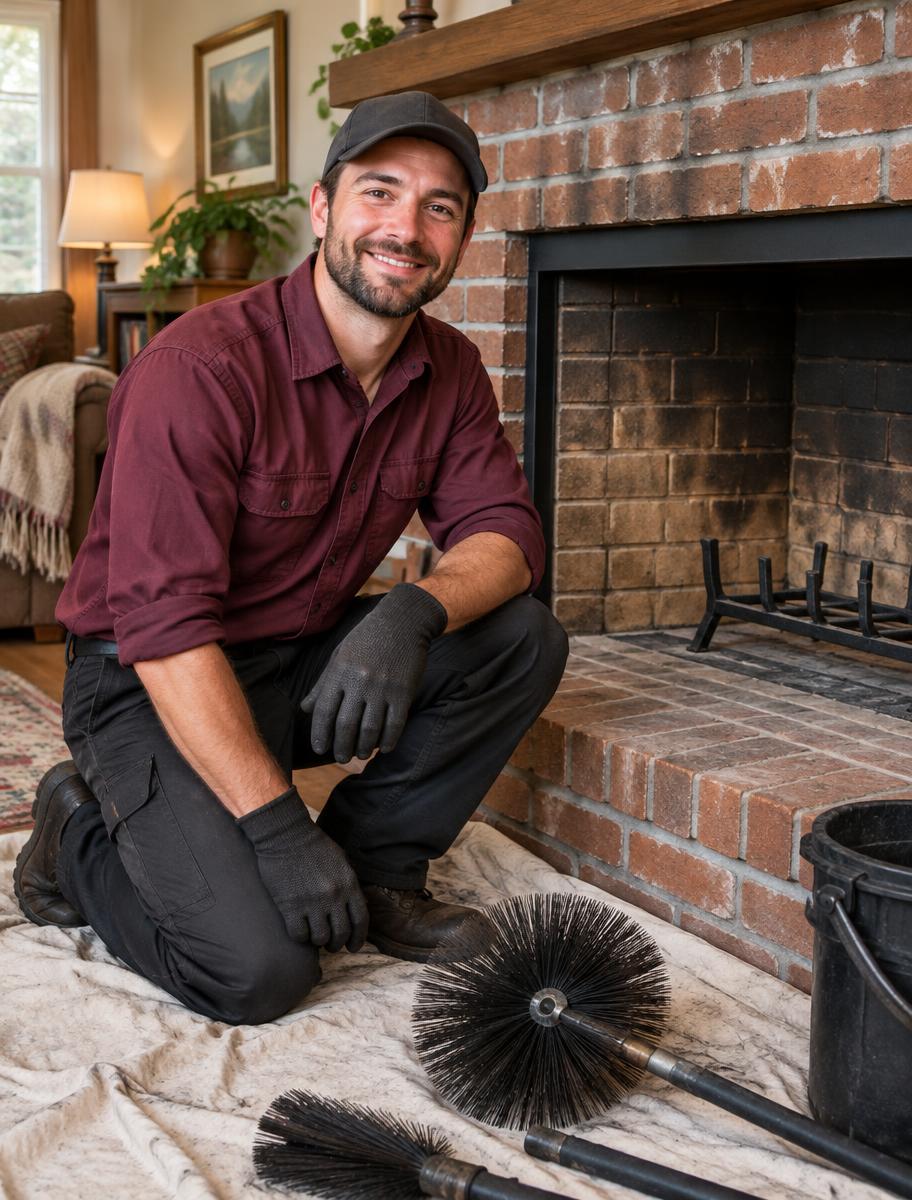
We place clean drop cloths throughout your hearth room, install industrial HEPA filtration vacuums, and tightly seal the fireplace opening to guarantee that no soot or dust escapes.
- 2
Full Internal Video Inspection
Our technicians pass a specialized chimney camera through the entire length of the flue, inspecting the liner tiles, mortar joints, damper, and cap while documenting creosote depth and stage.
- 3
Targeted Mechanical and Chemical Cleaning
Using rotary whips, flexible scrubbing rods, or specialized chemical conditioning agents for stubborn glaze, we meticulously dislodge creosote deposits from top to bottom without harming the flue liner.
- 4
Debris Extraction and Component Clearing
We vacuum all dislodged soot from the smoke shelf, damper, and firebox floor using HEPA equipment, then clean and inspect the damper assembly for smooth, reliable mechanical movement.
- 5
Post-Clean Verification and Report
A final visual check confirms that all combustible deposits have been cleared. We provide you with a written condition report detailing maintenance findings and burning recommendations.
Advanced Mechanical and Chemical Creosote Removal Techniques
Removing stubborn creosote requires matching the proper technique to the specific type of deposit present in your chimney. For powdery stage-one soot and light stage-two flakes, we utilize modern rotary sweeping systems powered by variable-speed drills. These flexible spinning rods and nylon or wire whip heads expand against the perimeter of the flue walls, gently scrubbing away deposits while protecting fragile clay tiles and stainless steel liner walls from impact damage.
When confronted with heavy stage-two or rock-hard stage-three glazed creosote, standard sweeping brushes simply slide across the surface without making an impact. In these demanding situations, we apply targeted anti-creosote chemical conditioning agents. These specialized powders and catalytic liquids break the chemical bond of the hardened tar, drying out the moisture within the glaze and causing the glassy material to swell, crack, and turn into a brittle, removable crust.
Once the glazed creosote has been properly conditioned and rendered brittle, our technicians introduce specialized mechanical cleaning flails, such as chain heads or heavy-duty polymer whips, to safely fracture and dislodge the material. We carefully clean the smoke shelf and smoke chamber, often neglected areas where dangerous flammable debris collects, ensuring that the entire venting system is completely free of combustible obstacles from bottom to top.
- Variable-speed rotary sweeping rods adapt perfectly to round, square, and rectangular flues.
- Non-abrasive cleaning heads thoroughly scour tile surfaces without cracking mortar joints.
- Specialized chemical treatments convert rock-hard glazed creosote into brittle, sweepable ash.
- Smoke shelf and damper areas are hand-cleared of accumulated falling debris.
- All dislodged creosote is extracted directly through sealed HEPA containment systems.
Chimney Draft Physics, Air Pressure, and Carbon Monoxide Alarms
Proper draft depends on basic thermal physics: hot air rises because it is less dense than the cold air surrounding it. In a well-designed chimney, rising hot flue gases create natural negative pressure that draws fresh combustion air into the fire while expelling smoke outside. However, when creosote coats the interior walls, it adds surface friction and reduces the flue diameter, slowing exhaust gas velocity and weakening the draft necessary for clean combustion.
Modern energy-efficient homes in Markham present additional drafting challenges due to tight insulation, modern weatherstripping, and powerful kitchen range hoods or bathroom exhaust fans. When these mechanical exhaust fans run, they pull air out of the home, creating internal negative pressure that can overpower a dirty chimney draft. This can draw combustion gases backward down the chimney flue, pulling hazardous carbon monoxide directly into family living spaces.
To safeguard your household, every home with a fuel-burning fireplace should feature working carbon monoxide alarms installed in accordance with Ontario building and fire codes. Alarms should be situated on every living level and directly outside all sleeping areas. We regularly evaluate how your home's air pressure affects the fireplace draft, offering practical guidance on crack-opening a window or utilizing makeup air intakes to maintain smooth, safe upward exhaust ventilation.
- Creosote buildup creates air friction that drags down exhaust gas speed and impairs draft.
- Tight home building envelopes can cause back-drafting when powerful kitchen hoods run.
- Ontario fire safety guidelines require operational carbon monoxide alarms near all bedrooms.
- Regular draft checks ensure smoke and toxic combustion fumes exit cleanly outdoors.
- Proper ventilation prevents lingering creosote and sulfur fumes from contaminating living areas.
Smart Burning Practices to Minimize Future Creosote Buildup
While routine professional sweeping remains essential, your daily burning habits directly dictate how fast creosote forms inside your chimney. The single most important factor is the moisture content of your firewood. Burning unseasoned, green wood wastes fire energy turning water into steam, dropping flue gas temperatures below the critical threshold where creosote condenses. Always burn hardwood that has dried for at least six to twelve months.
Using an inexpensive wood moisture meter is one of the smartest investments a wood-burning homeowner can make. Hardwood logs should read under twenty percent moisture content before being placed on your hearth. Seasoned hardwoods like maple, oak, ash, and beech produce hot, steady fires that burn clean, whereas softwoods, painted wood, construction lumber, or damp logs generate heavy smoke, low temperatures, and rapid tar buildup within weeks.
Fire management technique also plays a crucial role. Avoid letting fires smoulder overnight by choking the air dampers down too tightly. Smouldering fires operate at low combustion temperatures, producing vast quantities of unburned volatile gases that quickly glaze the upper sections of the flue. Instead, burn bright, hot fires with sufficient airflow, and use a top-down fire-building method to establish quick chimney draft without excessive initial smoke.
- Burn only seasoned, split hardwood with a measured moisture content under twenty percent.
- Never burn green wood, painted scraps, pressure-treated lumber, or domestic trash.
- Avoid starving your fire of oxygen; smouldering wood creates massive amounts of creosote.
- Store firewood off the ground in a covered, well-ventilated outdoor shed or shelter.
- Build fires using the top-down lighting method for cleaner ignition and faster draft.
Choosing an Honest, Qualified Chimney Specialist in Markham
Finding the right chimney specialist requires careful attention to detail and a commitment to quality. The chimney service trade requires extensive technical knowledge of masonry physics, thermodynamic airflow, and regional building standards. Unfortunately, homeowners frequently encounter door-to-door operators who offer unrealistically cheap sweeps only to invent fictitious structural emergencies or perform hasty, incomplete surface brushing that leaves dangerous glazed creosote behind.
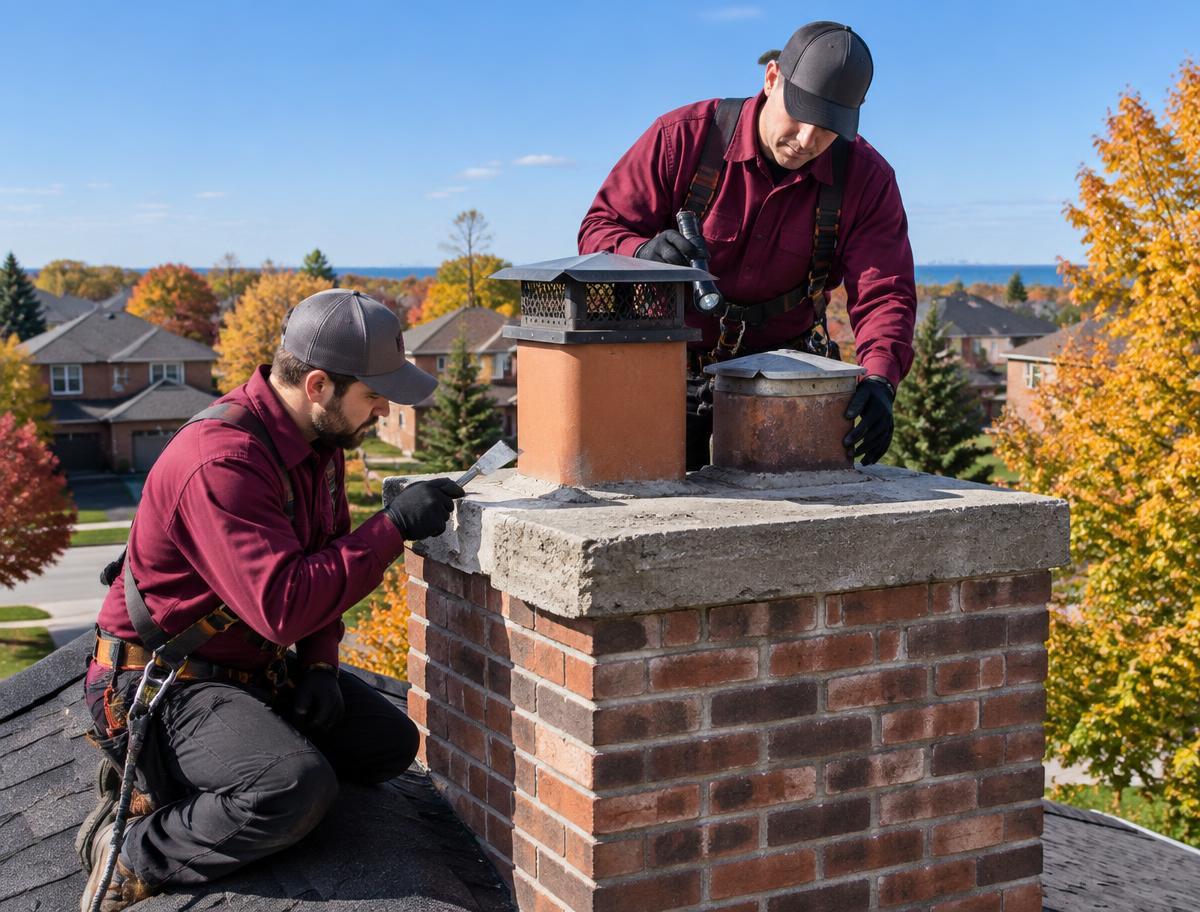
A reputable local company will always take the time to inspect your flue thoroughly, use modern dust-containment systems, and explain their observations with honesty and patience. They should be fully insured with commercial general liability coverage and workplace safety protections, ensuring you are never exposed to financial risk while technicians work on your roof or around your hearth. Never hesitate to ask for clear, written estimates before work begins.
Markham Chimney Services operates on straightforward principles of integrity, craftsmanship, and local accountability. We treat your property with the utmost respect, using specialized tools tailored to your specific chimney construction and providing transparent documentation of our findings. Our goal is to build lasting relationships with our neighbours by ensuring every fireplace we service provides safe, reliable warmth throughout the coldest Canadian winters.
- Verify that your contractor carries robust commercial liability and worker safety insurance.
- Beware of high-pressure sales pitches claiming immediate structural collapse without visual proof.
- Insist on seeing camera inspection footage or clear photos of internal flue conditions.
- Demand upfront pricing that clearly details both diagnostic assessments and mechanical labour.
- Work with established local professionals who understand Markham homes and weather.
Average pricing in Markham
$229 – $549
- Inspection / diagnostic
- $129 – $189
- Typical time on site
- 1.5 to 3 hours
- Parts and materials
- Chemical glaze remediation agents, replacement clay tiles, damper components, and chimney caps quoted separately.
- What moves the price
- The specific stage and physical hardness of the creosote deposits (powdery soot vs. hardened glazed tar). · The overall height, accessibility, and pitch of your roof and chimney stack. · Flue liner condition, configuration, and whether chemical pre-treatment is required for removal.
Estimated local market range, not a quote. All estimates are in Canadian dollars and exclude 13% Ontario HST. Your exact price is confirmed before any work begins.