
A fireplace brings welcome warmth and classic charm to a Markham residence, yet the venting structure that safely carries combustion gases outside operates quietly out of sight. Because chimney flues, liners, and masonry joints remain largely hidden behind drywall and roof lines, dangerous defects often develop unnoticed. Routine chimney inspection services identify soot accumulation, cracked clay tiles, degraded mortar, and drafting obstructions before they escalate into structural hazards or active chimney fires. By assessing the entire venting system from hearth to crown, our independent team helps protect your household investment, interior air quality, and personal safety throughout every heating season.
Operating from 4418 Highway 7 East, Markham Chimney Services delivers meticulous inspection services tailored specifically to the structural demands of local architecture. From mid-century split-levels near Cornell to newer custom builds across Unionville, regional weather patterns take a heavy toll on venting pathways. Unchecked moisture, thermal expansion, and creosote buildup can cause significant interior deterioration that standard visual checks from the living room floor simply cannot uncover. We evaluate your installation against proven Canadian safety benchmarks, offering clear guidance, honest recommendations, and the thorough technical feedback required to keep your fireplace operating securely.
Chimney Inspection Services: visit summary
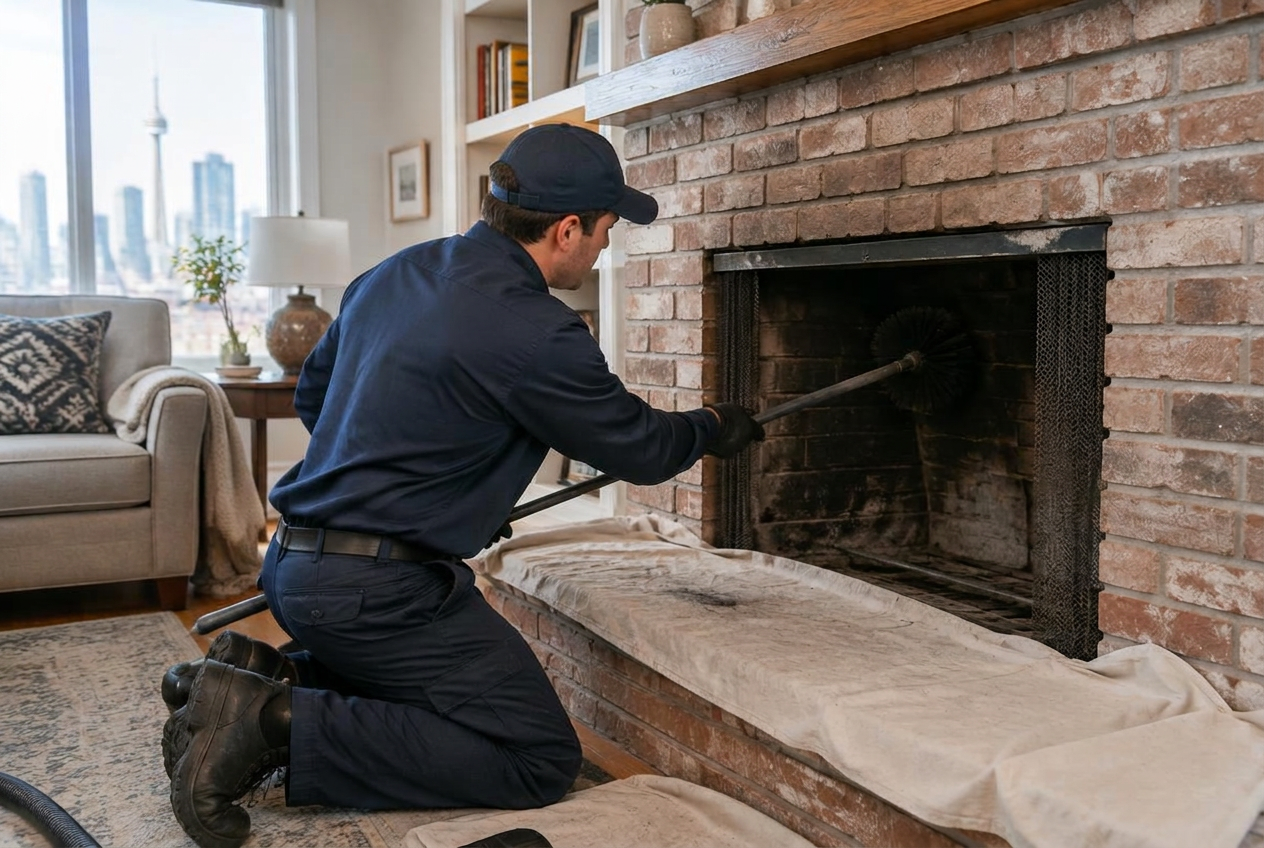
Chimney Inspection Services for Markham homes: soot and creosote cleared with drop cloths down and a filtered vacuum running at the hearth. Serving Markham and the Greater Toronto Area (GTA). The estimated local market range is $189 – $389, not a fixed company rate. The final scope and quote are confirmed before work begins.
| Estimated market range | $189 – $389. All estimates are in Canadian dollars and exclude 13% Ontario HST. |
|---|---|
| Typical time | 1 to 2 hours on site |
| Price factors | Accessibility and steepness of the roofline; Type of venting system including clay, metal, or zero-clearance; Overall structural condition and level of creosote accumulation |
| Routine signs to discuss | Campfire or Soot Odour Indoors; Clay Tile Shards in Firebox; White Salt Residue on Bricks; Stiff or Rusted Throat Damper; Smoke Spilling Into the Room; Staining on Adjacent Walls |
What a Professional Chimney Inspection Involves
A comprehensive chimney inspection is a methodical evaluation of your entire venting structure, designed to determine whether it can safely exhaust smoke, heat, and combustible byproducts. Rather than merely glancing up the throat of the fireplace, a qualified assessment reviews the condition of the firebox, damper assembly, smoke shelf, flue lining, and external masonry housing. Our technicians examine each critical component to detect physical deterioration, clearances to combustible framing, structural settlement, and flammable creosote deposits that routinely compromise household safety.
Chimneys venting wood fireplaces, high-efficiency wood inserts, or fuel-burning appliances experience intense temperature shifts and chemical exposure. Over time, acidic flue gases react with moisture to erode mortar joints, split terracotta clay liners, and corrode metal flue components. A thorough visual examination identifies these hidden compromises long before smoke enters your living spaces or sparks penetrate structural wall cavities. We check every accessible segment to ensure unhindered passage for rising flue gases, verifying that your fireplace functions reliably whenever called upon.
For homeowners purchasing a property, renovating a home, or noticing unexpected drafting issues, an on-site evaluation provides essential clarity. We illuminate internal passages, measure clearances around the hearth, and inspect the termination point high above the roofline. You receive plain-language explanations detailing the functional condition of your chimney system, backed by photographic evidence so you can make informed decisions regarding maintenance, repairs, or seasonal usage without unnecessary guesswork or stressful surprises.
- Comprehensive review of the firebox firebrick, mortar joints, and lintel bar stability
- Assessment of the throat damper, rotary controls, and smoke chamber contours
- Detailed visual examination of clay flue tiles, metal liners, or factory-built systems
- Inspection of the exterior masonry stack, flashing seals, and concrete wash crown
- Verification of termination caps, spark arrestors, and animal exclusion screens
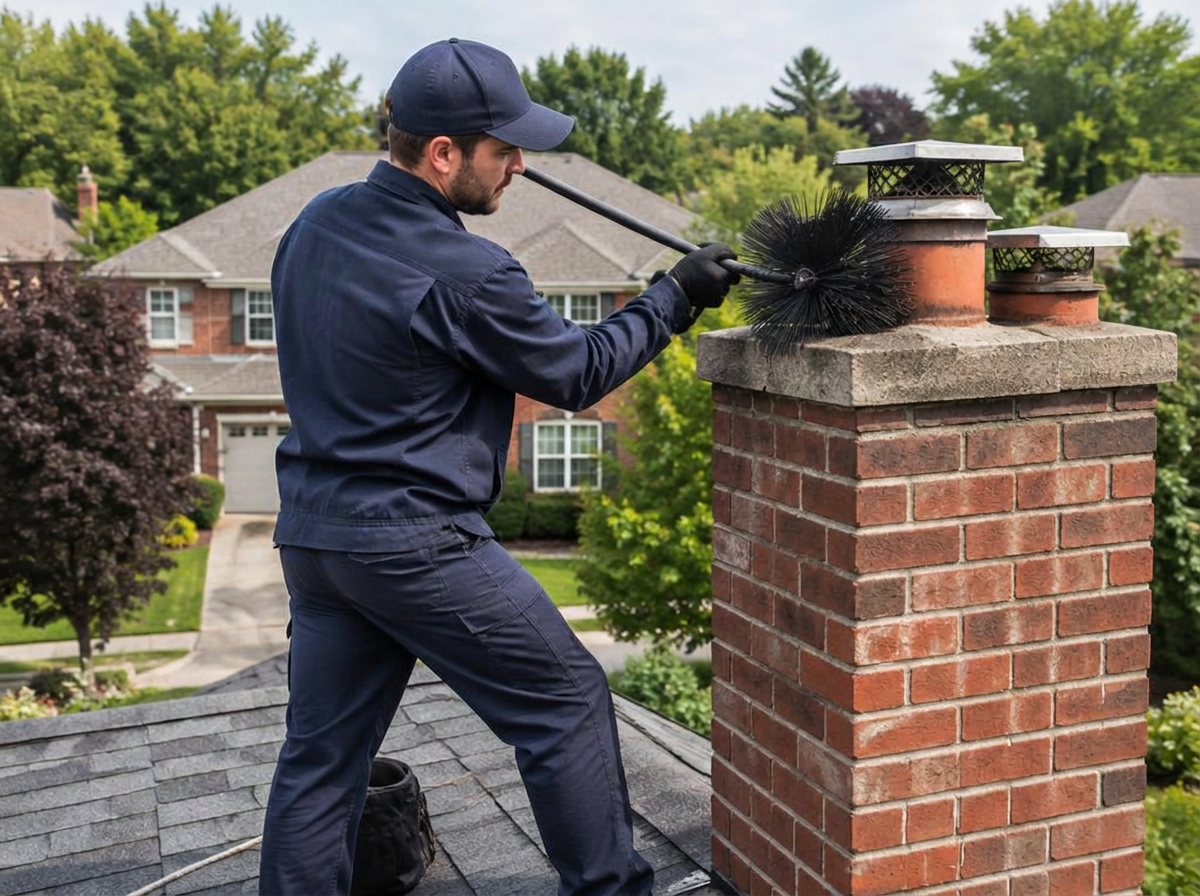
Thorough visual chimney evaluations providing Markham homeowners with genuine peace of mind and lasting safety.
Self-check
Warning signs you need chimney inspection services
Campfire or Soot Odour Indoors
A lingering, pungent campfire or smoky soot odour entering your living space indicates significant creosote accumulation, downdrafts, or a stuck damper drawing dirty flue air directly into your home instead of exhausting outward.
Clay Tile Shards in Firebox
Finding thin curved pieces of terracotta or crumbly clay tile on your smoke shelf or hearth floor signals that your chimney liner is fracturing internally from moisture penetration, thermal expansion, or past chimney fire damage.
White Salt Residue on Bricks
White, chalky salt stains known as efflorescence on exterior chimney bricks reveal that water is soaking deep through the masonry. This trapped moisture dissolves internal salts before evaporating, accelerating rapid winter freeze-thaw damage.
Stiff or Rusted Throat Damper
A damper that resists moving, screeches, or fails to create a tight seal has likely suffered significant moisture corrosion. Corroded dampers allow conditioned indoor air to escape and prevent smoke from venting freely outdoors.
Smoke Spilling Into the Room
Smoke rolling across the hearth instead of rising up the chimney flue points to drafting restrictions, internal soot blockages, animal nests, improper flue sizing, or severe negative indoor air pressure within your house.
Staining on Adjacent Walls
Dark water stains, bubbling drywall paint, or peeling wallpaper on walls bordering your chimney breast reveal that water is leaking past deteriorated roof flashing, a cracked crown wash, or porous, unsealed exterior mortar joints.
How Ontario Freeze-Thaw Cycles Erode Chimneys
Chimneys in Southern Ontario endure some of the most punishing climate conditions on the continent, primarily driven by rapid freeze-thaw cycles between late autumn and early spring. When autumn rainfall or melting snow seeps into porous brickwork and unsealed mortar joints, it remains trapped within tiny capillaries. As ambient temperatures plunge overnight, this trapped moisture expands by roughly nine percent, creating immense hydraulic pressure that breaks clay brick faces apart, cracks mortar beds, and loosens the chimney crown.
This moisture-driven decay accelerates significantly in multi-flue masonry stacks where thermal gradients are sharp. The heat generated by an active indoor fire warms the flue interior while sub-zero winds blast the exterior brick shell, producing immense thermal shock. Over successive winters, spalling occurs, causing brick faces to pop off entirely and mortar joints to turn into powdery sand. Once exterior integrity is breached, water penetrates deeper into the interior chimney chase, rotting adjacent roof framing and damaging indoor plaster.
Internal clay liners face comparable stress when winter condensation forms inside cold chimneys. Water vapour produced during fuel combustion combines with sulphur and creosote residues, forming mild acidic solutions that attack terracotta liners from within. Our inspections specifically focus on identifying early moisture penetration, crown hairline fractures, and deteriorating flashing before external weathering transforms minor surface repairs into urgent structural rebuilding projects across our cold local winters.
- Spalling brick faces caused by expanding ice trapped within masonry pores
- Washed-out or crumbling mortar joints allowing water to travel into wall framing
- Fractured chimney crowns that allow melting snow to pool and leak downward
- Rusted sheet metal flashing leading to ceiling stains and roof deck rot
- Efflorescence, or white mineral salt deposits, signaling severe water migration
Critical Flue Hazards Uncovered During Inspections
One of the most dangerous conditions identified during our inspections is the formation of third-degree, glazed creosote. Unlike dry soot or flaky deposits, glazed creosote forms when wood burns at low temperatures with insufficient draft, leaving behind a dense, tar-like fuel source bonded tightly to flue walls. This shiny black coating is exceptionally flammable and can ignite under intense firebox temperatures, fueling chimney fires that burn hot enough to split masonry stacks and ignite adjacent structural timbers.
Broken or shifted flue tiles represent another pervasive hazard, especially in homes constructed before modern stainless steel relining became standard practice. Terracotta flue sections can shift during seasonal freeze-thaw events, earth settlement, or past low-grade chimney fires. When a flue tile fractures or separates at the joint, heat, toxic fumes, and flying embers can escape into the surrounding dead space of the chimney, putting combustible house framing at direct risk of ignition behind finished drywall.
Physical blockages also create urgent safety concerns across Markham properties with mature tree canopies. Nesting birds, squirrels, leaves, and fallen masonry fragments can easily obstruct the flue passage when an exterior chimney lacks a robust rain cap and mesh barrier. A blocked flue prevents combustion gases from escaping freely, forcing noxious smoke, unburned hydrocarbons, and odorless carbon monoxide back down into your home during operation.
- Glazed, highly volatile creosote deposits clinging to the internal flue liner
- Separated, cracked, or missing clay tile flue segments inside the chimney stack
- Animal nests, dry twigs, and leaf debris obstructing proper exhaust draft
- Corroded or warped metal damper plates that leak room heat or jam shut
- Combustible framing materials improperly installed directly against masonry walls
Carbon Monoxide Prevention and Fire Safety Best Practices
Carbon monoxide is an invisible, odourless, and tasteless toxic byproduct of incomplete combustion that poses a profound danger to residential occupants. When a fireplace, wood stove, or heating appliance vents through a chimney with restricted draft, cracked lining, or internal debris, this hazardous gas can silently seep into bedrooms and living spaces. Our inspections assess venting dynamics, backdrafting tendencies, and flue continuity to ensure combustion byproducts are carried entirely outside the dwelling boundary.
Proper draft depends heavily on modern household air pressure dynamics, particularly in Markham homes that have received weatherstripping, double-pane windows, and powerful kitchen exhaust fans. A tightly sealed building envelope can cause negative indoor air pressure, encouraging the chimney to draw air downward rather than expelling smoke outward. During an inspection, we evaluate air supply factors, damper sealing, and stack height configurations to verify that natural buoyancy functions correctly whenever a fire is lit.
We strongly advise every homeowner to install certified carbon monoxide alarms outside all sleeping areas and on every occupied level of the house. Testing these alarms monthly and replacing batteries biannually ensures an essential layer of active protection. Our visual inspection process evaluates venting pathways alongside your indoor safety setup, helping you maintain a secure living environment while enjoying the comforts of your fireplace throughout the coldest stretches of the year.
- Testing natural venting draft and identifying mechanical air depressurization issues
- Inspecting flue continuity to prevent carbon monoxide leakage into living quarters
- Recommending optimal placement for household carbon monoxide alarms and smoke detectors
- Checking hearth extensions to ensure embers cannot bounce onto hardwood flooring
- Verifying the clearance between metal stove pipes and combustible wall finishes
"I discovered odd odours coming from my chimney and booked a deodorizing treatment Downtown. They applied a specialized solution, sealed minor cracks, and eliminated the smell completely. My living room feels fresh again."
Our process
How we handle your chimney inspection services, step by step
- 1
Hearth and Room Setup
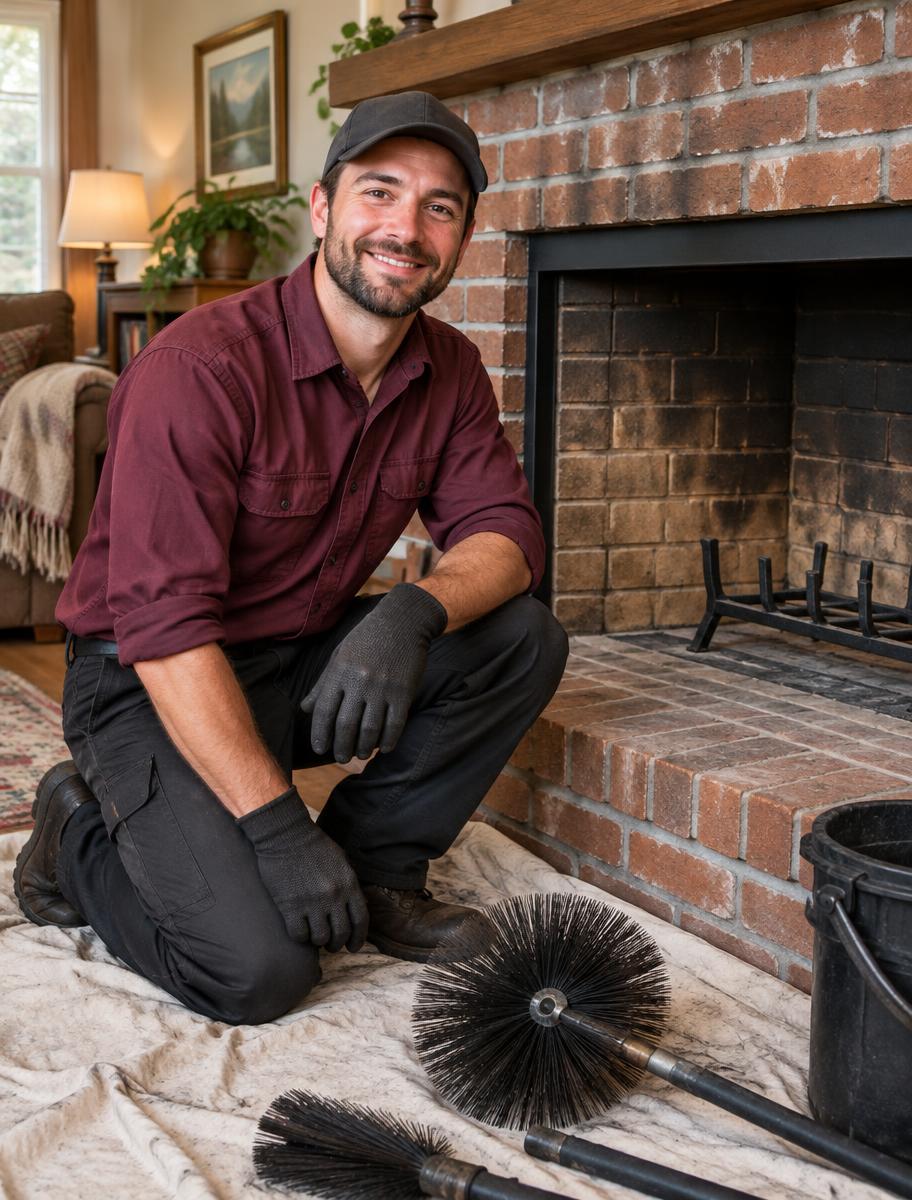
We place clean protective canvas cloths across your flooring and hearth area, ensuring dust and soot stay completely contained while we set up specialized high-power lighting.
- 2
Firebox and Damper Assessment
Our technician carefully inspects the firebox bricks, mortar joints, lintel bar, and throat damper to verify mechanical operation and check for structural cracking or heat damage.
- 3
Flue Passage Examination
We examine the internal liner from bottom to top, evaluating creosote stages, checking for missing mortar in clay joints, and identifying signs of cracked or shifted flue segments.
- 4
Roofline and Masonry Review
Weather permitting, we evaluate the external stack, inspecting the concrete crown, brickwork, counter-flashing, rain cap, and spark arrestor for freeze-thaw weathering and moisture penetration.
- 5
Photo Review and Consultation
We present clear digital photographs of our findings, walk you through the flue condition in plain language, and provide an honest summary of recommended repairs or sweeping.
Applying WETT-Style and CSA Safety Principles
In the Canadian heating sector, solid-fuel installation safety revolves around principles reflected in national CSA standards and WETT-style inspection protocols. While Markham Chimney Services operates as an independent service provider without claiming formal entity accreditations, our technical methodology aligns strictly with these established safety principles. We understand the specific clearance criteria, component spacing, and installation specifications required to verify that your solid-fuel appliance and masonry chimney operate without endangering the property.
Visual evaluation protocols categorize inspections by accessibility and purpose, distinguishing basic visual overviews from comprehensive structural assessments during property transactions. Our evaluations scrutinize spatial clearances between heating surfaces and combustible wall framing, floor pad thickness, heat shielding configurations, and flue collar attachments. By inspecting against these rigorous benchmarks, we deliver reliable insights that satisfy the technical safety expectations commonly requested by property insurers and building authorities.
Homeowners throughout the Greater Toronto Area frequently encounter questions from insurance underwriters regarding wood-burning fireplaces and basement stoves. Insurers want clear evidence that an appliance is safe to burn, properly vented, and free from internal deterioration. Our detailed inspection reports document clearance dimensions, liner conditions, and installation safety factors in clear, professional language, giving both you and your insurer an accurate, objective record of your heating system condition.
- Verification of minimum clearances between stoves, insert bodies, and combustible walls
- Assessment of non-combustible hearth extension depths and protective floor pads
- Evaluation of factory-built chimney pipe clearances through attic and roof cavities
- Visual inspection of appliance labels, data plates, and listed clearances where accessible
- Identification of non-compliant modifications, unapproved stove pipes, or missing heat shields
Our Practical On-Site Inspection Methodology
When our technician arrives at your home from our 4418 Highway 7 East location, we begin with a protective setup designed to keep your home clean. We lay heavy canvas drop cloths around the hearth, set up high-output LED work lights, and prepare specialized inspection equipment. Our process starts inside the living space, where we evaluate the hearth, firebox integrity, refractory panels, lintel, and throat damper using specialized mirrors and direct lighting to uncover early indications of thermal fatigue.
Next, we move toward the flue interior to examine the passage for creosote stages, cracked liners, and structural misalignments. We document our visual findings photographically, capturing high-resolution views of soot buildup, missing mortar in clay joints, or inward flaking on metal liners. This visual record allows you to see exactly what is occurring inside dark venting pathways without requiring you to climb a ladder or look up a messy flue yourself.
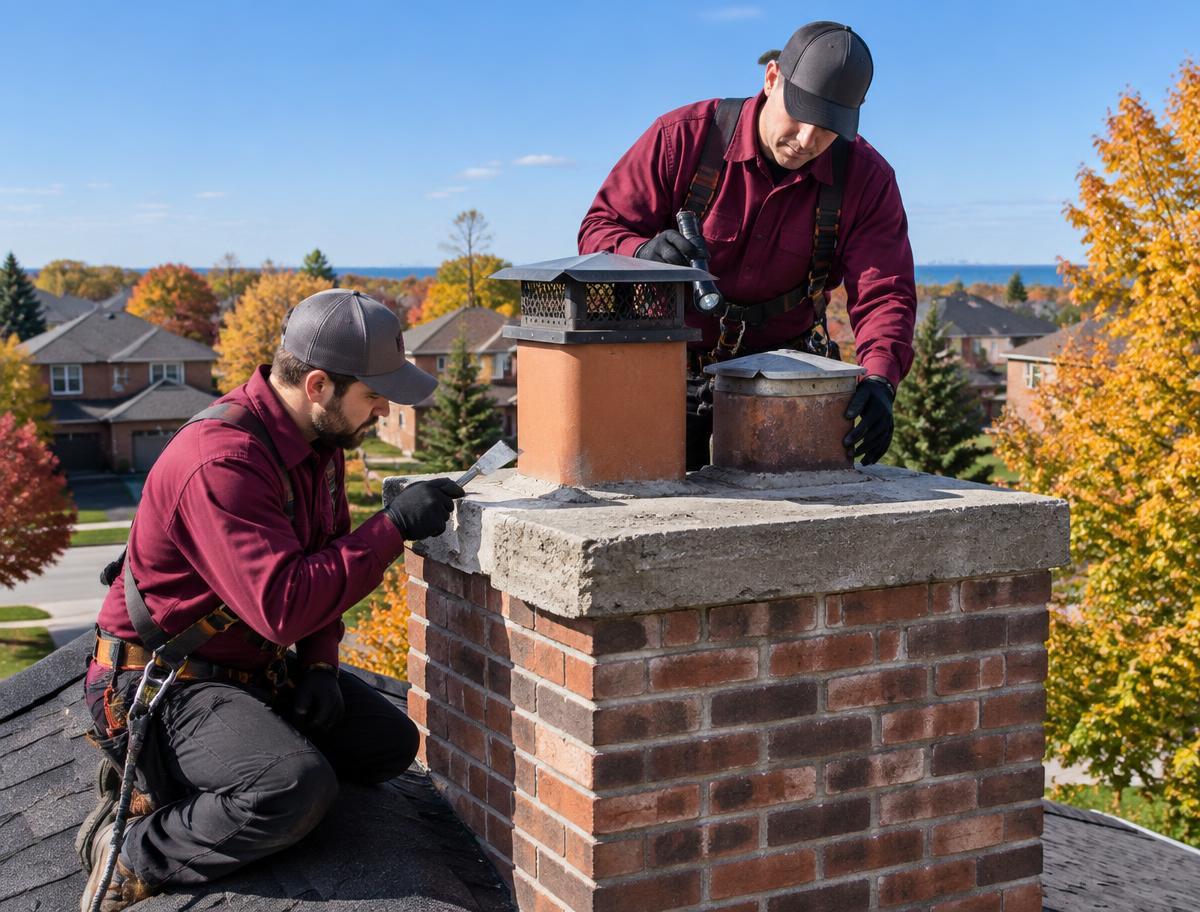
Finally, we complete an exterior inspection of the roofline and chimney stack, weather conditions and roof safety permitting. We review the condition of the exterior bricks, mortar joints, flashing counter-seals, rain caps, and concrete wash crowns. Once all evaluations are finished, we sit down with you at your kitchen table to walk you through the photographic evidence, explain any immediate safety issues, and present clear, practical options for any recommended repairs or cleaning.
- Clean hearth preparation using protective drop cloths and dust containment tools
- Internal firebox, throat, smoke shelf, and damper mechanical inspection
- Detailed flue passage assessment examining liner integrity and soot accumulation
- Exterior roofline review of masonry, crown wash, flashing, and termination caps
- Transparent post-inspection consultation with complete photographic evidence
Preventative Maintenance Tips Between Professional Visits
While annual professional evaluations are essential for identifying hidden internal structural defects, consistent homeowner maintenance makes a major difference in keeping your chimney clean and safe throughout the winter. The single most impactful habit is burning only properly seasoned hardwood, such as maple, oak, or ash, that has cured for at least six to twelve months. Burning green, wet, or painted wood lowers combustion temperatures and dramatically speeds up sticky creosote formation inside your flue.
You can also protect your chimney system by inspecting your fireplace exterior and basement clean-out doors between seasons. Ensure that the cast-iron ash clean-out door in your basement remains tightly latched to prevent drafts and soot leakage. Upstairs, check your damper mechanism before every fire to ensure it opens fully and seals tightly when shut, preventing valuable heated household air from escaping up the stack when the fireplace is not in active use.
Paying attention to changes in how your fireplace drafts can alert you to emerging problems before an annual inspection is due. If you notice persistent smoke entering the room when starting a fire, hear unusual downdrafts, or spot powdery white salts on the chimney bricks outside, schedule a visual evaluation promptly. Catching small mortar gaps or minor draft restrictions early prevents extensive masonry rebuilds and keeps your fireplace running cleanly all winter long.
- Burn dry, seasoned hardwoods with moisture levels below twenty percent
- Never burn treated lumber, coloured newspaper, cardboard, or household trash
- Verify damper movement and full opening clearance before striking a match
- Inspect exterior roof gutters near the chimney to prevent water overflowing against brick
- Monitor the hearth for fallen mortar flakes or unusual soot drops after windstorms
What to Look for When Choosing a Chimney Inspector
Selecting a trustworthy chimney inspection provider requires looking past flashy advertising and focusing on local technical experience, transparent communication, and honest diagnostic methods. A dependable contractor takes the time to explain the physics of your venting system, highlights both urgent safety issues and minor cosmetic wear, and never resorts to high-pressure scare tactics to sell unnecessary full-stack rebuilds on the spot.
Always confirm that the chimney company carries comprehensive commercial general liability insurance and operates with proper safety protocols for roof and ladder access. Reliable professionals provide detailed, itemized written reports complete with clear photographic documentation of any damaged flue tiles, deteriorated mortar, or defective crowns they identify. If a contractor cannot clearly show you the internal damage they claim is present, you should seek a second opinion.
Local familiarity with Markham architectural styles is equally valuable. Older brick homes in areas like Langstaff or Berczy Village feature different masonry techniques and liner designs than modern custom properties along Thornhill. A contractor who understands local building methods and the severe effects of Southern Ontario winters will deliver practical, realistic recommendations tailored to the specific construction of your home, ensuring your chimney remains structurally sound for decades.
- Clear, itemized estimates outlining diagnostic findings without aggressive upselling
- Photo-documented inspection reporting showing clear proof of internal flue conditions
- Proof of active commercial general liability insurance and safe work practices
- Familiarity with Markham residential architecture and regional climate demands
- Plain-language communication explaining structural safety without complicated jargon
Average pricing in Markham
$189 – $389
- Inspection / diagnostic
- $189 – $249
- Typical time on site
- 1 to 2 hours on site
- Parts and materials
- Masonry sealants, replacement caps, damper plates, or liner sections quoted separately
- What moves the price
- Accessibility and steepness of the roofline · Type of venting system including clay, metal, or zero-clearance · Overall structural condition and level of creosote accumulation
Estimated local market range, not a quote. All estimates are in Canadian dollars and exclude 13% Ontario HST. Your exact price is confirmed before any work begins.