
Winter in Markham places immense demands on residential fireplaces and heating flues. Whether your home is a mid-century bungalow in Unionville, a classic two-storey brick residence in Berczy Village, or a custom build in Angus Glen, your chimney works tirelessly to vent toxic combustion gases away from your living space. Over weeks of steady burning, fine soot coats the interior walls of your flue tiles or metal liner. This powdery black residue might seem harmless at first glance, but accumulating soot restricts airflow, reduces heating efficiency, and creates an environment where corrosive moisture and hazardous combustible glazed creosote can rapidly take hold.
Markham Chimney Services operates from 4418 Highway 7 East, providing homeowners across local neighbourhoods and the Greater Toronto Area with thorough, mess-free chimney soot cleaning. Our dedicated team approaches every venting system with methodical care, using specialized rotary brushes and industrial containment vacuums to ensure your living room stays spotless. We focus on diagnosing airflow problems, checking liner integrity, and clearing stubborn accumulations before cold weather arrives. By eliminating soot deposits early, we protect your masonry against harsh seasonal conditions, lower the risk of chimney fires, and ensure your fireplace brings genuine comfort without lingering smoke or toxic backdrafts.
Chimney Soot Cleaning: visit summary
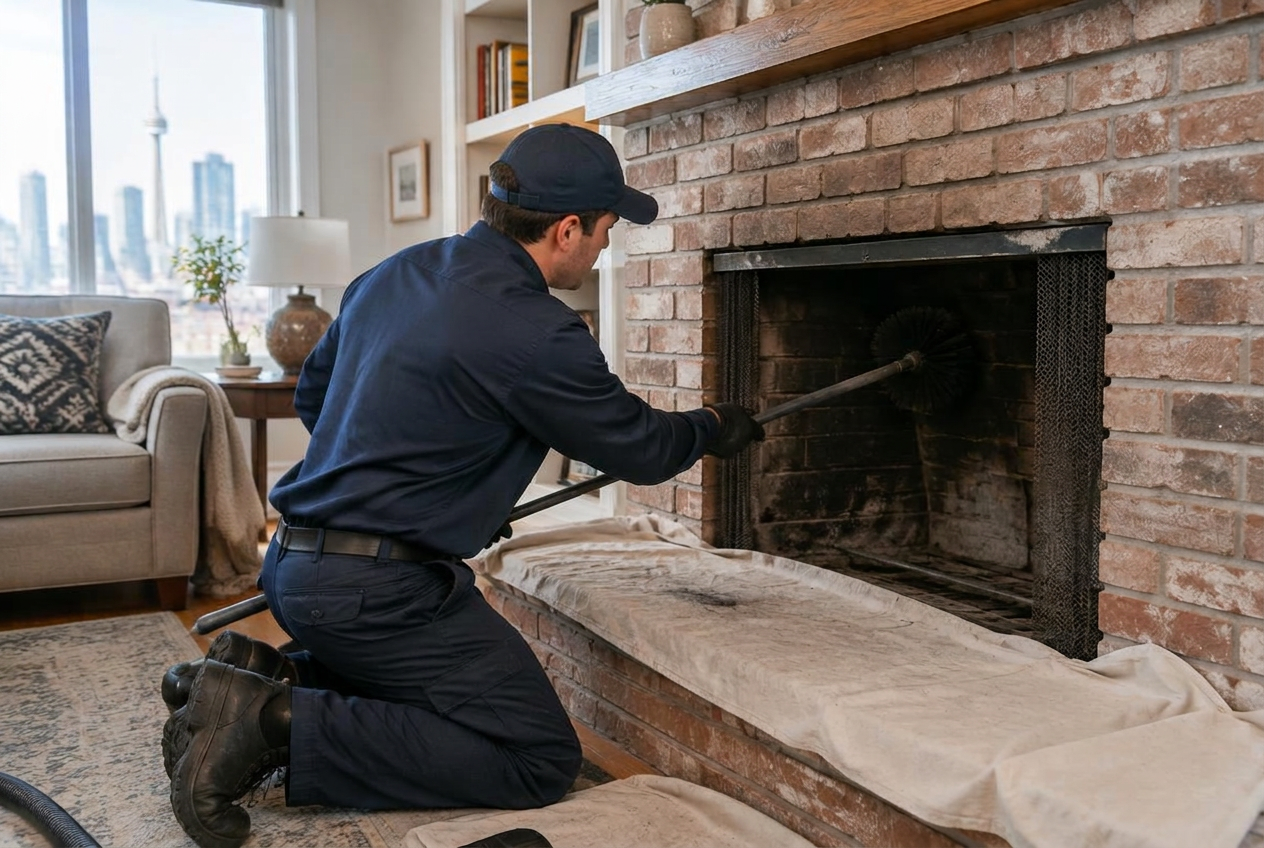
Chimney Soot Cleaning for Markham homes: soot and creosote cleared with drop cloths down and a filtered vacuum running at the hearth. Serving Markham and the Greater Toronto Area (GTA). The estimated local market range is $229 – $489, not a fixed company rate. The final scope and quote are confirmed before work begins.
| Estimated market range | $229 – $489. All estimates are in Canadian dollars and exclude 13% Ontario HST. |
|---|---|
| Typical time | 60 to 90 minutes on site |
| Price factors | Chimney height, roof pitch, and accessibility; Severity of soot accumulation and presence of glazed creosote; Type of venting liner such as clay tile, prefabricated steel, or masonry |
| Routine signs to discuss | Sluggish Draft and Backdraft Smoke; Strong, Sour Ash Smells Indoors; Black Flakes Falling into the Hearth; Greasy, Oily Damper Plate Residue; Difficulty Lighting and Maintaining Fires; Soot Stains on the Outside Chimney Cap |
What Chimney Soot Cleaning Entails for Modern Homes
Chimney soot cleaning is the mechanical removal of fine carbon particles, ash, and early-stage combustion residues that adhere to the interior surfaces of your chimney flue. When wood, gas, or oil fuels burn incompletely, unburnt carbon travels up the venting passage alongside moisture vapour. As these gases encounter the cooler masonry near the top of the chimney stack, the carbon solidifies into powdery soot. Left unchecked, this layer thickens across the liner, narrowing the flue passage and restricting the natural draft required to pull smoke out of your home.
While many homeowners confuse soot with heavy creosote, they represent different stages of combustion buildup. Soot is primarily lightweight carbon dust that settles on horizontal ledges, smoke shelves, and flue walls. Creosote, on the other hand, develops when volatile wood tars condense into a sticky, flammable glaze. Thorough soot cleaning removes the base layer before it can react with atmospheric humidity and transform into dangerous tar glaze. Our technicians focus on cleaning the entire venting path, from the firebox and smoke chamber up through the flue termination point on your roof.
A proper cleaning involves far more than pushing a wire brush up a dark pipe. Modern chimneys require tailored sweep heads that match the exact shape and composition of the venting system, whether clay tile, poured concrete, or stainless steel. Sweeping must always be paired with high-volume negative air pressure systems to prevent microscopic carbon particles from escaping into your living room. Our careful approach restores the inner diameter of your chimney, returning draft dynamics to optimal operational levels and preventing acrid chimney odours from penetrating your furniture and drapery.
- Mechanical clearing of carbon residue across the full length of the flue
- Deep vacuuming of the smoke shelf, damper plate, and firebox floor
- Removal of soot before it bonds with moisture into hard creosote
- Matching brush stiffness and size to specific liner materials
- Full containment to protect indoor carpets, walls, and home furnishings
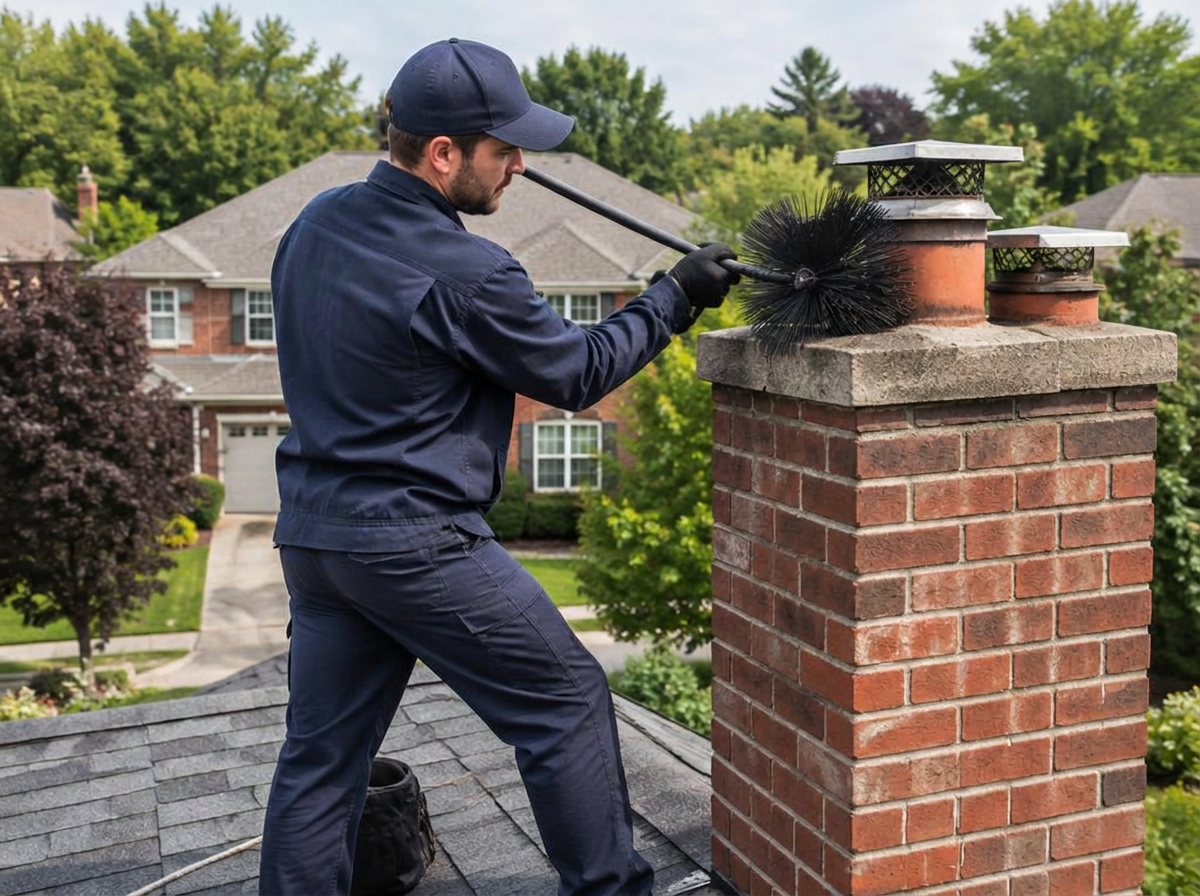
Professional soot sweeping and flue care designed for Markham homes through every cold Ontario winter.
Self-check
Warning signs you need chimney soot cleaning
Sluggish Draft and Backdraft Smoke
When soot narrows the flue diameter, hot gases struggle to escape. Smoke spills around the fireplace opening into your room when lighting or tending the hearth, leaving dark stains on the mantel and filling the house with irritating smoke haze.
Strong, Sour Ash Smells Indoors
Thick soot absorbs atmospheric moisture and emits an acrid, barbecue-like odour. If you notice a damp, sour ash smell coming from the firebox during rainy days or humid summer afternoons, your flue holds significant carbon buildup requiring immediate cleaning.
Black Flakes Falling into the Hearth
Piles of black, powdery carbon or brittle dark flakes landing behind the damper or on the firebox floor indicate heavy buildup. When soot layers become too thick, temperature changes cause the deposits to shed and fall down the flue.
Greasy, Oily Damper Plate Residue
Inspecting your cast iron damper should reveal bare metal or light ash. If the damper handle and plate feel sticky, gummy, or coated in velvety black soot, combustion residues have accumulated to levels that restrict air movement and pose safety risks.
Difficulty Lighting and Maintaining Fires
A restricted chimney cannot draw fresh combustion oxygen effectively into the firebox. If fires that previously burned vigorously now struggle to stay lit, smoulder constantly, or require open doors to catch, restricted flue draft from soot buildup is usually responsible.
Soot Stains on the Outside Chimney Cap
Heavy black staining dripping down the exterior metal rain cap or across top chimney bricks indicates unburnt carbon escaping in wet smoke. This visible exterior staining confirms that combustion temperatures are too low and the interior flue needs sweeping.
The Impact of Ontario Freeze-Thaw Cycles on Soot-Lined Chimneys
Southern Ontario experiences brutal winter weather characterized by rapid shifts between sub-zero chills and above-freezing thaws. These constant temperature swings place unique physical stress on exterior masonry chimneys throughout Markham. When rain, sleet, or melting snow enters an uncapped or degraded chimney top, moisture mixes directly with accumulated soot. Soot contains high concentrations of sulfur and acidic combustion byproducts. When water blends with these carbon deposits, it creates weak acids that slowly eat away at mortar joints and clay flue tiles.
The real destruction begins when the mercury drops overnight. The acidic water trapped within the soot-soaked porous clay freezes and expands by roughly nine percent. This internal pressure causes spalling, a process where the surface of clay tiles cracks, flakes, and falls to the bottom of the flue. Over several winters, uncleaned chimneys suffer accelerated structural deterioration. Flue cracks allow dangerous heat and toxic gases to migrate into surrounding wall framing, creating severe house fire risks that remain completely hidden behind finished drywall.
Regular soot sweeping breaks this destructive cycle by stripping away the acidic sponge that retains moisture against the masonry. A clean flue dries out quickly after damp weather events, preventing water from lingering on structural elements. During our service visits, we pay close attention to signs of water infiltration, ensuring that your chimney crown, flashing, and flue tiles remain structurally sound. Keeping the flue dry and clean is the single most effective way to extend the lifespan of your chimney masonry through decades of Ontario winters.
- Soot holds trapped moisture against clay tile liners and mortar joints
- Acidic soot wash dissolves lime based mortar during wet winter thaws
- Freezing temperatures cause soaked clay flue tiles to crack and spall
- Flue damage permits dangerous heat transfer to combustible home framing
- Clean chimney flues dry quickly and resist harsh winter deterioration
Comprehensive Chimney Inspection and Diagnosis
A thorough chimney cleaning always begins with a careful physical and visual evaluation. Before running any brushes through the flue, our technicians examine the hearth, firebox, lintel, and damper assembly. We assess the thickness, texture, and colour of the soot deposits to understand how cleanly your fireplace has been burning. Powdery gray-black soot suggests relatively normal combustion, while thick, tacky deposits point toward damp firewood, poor draft conditions, or improper air control settings that require immediate correction.
Next, we look upward through the smoke chamber using high-output inspection lights. We examine the throat damper to confirm it pivots smoothly, seats tightly against its frame, and shows no signs of warping or rust perforation. The smoke chamber itself is a critical transition zone where soot frequently piles up on flat masonry ledges. If your chimney configuration allows, we inspect the flue interior from the rooftop as well, checking for misaligned flue tiles, missing joint mortar, cracked crowns, and failing counter-flashing around the roof penetration.
This systematic assessment helps us identify hidden safety defects that sweeping alone cannot cure. For example, if we uncover cracked flue tiles or deteriorated mortar joints behind the soot layer, we document these findings clearly and explain what repairs are required before you light another fire. We believe in transparent diagnostic communication, offering straightforward explanations without confusing jargon so you can make confident, informed decisions about maintaining your home heating infrastructure.
- Visual evaluation of the hearth, firebox walls, and refractory panels
- Detailed inspection of damper movement, seating, and rust integrity
- Assessment of soot composition to diagnose underlying combustion problems
- Rooftop examination of the chimney crown, exterior brickwork, and flashing
- Checking clay liners or metal pipes for structural cracks and gaps
"I booked an annual chimney sweep in Unionville and they arrived right on time. They cleared all creosote, inspected the flue draft, and shared simple maintenance tips. My fireplace runs smoother and safer now."
Our process
How we handle your chimney soot cleaning, step by step
- 1
Arrival, Setup, and Living Room Protection
Our technicians lay heavy drop cloths from your entryway to the fireplace, seal the hearth opening, and set up our industrial HEPA vacuum to maintain complete dust containment throughout the service.
- 2
Initial Visual and Mechanical Inspection
We examine the firebox, damper plate, and smoke chamber with high-powered lighting, assessing soot depth and liner condition to select the exact brush type and sweeping method required for your system.
- 3
Full Flue Mechanical Sweeping
Using professional flexible rods and specialized brushes, we sweep the entire height of the flue from top to bottom, dislodging all carbon deposits while the negative air vacuum captures airborne dust.
- 4
Smoke Shelf and Firebox Deep Cleaning
We thoroughly vacuum the flat smoke shelf behind the damper, clean the firebox walls, brush down the damper assembly, and remove all fallen soot and ash deposits into sealed collection containers.
- 5
Final Clearance Check and Client Review
We test damper movement, conduct a smoke draft check, inspect the cleaned flue with high-lumen lights, pack up protective equipment, and provide you with a written condition report and maintenance advice.
Our Meticulous Soot Removal and Containment Process
We know that homeowners worry about chimney sweeps tracking black dust through their homes. Markham Chimney Services treats your living space with utmost respect. Before bringing equipment inside, our technicians lay heavy canvas drop cloths from the front entrance directly to the fireplace hearth. We cover the entire hearth area and seal the fireplace opening using specialized magnetic shields or heavy poly containment barriers. This tight enclosure guarantees that dislodged soot remains entirely trapped within the chimney envelope.
We then connect an industrial, three-stage HEPA containment vacuum to the sealed firebox opening. This high-volume vacuum maintains continuous negative air pressure inside the flue throughout the sweeping process. As our specialized flexible rods and custom-sized poly or steel brushes sweep downward or upward through the chimney, every flake of loosened soot is sucked directly into the sealed filtration unit. The exhaust air returned to your room is cleaner than standard ambient room air, preventing dust settling on your furniture.
Our process includes deep mechanical cleaning of the smoke chamber, smoke shelf, and damper housing. The smoke shelf behind the damper plate often holds buckets of accumulated soot that standard sweeps miss completely. We vacuum this flat area thoroughly using narrow nozzles, brush down the firebox brickwork, and polish the damper plate. When the physical sweeping is finished, we clean the hearth floor, pack up our protective cloths, and leave your home as tidy as we found it.
- Floor-to-hearth path protection using heavy-duty canvas drop cloths
- Sealing the fireplace opening with barriers to isolate soot and ash
- Three-stage HEPA negative air containment running during the sweep
- Rotary or manual brushing tailored to the chimney liner dimensions
- Meticulous vacuuming of the hidden smoke shelf and damper assembly
Venting Safety, CSA Guidelines, and Carbon Monoxide Prevention
Safe wood burning demands strict adherence to established safety practices aligned with CSA standards and solid-fuel best practices. While our independent technicians follow these rigorous trade protocols rather than relying on promotional credentials, our work reflects the highest standards of chimney safety engineering. Every fireplace venting system must provide an unbroken, smooth passage for hot exhaust gases. Any breach in flue integrity, inadequate clearance to combustible framing, or missing spark arrestor creates unnecessary risk for your household.
Carbon monoxide prevention sits at the very heart of our service philosophy. Ontario building codes mandate working carbon monoxide alarms outside sleeping areas, but chimney maintenance provides the primary mechanical defence against gas accumulation in the first place. A clean, properly drafting chimney generates strong natural buoyancy, drawing toxic fumes upward and venting them safely outside. During our soot cleaning visits, we check that your firebox draft creates adequate negative pressure to carry all combustion products cleanly out of your home.
We also examine exterior clearance requirements around your chimney cap. Trees that have grown over the roofline in mature Markham neighbourhoods can disrupt wind patterns, creating turbulent air currents that push smoke back down the chimney. We verify that your flue termination sits at a safe height above your roof ridge, fitted with an approved bird screen and rain cap. These physical safety checks ensure that your fireplace functions reliably through blizzards, freezing rain, and high windstorms without compromising indoor safety.
- Adherence to CSA venting safety and solid-fuel installation guidelines
- Verification of strong thermal draft to prevent indoor CO spillover
- Recommendations for proper carbon monoxide alarm placement in the home
- Checking chimney termination height relative to rooflines and trees
- Inspection of spark arrestors and rain caps to keep wildlife outside
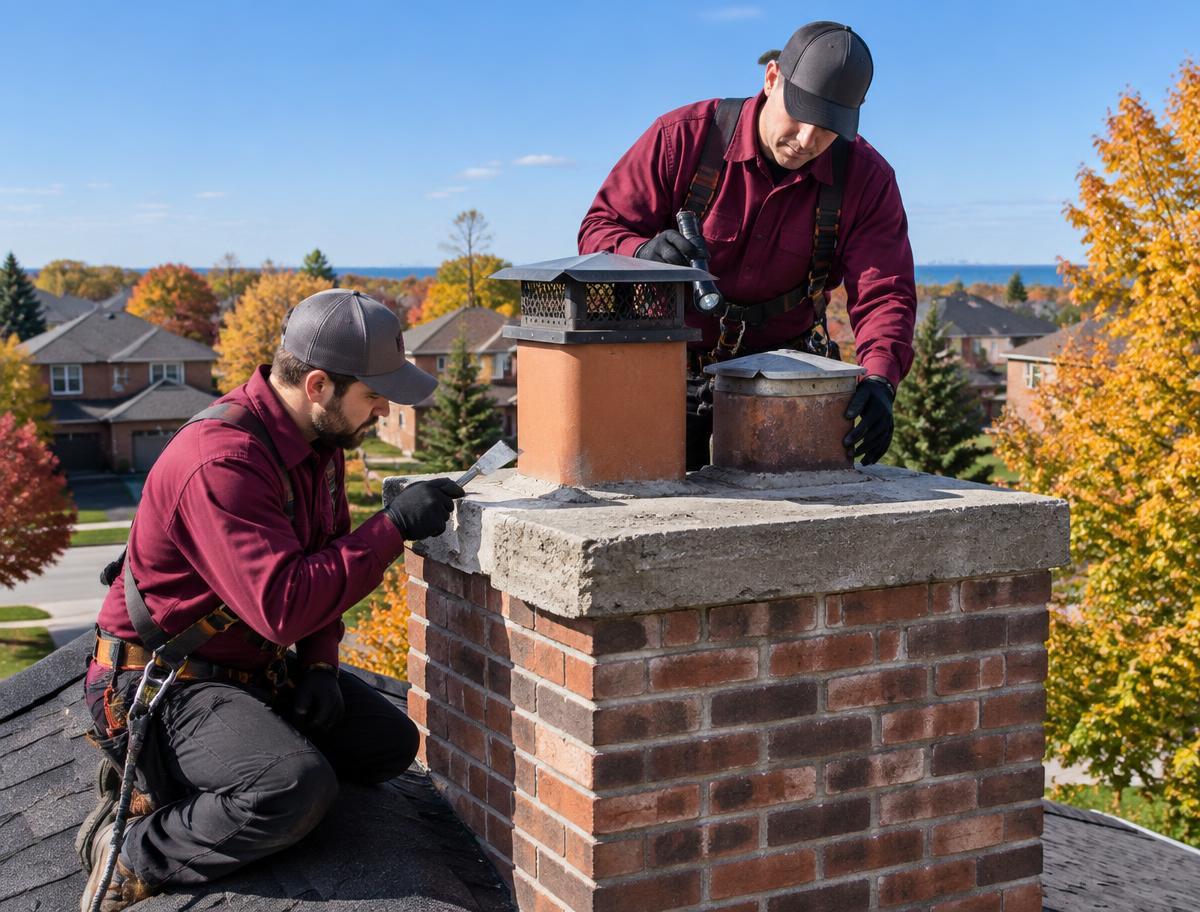
Practical Maintenance Habits for Cleaner Chimney Flues
Homeowners can significantly reduce soot accumulation between professional sweepings by adopting smart burning habits. The fuel you select plays the most critical role in flue cleanliness. Never burn green, unseasoned firewood, painted trim, pressure-treated lumber, or cardboard boxes in your fireplace. Freshly cut wood contains up to fifty percent water by weight. When burned, energy is wasted boiling off moisture rather than producing heat, creating low flue gas temperatures that cause heavy, dark soot and creosote to condense rapidly.
Invest in an inexpensive wood moisture metre and only burn split hardwood with a moisture reading below twenty percent. Seasoned maple, oak, beech, and ash provide hot, efficient fires with minimal smoke. When lighting a fire, build it using the top-down method: place large split logs on the bottom, medium splits across them, and kindling with natural firelighters on top. This technique warms the flue quickly, establishes an immediate upward draft, and reduces initial smoky smouldering by up to eighty percent.
Finally, ensure your fire receives adequate combustion air at all times. Modern, airtight homes in Markham often lack natural air infiltration. If your kitchen range hood or bathroom exhaust fans run simultaneously with a fire, they can depressurize your home and reverse your chimney draft. Crack a nearby window slightly when lighting your fireplace, leave air intake controls fully open during the burn, and avoid letting fires smoulder lazily overnight. Fast, hot fires produce dramatically less soot than cool, choked burns.
- Burn exclusively seasoned hardwoods with moisture levels under twenty percent
- Avoid burning painted wood, construction scraps, cardboard, or garbage
- Adopt the top-down fire-lighting method to warm the flue rapidly
- Crack a window if home ventilation fans cause fireplace backdrafts
- Maintain open air controls to prevent low-temperature, smoky smouldering
Selecting a Reputable Chimney Sweep in Markham
Selecting the right chimney professional protects both your financial investment and your home. Unfortunately, the chimney maintenance industry attracts fly-by-night operators who offer unrealistically cheap sweeping prices over the phone, only to invent phantom structural emergencies once they arrive. A reputable chimney contractor never uses high-pressure scare tactics to force you into costly, immediate relining contracts. Instead, they provide transparent explanations, clear photographs of any identified flaws, and detailed written quotes before commencing work.
When evaluating service providers, verify that the company maintains dedicated commercial liability insurance and proper provincial workplace safety coverage. Chimney work involves high roof access, heavy ladders, and working inside living spaces with expensive flooring. A trustworthy business willingly demonstrates proof of insurance and takes full responsibility for protecting your property. Look for established local presence, clear business registration, and an address you can verify within your community rather than generic national call centres.
Markham Chimney Services operates as an independent service company committed to honest craftsmanship and dependable local service. We pride ourselves on clear communication, punctuality, and clean workmanship. We arrive with all required safety equipment, perform thorough diagnostic sweeps, and explain the true condition of your chimney without exaggerated claims. By choosing an experienced local specialist, you ensure that your chimney receives the skilled care needed to keep your home warm and safe all winter long.
- Demand upfront, transparent pricing without hidden diagnostic add-ons
- Confirm valid commercial general liability and worker safety insurance
- Avoid contractors who rely on high-pressure scare tactics or verbal quotes
- Expect photographic evidence of any identified liner or masonry damage
- Choose an established local business rooted in the Markham community
Average pricing in Markham
$229 – $489
- Inspection / diagnostic
- $119 – $189 if booked without full sweeping
- Typical time on site
- 60 to 90 minutes on site
- Parts and materials
- Replacement dampers, custom chimney caps, top-mounted damper cables, and minor firebrick mortar repairs quoted separately
- What moves the price
- Chimney height, roof pitch, and accessibility · Severity of soot accumulation and presence of glazed creosote · Type of venting liner such as clay tile, prefabricated steel, or masonry
Estimated local market range, not a quote. All estimates are in Canadian dollars and exclude 13% Ontario HST. Your exact price is confirmed before any work begins.