

A damaged chimney exposes your home to harsh seasonal weather, carbon monoxide hazards, and expensive structural deterioration. Located at 4418 Highway 7 East, Markham Chimney Services provides homeowners throughout our local communities with dependable chimney repair and masonry restoration. Whether your home is a post-war bungalow in Unionville or a two-storey brick build in Bayview Glen, your chimney faces relentless exposure to wind, rain, and snow. Our knowledgeable crew inspects the entire venting stack, diagnosing hidden flue liner cracks, decaying mortar joints, and damaged crowns before moisture penetrates living spaces or compromises your heating appliances.
Finding an experienced chimney professional nearby means getting prompt, reliable service tailored to our regional architectural styles and building techniques. We approach every residential chimney project with practical expertise, clear communication, and respect for your property. By addressing masonry decay, cracked flue tiles, and corroded flashing early, you avoid the heavy financial burden of a complete rebuild down the road. Serving our Markham neighbourhoods and the GTA, we combine traditional trade masonry with modern diagnostic techniques to keep your venting pathways clear, structurally sound, and completely safe through every Canadian season.
Chimney Repair Near Me: visit summary
Chimney Repair Near Me in Markham: cracked brick, loose mortar and weather damage assessed and repaired before water gets in. Serving Markham and the Greater Toronto Area (GTA). The estimated local market range is $450 – $3,800, not a fixed company rate. The final scope and quote are confirmed before work begins.
| Estimated market range | $450 – $3,800. All estimates are in Canadian dollars and exclude 13% Ontario HST. |
|---|---|
| Typical time | Half-day for repointing to 3 days for partial rebuilds |
| Price factors | Height, pitch, and overall accessibility of the roofline; Extent of masonry deterioration and need for structural rebuilding; Whether interior flue relining or custom sheet metal flashing is required |
| Routine signs to discuss | Spalling or Flaking Brick Faces; Cracked or Crumbling Mortar Joints; White Powdery Stains (Efflorescence); Interior Ceiling or Wall Water Staining; Rusted Fireplace Damper or Metal Flue Components; Visible Tilt or Structural Leaning |
What Chimney Repair and Masonry Restoration Entails
Chimney repair is a broad discipline that addresses both the structural envelope of your venting system and its internal exhaust pathways. Your chimney is an active exhaust structure handling toxic combustion gases, acidic moisture, and intense thermal expansion. Repairs range from minor brick repointing along the exterior stack to full structural rebuilds above the roofline. Every component must function in harmony, including the clay flue tile, the masonry shoulder, the flashing along your shingles, and the top wash.
When masonry joints begin to fail, water seeps into the core of the chimney stack. Left unchecked, that water erodes the structural bonding between individual clay bricks, resulting in leaning chimney stacks, interior drywall staining, and spalling brick faces. Comprehensive chimney restoration involves scraping away decayed mortar, replacing damaged masonry units with colour-matched materials, and renewing the structural bed joints. It also includes evaluating the firebox, smoke chamber, throat damper, and exterior flashing to guarantee moisture stays out and exhaust gases exit freely.
Homeowners frequently contact us when they spot spalling bricks on the driveway or notice an unpleasant smoky odour drifting down through the fireplace damper. Our independent service team treats every job as a complete venting assessment, ensuring that surface repairs do not conceal deeper flue blockages or hazardous structural settling. We take the time to evaluate the full venting column from your basement cleanout door right up to the spark arrestor on your chimney cap.
- Precision repointing and tuckpointing of failing exterior mortar joints
- Rebuilding fractured concrete chimney crowns and custom top washes
- Flue relining using heavy-gauge stainless steel venting liners
- Counter-flashing and step-flashing replacement at the roof intersection
- Smoke chamber parging to streamline draft efficiency and exhaust flow
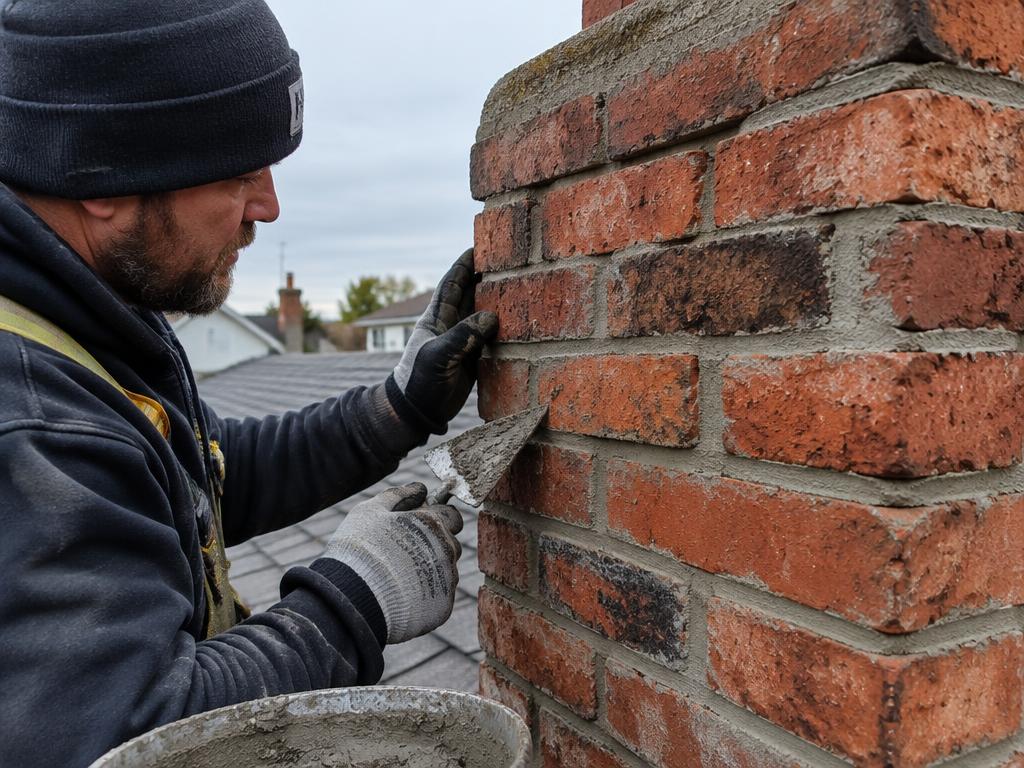
Restoring structural integrity and fireside safety to Markham homes through thoughtful local masonry craftsmanship.
Self-check
Warning signs you need chimney repair near me
Spalling or Flaking Brick Faces
When brick faces pop off and collect along your roof or driveway, trapped moisture has frozen inside the clay. This leaves the soft brick core open to rapid structural breakdown and requires prompt masonry repair.
Cracked or Crumbling Mortar Joints
Mortar that is receding, powdery, or falling out in chunks indicates chemical erosion from weather and flue gases. Degraded mortar lets water enter the stack core, leading to loose bricks and structural instability.
White Powdery Stains (Efflorescence)
White mineral staining on exterior brick shows that moisture is travelling through the masonry, dissolving natural salts and depositing them on the surface. It is an early visual indicator of chronic water penetration.
Interior Ceiling or Wall Water Staining
Water stains on ceilings or peeling drywall paint near your chimney breast often stem from failed roof flashing or a fractured chimney crown allowing rain to bypass your roofline and damage underlying timber.
Rusted Fireplace Damper or Metal Flue Components
Excessive moisture in your chimney causes the iron damper or firebox metal to rust. If opening the damper feels stiff or gritty, water is likely entering via a cracked crown wash or missing chimney cap.
Visible Tilt or Structural Leaning
A chimney stack tilting away from the roofline indicates that foundation footing has shifted or the mortar bed on one side has dissolved. This is an urgent safety concern requiring immediate structural support.
Why the Ontario Freeze-Thaw Cycle Destroys Chimneys
Southern Ontario experiences one of the harshest freeze-thaw climates in North America, placing tremendous mechanical stress on exterior residential masonry. Throughout late autumn, winter, and early spring, temperatures frequently fluctuate across the zero-degree mark within a single twenty-four-hour cycle. Clay bricks and lime-cement mortars are naturally porous materials that readily absorb ambient rainwater, melting snow, and freezing precipitation. When this trapped moisture freezes overnight, it expands by approximately nine percent within the tiny capillaries of the brickwork.
This relentless hydraulic pressure forces the microscopic pores of the brick apart, fracturing the hard outer glaze of the unit. During the midday thaw, liquid water migrates even deeper into the fresh fissures, only to freeze and expand again the following evening. Over several seasons, this cycle causes spalling, where the brick face pops off entirely, leaving a soft, crumbly interior exposed to the elements. Chimneys without effective protective crowns or proper rain covers experience this rapid deterioration at twice the rate.
The situation intensifies when modern high-efficiency furnaces share or vent near older masonry chimneys. Cooler exhaust gases produce corrosive condensation inside the flue, attacking the masonry from the inside while winter snow and ice assault it from the exterior. Without proactive intervention and timely tuckpointing, a stack can shift or collapse, creating an urgent safety hazard. Applying breathable, siloxane-based water repellents and securing the crown wash helps keep liquid water outside your brickwork where it belongs.
- Rapid temperature swings across the freezing point force moisture expansion
- Spalling brick faces leave soft inner cores vulnerable to rapid erosion
- Chimney crowns crack and direct melting snow straight down the masonry core
- Acidic furnace condensation degrades unlined or under-insulated flues from inside
- Unchecked moisture penetration leads to unstable, leaning chimney stacks
Underlying Causes of Chimney Deterioration
While moisture and sub-zero temperatures are the primary drivers of chimney decay, several other factors speed up the breakdown of your chimney structure. Inadequate original construction practices, such as pouring a thin mortar wash instead of an overhanging concrete crown, leave bricks completely unprotected from cascading roof runoff. Without a drip edge, rainwater washes down the exterior faces, stripping away the mortar cement and weakening the bond over decades of exposure.
Improper appliance venting and fuel conversion also play an enormous role in chimney degradation. When older homes convert from traditional oil furnaces to natural gas without installing a dedicated metal flue liner, the lower exhaust temperatures fail to generate sufficient natural draft. The moisture in gas exhaust condenses along cold interior clay tiles, mixing with residual sulfur and creosote to form corrosive acids that eat through clay seams and dissolve interior mortar joints.
Structural settling of the home, minor ground movement, and strong wind shearing across exposed rooflines place ongoing physical stress on tall chimney columns. As the foundation settles slightly, rigid masonry develops fine hairline fractures that trace through step joints. If flashing around the base has oxidized, pulled away from the brick, or been sealed with brittle roof tar, roof runoff will slip behind the siding, rotting the rafters and destabilizing the chimney base.
- Absence of a proper overhanging crown with a functional drip edge
- Appliance fuel conversions carried out without an approved metal liner
- Corrosive acidic condensation breaking down unsealed clay flue joints
- Building settlement causing step-cracking through brick and mortar joints
- Failed roof flashing joints allowing rainwater into the surrounding framing
Our Thorough Inspection and Diagnosis Process
A reliable chimney repair always begins with a comprehensive, step-by-step diagnostic assessment. We never rely on guesswork or superficial surface checks from the driveway. Our diagnostic process examines both the exterior structure and the internal venting passages to identify the root cause of every defect. We begin at the lowest level of your home, inspecting cleanout ports, furnace thimbles, and fireplace dampers before moving upwards toward the roofline.
During our assessment, we evaluate the condition of every brick course, inspecting mortar integrity, checking vertical alignment, and looking for signs of efflorescence, which indicates subsurface moisture travel. Up on the roof, we inspect the flashing seams, counter-flashing bonds, the slope and thickness of the crown, and the condition of the flue terminations. We also check for bird or animal nesting materials, heavy creosote glaze, and deteriorating clay tiles that could fall and block the flue exhaust pathway.
Once our evaluation is complete, we provide you with a clear, plain-language summary of what is happening inside and outside your chimney. We explain which repairs are urgent safety priorities and which items can be monitored over future seasons. You receive an upfront written estimate detailing the necessary scope of work, the materials we recommend, and the restoration timeline, giving you total peace of mind before any work begins on your home.
- Complete exterior masonry condition review from base to crown
- Flue passageway check to identify obstructions, creosote, and fractures
- Thorough roofline inspection of flashing collars, counter-flashing, and sealants
- Chimney cap and spark arrestor evaluation to prevent moisture and animal entry
- Detailed findings report with transparent recommendations and fair pricing
"I discovered odd odours coming from my chimney and booked a deodorizing treatment Downtown. They applied a specialized solution, sealed minor cracks, and eliminated the smell completely. My living room feels fresh again."

Our process
How we handle your chimney repair near me, step by step
- 1
Initial Safety and Structural Assessment
We examine the entire venting stack, inspecting the cleanout, firebox, roof flashing, masonry courses, and chimney crown to diagnose the underlying causes of decay.
- 2
Detailed Scope and Transparent Written Quote
We deliver a comprehensive report showing photos of roofline issues alongside an itemized written estimate covering all materials, mortar mixes, and labour requirements.
- 3
Site Preparation and Property Protection
Our crew establishes secure roof access, positions safety fall-protection gear, and covers your shingles, eaves, and surrounding landscaping with heavy-duty tarpaulins to capture all masonry debris.
- 4
Masonry Repair, Rebuilding, and Flue Restoration
We grind out compromised mortar, replace deteriorated brickwork, rebuild crowns, or install stainless steel liners, adhering to strict CSA-aligned building methods and safety principles.
- 5
Final Cleanup and Safety Verification
We clear away all construction debris, review the restored stack with you, inspect appliance draft operation, and verify that household carbon monoxide alarms are functioning properly.
Proven Repair and Masonry Restoration Methods
Restoring an aging chimney requires careful craftsmanship, using time-tested masonry techniques alongside modern construction standards. When mortar joints begin crumbling, we execute precise repointing. This process requires grinding out degraded mortar to a uniform depth of at least fifteen millimetres without damaging surrounding brick edges. We then pack the joints with freshly mixed mortar tailored in strength and flexibility to match the original brickwork, ensuring proper bonding and structural resilience.
If the upper courses of the chimney stack have suffered severe moisture degradation, repointing alone is not sufficient. In these scenarios, our team carefully deconstructs the unstable brickwork down to solid, undisturbed masonry courses. We clean and salvage reusable historic bricks where appropriate or source matching replacement units, then rebuild the stack using reinforced mortar beds. We finish the rebuild with a poured, reinforced concrete crown featuring a proper drip edge to shed water clear of the brickwork below.
Interior flue repairs require specialized relining methods to ensure fireside safety. When clay flue tiles crack, break, or exhibit open mortar seams, they allow deadly gases and extreme heat to reach combustible framing. We install custom-sized, continuous stainless steel liners insulated with ceramic blanket wrap or vermiculite mixtures. This modern venting system enhances drafting, contains flue gases securely, prevents acid condensation from contacting surrounding bricks, and restores your heating equipment to safe operation.
- Deep mechanical grinding and mortar tuckpointing using matched mortar blends
- Partial or complete chimney teardowns and structural masonry rebuilds
- Reinforced concrete crown installations with overhanging drip grooves
- Continuous stainless steel flue lining systems for wood and gas appliances
- Lead and copper flashing fabrication for durable roofline moisture seals
Safety Protocols, Carbon Monoxide, and Best Practices
Your chimney is the most critical exhaust system in your home, and its failure poses immediate life-safety risks. A fractured flue liner or blocked venting passageway can permit odorless, invisible carbon monoxide gas to seep through wall cavities and into living spaces. Because heating equipment runs continuously throughout our freezing winters, maintaining clear, leak-free exhaust pathways is a non-negotiable household safety priority for every homeowner across Markham.
We follow strict safety principles aligned with CSA standards and WETT-style safety guidelines for solid-fuel installations. This means ensuring proper clearances between masonry structures and combustible wood framing, verifying correct draft pressures, and installing dedicated spark arrestors to guard against embers igniting dry roofing materials. Whenever we service a chimney, we confirm that working carbon monoxide and smoke alarms are installed on every level of the residence, especially near bedroom corridors.
Safe repairs also demand rigorous jobsite safety precautions. Our technicians use stable roof access systems, secure scaffolding, and appropriate personal protective equipment while working at heights. We protect your roof shingles, gutters, and surrounding landscaping from heavy debris and mortar splatter using protective tarps and boards. We also run HEPA dust extraction tools during indoor firebox repointing to keep fine soot and silica particles completely out of your home.
- Carbon monoxide mitigation through leak-free, properly sized flue pathways
- Rigorous adherence to CSA venting clearances and WETT-style safety guidelines
- Installation of spark arrestors and animal barriers to prevent chimney fires
- Use of specialized HEPA containment tools to protect indoor living air quality
- Roof and gutter protection protocols to safeguard your landscaping and property

Preventative Maintenance Tips for Homeowners
Simple, consistent preventative maintenance extends the lifespan of your chimney by decades and saves you thousands of dollars in major masonry work. The most critical line of defence is a heavy-duty, stainless steel chimney cap equipped with an integrated spark arrestor and wire mesh screen. This cap prevents driving rain, freezing sleet, and nesting wildlife like raccoons and squirrels from entering the open top of your flue, keeping the interior structure dry year-round.
Another powerful protective measure is the application of a 100 percent breathable, siloxane-based masonry water repellent to the exterior brickwork. Unlike silicone or oil-based sealers that trap moisture inside the brick and cause disastrous freeze-thaw spalling, breathable sealers allow interior moisture vapour to evaporate outward while forming an invisible barrier against wind-driven rain. Homeowners should schedule an exterior water-repellent treatment every seven to ten years to maintain continuous protection.
Make it a habit to perform a quick visual inspection of your chimney each spring and autumn. Walk around your home and examine the roofline with binoculars, looking for missing bricks, white powdery stains, cracked mortar, or rust stains running down your flashing. Check inside your basement cleanout door for fallen pieces of clay tile or mortar sand. If you spot any unusual changes, schedule a professional checkup right away before another winter freeze takes its toll.
- Install a stainless steel chimney cap to stop rain, snow, and animal nesting
- Apply breathable masonry water repellents to block wind-driven moisture
- Clear overhanging tree branches that scrape masonry and deposit moss
- Inspect the basement cleanout annually for fallen tile fragments or debris
- Burn only seasoned, dry hardwood to reduce sticky creosote deposits inside the flue
Choosing a Qualified Local Chimney Contractor
Finding the right contractor for your chimney repair requires looking past high-pressure sales pitches and focusing on proven masonry knowledge. A qualified chimney contractor should understand the unique architectural demands of Markham homes, from mid-century builds with lime-sand mortar to newer subdivisions with clay brick veneer. When choosing a specialist, look for an independent local company that provides transparent, itemized estimates and takes the time to explain the engineering behind their repair plan.
Always verify that any contractor working on your roof carries active commercial liability insurance and Workplace Safety and Insurance Board coverage. Roofing and high-elevation masonry work present genuine hazards; an uninsured or underinsured handyman puts you at financial and legal risk if an accident occurs on your property. Ask the contractor directly about the types of mortar they use, as applying modern, high-strength Portland cement on older, softer brickwork can cause the brick to crack under thermal stress.
Be cautious of transient, door-to-door handymen who claim they spotted an urgent problem from the street and demand cash up front for immediate repairs. Reputable local professionals provide comprehensive written evaluations, take photos of the roofline issues to show you directly, and back their labour with clear warranty coverage. Selecting a dedicated masonry and chimney service company ensures your home receives durable, code-compliant repairs that stand up to decades of unpredictable Ontario winters.
- Insist on current general liability insurance and WSIB safety documentation
- Require detailed, written estimates specifying mortar types and repair scopes
- Choose contractors with specific knowledge of Ontario freeze-thaw masonry demands
- Avoid high-pressure door-to-door operators who demand upfront cash payments
- Verify that the team provides photographic evidence of all rooftop defects
Average pricing in Markham
$450 – $3,800
- Inspection / diagnostic
- $150 – $250 (credited toward major repairs)
- Typical time on site
- Half-day for repointing to 3 days for partial rebuilds
- Parts and materials
- Stainless steel chimney caps, custom flue liners, flashing materials, and replacement bricks
- What moves the price
- Height, pitch, and overall accessibility of the roofline · Extent of masonry deterioration and need for structural rebuilding · Whether interior flue relining or custom sheet metal flashing is required
Estimated local market range, not a quote. All estimates are in Canadian dollars and exclude 13% Ontario HST. Your exact price is confirmed before any work begins.