
A clean chimney is fundamental to maintaining a warm, safe, and efficient home throughout the colder months in Markham. When you burn wood in your fireplace, combustion byproducts rise through the flue, leaving behind carbon residue, moisture, and dangerous creosote glaze. Over time, these materials restrict the exit passage, choke the draft, and present a real risk of internal chimney fires. Markham Chimney Services provides thorough, mess-free chimney sweep services for local homeowners from our base at 4418 Highway 7 East. We carefully clear soot, remove combustible buildup, and examine every accessible part of your venting system to help protect your household against chimney fires and carbon monoxide hazards.
Homes across our local neighbourhoods feature a wide range of heating designs, from traditional open brick hearths in mature mid-century bungalows to modern airtight wood stoves installed in renovated multi-storey properties. Each venting system handles smoke and heat differently, but all chimneys face the same punishing winter conditions. Sub-zero temperatures, freezing rain, and repeated freeze-thaw cycles create heavy thermal shock and accelerate moisture deterioration inside the flue. Our sweep process combines meticulous mechanical brushing with detailed interior evaluations, giving you total peace of mind whenever you strike a match. We treat your living space with the highest level of care, protecting your floors and furnishings throughout every appointment.
Chimney Sweep: visit summary
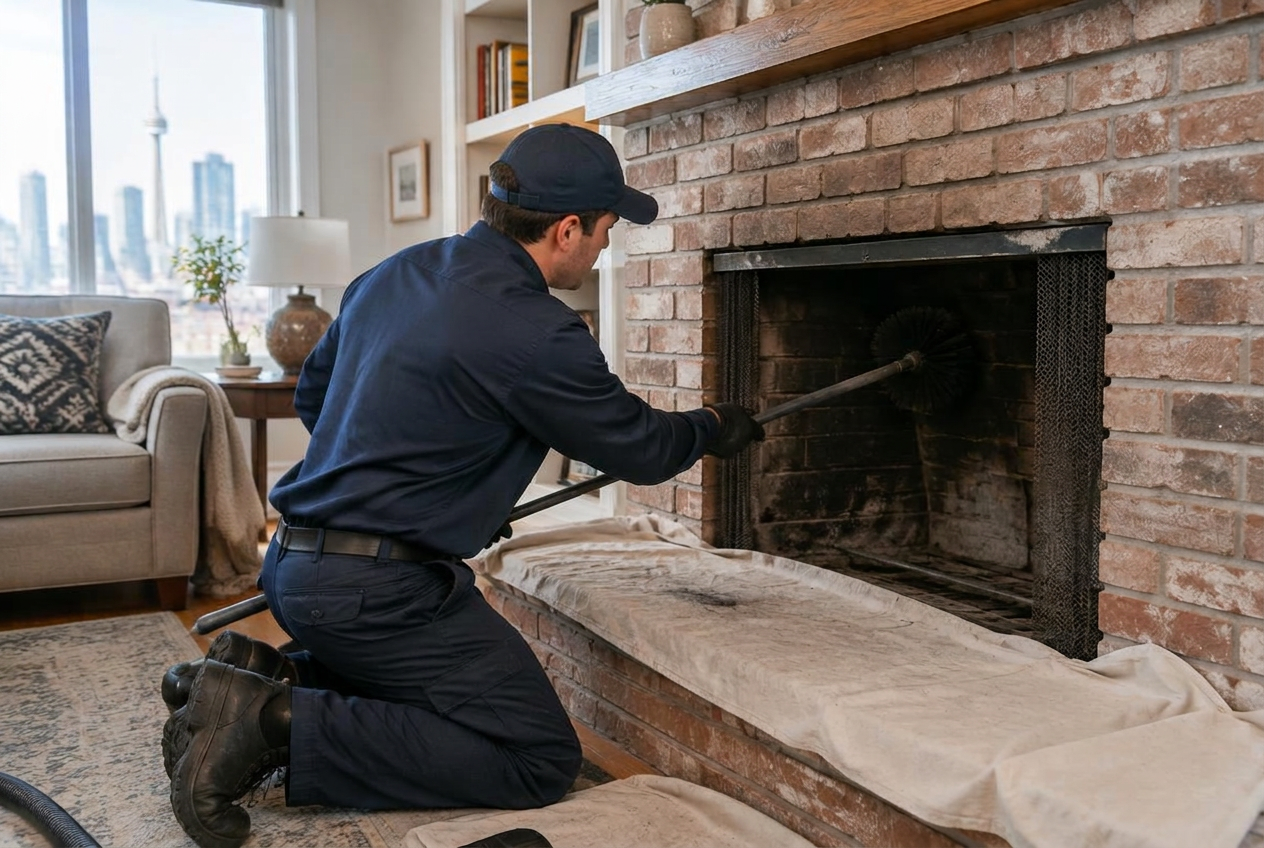
Chimney Sweep for Markham homes: soot and creosote cleared with drop cloths down and a filtered vacuum running at the hearth. Serving Markham and the Greater Toronto Area (GTA). The estimated local market range is $189 – $449, not a fixed company rate. The final scope and quote are confirmed before work begins.
| Estimated market range | $189 – $449. All estimates are in Canadian dollars and exclude 13% Ontario HST. |
|---|---|
| Typical time | 1 to 2 hours typical on-site time |
| Price factors | Degree and hardness of creosote accumulation (stage one soot versus stage three hardened glaze); Chimney height, roof pitch, access complexity, and number of individual flues being swept; Type and condition of the flue liner, including clay tile, factory-built metal, or stainless steel |
| Routine signs to discuss | Thick black smoke enters the room; Pungent campfire or barbecue smells; Oily, sticky black deposits on the damper; Sluggish burns and poor fire starting; Falling soot flakes and mortar debris; Fluttering sounds or animal activity inside |
Understanding the Chimney Sweep Process in Markham Homes
Chimney sweeping is the systematic removal of soot, ash, and creosote deposits from the internal surfaces of your fireplace flue and smoke chamber. During normal wood combustion, volatile gases leave the firebox and hit the cooler walls of the chimney liner, where they condense into dark deposits. If you ignore this accumulation, the passage narrows and draft efficiency drops significantly. A professional chimney sweep restores the proper interior diameter of the exhaust path, allowing dangerous smoke and toxic exhaust gases to rise freely away from your living spaces without lingering or blowing back into the house.
Our approach begins with complete containment of the work zone to prevent airborne soot particles from entering your home. We use heavy drop cloths around the hearth, secure high-efficiency particulate air vacuums directly at the fireplace opening, and seal off draft avenues. Once the containment barrier is in place, our technicians select specialised wire or polypropylene brushes sized specifically to the exact shape and dimensions of your clay tile, stainless steel, or poured masonry liner. We sweep the entire length of the system from the firebox up to the chimney termination cap.
Beyond sweeping the main vertical run, we also carefully clean the critical transitional zones that often get overlooked during basic maintenance. The smoke shelf, damper assembly, throat, and firebox walls collect loose debris, dislodged mortar dust, and heavy soot flakes that can prevent the damper plate from closing or opening properly. By clearing these components thoroughly, we ensure that mechanical parts move freely and draft seals remain tight, saving heating energy when your fireplace sits idle between winter fires.
- Mechanical agitation removes stubborn soot, debris, and flaky creosote deposits safely.
- Continuous industrial particulate vacuuming prevents any ash or dust escape into your home.
- Complete clearing of the smoke shelf, damper throat, and firebox walls restores balanced airflow.
- Inspection of interior clearances helps prevent structural overheating behind finished walls.
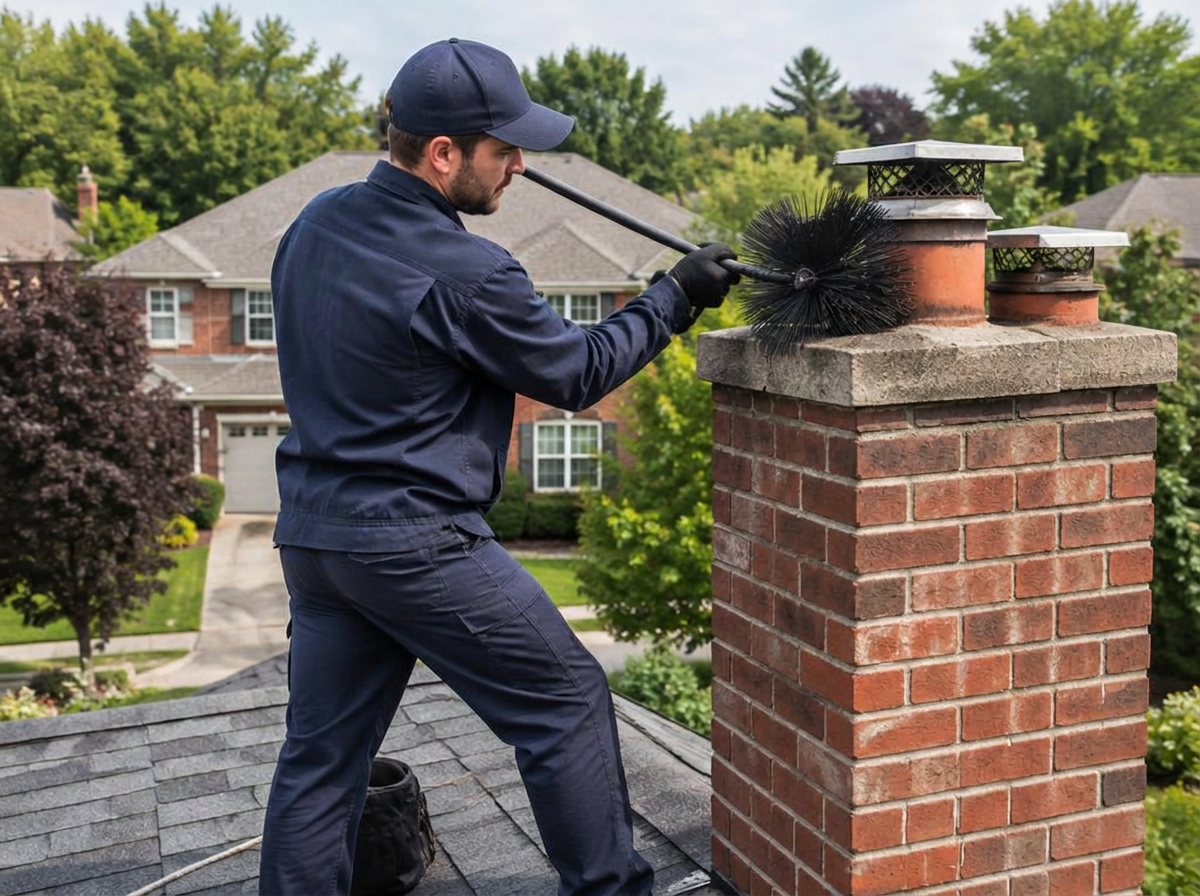
Thorough flue cleaning and safety inspections designed for Markham homes and harsh Ontario winters.
Self-check
Warning signs you need chimney sweep
Thick black smoke enters the room
Smoke pushing out past the fireplace lintel rather than flowing up the chimney indicates heavy creosote constriction, damper mechanical failure, or a compromised flue draft that requires prompt clearing.
Pungent campfire or barbecue smells
Strong, sour, sooty odours coming from the fireplace when it is not in use mean humid summer air is reacting with accumulated creosote inside the flue, calling for a thorough sweeping.
Oily, sticky black deposits on the damper
Spotting thick, tar-like or crusty buildup inside the firebox or across the throat damper plate reveals dangerous stage-two creosote accumulation that requires professional mechanical sweeping before lighting another fire.
Sluggish burns and poor fire starting
If seasoned firewood smothers, produces small weak flames, and struggles to catch despite open drafts, restricted flue capacity is choking combustion air and holding toxic exhaust gases back.
Falling soot flakes and mortar debris
Finding black flakes, sand, or chunks of clay tile littering the hearth floor signals progressive liner wear and heavy creosote flaking that requires professional cleanup and interior inspection.
Fluttering sounds or animal activity inside
Scratching or chirping noises within the chimney flue suggest birds, squirrels, or raccoons have entered through a damaged cap, creating immediate fire hazards with nesting materials.
Ontario Freeze-Thaw Weather and Chimney Flue Degradation
Southern Ontario experiences some of the most aggressive seasonal weather fluctuations in the country, and Markham masonry bears the brunt of these shifts. During late autumn and winter, rain and melting snow soak into porous exterior brick, mortar joints, and unsealed chimney crowns. When temperatures drop below zero overnight, that trapped moisture freezes and expands with tremendous physical force. This ongoing freeze-thaw cycling breaks down mortar bonds, splits clay flue tiles from within, and leaves internal surfaces vulnerable to aggressive creosote adhesion.
When an internal clay flue liner cracks due to thermal shock and freeze-thaw action, heat and combustion gases can escape into adjacent wall framing. Creosote that accumulates inside these fractures creates a hidden fire danger that standard visual checks from the firebox cannot identify. Furthermore, cold chimney liners create significant draft issues during winter startups. Cold outside air sinks down an exterior masonry chimney, creating an air plug that pushes initial smoke straight into your living room instead of venting upward outdoors.
Regular sweeping and flue monitoring help catch this moisture-driven damage before it leads to structural chimney failure or dangerous water penetration into your ceilings. By clearing away insulating layers of black soot, we can directly inspect the underlying liner material for spalling, flaking, missing mortar, or shifted joints. Identifying these vulnerabilities early lets you make targeted repairs, protecting your masonry investment against expensive structural rebuilding down the road.
- Expansion of trapped moisture causes spalling, cracking, and premature clay tile breakdown.
- Thermal shock between roaring fires and sub-zero weather stresses masonry construction.
- Cold chimney flues cause dense air plugs that resist natural upward draft on cold mornings.
- Clearing soot allows early detection of hidden liner cracks before winter moisture worsens them.
The Dangerous Progression of Creosote Buildup
Creosote is a natural byproduct of incomplete wood combustion, but its character changes dramatically as it accumulates over time. In its earliest stage, creosote forms a dry, flaky, dark grey soot that sweeps away relatively easily with standard chimney brushes. This stage develops during hot, well-ventilated fires where air supply remains plentiful. While stage-one soot is flammable, it does not pose the severe ignition resistance found in later stages, making annual cleaning simple and highly effective.
When homeowners burn unseasoned green firewood or consistently restrict airflow to extend burn times, unburned wood oils condense quickly into stage-two creosote. This form appears as shiny, sticky, tar-like flakes or thick black granules that bond tightly to liner joints and damper plates. Stage-two creosote requires stiff steel sweeping brushes, rotary scraping tools, and calculated manual effort to dislodge without cracking older clay tile liners underneath.
Stage-three creosote is the most dangerous condition a chimney can experience. It forms a dense, rock-hard, glossy black glaze that coats the flue walls like hardened tar. As hot flue gases pass over previous deposits, the volatile components bake off, leaving concentrated fuel that ignites at temperatures as low as two hundred and forty degrees Celsius. Once lit, a third-stage chimney fire burns with explosive intensity, often exceeding one thousand degrees Celsius and destroying chimney liners within minutes.
- Stage one features powdery black soot that sweeps away smoothly with regular annual care.
- Stage two presents sticky, tar-like granules caused by low-temperature fires and moist cordwood.
- Stage three creates a hardened, glossy glaze that poses an extreme chimney fire risk.
- Targeted mechanical removal and proper wood-burning habits prevent dangerous glaze formation.
Draft Dynamics, Airflow Problems, and Smoke Backup
A functioning fireplace depends on a physical balance known as the stack effect, where warm, buoyant flue gases rise naturally against cooler outdoor air. However, modern building practices have made many homes in Markham exceptionally airtight through replacement windows, spray foam insulation, and modern house wraps. When exhaust appliances like kitchen range hoods, bathroom fans, and clothes dryers run simultaneously, they draw indoor air pressure downward, competing directly with your fireplace flue for makeup air.
When your chimney cannot pull enough air from inside the home, the natural draft reverses direction. Instead of rising smoothly through the roof terminal, smoke rolls lazily out of the fireplace opening, spreading fine particulates, unpleasant odours, and invisible combustion gases across your home. Accumulated soot along the flue liner and around the damper throat further restricts passage volume, compounding draft sluggishness and making lighting a clean fire nearly impossible.
During our chimney sweep service, we evaluate your system's draft performance under actual operating conditions. We clear soot blockages that restrict exhaust flow, confirm that your throat damper opens to its correct angle, and assess how household air movement influences draft behaviour. We then provide straightforward, practical guidance on establishing strong initial drafts, managing indoor pressure differentials, and using simple pre-warming routines to stop smoke rollback completely.
- Airtight modern home renovations can starve wood fireplaces of essential combustion air.
- Competing exhaust fans create negative house pressure that pulls flue smoke back inside.
- Soot accumulation inside the damper throat restricts natural exhaust flow and slows air speed.
- Pre-heating the flue with rolled newspaper creates a dependable draft before lighting full logs.
"When a storm loosened some bricks, I called for emergency repair in Thornhill. Their crew arrived within hours, secured the chimney crown, and restored its integrity without any mess. Truly impressive expertise."
Our process
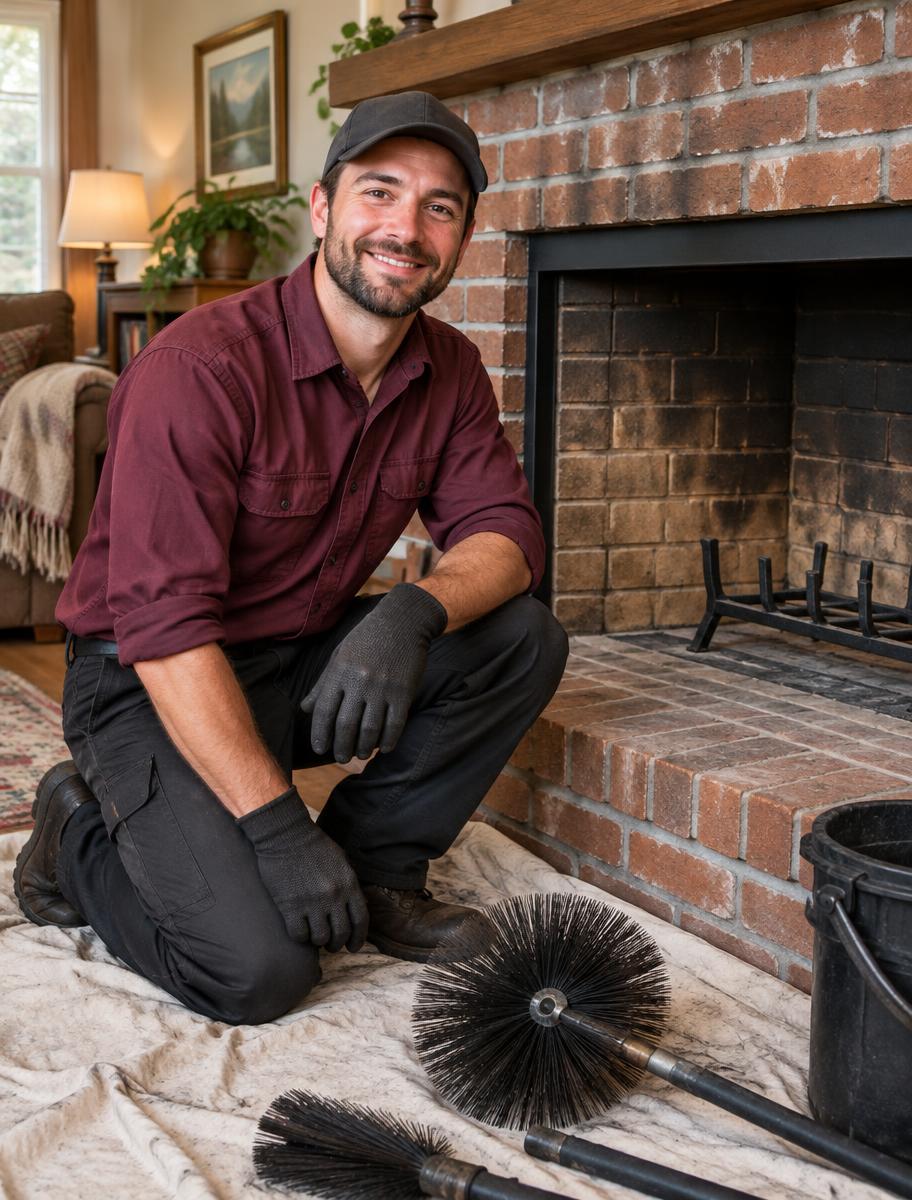
How we handle your chimney sweep, step by step
- 1
Hearth Protection and Containment
We lay heavy-duty canvas drop cloths across the surrounding floor and seal the fireplace opening with an industrial HEPA dust management system to stop soot migration.
- 2
Visual Liner and Flue Assessment
Our technicians check the firebox, damper, and accessible flue interior using high-output lighting, evaluating soot buildup depth, creosote classification, and visible masonry condition.
- 3
Thorough Mechanical Sweeping
Using sized steel or poly brushes and flexible sweeping rods, we scour the entire vertical flue, dislodging soot and stubborn creosote from top to bottom.
- 4
Smoke Chamber and Shelf Clearing
We clear the throat, brush the damper assembly, and thoroughly vacuum out the hidden smoke shelf where falling soot and debris naturally settle during the sweep.
- 5
Final Cleanup and Plain-Language Briefing
We vacuum the firebox clean, pack up all protective gear, and review our findings with you directly, providing practical maintenance advice for safe winter burning.
Essential Carbon Monoxide Safety and Home Detection
Carbon monoxide is an invisible, odorless, and colourless gas produced whenever carbon-based fuels burn incompletely. In a healthy heating installation, the chimney safely vents this dangerous byproduct outside above the roofline. However, if your flue is restricted by heavy soot, collapsed liner tiles, bird nests, or leaves, carbon monoxide can drift backward into your living areas unnoticed, placing everyone in your household at serious risk.
Ontario fire safety regulations mandate operational carbon monoxide alarms near all sleeping areas in residences with fuel-burning appliances or attached garages. We strongly recommend testing these life-saving detectors monthly and replacing their backup batteries every autumn before lighting your first fire. In addition, carbon monoxide alarm units have finite sensor lives, usually between five and ten years, after which the sensing elements fail and must be replaced entirely regardless of power status.
Our sweeping protocol adheres to safety best practices inspired by CSA standards and established WETT guidelines, focusing on complete flue pathway clearance and draft security. While we provide sweeping and diagnostic evaluations rather than regulatory certificates, we inspect your damper, smoke chamber, and venting alignment with deep safety awareness. Keeping your chimney free of debris is your home's first line of physical defense against accidental carbon monoxide accumulation.
- Carbon monoxide cannot be detected by smell or sight, making clear venting paths essential.
- Ontario regulations require working CO detectors positioned directly outside all bedroom areas.
- Flue blockages from creosote, leaf debris, or animal nests force dangerous gases inside.
- Routine chimney sweeping provides dependable exhaust clearance to keep your indoor air safe.
Preparing Your Home and Hearth for Sweep Day
Preparing your fireplace for an upcoming chimney sweep takes only a few minutes and ensures the service proceeds smoothly, safely, and cleanly. First, please stop using your fireplace or wood stove at least twenty-four to thirty-six hours before our scheduled arrival. Chimney liners, firebricks, and metal dampers retain heat for an extended period, and our team cannot safely sweep a warm system or place filtration equipment near hot embers.
Next, clear a working perimeter of about two to three metres in front of the hearth. Move delicate decorations, fireplace tools, area rugs, and nearby living room furniture away from the fireplace opening. While we protect all adjacent surfaces with clean drop coverings and use sealed negative-air vacuums, having an unobstructed workspace lets our technicians move equipment freely without any risk of bumping your cherished belongings.
Lastly, please ensure that household pets are secured in another quiet room during the visit. The sound of industrial vacuums, chimney brushes working inside the flue, and open exterior entry doors can startle dogs and cats. If you have an exterior cleanout door in your basement or on an outside wall, ensuring clear access to that panel is equally helpful for complete ash disposal.
- Extinguish all fires at least twenty-four to thirty-six hours prior to your scheduled sweep.
- Clear a two-metre clear zone around the hearth, moving rugs, tools, and fragile items.
- Keep pets comfortably secured in a separate room away from sweeping vacuums and equipment.
- Ensure clear exterior and basement access to any lower ash cleanout doors on your property.
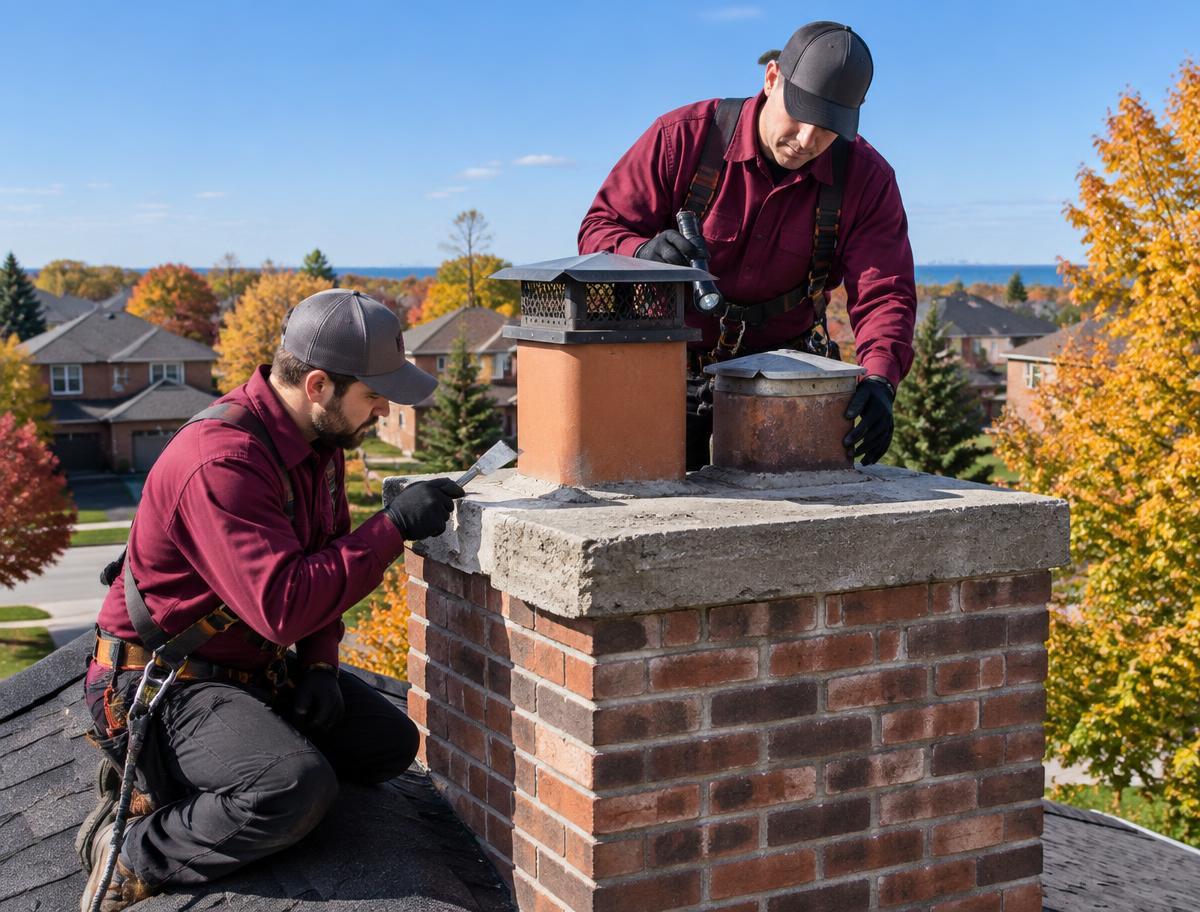
Season-by-Season Chimney Maintenance Best Practices
A healthy chimney requires consistent, year-round attention, not just a passing thought on the first cold night of November. In spring, after heating season ends, book your annual sweep early to remove acidic soot deposits before warm summer humidity arrives. Soot mixed with damp air forms caustic compounds that eat away at steel fireboxes, damper linkages, and mortar joints over the summer, creating unpleasant ash odours that spread into your home.
During late summer and early autumn, perform a careful exterior check of your chimney structure from the ground. Look for cracked mortar along the brick joints, loose flashing around the roof junction, or a missing spark arrestor cap. Installing an exterior chimney cap with a wire mesh screen keeps out raccoons, squirrels, birds, and windblown autumn leaves, which are frequent causes of sudden flue blockages in leafy Markham neighbourhoods.
Throughout the winter burning season, practice clean-burning habits to reduce creosote buildup between professional sweeps. Burn only well-seasoned hardwoods like maple, oak, or ash that have cured for at least twelve months and hold moisture contents below twenty percent. Never burn pressure-treated lumber, painted trim, glossy magazines, or household trash, as these release toxic chemicals and leave behind heavy, difficult-to-remove chemical creosote residues.
- Schedule spring sweeping to remove acidic soot before warm, humid weather causes corrosion.
- Install a screened chimney rain cap to keep out nesting wildlife and autumn leaf litter.
- Burn seasoned hardwoods with moisture levels under twenty percent for clean, hot fires.
- Avoid burning painted wood, construction cutoffs, or garbage that deposits toxic residues.
What to Look for When Choosing a Chimney Service Professional
Selecting the right chimney sweep requires finding an independent, knowledgeable service provider who understands local building methods and historic masonry construction. Beware of low-cost fly-by-night contractors who offer five-minute superficial brushings or aggressive high-pressure sales pitches claiming your chimney will collapse tomorrow. A true professional arrives with clean gear, uses industrial dust extraction, and takes time to explain their findings clearly using plain language.
Ask prospective sweeps about their containment methods, internal inspection practices, and familiarity with Ontario residential building requirements. A reputable contractor carries comprehensive commercial liability insurance, protects your home with clean canvas drops, and respects your property from arrival to completion. They should gladly walk you through the condition of your damper, firebox, flue liner, and exterior cap without pressure or confusing industry jargon.
At Markham Chimney Services, we take genuine pride in transparent, independent service. We provide clear pricing upfront, take photographs of any flue irregularities we discover during the sweep, and explain your maintenance choices in practical terms. Whether you live in an established mid-century home in Cornell or a classic stone property in Unionville, we deliver thorough, reliable craftsmanship you can count on season after season.
- Verify complete commercial liability insurance to protect your property during service.
- Ensure the contractor uses sealed HEPA filtration vacuums to avoid interior soot contamination.
- Expect clear photographic evidence of any recommended liner repairs or safety concerns.
- Look for independent local specialists who prioritize honest education over high-pressure tactics.
Average pricing in Markham
$189 – $449
- Inspection / diagnostic
- $129 – $199
- Typical time on site
- 1 to 2 hours typical on-site time
- Parts and materials
- Chimney caps, top-mount dampers, custom chase covers, and replacement firebricks quoted separately
- What moves the price
- Degree and hardness of creosote accumulation (stage one soot versus stage three hardened glaze) · Chimney height, roof pitch, access complexity, and number of individual flues being swept · Type and condition of the flue liner, including clay tile, factory-built metal, or stainless steel
Estimated local market range, not a quote. All estimates are in Canadian dollars and exclude 13% Ontario HST. Your exact price is confirmed before any work begins.