A crackling fireplace brings unmatched comfort during a bitter Ontario winter, but regular maintenance is essential to keep that warmth safe and reliable. When local homeowners look for a chimney sweep near me, they are often facing poor draft, unpleasant smoky smells, or the quiet accumulation of flammable creosote inside the flue. Markham Chimney Services operates from 4418 Highway 7 East, helping property owners across local neighbourhoods maintain clean, fully functional venting systems. Our sweeping process tackles the dense soot, combustible deposits, and seasonal blockages that naturally develop over months of use, giving you complete peace of mind whenever you strike a match.
Neglecting your chimney can lead to hazardous indoor air quality, diminished heating performance, and destructive chimney fires that threaten your entire household. Because our regional weather shifts rapidly between biting subzero cold and damp thaws, chimneys in this part of Ontario endure intense environmental wear alongside routine combustion stress. By scheduling a timely professional sweep, you clear out stubborn fuel residues, eliminate hidden animal nests, and ensure that toxic combustion byproducts like carbon monoxide vent cleanly outside. We approach every residential system with careful attention to detail, maintaining clean living spaces indoors while restoring safe clearance throughout the length of your flue.
Chimney Sweep Near Me: visit summary
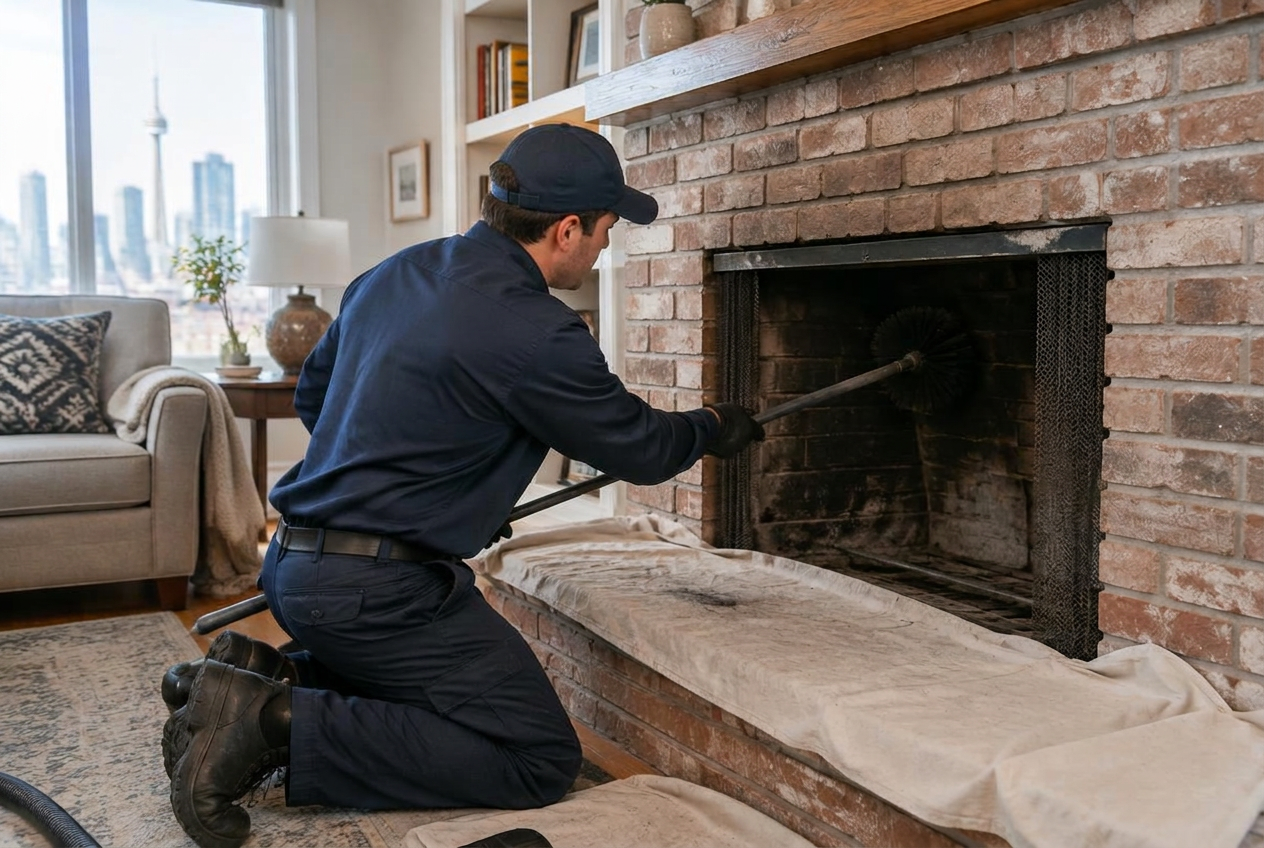
Chimney Sweep Near Me for Markham homes: soot and creosote cleared with drop cloths down and a filtered vacuum running at the hearth. Serving Markham and the Greater Toronto Area (GTA). The estimated local market range is $229 – $489, not a fixed company rate. The final scope and quote are confirmed before work begins.
| Estimated market range | $229 – $489. All estimates are in Canadian dollars and exclude 13% Ontario HST. |
|---|---|
| Typical time | 1 to 2 hours typical appointment duration |
| Price factors | Chimney height, roof pitch, and accessibility; Appliance type such as open masonry versus insert; Degree of creosote accumulation or stage three glaze |
| Routine signs to discuss | Thick Smoke Backdrafting Indoors; Strong Barbecue or Campfire Odours; Visible Black Soot on Hearth; Sluggish, Difficult Fire Starts; Clicking or Rustling Animal Sounds; Cracked or Flaking Brick Masonry |
Understanding Professional Chimney Sweeping and Creosote Stages
Chimney sweeping is the systematic removal of soot, debris, and creosote deposits from the interior walls of your venting system. Creosote is a natural byproduct of burning wood, formed when unburned gases, tar droplets, and water vapour cool as they ascend the flue. Over time, these compounds condense into a stubborn residue that clings to clay tile liners, stainless steel pipes, or brick masonry. Sweeping clears this accumulation, protecting your home against sudden chimney fires and ensuring that flue gases exhaust smoothly without tumbling back into your primary living quarters.
Creosote develops in three distinct progressive stages, each presenting higher fire hazards and greater cleaning challenges. Stage one consists of light, powdery grey or black soot that brushes away with relative ease using standard wire or poly brushes. Stage two transforms into thick, sticky, or crunchy tar flakes that cling tightly to the flue walls and require heavier mechanical scraping. Stage three is a dense, hardened glaze that looks like poured asphalt, highly concentrated with fuel energy that can ignite easily at high temperatures and burn with ferocious intensity inside the chimney.
A thorough sweep targets all levels of accumulation using matched equipment that will not damage the underlying flue materials. In addition to scrubbing the flue tiles or steel liner, our technicians address the smoke shelf, damper assembly, and firebox walls where loose ash settles. Without proper cleaning, even a minor spark can ignite glazed residue, creating sustained temperatures above one thousand degrees Celsius that crack masonry joints, shatter clay tiles, and quickly spread flames into surrounding attic rafters or wall cavities.
- Stage one soot forms fine, dusty layers that reduce overall draft efficiency.
- Stage two deposits create crunchy, tar-like flakes requiring firm mechanical agitation.
- Stage three glazed creosote forms an extremely flammable, hardened coating.
- Complete cleaning covers the firebox, throat damper, smoke shelf, and upper flue tiles.
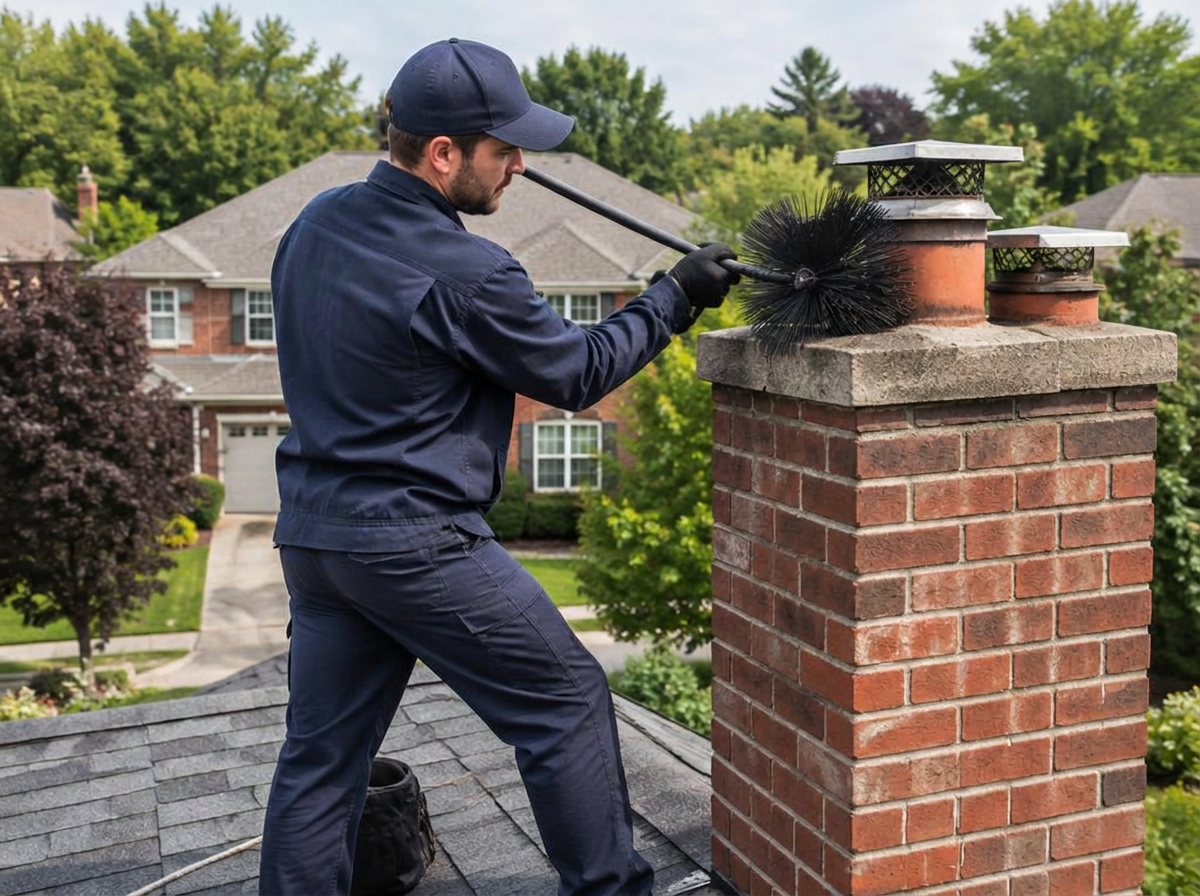
Thorough chimney sweeping, creosote removal, and draft diagnostics tailored to Markham homes.
Self-check
Warning signs you need chimney sweep near me
Thick Smoke Backdrafting Indoors
Smoke rolling into your living room rather than venting upwards signals a severe flue blockage, closed damper, or heavy creosote accumulation restricting natural exhaust flow.
Strong Barbecue or Campfire Odours
Pungent, acrid soot odours filling your home during humid weather or when running exhaust fans indicate thick creosote deposits clinging to the chimney liner walls.
Visible Black Soot on Hearth
Flakes of crusty soot or oily deposits dropping onto the hearth or damper plate mean creosote layers are actively peeling and require prompt mechanical cleaning.
Sluggish, Difficult Fire Starts
Fires that struggle to ignite, smoulder continuously, or fail to establish strong flames often suffer from insufficient air draw caused by a narrowed, soot-choked flue.
Clicking or Rustling Animal Sounds
Chittering noises, scratching, or bird cries originating from the chimney throat usually reveal birds, raccoons, or squirrels nesting directly inside your venting passage.
Cracked or Flaking Brick Masonry
Spalling bricks or sandy, crumbling mortar around the chimney base or stack suggest moisture absorption that combines with acidic soot to destroy structural integrity.
The Markham Freeze-Thaw Reality and Chimney Deterioration
Southern Ontario experiences severe freeze-thaw cycles throughout late autumn, winter, and early spring, creating harsh conditions for exterior masonry chimneys. When rain, sleet, or melted snow soaks into porous clay bricks and mortar joints, subsequent freezing temperatures cause that trapped water to expand. This continuous hydraulic pressure slowly fractures mortar, cracks flue tiles, and leads to spalling, where the outer faces of bricks flake off completely. A chimney choked with damp soot accelerates this deterioration, as acidic creosote binds with moisture to form corrosive chemical cocktails.
Internal condensation problems multiply when cold winter air cools the chimney structure down to freezing temperatures. When warm, moisture-laden exhaust from your fireplace or wood stove travels up an uninsulated or exterior masonry chimney, it hits the cold chimney walls and quickly condenses. This liquid runs down the liner, carrying corrosive sulphurs and acidic soot that eat away at mortar bonds and corrode metal components like dampers and stovepipe connectors. Routine sweeping strips away the sponge-like soot layers that would otherwise hold this moisture against vulnerable structural materials.
Homes across Markham neighbourhoods, from mid-century post-war bungalows to modern custom rebuilds, rely on sound venting to endure these climate extremes. When sweeping reveals cracked flue liners or spalled crowns, prompt intervention prevents moisture from leaking into interior drywall, plaster, and ceiling joists. Protecting your chimney through regular sweeping and proactive seasonal care ensures that heavy snowfall, freezing rain, and rapid mid-winter thaws do not compromise the safe, reliable operation of your hearth.
- Freeze-thaw cycling expands trapped moisture, fracturing brickwork and mortar joints.
- Acidic soot mixed with condensation corrodes steel dampers and clay flue liners.
- Exterior chimneys cool down quickly, driving rapid condensation and creosote buildup.
- Regular maintenance uncovers hidden water penetration before interior ceilings suffer water damage.
Common Causes of Excessive Soot and Dangerous Flue Blockages
Excessive soot and creosote buildup rarely occur by pure chance; they are direct results of combustion habits and mechanical factors. Burning unseasoned or damp firewood is the single most common culprit in residential chimneys. Green wood contains up to fifty percent moisture by weight, meaning a vast amount of fire energy is wasted simply boiling off water rather than producing heat. This cooling effect lowers flue temperatures, causing unburned tar droplets to condense immediately along the lower and middle sections of the chimney liner.
Restricted air supply also plays a major role in heavy soot creation. Operating a fireplace or wood-burning insert with the air controls choked down too tightly smothers the fire, leading to incomplete combustion and dense, smoky exhaust. Similarly, an oversized flue can undermine draft, allowing exhaust gases to cool down and crawl upward slowly instead of rising swiftly out of the building. This sluggish transit time gives soot particles ample opportunity to settle onto chimney surfaces rather than venting cleanly into the outdoor atmosphere.
Outside intrusions can also choke an otherwise healthy chimney during warm months. Raccoons, squirrels, and small birds frequently view uncapped chimney tops as secure, hollow nesting sites protected from wind and predators. Twigs, dried leaves, pine needles, and animal nesting materials can form a dense, airtight plug across the flue in just a few days. Lighting a fire below an obstructed flue forces heavy smoke and dangerous combustion gases directly into the home within minutes.
- Burning unseasoned or wet logs drastically reduces combustion temperatures.
- Smouldering fires with restricted air controls yield thick, tar-laden exhaust.
- Oversized or improperly matched flues cause slow, sluggish venting cycles.
- Animal nests, leaves, and outdoor debris create sudden, hazardous flue blockages.
Our Diagnostic and Chimney Sweeping Procedure
At Markham Chimney Services, we treat your home with the highest degree of cleanliness and respect from the moment we arrive. We begin every appointment by laying down durable drop cloths around your hearth, sealing the fireplace opening with protective barriers, and setting up an industrial HEPA dust-containment vacuum. This negative-pressure filtration system guarantees that fine soot, ash particles, and lingering odours cannot drift into your living room, rugs, or nearby furniture while our mechanical cleaning tools are working actively inside the flue.
Once containment is secured, our technicians carry out an initial visual evaluation of the firebox, lintel, damper, and accessible interior liner sections. We then select appropriately sized poly or wire brushes, flexible sweeping rods, or rotary whip systems calibrated specifically for your flue dimension and liner type. Cleaning proceeds through the full vertical height of the chimney, dislodging soot flakes, tar, and stage two creosote deposits from top to bottom. We also scrub the throat damper frame, remove accumulated debris from the smoke shelf, and vacuum the firebox clean.
After mechanical sweeping finishes, we perform a detailed diagnostic review of the cleaned interior surfaces. Without soot masking the walls, we check for missing mortar joints, cracked clay flue tiles, gaps in metal liners, and signs of structural deterioration. We examine the chimney crown, exterior masonry, flashing, and chimney cap to ensure the outer envelope keeps moisture out. Finally, we provide homeowners with a plain-language summary of our findings, clearly explaining the current condition of their venting system along with practical recommendations.
- Industrial HEPA filtration systems ensure your interior living space stays spotless.
- Custom brush and rotary whip setups match your specific clay, steel, or masonry liner.
- Complete cleaning removes debris from the smoke shelf, damper, and firebox floor.
- Post-cleaning evaluation checks for liner cracks, mortar voids, and water intrusion.
"After noticing smoke backing into the room, I called for an inspection in Buttonville. Their technician diagnosed a minor blockage quickly, cleared it thoroughly, and explained how to avoid future issues. Excellent service."

Our process
How we handle your chimney sweep near me, step by step
- 1
Hearth Preparation and Containment
We place clean drop cloths across your floor, seal the fireplace opening, and establish HEPA vacuum negative-pressure containment to keep soot completely out of your home.
- 2
Initial Flue and Firebox Evaluation
Our technicians inspect the firebox, throat damper, and lower flue passages, determining soot thickness and selecting the appropriate brush or rotary whip system.
- 3
Mechanical Sweeping and Scrubbing
We sweep the complete flue run from top to bottom, dislodging stubborn creosote, soot deposits, and nesting debris without abrading or damaging liner materials.
- 4
Debris Extraction and Component Cleaning
All fallen soot and carbon debris are removed from the smoke shelf and firebox floor using high-efficiency vacuum equipment, leaving the hearth completely clean.
- 5
Post-Clean Diagnostic and Customer Review
We visually examine the cleared liner and exterior structure, review draft performance, and deliver a straightforward verbal and written summary of chimney health.
Home Safety Protocols, Carbon Monoxide, and Draft Dynamics
A blocked or sluggish chimney is not merely a nuisance; it is an immediate health hazard due to the threat of carbon monoxide poisoning. Carbon monoxide is a colourless, odourless, and tasteless toxic gas produced by incomplete combustion of organic fuels. When a flue is lined with dense soot or obstructed by debris, toxic exhaust cannot rise freely and spills backward into living areas. Because early symptoms of exposure mimic mild flu or fatigue, homeowners can quickly find themselves in grave danger without realizing their fireplace is the source.
Draft dynamics inside your home depend on the natural stack effect, where warm indoor air rises and creates pressure differences across various floor levels. In tightly sealed modern homes or renovated houses with powerful kitchen range hoods and bathroom exhaust fans, indoor air pressure can become negative. This negative pressure fights against the natural upward buoyancy of the chimney, pulling exhaust gases down into the basement or living room. A thoroughly cleaned flue reduces friction, maximizing natural draft to overcome minor household pressure imbalances safely.
We align our residential sweeping protocols with established solid-fuel safety practices across Ontario, ensuring your fireplace installation operates responsibly. We always confirm that homeowners have working carbon monoxide alarms positioned outside sleeping areas and on every occupied level of the house. Our team checks that clearances to combustible mantels, wood trim, and hearth extensions meet reliable safety benchmarks, helping you enjoy comforting fires while maintaining robust defences against silent combustion hazards.
- Carbon monoxide is an undetectable gas that accumulates when flue passages are restricted.
- Negative indoor pressure from kitchen fans can pull chimney smoke backward into living areas.
- Smooth, clean flue liners reduce friction, promoting strong and dependable updraft.
- Working carbon monoxide detectors outside all bedrooms remain an essential winter baseline.
Year-Round Preventative Maintenance and Best Burning Practices
Maintaining a clean, safe chimney extends beyond an annual sweeping visit; it requires conscientious daily burning habits throughout the heating season. Always select seasoned, split hardwood such as maple, oak, ash, or beech that has dried under cover for at least six to twelve months. Well-seasoned firewood features checked ends, loose bark, and a hollow ring when two pieces are struck together. Burning dry wood generates hotter, cleaner fires that burn off flammable gases before they condense as creosote inside the flue.
How you build your fire also influences how much soot accumulates over the winter. We recommend using the top-down fire-building method, where larger logs are placed on the firebox floor, followed by smaller pieces, and topped with dry kindling and natural fire starters. Lighting the fire from the top heats the flue quickly, establishing a reliable upward draft in minutes while producing remarkably little initial smoke. Never burn treated lumber, painted wood, cardboard, wrapping paper, or household trash, as these release toxic chemicals and spark rapid creosote buildup.
Between professional sweepings, make a habit of visually checking your hearth and exterior chimney. Ensure the chimney cap features sturdy stainless steel mesh to keep squirrels, birds, and windblown debris out of the flue opening while containing upward sparks. During humid summer months, close the throat damper tightly to stop damp, soot-scented air from drifting down into your home. If you notice persistent chimney odours on hot, humid afternoons, that is a clear indicator that residual soot inside the flue needs professional attention.
- Burn only seasoned hardwoods that have dried for six months or longer.
- Adopt the top-down fire lighting technique to establish prompt draft with minimal smoke.
- Never burn garbage, painted trim, pressure-treated lumber, or glossed paper products.
- Install a secure chimney cap with spark arrestor mesh to bar wildlife and moisture.

Clear Cost Factors for Markham Chimney Sweeping
Understanding chimney sweeping costs helps homeowners budget appropriately without facing surprise fees. The primary factor influencing price is the general accessibility and architectural design of your chimney system. A standard single-flue fireplace on a gentle roof pitch requires standard setup time, whereas a steep, multi-storey roofline or an intricate heritage chimney may necessitate specialized roof harnesses, ladder stabilizers, or interior-only sweeping techniques. Systems that have gone uncleaned for several years typically require extra time to clear heavy stage two or three creosote safely.
The type of appliance and liner material also shapes the overall scope of the service. Open masonry fireplaces with broad smoke shelves demand different cleaning protocols than wood-burning stove inserts connected to continuous stainless steel flex liners. Inserts may require careful dismantling of internal baffle plates, secondary air tubes, and catalytic combustors before the liner can be scrubbed clean. If our technicians encounter active animal nests, dense leaf plugs, or detached liner sections, resolving those obstacles will naturally alter the time and labour involved.
Investing in periodic sweeping is vastly more economical than coping with emergency chimney repairs or chimney fire recovery. Minor mortar voids, detached spark arrestors, or hairline crown cracks identified early during a routine sweep can be corrected before freezing winter weather causes expansive masonry failure. Transparent, upfront quotes based on your specific appliance type and roof layout ensure you receive reliable service suited to your budget.
- Roof pitch, total chimney height, and site accessibility influence overall labour time.
- The presence of stage three glazed creosote demands intensive chemical or mechanical treatment.
- Wood inserts with baffles or catalytic units take longer to disassemble and service.
- Routine cleanings prevent costly structural masonry rebuilds caused by unaddressed decay.
How to Select a Dependable Chimney Sweep Contractor
Choosing the right chimney contractor protects both your property value and your family's personal safety. Start by confirming that any prospective technician carries comprehensive commercial general liability insurance and active workplace safety coverage. Chimney sweeping involves working on high, steep surfaces and handling combustible materials inside your home; working with an uninsured contractor exposes homeowners to considerable liability if an accidental fall or property mishap occurs on site.
Be wary of door-to-door solicitations or rock-bottom price quotes that seem too good to be true. Unscrupulous operators often quote absurdly low cleaning rates simply to gain access to your living room, only to claim your chimney is on the verge of immediate collapse and demand exorbitant fees for unnecessary emergency repairs. A trustworthy sweep provides clear, written quotes, explains their cleaning methods without pressure tactics, and uses professional HEPA dust containment equipment to keep your home pristine.
Look for an independent contractor who takes time to answer your questions thoroughly and explains flue dynamics in clear, accessible language. They should be familiar with the unique construction styles of Markham neighbourhoods and the Greater Toronto Area, from classic brick homes built in the mid-twentieth century to contemporary architectural properties. A reputable specialist will gladly walk you through the post-sweep assessment, showing you exactly what was cleared and detailing any maintenance concerns that warrant future attention.
- Verify full commercial liability insurance and active workplace injury protection.
- Beware of unrealistically low promotional quotes paired with high-pressure repair upsells.
- Ensure the contractor uses true HEPA dust-containment equipment to safeguard interiors.
- Select professionals who provide detailed written findings without demanding rushed decisions.
Average pricing in Markham
$229 – $489
- Inspection / diagnostic
- $149 – $199
- Typical time on site
- 1 to 2 hours typical appointment duration
- Parts and materials
- Replacement dampers, custom chimney caps, top-sealing cables, and spark arrestor screens quoted separately.
- What moves the price
- Chimney height, roof pitch, and accessibility · Appliance type such as open masonry versus insert · Degree of creosote accumulation or stage three glaze
Estimated local market range, not a quote. All estimates are in Canadian dollars and exclude 13% Ontario HST. Your exact price is confirmed before any work begins.