

Your chimney stands exposed to the elements every single day, bearing the brunt of wind, driving rain, heavy snow, and harsh temperature swings. While masonry bricks can last for generations, the mortar binding them together possesses a significantly shorter lifespan. Over time, moisture infiltrates microscopic pores within the mortar. As seasonal weather patterns fluctuate, this trapped moisture repeatedly expands and contracts, causing the mortar joints to erode, soften, crack, and recede. When left unaddressed, degraded mortar allows water to seep behind the brickwork, rotting roof decking, staining drywall, and destabilizing the structural integrity of the entire chimney stack.
Markham Chimney Services provides dependable, precision tuckpointing to safeguard residential properties across local neighbourhoods. Located at 4418 Highway 7 East, our team focuses on careful diagnosis and traditional craftsmanship to restore masonry chimneys to optimal condition. By meticulously grinding out failing joints and packing them with custom-blended, weather-resilient mortar, we stop water infiltration in its tracks and extend the life of your chimney. Whether your home is a mid-century bungalow or a modern two-storey build, timely tuckpointing prevents costly rebuilds and keeps your fireplace drafting cleanly, safely, and efficiently through every Canadian winter.
Chimney Tuckpointing: visit summary
Chimney Tuckpointing in Markham: cracked brick, loose mortar and weather damage assessed and repaired before water gets in. Serving Markham and the Greater Toronto Area (GTA). The estimated local market range is $750 – $2,850, not a fixed company rate. The final scope and quote are confirmed before work begins.
| Estimated market range | $750 – $2,850. All estimates are in Canadian dollars and exclude 13% Ontario HST. |
|---|---|
| Typical time | 1 to 3 days depending on chimney height and scope |
| Price factors | Total linear footage of degraded mortar joints requiring raking; Roof pitch, stack height, and staging or scaffolding complexity; Extent of spalled bricks needing complete individual unit replacement |
| Routine signs to discuss | Sandy or Crumbling Mortar; Visible Mortar Recessions; White Powdery Efflorescence; Spalling or Fractured Bricks; Loose or Wobbly Bricks; Interior Ceiling and Wall Leaks |
What Chimney Tuckpointing Is and Why It Matters
Chimney tuckpointing, frequently referred to alongside repointing, is the specialized masonry process of removing decayed, crumbling mortar from between exterior bricks and replacing it with fresh, durable mortar. Mortar serves as both an adhesive and an essential sacrificial buffer. It is formulated to be slightly softer and more porous than brick, ensuring that regular building movement and moisture stress affect the renewable mortar lines rather than fracturing the permanent clay or concrete units.
Over years of exposure, rainwater washes away the chemical binders within the joint matrix, leaving sandy voids behind. If these voids remain neglected, individual bricks begin shouldering irregular mechanical loads. Water accumulates inside the newly formed gaps, washing deeper into the core structure and flue liner. Tuckpointing arrests this decay cycle before moisture undermines the structural alignment of the chimney stack, preventing catastrophic brick delamination and costly full-scale teardowns.
When performed correctly, tuckpointing restores both functional strength and visual elegance to your roofline. Professional masons cleanly rout the deteriorating mortar to an exact, uniform depth, hydrate the remaining bed, and fill the joint with high-calibre mortar. The finished joint is neatly profiled to shed moisture efficiently, creating an impermeable barrier that blends seamlessly with the original masonry style of your residence.
- Stops water from entering inner brickwork and attic spaces
- Preserves original heritage or residential brickwork from spalling
- Restores structural equilibrium across the entire chimney column
- Significantly cheaper than complete structural chimney rebuilds
- Enhances home exterior aesthetic and overall resale value
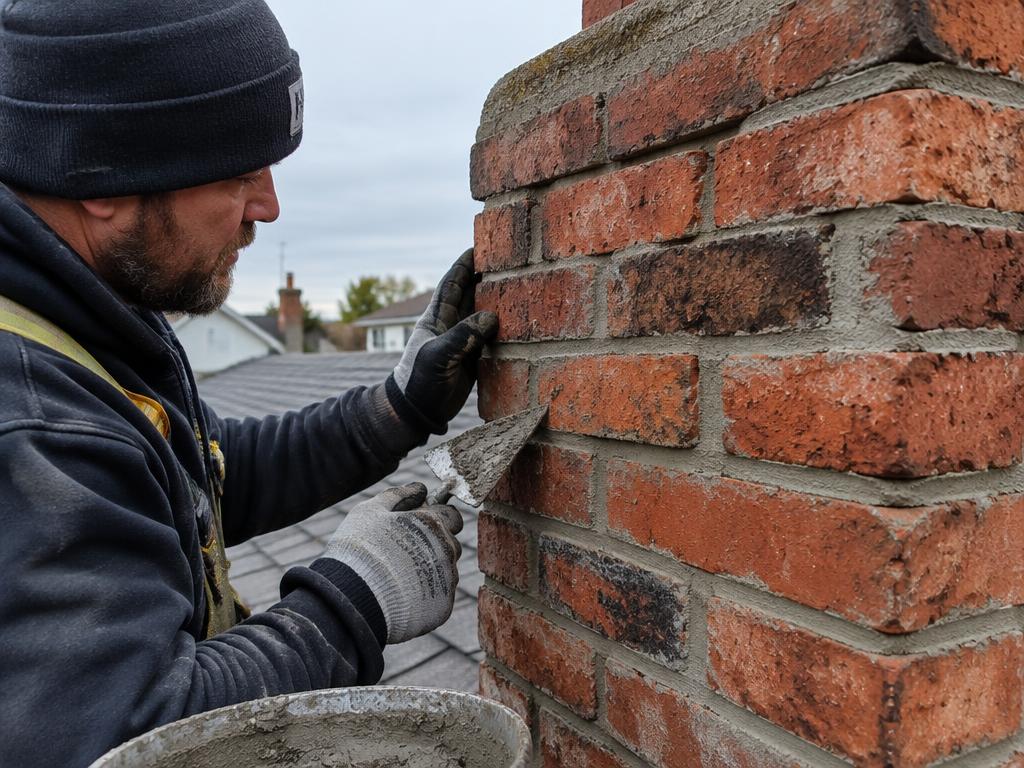
Restore your chimney mortar joints and shield your home from severe Ontario freeze-thaw moisture damage.
Self-check
Warning signs you need chimney tuckpointing
Sandy or Crumbling Mortar
When rubbing a key or fingernail across joint seams leaves loose sand shedding onto shingles, the chemical bond has failed, requiring raking and new mortar.
Visible Mortar Recessions
Gaps where mortar has receded more than six millimetres behind the brick face collect rainwater, rapidly escalating frost heave during sub-zero Ontario winter nights.
White Powdery Efflorescence
Chalky white crystalline salts staining exterior brickwork indicate chronic moisture travel through your chimney core, dissolving minerals before evaporating at the surface.
Spalling or Fractured Bricks
Popped brick faces or split clay corners signal that moisture trapped behind failing joints has frozen, expanded, and sheared the solid brick material apart.
Loose or Wobbly Bricks
Bricks along the top courses that shift under light hand pressure have lost their mortar bed entirely, presenting immediate fall hazards in high winds.
Interior Ceiling and Wall Leaks
Brown water stains appearing on ceilings, attic rafters, or drywall around fireplaces often trace back to degraded roof-level chimney mortar joints welcoming heavy rain.
The Impact of Ontario Freeze-Thaw Weather on Mortar
The climate across Markham presents unique challenges for exterior masonry. Autumn often brings sustained rainfall, thoroughly saturating porous brick and mortar joints. As winter settles across the Greater Toronto Area, temperatures routinely cycle above and below the freezing point over very short intervals. Water trapped within unsealed mortar joints expands by approximately nine percent upon freezing, exerting immense internal hydraulic pressure against the surrounding brick facets.
When temperatures rise during mild afternoons, that ice melts, permitting liquid water to penetrate even deeper into fresh micro-fractures. When night brings sub-zero temperatures, the water freezes again, widening the fissures. This relentless freeze-thaw cycling transforms tiny hairline cracks into gaping cavities within just a single season. The resulting damage, known as spalling, causes brick faces to pop off and mortar to slough away like wet sand.
Applying tuckpointing before deep winter sets in is vital for long-term envelope preservation. By addressing deteriorated seams before heavy saturation occurs, you eliminate the voids where standing water gathers. Properly mixed, modern Type N or Type O mortar provides balanced flexibility and vapour permeability, allowing trapped humidity to escape while successfully deflecting wind-driven sleet, freezing rain, and heavy snow accumulations.
- Trapped moisture expands roughly nine percent every time it freezes
- Rapid daily temperature fluctuations accelerate joint breakdown
- Spalling bricks and sandy mortar beds result from neglected water intrusion
- Preventative autumn joint repair limits severe winter frost damage
- Vapour-permeable mortar formulations prevent inner chimney rot
Identifying Structural Deterioration Before Damage Spreads
Homeowners often overlook early masonry wear because chimneys sit high above regular sightlines. However, subtle hints frequently manifest closer to ground level or along visible exterior lines. You might notice loose sand or dislodged mortar gravel accumulating on your shingles, inside rain gutters, or scattered across the patio directly below the chimney stack. This sand indicates that the binding cements have washed out, leaving only inert aggregate behind.
Another telltale warning sign is efflorescence, visible as powdery white mineral deposits across the chimney face. Efflorescence occurs when moisture passes through the masonry core, dissolves interior mineral salts, and evaporates on the surface, leaving chalky residues behind. While the salt itself is harmless, its visible presence proves that water is actively traveling through your chimney structure and will inevitably compromise underlying construction elements.
Interior symptoms can be even more urgent. Water staining on drywall surrounding an upstairs fireplace, peeling ceiling paint, damp attic insulation, or musty basement draughts often trace back to failing roof-level mortar lines. Catching these alerts early allows you to address the problem with targeted tuckpointing rather than financing extensive roof decking, framing, or drywall remediation.
- Loose mortar aggregate washing into eavestroughs and onto shingles
- Chalky white efflorescence staining visible exterior brickwork
- Gaps, fissures, or missing mortar chunks between brick layers
- Damp stains or water marks on ceilings and walls adjacent to flues
- Bricks shifting, tilting, or loosening under light physical contact
The Mechanics of Mortar Raking and Preparation
Proper tuckpointing is not simply smearing a thin layer of wet mortar over old, damaged joints. Superficial caulking or buttering will fail within months, peeling away and trapping moisture even deeper against the brick. Lasting repair begins with meticulous joint preparation, also known as raking out. Our technicians remove failing mortar to a uniform depth, typically between twelve and twenty millimetres, ensuring adequate mechanical clearance for the new mortar bed.
Raking requires extreme precision and steady handling. Using specialized dust-controlled diamond plunge grinders, oscillating blades, and non-impact raking chisels, technicians strip the decaying joint cleanly without clipping the edges of adjacent bricks. Damaging the brick arris permanently ruins the moisture-shedding profile and weakens the brick. Every joint is raked back until sound, intact original mortar or brick backing is firmly exposed.
Following raking, the open joints are vacuumed to eliminate loose dust and rinsed with clean water. Pre-wetting the cavity is essential because dry bricks act like sponges, rapidly pulling hydration out of freshly applied mortar before it can cure. By saturating the substrate without leaving standing pools, we ensure the new mortar bonds securely to the host masonry and attains its full engineered compressive strength.
- Decayed mortar removed to a uniform depth for long-lasting adhesion
- Specialized diamond masonry tools eliminate unwanted brick face damage
- High-efficiency dust management minimizes mess across your property
- Cavities thoroughly cleared of sand, debris, and carbon soot deposits
- Moisture conditioning of open joints prevents premature mortar dehydration
"I discovered odd odours coming from my chimney and booked a deodorizing treatment Downtown. They applied a specialized solution, sealed minor cracks, and eliminated the smell completely. My living room feels fresh again."

Our process
How we handle your chimney tuckpointing, step by step
- 1
Comprehensive Visual Diagnosis
We scale your roof to inspect brick condition, assess joint depth, review the crown, and capture high-resolution imagery to plan required repairs.
- 2
Precision Joint Raking
Using dust-controlled diamond equipment, technicians neatly remove decayed mortar to a depth of twelve to twenty millimetres without touching host brick edges.
- 3
Substrate Washing and Hydration
Open cavities are cleared of loose dust and soaked with clean water, ensuring fresh mortar bonds tightly without suffering rapid water loss.
- 4
Mortar Packing and Joint Tooling
Custom-tinted, flexible mortar is firmly packed in layered passes and systematically tooled with concave profiles to shed driving rain efficiently.
- 5
Clean-Down and Site Inspection
We wash masonry faces with non-acidic detergents, clear roof valleys and gutters, pack away containment gear, and conduct a final walkthrough.
Mortar Selection and Colour Matching for Local Homes
Markham contains an eclectic mix of architectural eras, from classic post-war brick bungalows to contemporary custom estates. Selecting the proper mortar composition is critical to both structural balance and historic preservation. Using modern, excessively hard Type S or Portland-heavy mortar on older, softer clay brick is a frequent contractor error. Hard mortar does not flex, which forces everyday thermal expansion into the bricks, causing them to crack and shear.
Our approach evaluates the exact age, density, and physical properties of your home's exterior envelope. For historic and mid-century residences, a softer Type N or customized hydraulic lime mixture is typically appropriate. This ensures the mortar remains the sacrificial component of the assembly, flexing harmoniously with changing outdoor conditions while letting moisture vapour breathe out through controlled porosity rather than accumulating indoors.
Aesthetic balance is equally crucial. Fresh, stark grey mortar lines across weathered red or buff brick look jarring and unappealing. We carefully match both the colour pigments and aggregate sand texture of your original masonry. By blending subtle iron oxide tints and selecting matching aggregate grits, newly tuckpointed sections blend seamlessly with original construction, enhancing your home's visual charm and curb appeal.
- Careful mortar classification matching prevents premature brick fracturing
- Type N and historic lime formulations permit essential vapour breathability
- Custom aggregate grading mirrors original sand grain consistency
- Natural iron oxide mineral pigments ensure flawless colour blending
- Protection of historic masonry value across varied architectural eras
Flue Safety, Draught, and Carbon Monoxide Prevention
While tuckpointing is primarily an exterior procedure, chimney stability is intrinsically tied to interior heating safety. Gaps in exterior mortar permit water to breach the interstitial gap separating the outer brick shell from the inner clay tile or metal flue liner. Over time, this moisture rusts metal components, corrodes chimney ties, and causes clay flue tiles to crack, shatter, or misalign along joint boundaries.
When flue tile joints breach, your heating system loses draught efficiency. Cool exterior air leaks into the chimney column, chilling exhaust gases and slowing the buoyant upward draw needed to vent combustion products outdoors. In wood-burning fireplaces, this sluggish draught causes heavy creosote accumulation. In gas-fired furnaces and water heaters, inadequate draught can prompt severe flue gas spillage, allowing dangerous fumes to re-enter your living space.
Carbon monoxide is an invisible, odourless, and potentially lethal combustion byproduct. During our exterior assessments, we check external chimney walls for movement that could reflect underlying flue misalignment. We always encourage Markham homeowners to pair structural repairs with properly located, certified carbon monoxide alarms on every living level, and to maintain heating appliance venting pathways in alignment with CSA safety practices and local standards.
- Water infiltration can shatter internal clay tiles and compromise flues
- Mortar failures degrade thermal draught needed to vent exhaust gases safely
- Sluggish draught increases rapid creosote buildup in wood-burning systems
- Exhaust pathway leaks increase risk of deadly carbon monoxide spillage
- Safe home operation requires functional carbon monoxide alarms on every level
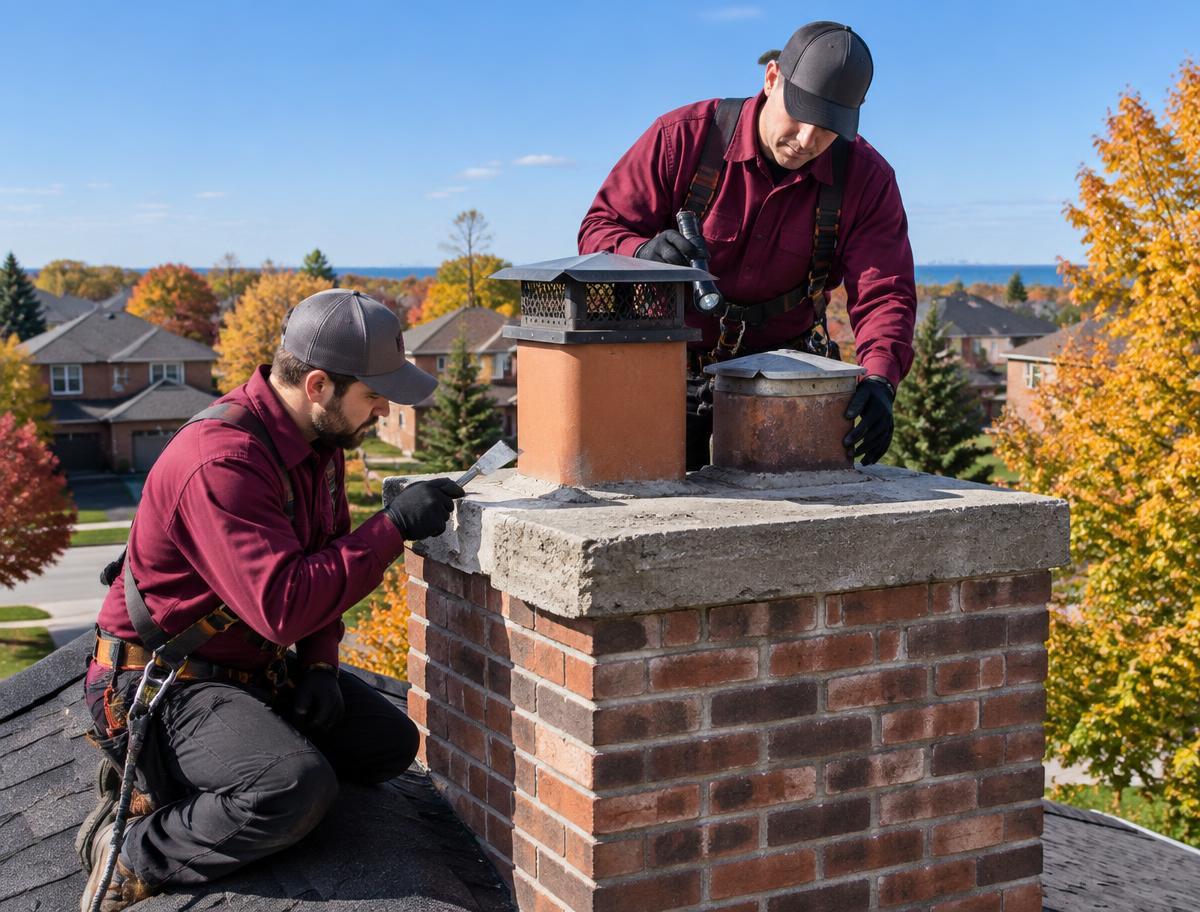
Preventative Care, Chimney Caps, and Waterproofing Measures
Completing a high-calibre tuckpointing project is an outstanding investment in your home, but ongoing preventative maintenance will protect your newly restored mortar for decades to come. The top of your chimney represents its most exposed vulnerability. A cracked concrete crown or absence of a stainless steel chimney cap allows rain and snow to drop straight down the flue and saturate mortar beds from the top down.
Installing a heavy-gauge chimney cap equipped with an integrated spark arrestor and animal guard shields the upper masonry from overhead precipitation. In addition, repairing or re-pouring the chimney crown with a proper drip edge ensures shedding water drips clear of the brickwork rather than running down vertical mortar lines. These crown details protect newly filled joints from concentrated downpours.
Applying a breathable, silane-siloxane masonry water repellent provides an added line of defense against driving rain. Unlike thick clear coats or silicone paints that trap rising internal vapor and trigger internal rot, breathable hydrophobic sealers deeply penetrate the pores of the brick and mortar. They chemically bond to the masonry, causing wind-driven water to bead and roll away harmlessly while letting the chimney breathe freely.
- Heavy-gauge stainless steel chimney caps stop direct overhead precipitation
- Sound concrete crowns with sloped drip edges cast water away from walls
- Breathable water-repellent sealers prevent exterior moisture penetration
- Avoiding film-forming paints protects masonry from trapped internal moisture
- Annual visual inspections catch small joint stresses before water penetrates
How to Choose a Reputable Masonry Contractor in Markham
Hiring the right masonry contractor is the difference between a chimney repair that lasts thirty years and one that fails after a single freeze-thaw winter. Unfortunately, low-cost contractors often cut corners by merely caulking seams or smearing a thin veneer of Portland cement directly over crumbling joints without performing proper diamond-blade raking. This careless shortcut traps moisture inside and rapidly accelerates structural decay.
When evaluating service contractors in Markham, demand a clear, written scope of work detailing raking depths, mortar specifications, cleanup protocols, and cleanup disposal. A reputable contractor will provide detailed diagnostic photos taken at roof height, pointing out exact points of deterioration and outlining whether individual bricks need replacement along with comprehensive repointing.
In addition, always confirm that your contractor carries comprehensive commercial liability insurance and active workplace safety coverage for working at heights. Chimney masonry involves elevated staging, steep roofing access, and high-speed cutting machinery. Trustworthy professionals respect your property, establish robust roof and ladder safety systems, clean up every trace of fallen debris, and guarantee their finished work with transparent written warranties.
- Insist on written contracts specifying joint raking depths and mortar types
- Avoid contractors who recommend caulking or surface-buttering mortar joints
- Request high-resolution diagnostic photography of chimney top sections
- Confirm valid commercial general liability and worker safety compliance
- Verify clear cleanup measures for roof valleys, gutters, and ground areas
Average pricing in Markham
$750 – $2,850
- Inspection / diagnostic
- $120 – $220
- Typical time on site
- 1 to 3 days depending on chimney height and scope
- Parts and materials
- Replacement heritage bricks, custom flashing metal, concrete crowns, and stainless steel chimney caps
- What moves the price
- Total linear footage of degraded mortar joints requiring raking · Roof pitch, stack height, and staging or scaffolding complexity · Extent of spalled bricks needing complete individual unit replacement
Estimated local market range, not a quote. All estimates are in Canadian dollars and exclude 13% Ontario HST. Your exact price is confirmed before any work begins.