

Doing laundry is an everyday household routine across Markham, yet the exhaust duct connected to your clothes dryer often remains completely out of sight and out of mind. Every single laundry cycle pushes hot moisture, detergent residue, fabric strands, and combustible lint into your ductwork. While the internal lint screen collects a portion of these airborne fibres, a substantial volume escapes down the pipe toward the exterior termination cap. Over months of steady operation, this lint adheres to moist pipe walls, building up into a thick felt lining that chokes system airflow, forces your appliance to run under extreme heat, and creates a genuine home fire vulnerability.
At Markham Chimney Services, our team brings dedicated venting expertise directly to your laundry room. Operating from our central home base at 4418 Highway 7 East, we understand the distinctive housing layouts found throughout Markham, from sprawling post-war bungalows along Warden Avenue to multi-level townhomes near Unionville and modern custom builds in Bayview Glen. Dryer vent ducts that run through cold foundation walls, unconditioned basements, or long horizontal ceiling cavities demand methodical, careful maintenance. We clear your entire exhaust passage from collar to wall terminal, restoring optimal draft performance and giving you complete peace of mind with every load you wash and dry.
Dryer Vent Cleaning: visit summary
Dryer Vent Cleaning: lint cleared from the duct and exterior hood to cut fire risk and shorten drying times. Serving Markham and the Greater Toronto Area (GTA). The estimated local market range is $189 – $389, not a fixed company rate. The final scope and quote are confirmed before work begins.
| Estimated market range | $189 – $389. All estimates are in Canadian dollars and exclude 13% Ontario HST. |
|---|---|
| Typical time | 1 to 2 hours depending on duct length and exterior access |
| Price factors | Total duct length and number of interior ninety-degree bends; Second-storey or roof-mounted exterior vent hood access requirements; Presence of severe clogs, foreign objects, or bird nest blockages |
| Routine signs to discuss | Clothes Require Multiple Cycles; Excessive Cabinet and Room Heat; Pungent Burning Odours; Exterior Louvres Fail to Open; Visible Lint Accumulating Outdoors; Damp or Musty Laundry Smell |
What Dryer Vent Cleaning Involves and How Ductwork Operates
Dryer vent cleaning is the specialized mechanical clearing of the entire exhaust run that carries moisture, heat, and combustion byproducts from your clothes dryer to the outside of your house. Many homeowners mistake the routine task of emptying the slide-in mesh lint trap for complete exhaust maintenance. In reality, that small nylon or metal screen catches merely a fraction of the loose textiles sheared off during the tumbling cycle. The residual lint drifts past the blower wheel and enters the transition hose, travelling through rigid or semi-rigid pipes toward the outside vent termination hood.
When exhaust paths stretch across extensive floor joists or turn through multiple ninety-degree elbows, internal air resistance escalates quickly. The warm, saturated air slows down as it travels away from the appliance drum, causing suspended fabric fibres to fall out of the airstream and stick to the inner duct surface. Layer by layer, these microscopic fibres collect until the interior diameter of a four-inch pipe is restricted down to a narrow channel, drastically reducing the blower fan capacity and causing backdraft resistance right inside your laundry space.
A thorough professional cleaning addresses this entire concealed pathway using rotary agitation whips and commercial extraction systems. Rather than simply clearing the first few feet behind your washing area, a professional service navigates the complete span of pipework hidden inside your drywall, subfloors, and basement framing. The objective is to return the internal surface of the duct to a smooth, uniform state, eliminating friction spots, clearing debris clusters, and ensuring that air flows freely to the exterior exterior vent hood without lingering obstructions or backpressure.
- Complete removal of combustible lint and compacted fibre strands
- Dislodging dense lint cakes gathered inside structural ninety-degree elbows
- Inspection and clearing of flexible appliance transition connectors
- Detailed clearing of exterior flapper louvres and hood hoods
- Restoration of factory-specified exhaust velocities and airflow rates
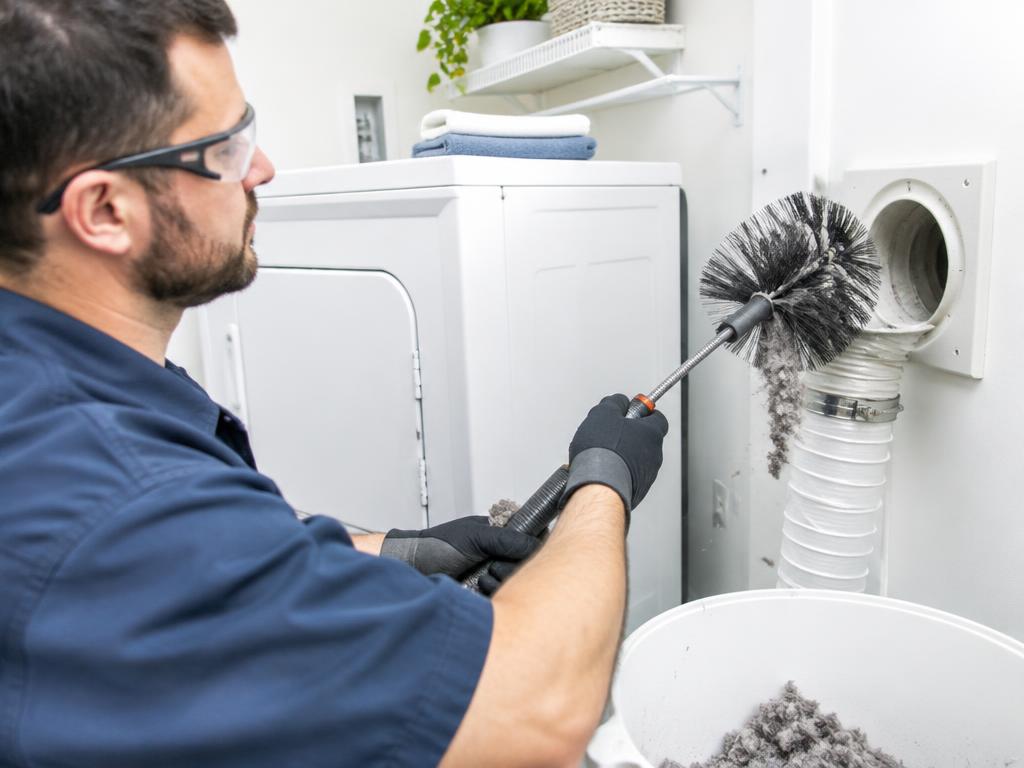
Thorough dryer exhaust cleaning that protects your home, lowers energy bills, and keeps laundry running safely.
Self-check
Warning signs you need dryer vent cleaning
Clothes Require Multiple Cycles
When average laundry loads require two or three consecutive cycles to dry completely, choked airflow is preventing damp vapour from escaping the duct system efficiently.
Excessive Cabinet and Room Heat
If the exterior top of your dryer feels scorching hot to the touch or your laundry room becomes uncomfortably humid during operation, heat is backing up inside the cabinet.
Pungent Burning Odours
A distinct, hot, burning smell during a cycle indicates that trapped lint is overheating near the electrical element or gas burner box, demanding immediate shutdown and service.
Exterior Louvres Fail to Open
When your appliance is running but the external wall damper flapper remains motionless or barely flutters, exhaust velocity has dropped to critically restricted levels.
Visible Lint Accumulating Outdoors
Noticing heavy deposits of lint clinging to exterior brickwork, garden beds, or outdoor air conditioning units near the vent hood indicates that the exhaust line is congested.
Damp or Musty Laundry Smell
Finished clothing that smells damp, stale, or musty right after a drying cycle reveals that stagnant moisture is lingering inside the drum rather than venting outdoors properly.
The Freeze-Thaw Cycle and Winter Challenges for Markham Ducts
Southern Ontario experiences extreme seasonal temperature swings, swinging from humid summer weather to bitter sub-zero winter blasts. This dramatic freeze-thaw climate imposes serious demands on residential dryer exhaust passages throughout Markham and the Greater Toronto Area. When your clothes dryer runs during a chilly January afternoon, it pushes air heated to over sixty degrees Celsius and saturated with moisture into an exhaust pipe that may run through freezing cold foundation perimeters, unheated crawl spaces, or exterior soffit overhangs.
The sharp temperature contrast causes flash condensation inside the metal duct line. Moisture quickly liquifies on cold interior pipe surfaces, turning dry, powdery lint into a sticky paste that clings tenaciously to the metal. As the appliance stops running between cycles, sub-zero winter temperatures penetrate uninsulated duct runs, causing that damp layer of paste to freeze into solid, frosty rinds. Successive laundry days deposit additional layers of damp lint on top of the ice, creating rapid duct narrowing that accelerates far faster in winter than in warmer summer months.
Compounding this issue are exterior vent hood covers on outside walls that become crusted in blowing snow and freezing rain. When wet exhaust air meets freezing outdoor temperatures, condensation frequently freezes on the flapper louvres, locking the damper shut. A stuck flapper traps humid exhaust directly inside the building envelope, causing moisture to seep into rim joists, drywall, and insulation, creating mould risks while driving toxic heat back into the laundry appliance cabinet itself.
- Rapid condensation buildup inside exhaust ducts traversing cold framing cavities
- Freezing of damp lint linings into stubborn, hardened interior clogs
- Exterior vent dampers that freeze shut during winter storms and ice events
- Frost buildup choking outdoor louvres and roof exhaust hoods
- Hidden structural rot risks created by blocked exhaust vapour leaking indoors
Common Root Causes of Severe Dryer Duct Accumulation
While lint is a natural consequence of drying cotton, fleece, and synthetic textiles, certain architectural configurations and installation choices accelerate clogs dramatically. In older Markham homes, modern renovations frequently relocate laundry facilities from open basement areas up to second-floor bedroom levels or central main-floor closets. These updated configurations often require extraordinarily long duct runs with multiple bends to reach an exterior exterior wall, drastically elevating internal static friction and promoting rapid lint settling.
Substandard duct materials represent another leading cause of severe clogs. Corrugated vinyl, thin plastic flex foil, and spiralled accordion hoses create intense turbulence inside the exhaust path. The corrugated ridges trap loose lint strands like tiny speed bumps, while the flexible walls easily sag, buckle, and crush behind heavy laundry machines pushed tight against the wall. Building standards strictly recommend rigid, smooth-wall galvanized steel or aluminium ducts, yet many residential installations still rely on inferior corrugated connectors that collect debris rapidly.
Pest intrusion also triggers sudden, unexpected duct blockages across our local communities. During early spring and late autumn, birds, mice, and red squirrels seek out warm exhaust hoods on brick exteriors, frequently pushing past damaged plastic dampers to construct nests inside the duct. A single bird nest constructed from dried twigs, straw, and outdoor debris can choke an entire four-inch duct line overnight, trapping exhaust gas and transforming the pipe into a severe fire hazard.
- Excessively long horizontal or vertical pipe runs with multiple right-angle elbows
- Use of non-compliant corrugated foil or spiral vinyl transition connectors
- Crushed, kinked, or sagging exhaust pipes hidden behind heavy laundry pairs
- Bird nests, squirrel bedding, and rodent intrusions inside exterior wall terminations
- Drying bulky, lint-heavy household materials like pet blankets, towels, and rugs
Fire Prevention, Gas Exhaust Safety, and Carbon Monoxide Awareness
Lint is an exceptionally combustible material composed of finely separated cellulose and synthetic fibres that ignite at comparatively low temperatures. When an exhaust pipe fills with lint, the dryer motor and heating element must work harder to push air against the blockage. Internal cabinet temperatures can rise swiftly to hazardous levels. If a thermal cutout switch fails or loose lint gathers near the heating coils or burner box, a single spark or extreme thermal pocket can ignite the lint, rapidly sending flames racing through the duct into your home walls.
For homes operating natural gas clothes dryers, proper exhaust maintenance is doubly critical due to carbon monoxide risks. Natural gas combustion produces moisture, carbon dioxide, and potentially lethal carbon monoxide, an odourless, colourless, and tasteless gas. While a functioning duct carries these poisonous combustion products harmlessly to the outdoors, a choked duct creates backpressure that forces combustion fumes backward into indoor living quarters through cabinet joints and seam collars.
We approach dryer venting with the exact same safety-first mindset applied to solid-fuel and gas heating systems. Safe venting protocols prioritize smooth metal pathways, airtight seams, direct routing, and early warning protection. Every household should maintain working carbon monoxide alarms on every residential level, especially near laundry spaces equipped with gas appliances. Treating your dryer duct as an active combustion and thermal exhaust conduit is fundamental to protecting your family from preventable domestic emergencies.
- Combustible lint deposits ignited by overheated electrical heating coils
- Carbon monoxide backdrafts caused by clogged natural gas dryer exhaust lines
- Thermal switch breakdown caused by prolonged cycling against static air resistance
- Rapid fire spread through wall cavities via damaged or cracked duct material
- Crucial necessity of installing tested carbon monoxide detectors on every level
"I scheduled a full fireplace cleaning before winter. They used professional-grade tools to remove every trace of soot, tested airflow, and provided clear advice on maintenance. My hearth looks brand new and works flawlessly."

Our process
How we handle your dryer vent cleaning, step by step
- 1
Initial Airflow Diagnostic
We measure exhaust velocity at the outdoor hood and assess the interior duct line to pinpoint the density and location of the obstruction.
- 2
Workstation and Machine Preparation
We pull the dryer forward carefully, safeguard your flooring, detach the transition duct, and set up our high-volume negative air collection system.
- 3
Full-Length Rotary Agitation
We guide flexible rotary scrubbing brushes through the entire duct run, stripping away compacted lint cakes, stubborn debris, and blockages from interior walls.
- 4
Exterior Vent Cap Reconditioning
We clean the outdoor termination hood, remove pest debris, and ensure the backdraft damper flapper swings open freely without sticking or jamming.
- 5
System Reassembly and Final Testing
We secure all joints with heavy-duty foil tape, reposition the appliance, and run a final airflow test to verify peak exhaust velocity.
Our Markham Inspection, Diagnosis, and Mechanical Cleaning Process
Our service protocol begins with a comprehensive mechanical and structural assessment of your existing laundry venting installation. When our technicians arrive at your Markham home, we inspect the transition connection behind the dryer, evaluate the duct routing, and examine the material integrity of the entire pipe run. We assess internal air velocity at the exterior termination hood using precision measurement tools, identifying whether your system suffers from minor lint dusting or a severe, compressed blockage deep inside the building framing.
Following initial diagnostic readings, we prepare the work area using protective floor mats and containment equipment to ensure your laundry room remains immaculately clean. We disconnect the appliance carefully, attaching high-volume vacuum systems designed to maintain continuous negative air pressure inside the ductwork. We then deploy specialized forward-spinning rotary nylon whip assemblies through the entire length of the pipe run. These flexible, non-damaging brushes scrub the interior pipe circumference, stripping baked-on lint paste and loose debris from the metal surface without puncturing or separating duct joints.
Once mechanical scrubbing is complete, we address the exterior termination cap. We inspect damper louvres, clear hood housings, remove any pest nest debris, and verify that the backdraft flap opens smoothly during operation and seals tightly when idle. Finally, we reconnect your appliance using heavy-duty, all-metal semi-rigid transitions, check for exhaust leaks along connecting collars with sensitive pressure meters, and conduct a final airflow velocity test to confirm that your laundry system operates at maximum manufacturer performance.
- Baseline airflow velocity testing and structural transition inspections
- Negative pressure dust containment to prevent loose lint from entering the home
- Full-length rotary brush mechanical scrubbing of all interior duct surfaces
- Exterior hood cleaning, damper tension checking, and pest guard inspection
- Post-cleaning airflow verification and airtight connection reassembly
Extending Appliance Lifespan and Lowering Monthly Energy Bills
Beyond vital fire prevention and life safety benefits, regular dryer exhaust cleaning delivers immediate financial returns on your monthly household operating costs. Modern electric and gas dryers consume substantial quantities of energy during every run. When airflow is choked by internal lint deposits, wet clothing remains trapped in a stagnant pocket of humid vapour. The internal sensors keep heating elements activated for prolonged periods, frequently turning a normal forty-minute cycle into an exhausting eighty or ninety-minute ordeal.
Running double cycles for every laundry load doubles the utility cost associated with your clothes dryer, causing hydro and natural gas expenses to quietly climb. In addition to wasting energy, this excess thermal stress takes a heavy mechanical toll on the dryer itself. Critical internal components, including heating elements, drive belts, blower wheel bearings, thermal fuses, and moisture sensors, suffer premature wear and tear when forced to operate in overheated conditions over extended run times.
By restoring unimpeded airflow, your clothes dry much faster, moisture vents outdoors immediately, and drying cycles finish within normal factory durations. This reduction in operating hours saves money on monthly utility bills while postponing costly service calls or premature appliance replacements. Protecting your valuable laundry appliances through proper duct maintenance ensures smooth, dependable performance year after year across Markham.
- Elimination of frustrating double drying cycles on heavy cottons and bedding
- Substantial reductions in monthly household hydro and natural gas consumption
- Reduced wear on delicate clothes caused by prolonged exposure to high heat
- Prevention of premature burnout in heating elements and thermal cutoffs
- Extended functional lifespan for expensive modern laundry appliances

Proactive Maintenance Practices Between Professional Visits
Maintaining a safe, high-performing laundry exhaust system requires a partnership between periodic professional cleaning and mindful homeowner habits. The simplest yet most critical habit is cleaning your dryer lint trap screen after every single load without exception. Even a thin layer of lint on the screen restricts air intake, elevating drum temperatures and allowing surplus fibres to bypass the trap seal. Periodically washing the mesh screen with warm water and mild dish soap also removes invisible, waxy fabric softener films that restrict airflow.
Pay close attention to the space directly behind and beneath your dryer cabinet. When sweeping or vacuuming your laundry room, clean behind the machine to prevent loose lint bunnies from being pulled into the internal motor cooling intake. Avoid shoving laundry hampers, storage boxes, or detergent jugs tight against the flexible transition hose behind the dryer, as compressing this duct sharply restricts airflow, mimicking a severe mechanical blockage inside the wall.
Finally, get into the routine of checking your exterior exhaust vent cap on the outside wall of your home every few weeks, particularly during Markham winter months. Verify that snow banks do not bury the vent opening, remove any icicles hanging from the hood housing, and confirm that the damper flap swings freely when the dryer is running. Taking five minutes to monitor these exterior components helps you catch airflow issues long before they turn into serious hazards.
- Clear the internal lint screen clean after every single laundry load
- Wash the lint screen mesh periodically to dissolve invisible fabric softener films
- Ensure the transition hose behind the dryer remains unkinked and uncompressed
- Clear external wall louvres of winter snowdrifts, ice, and autumn leaf litter
- Never run your clothes dryer when leaving the house or while sleeping at night
How to Choose a Reliable Venting Specialist in Markham
When hiring a contractor to clean or repair your laundry venting system, it is crucial to select a professional who treats the ductwork as a critical exhaust ventilation system rather than simply running a shop vacuum into the wall. Inquire specifically about their cleaning methodology. A reputable venting specialist relies on complete mechanical agitation, such as rotary brushes and forward-blowing air nozzles, paired with continuous vacuum collection, rather than merely blowing loose debris blindly into your attic or garden.
Transparency regarding pricing and scope of work is another hallmark of a professional contractor. Be wary of door-to-door sales operators or telemarketers offering unusually cheap introductory cleaning rates, which frequently turn into aggressive upselling tactics once they dismantle your appliance connection. A trustworthy service provider offers clear pricing models, discusses necessary transition repairs upfront, and inspects the exterior hood cap as an essential, standard part of the job.
Ensure your chosen specialist possesses deep familiarity with Ontario residential building construction methods and venting dynamics. Your technician should understand proper duct materials, appropriate joint assembly techniques using foil tape instead of snagging sheet metal screws, and exterior clearance requirements from gas meters and windows. Choosing an established, locally rooted company guarantees dependable workmanship, verified liability insurance, and lasting peace of mind.
- Demands the use of dedicated mechanical rotary scrubbing and vacuum capture gear
- Provides clear upfront pricing without hidden fees or high-pressure upselling
- Demonstrates complete understanding of Ontario venting safety standards
- Refuses dangerous shortcuts like fastening duct seams with internal screws
- Operates with comprehensive commercial liability coverage and local roots
Average pricing in Markham
$189 – $389
- Inspection / diagnostic
- $89 – $129 (waived when cleaning service is completed)
- Typical time on site
- 1 to 2 hours depending on duct length and exterior access
- Parts and materials
- Rigid metal transition ducts, exterior replacement hoods, and pest guards quoted separately
- What moves the price
- Total duct length and number of interior ninety-degree bends · Second-storey or roof-mounted exterior vent hood access requirements · Presence of severe clogs, foreign objects, or bird nest blockages
Estimated local market range, not a quote. All estimates are in Canadian dollars and exclude 13% Ontario HST. Your exact price is confirmed before any work begins.