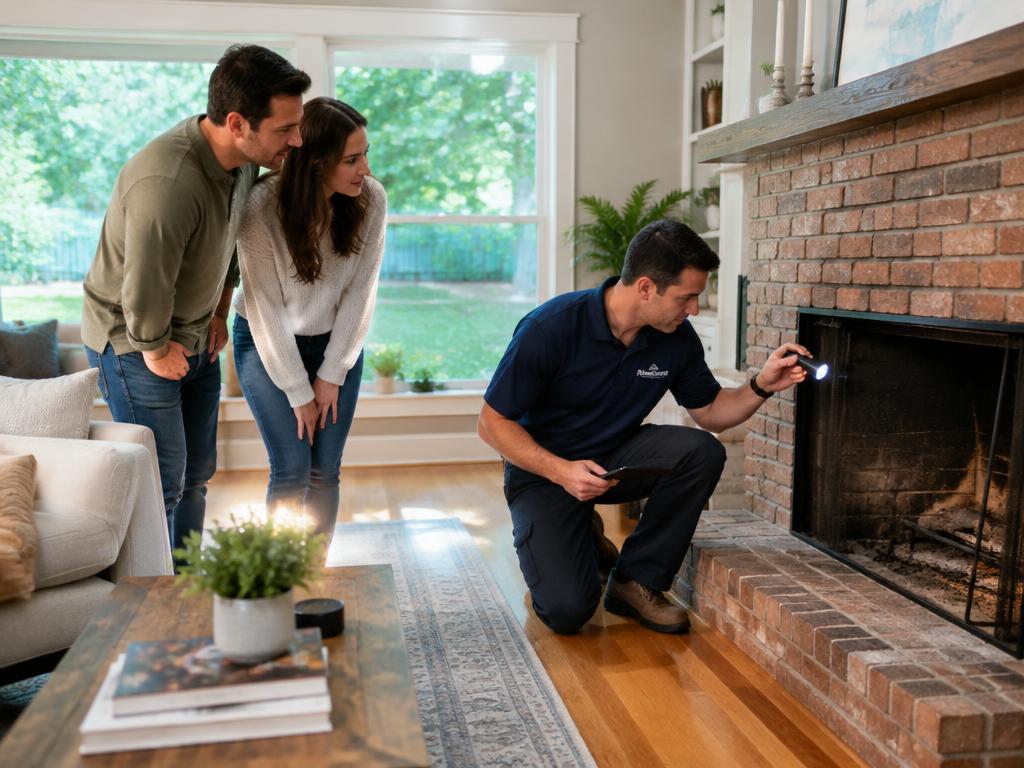

A cozy hearth brings incredible comfort to a Markham home during our bitter winter months, but hidden chimney hazards can turn a welcoming fire into an unexpected emergency. Over months of steady burning, dangerous creosote glazes your flue liner, drafting pathways become restricted, and seasonal moisture begins to eat away at hidden masonry joints. Markham Chimney Services provides thorough, detail-oriented fireplace cleaning and diagnostic safety inspections from our local base at 4418 Highway 7 East. We examine every component of your burning system, ensuring you can light a fire with complete confidence whenever temperatures drop.
Ignoring your fireplace until smoke enters your living room or a foul odour appears often leads to expensive structural damage and elevated safety risks. Our experienced team works with wood-burning masonry hearths, factory-built metal appliances, and modern decorative systems across established residential pockets throughout Markham and the Greater Toronto Area. We focus on preventive diagnosis, identifying minor cracks, failing mortar caps, and drafting obstructions before cold weather locks in structural flaws. By treating your hearth with meticulous care, we help you preserve interior air quality, defend against chimney fires, and maintain stable indoor comfort all season.
Fireplace Experts: visit summary
Fireplace Experts: a careful look and clean of the firebox, damper and flue, with a plain rundown of what we found. Serving Markham and the Greater Toronto Area (GTA). The estimated local market range is $189 – $449, not a fixed company rate. The final scope and quote are confirmed before work begins.
| Estimated market range | $189 – $449. All estimates are in Canadian dollars and exclude 13% Ontario HST. |
|---|---|
| Typical time | 1 to 2 hours typical on-site time |
| Price factors | Degree of creosote accumulation (light soot versus hardened third-degree glaze); Roof slope, chimney height, and overall exterior accessibility for safe servicing; Type of fireplace construction (traditional masonry hearth versus zero-clearance metal unit) |
| Routine signs to discuss | Thick Tar-Like Buildup Inside the Firebox; Persistent Smoke Spilling Into the Room; Pungent Barbecue Odours in Humid Weather; White Powdery Staining on Exterior Brick; Flaking Shards of Brick or Clay on the Hearth; Stiff or Completely Inoperable Damper Plate |
Comprehensive Fireplace Cleaning and Diagnostic Inspection Explained
A proper fireplace service goes far beyond simply vacuuming out cold ashes from the firebox floor. Our technical process begins with a top-to-bottom structural assessment that scrutinizes the firebox, refractory panels, throat damper, smoke shelf, and the entire internal flue pathway. We utilize high-output task lighting and specialised diagnostic cameras to inspect the flue tile joints, searching for minute hairline cracks, spalling clay, or disconnected stainless steel liner joints that remain invisible during casual daily use.
The cleaning phase utilizes heavy-duty rotary sweeping gear, contour-matched wire and poly brushes, and sealed HEPA filtration vacuums that capture microscopic particulate matter without releasing soot into your home. We carefully clean the smoke chamber, which is a notorious collection zone for combustible third-degree creosote deposits that common retail brushes fail to reach. We also clean and calibrate the damper mechanism so it opens fully during operation and closes tightly when the hearth sits dormant.
Following the physical sweep and assessment, we supply a detailed condition review outlining your system status. We explain how your air intake operates, discuss the structural stability of the exterior chimney stack, and identify any clearing hazards near combustible trim. This rigorous procedure ensures that every burn cycle vents safely outside your living space, giving Markham homeowners total peace of mind every time they ignite seasoned wood or run their hearth appliances.
- Full structural check of firebox refractory panels, lintels, and hearth extensions
- Rotary mechanical flue sweeping combined with HEPA-sealed negative air filtration
- Thorough mechanical inspection and lubrication of the throat or top-mount damper
- Clearance verification against combustible framing, mantels, and adjacent drywall
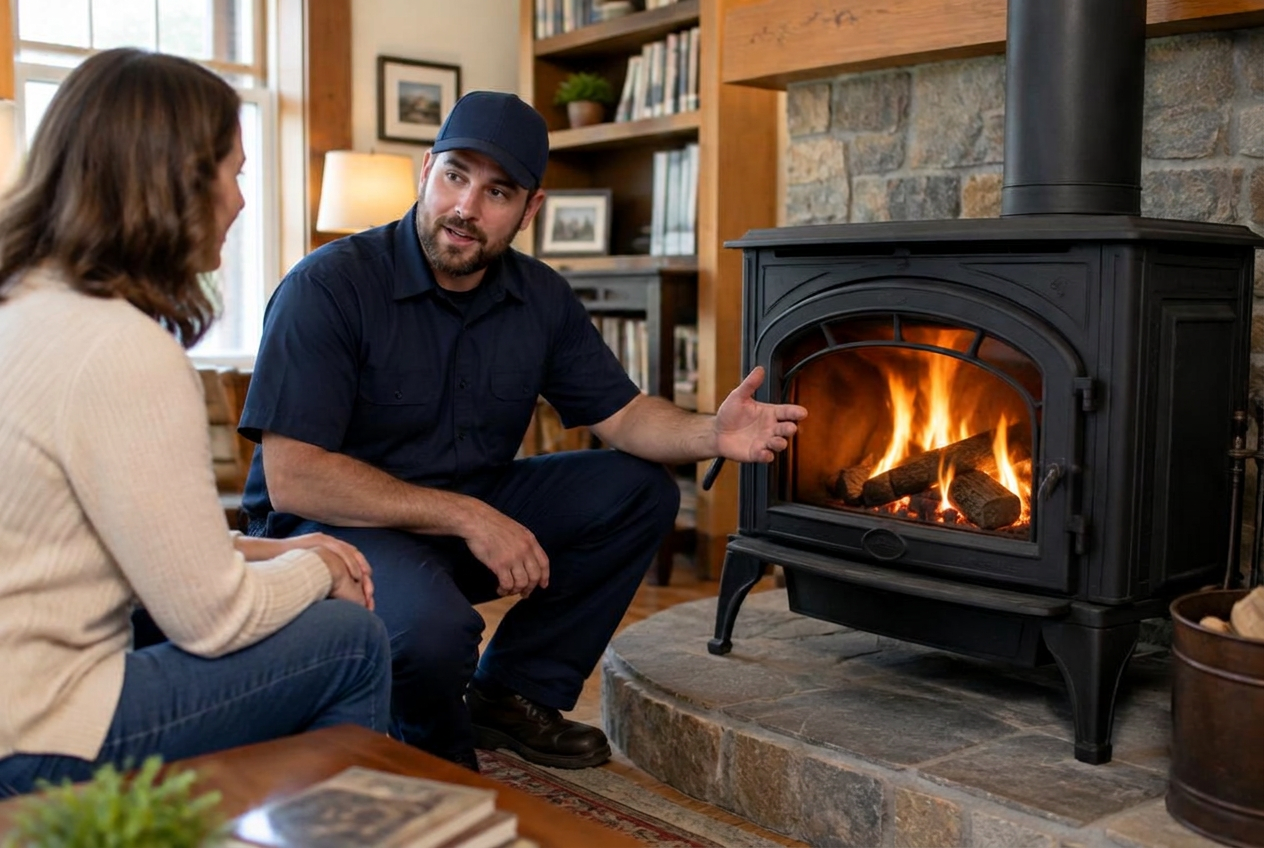
Dedicated fireplace inspections and precision cleaning designed to keep your Markham home safe and warm.
Self-check
Warning signs you need fireplace experts
Thick Tar-Like Buildup Inside the Firebox
A shiny, dark, or sticky crust coating your firebrick or damper plate indicates dangerous third-degree creosote. This highly flammable fuel source demands immediate professional rotary cleaning before you light another fire.
Persistent Smoke Spilling Into the Room
Smoke entering your living area during burning indicates poor draft, a flue obstruction, or negative air pressure. Operating a smoke-filled hearth damages indoor air quality and risks carbon monoxide accumulation in your home.
Pungent Barbecue Odours in Humid Weather
Strong, sour, or sooty smells wafting from your fireplace during rain or high humidity indicate damp soot deposits and unsealed flues. Moisture reacts with creosote acids, corroding masonry and spreading stale odours indoors.
White Powdery Staining on Exterior Brick
Chalky white efflorescence on your exterior chimney bricks signifies internal water penetration. Trapped moisture dissolves minerals in masonry, creating serious structural vulnerabilities during Ontario sub-zero winter freeze-thaw cycles.
Flaking Shards of Brick or Clay on the Hearth
Discovering reddish clay flakes or masonry fragments on your firebox floor means the internal flue liner is spalling. A compromised liner permits extreme heat and volatile exhaust gases to contact combustible wall framing.
Stiff or Completely Inoperable Damper Plate
A damper that resists opening, squeals loudly, or fails to create a snug seal wastes expensive home heating energy. Rusted or misaligned dampers restrict flue exhaust and allow toxic fumes to backdraft into the house.
How Southern Ontario Freeze-Thaw Cycles Deteriorate Flues and Masonry
The winter climate in Markham subjects exterior brick and internal chimney flues to severe physical stress. Between late November and early April, our region experiences dozens of rapid freeze-thaw cycles where melting snow and freezing rain soak into porous masonry materials. When daytime temperatures hover just above zero and plunge sharply overnight, moisture trapped inside exterior brickwork and flue tiles expands by nearly nine percent, generating immense hydrostatic pressure within the chimney structure.
This relentless expansion causes spalling, a damaging condition where the hard outer face of bricks pops off and clay flue tiles shatter into sharp shards. Crumbling flue sections can tumble inward, creating dangerous blockages inside the exhaust channel that deflect deadly combustion gases back toward your living quarters. Furthermore, moisture combined with acidic creosote creates a corrosive slurry that rapidly degrades mortar joints, allowing heat from active fires to transfer into the wooden framing behind your interior walls.
Protecting your chimney from these seasonal weather swings requires early detection and practical waterproofing solutions. During our inspection visits, we carefully check your chimney crown, flashing seams, and rain cap to confirm that exterior water cannot penetrate the interior flue. Addressing tiny mortar voids and micro-fractures in autumn prevents cold weather from compounding masonry damage, saving homeowners significant capital on structural rebuilds while ensuring that seasonal freezing cannot disable your home heating system.
- Deep water penetration expanding during sudden overnight sub-zero temperature drops
- Spalling clay flue liners cracking and shedding fragments directly into the smoke path
- Mortar joint washing and structural loosening along the exposed chimney exterior
- Corrosive chemical degradation caused by water combining with acidic flue deposits
Root Causes Behind Creosote Buildup, Poor Drafting, and Fireplace Hazards
Creosote is an unavoidable byproduct of burning solid wood, formed when unburned volatile gases, tar vapours, and moisture condense along the cooler upper walls of the flue. When homeowners burn unseasoned green wood or operate fires with insufficient combustion air, flue temperatures stay low, drastically accelerating the formation of dark, sticky creosote. Over time, this substance hardens into a dense, highly combustible glaze that represents the primary fuel source for devastating residential chimney fires.
Drafting failures are another persistent grievance for local residents, often triggered by modern home energy efficiency upgrades. Tightly insulated building envelopes, powerful kitchen range hoods, and mechanical bathroom exhaust fans create strong negative interior air pressure. When your fireplace is lit, the chimney struggle to draw exhaust upward, allowing smoke, particulate soot, and carbon monoxide to drift into your living room instead of venting cleanly through the top of the stack.
External factors also disrupt chimney drafting, such as mature tree canopies creating wind eddies or undersized flues connected to oversized open hearths. Animal nesting is another frequent culprit, with squirrels, raccoons, and birds seeking warmth inside open flues during seasonal transitions. Our diagnostic process pinpoints the exact mechanical, structural, or environmental reason behind your hearth performance issues, enabling us to eliminate underlying causes rather than merely treating visible soot symptoms.
- Combustion of damp, unseasoned wood generating dense smoke and low flue temperatures
- Accumulation of tar-like glazed creosote on inaccessible upper flue tile surfaces
- Negative house pressure created by modern insulation and heavy exhaust appliances
- Obstructions caused by leaves, twigs, animal nests, or collapsed interior liner tiles
Our Precision Diagnosis, Workspace Protection, and Cleaning Process
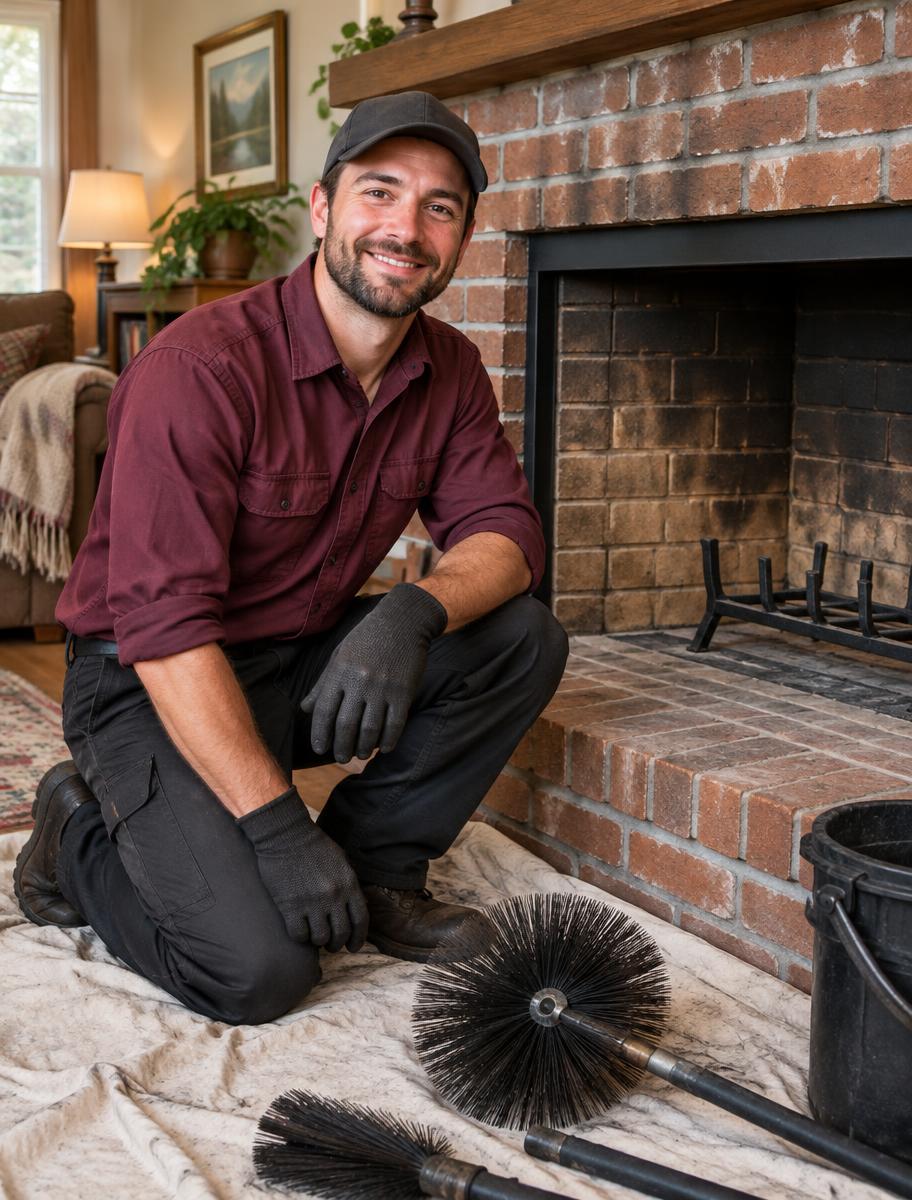
When our technicians arrive at your Markham home, workspace protection is our immediate priority. We set down heavy canvas runners from your entryway to the hearth, cover the surrounding flooring with industrial drop cloths, and position protective shields across your furniture. We secure a high-capacity HEPA-filtered vacuum unit directly beside the firebox opening, creating continuous negative air pressure that captures airborne dust before a single brush touch reaches the chimney.
Our diagnostic sweeping method utilizes specialized mechanical rods and engineered rotary heads tailored to your specific flue type, whether clay tile, poured masonry, or stainless steel. We clean the flue from the bottom up or top down depending on the roof pitch and chimney configuration, ensuring all creosote scales detach smoothly without damaging flue joints. We clean the smoke shelf, remove built-up soot behind the damper, and scrub the interior firebox bricks.
Once the sweeping stage is finished, we conduct a close visual and optical assessment of every component. We verify that the damper operates smoothly with a positive seal, check the firebox mortar for integrity, and examine all external surfaces including cleanout doors in the basement. We document our discoveries thoroughly, offering you clear photographic evidence of any areas of concern alongside pragmatic recommendations to keep your fireplace functioning at peak performance.
- Dual-layer floor tarps, runner mats, and negative pressure dust-containment setups
- Rotary power sweeping matched to liner material specifications and flue dimensions
- Complete cleaning of the smoke shelf, throat damper plate, and firebox floor
- Systematic multi-point safety evaluation covering all internal and external components
"I needed a new chimney cap. The installer arrived in Angus Glen, walked me through cap options, and fitted the perfect one with care. Cleanup was spotless and now I feel protected against rain and pests."
Our process
How we handle your fireplace experts, step by step
- 1
Arrival and Total Hearth Floor Protection
We place clean runners and industrial drop cloths across your living area, sealing the hearth opening with negative-pressure HEPA vacuums to ensure zero soot escapes inside.
- 2
Preliminary Diagnostic Visual Assessment
We examine the firebox, refractory bricks, damper blade, and smoke shelf with high-intensity lighting, identifying structural wear, creosote classification, and any draft blockages.
- 3
Mechanical Sweeping and Soot Evacuation
Using precision rotary gear matched to your liner type, we strip away stubborn creosote and soot from the flue top to firebox while running continuous air filtration.
- 4
Detailed Internal Flue and Hardware Check
We inspect clean flue walls for hidden liner cracks, shifting joints, and damper alignment, confirming the exhaust pathway is completely clear and mechanically sound.
- 5
Post-Service Consultation and Safety Review
We pack away all gear, review findings with you, explain observed conditions, and share helpful wood-burning tips to keep your system safe and efficient all winter.
Essential Fire Safety Protocols and Carbon Monoxide Prevention
Fireplace safety is not merely about preventing flames from escaping the firebox; it is equally about safeguarding your household against silent toxic fumes. Carbon monoxide is a colourless, odourless, and tasteless gas produced by the incomplete combustion of fossil fuels and wood. If your chimney flue suffers from a partial blockage, a cracked flue liner, or insufficient draft, this dangerous gas can leak steadily into bedrooms and living spaces without immediate detection.
We align all our fireplace diagnostic work with established Canadian safety guidelines, following rigorous CSA principles and WETT-style best practice benchmarks without claiming formal registry affiliations. We verify that your hearth installation maintains appropriate physical clearances from combustible mantlepieces, baseboards, and hardwood flooring. In addition, we check that cleanout doors seal securely, as deteriorated seals in basements can pull furnace exhaust or fireplace fumes into your basement living areas.
Every Markham household with a working fireplace or fuel-burning appliance must maintain reliable, working carbon monoxide alarms on every floor, especially outside sleeping areas. We routinely inspect the proximity and operational status of your safety alarms during our home visits, emphasizing that battery changes and sensor tests are vital lifelines. A properly swept and maintained chimney, paired with vigilant detector placement, remains the most dependable defence against household fire and poisoning risks.
- Clearance testing between hot firebox surfaces and adjacent combustible framing
- Detection of flue leaks that could discharge dangerous carbon monoxide indoors
- Inspection of basement cleanout doors and ash dump lids for tight, reliable seals
- Guidance on optimal carbon monoxide detector placement across all home living levels
Practical Seasonal Maintenance Tips for Markham Homeowners
While annual professional sweeping is indispensable, the daily habits you practice throughout the winter make a substantial difference in chimney longevity and fire safety. Always burn dry, well-seasoned hardwood such as maple, oak, or birch that has air-dried for at least six to twelve months. Burning green, freshly split wood wastes thermal energy boiling off internal moisture, which drops chimney temperatures and causes excessive creosote to condense along the liner walls.
Avoid using your fireplace as an incinerator for cardboard cartons, glossy wrapping paper, or construction scraps. These materials burn with intense, unpredictable flash fires that can crack cold flue tiles and loft burning embers onto your roof or your neighbour's property. Always build fires using the top-down method, placing large logs on the bottom, smaller pieces above, and kindling at the top to generate rapid heat that establishes an upward draft immediately.
Keep the firebox floor tidy throughout the active burning season, but leave a small bed of ash roughly one inch thick to insulate the floor and reflect heat upward into the fuel bed. When removing excess ashes, use an airtight metal bucket with a raised lid, place it on a non-combustible stone or concrete surface away from exterior walls, and let the embers cool completely for several days before disposal.
- Select strictly seasoned hardwoods with moisture levels measured below twenty percent
- Adopt top-down fire-building techniques to establish a prompt and clean chimney draft
- Refrain from burning treated lumber, coloured papers, plastics, or trash items
- Store hot fire ashes solely within a sealed metal container set on non-combustible floors
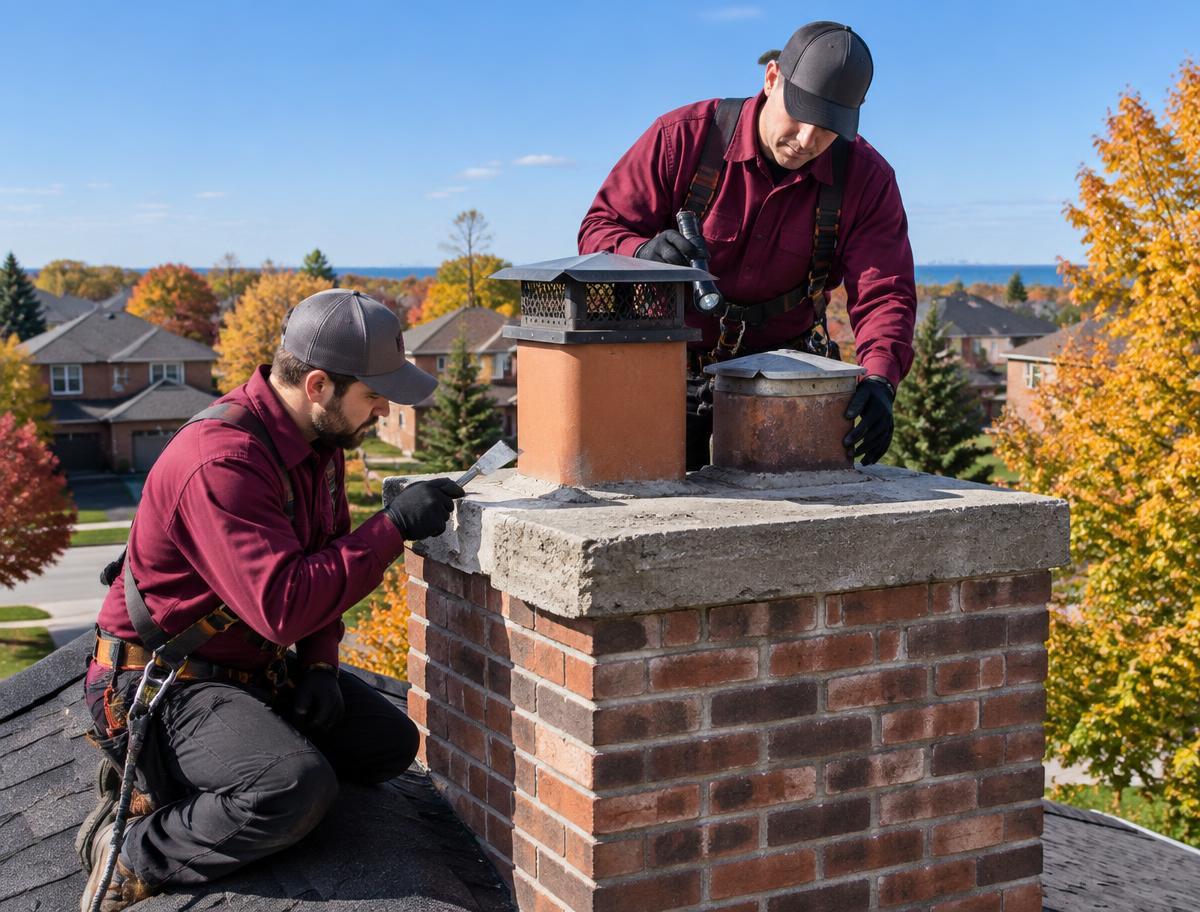
Understanding the Factors That Influence Fireplace Service Costs
When planning a budget for professional fireplace maintenance in Markham, homeowners will discover that pricing depends on the physical condition, type, and accessibility of their system. A standard cleaning and diagnostic inspection for a routinely serviced masonry chimney requires less time and equipment than dealing with years of neglected, rock-hard glazed creosote. Systems coated with thick third-degree creosote often demand chemical neutralizers and repeated mechanical scouring to return to safety.
Accessibility plays an equally critical role in pricing estimates. A low-slope roof on a single-storey bungalow in a traditional Markham neighbourhood provides straightforward access, whereas a steep, multi-level roof on a modern custom rebuild requires specialized roof safety anchoring, extended ladder configurations, and extra time on site. If our technicians discover mechanical failures, such as a rusted damper or cracked refractory firebrick, replacement components are itemized clearly on an individual estimate.
We believe in transparent, upfront quoting without hidden service charges or surprise add-ons. Our goal is to outline every required action clearly, explaining the mechanical or safety reason behind each recommendation so you can make informed decisions about your home. Investing in annual professional maintenance avoids catastrophic structural chimney repairs and significantly reduces seasonal fuel consumption by keeping your heating system drafting smoothly.
- Level and density of creosote buildup accumulated within the flue passageway
- Overall roof pitch, chimney height, and exterior accessibility requirements
- Physical type of fireplace, including traditional open masonry or metal zero-clearance
- Condition of secondary hardware like damper plates, firebricks, and flue caps
What to Look for When Choosing an Independent Fireplace Specialist
Entrusting your home safety to a fireplace contractor requires careful vetting, as incomplete sweeps and missed structural cracks can leave your property vulnerable to chimney fires. Look for independent service providers who operate transparently within your local community and can explain their technical methods in clear, everyday terms. A reliable professional takes the time to listen to your concerns, whether you are battling backdraft issues or suspicious smells, before picking up tools.
Ensure the contractor uses proper dust-containment systems, including commercial HEPA air scrubbers, clean drop cloths, and purpose-built rotary cleaning gear designed specifically for your liner type. Contractors who rely exclusively on quick hand brushes or offer five-minute evaluations without inspecting the upper flue or checking the damper mechanism fail to deliver the thoroughness your home deserves. Dependable specialists will welcome your questions and provide detailed photographic evidence of any defects.
At Markham Chimney Services, we take immense pride in serving our neighbours across Markham with honest craftsmanship and meticulous attention to detail. Operating from 4418 Highway 7 East, we are deeply invested in protecting local architectural styles, from mid-century post-war brick homes to newer urban detached developments. We treat your living space with the highest level of care, ensuring your heating season remains safe, comfortable, and completely stress-free.
- Demonstrated local community presence with transparent communication and clear pricing
- Employment of HEPA negative-air dust containment systems and clean floor coverings
- Willingness to explain diagnostics thoroughly and provide photographic documentation
- Adherence to recognized CSA guidelines and comprehensive WETT-style safety standards
Average pricing in Markham
$189 – $449
- Inspection / diagnostic
- $149 – $229
- Typical time on site
- 1 to 2 hours typical on-site time
- Parts and materials
- Replacement dampers, firebrick mortar, chimney caps, or custom flashing quoted separately
- What moves the price
- Degree of creosote accumulation (light soot versus hardened third-degree glaze) · Roof slope, chimney height, and overall exterior accessibility for safe servicing · Type of fireplace construction (traditional masonry hearth versus zero-clearance metal unit)
Estimated local market range, not a quote. All estimates are in Canadian dollars and exclude 13% Ontario HST. Your exact price is confirmed before any work begins.