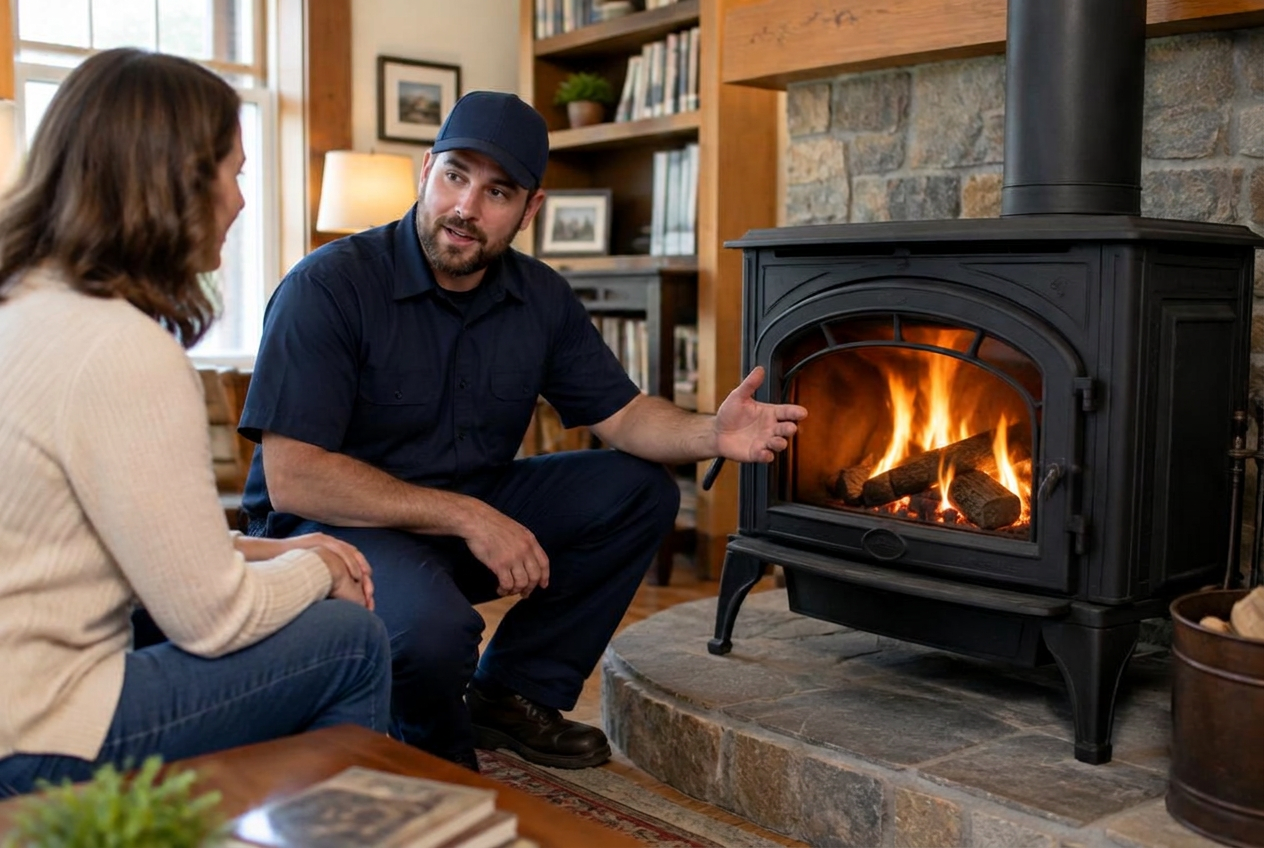
Setting an inviting fire provides dependable warmth and comfort when harsh winter temperatures settle over Markham. However, behind your hearth lies an intricate assembly of masonry, flue liners, dampers, and clearance barriers engineered to contain intense thermal energy and toxic combustion gases. Over months of steady heating, gradual structural deterioration or internal buildup can take place well out of normal sight. A thorough fireplace inspection delivers the precise technical assessment your system requires before you strike that first match. Our dedicated team examines every critical element to confirm your heating appliance operates safely, efficiently, and cleanly throughout the freezing months ahead.
Living in Ontario means your chimney structure constantly battles rapid temperature shifts, moisture penetration, and severe thermal stress. Whether your home is an established mid-century brick bungalow in Unionville, a classic two-storey residence in Berczy Village, or a newly updated property near Cornell, an uninspected fireplace can harbour unseen hazards. Loose mortar, cracked flue tiles, deteriorating gaskets, and flammable creosote deposits frequently develop beneath the surface. Operating as an independent chimney and fireplace service company based at 4418 Highway 7 East, Markham Chimney Services focuses purely on safety and structural integrity. We deliver transparent evaluations to protect your household from chimney fires, toxic fumes, and costly structural damage.
Fireplace Inspection: visit summary
Fireplace Inspection: a careful look and clean of the firebox, damper and flue, with a plain rundown of what we found. Serving Markham and the Greater Toronto Area (GTA). The estimated local market range is $189 – $489, not a fixed company rate. The final scope and quote are confirmed before work begins.
| Estimated market range | $189 – $489. All estimates are in Canadian dollars and exclude 13% Ontario HST. |
|---|---|
| Typical time | 1 to 2 hours on-site |
| Price factors | Chimney height, roofline pitch, and physical exterior accessibility; Type of fireplace appliance, whether traditional open masonry, factory-built, or gas insert; Degree of creosote accumulation and overall age of internal flue liners |
| Routine signs to discuss | White Powdery Masonry Stains; Persistent Smoky or Sour Odours; Rust on the Damper or Firebox; Spalling Bricks and Crumbling Mortar; Thick or Glazed Creosote Buildup; Sluggish Draft and Backdrafting |
What a Professional Fireplace Inspection Entails
A proper fireplace inspection goes far beyond simply glancing up the chimney opening with a flashlight. It is a systematic, methodical evaluation of every accessible component of your venting and combustion system. When our technicians assess your fireplace, we examine the firebox interior, the lintel, the damper assembly, the smoke chamber, and the continuous flue passage. Each of these zones handles extreme thermal expansion and acidic exhaust gases whenever a fire burns.
We also examine the exterior structure and clearance zones surrounding the fireplace opening. Combustible materials like wood mantels, drywall framing, and decorative trim must maintain adequate separation from radiant heat surfaces. On the outside, we inspect the chimney stack, the roofline flashing, and the chimney cap to make certain rain and pests cannot enter. Flue liners must remain entirely continuous to prevent escaping sparks from reaching hidden structural framing inside your home walls.
Our process reflects strict industry best practices aligned with CSA safety standards and established WETT-style evaluation guidelines. We do not merely check if your fireplace can produce a flame; we evaluate whether the system can safely manage drafting, exhaust ventilation, and thermal containment under peak winter operation. Every finding is recorded clearly so that you understand the present operational health of your home hearth without confusion or technical jargon.
- Comprehensive review of firebox refractory panels and firebrick joints
- Assessment of throat damper mobility, closure fit, and control handles
- Careful visual evaluation of the interior flue liner for cracks or gaps
- Clearance measurements between hearth surfaces and combustible walls or trim
- Exterior masonry and flashing assessment to check for weather vulnerability
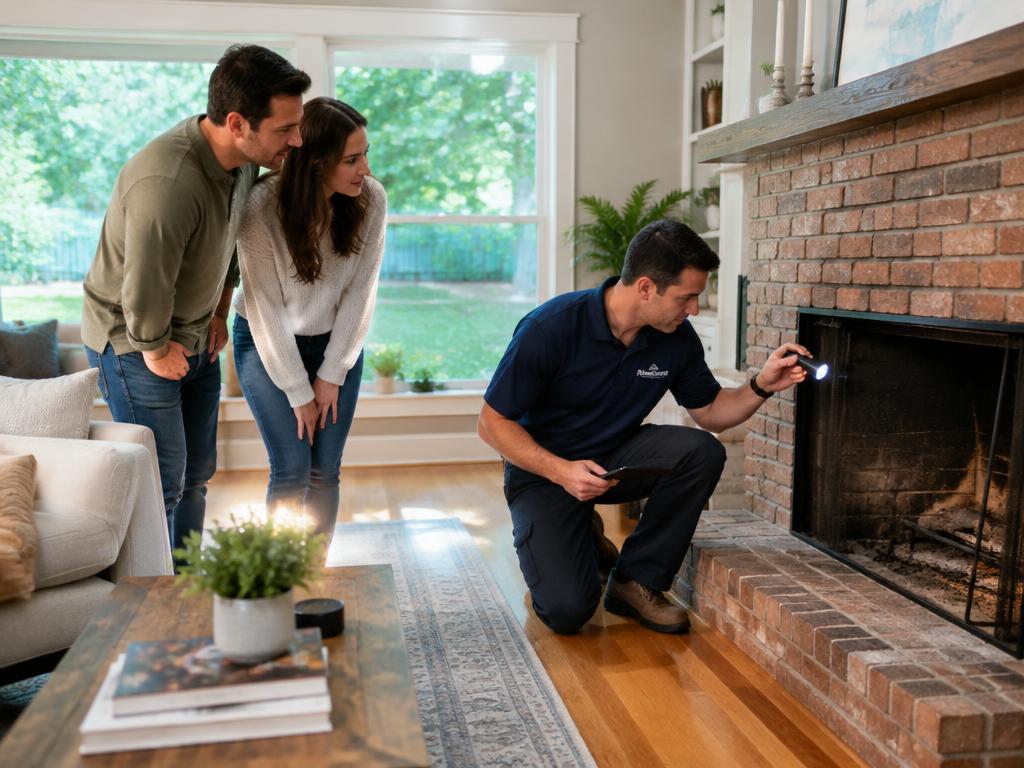
Protecting your family, hearth, and home with detailed fireplace safety evaluations across Markham.
Self-check
Warning signs you need fireplace inspection
White Powdery Masonry Stains
Chalky white efflorescence on exterior chimney bricks indicates that water is seeping through the masonry and dissolving internal mineral salts, signalling active moisture intrusion that threatens structural stability.
Persistent Smoky or Sour Odours
A strong smell resembling an old campfire or sour asphalt coming from the fireplace, especially on damp summer afternoons, indicates heavy creosote accumulation or moisture trapped inside your flue system.
Rust on the Damper or Firebox
Oxidation and rust flaking off the metal damper blade or firebox panels reveal that rainwater is entering the chimney stack directly due to a cracked crown, failed flashing, or missing chimney cap.
Spalling Bricks and Crumbling Mortar
Broken brick faces, loose masonry chips around the chimney base, and powdery mortar joints point to freeze-thaw damage that compromises the structural safety and exhaust containment of your chimney stack.
Thick or Glazed Creosote Buildup
A glossy, tar-like black crust coating the interior firebox walls or lower flue indicates stage-three creosote, a volatile fire hazard that demands prompt inspection and specialized removal before lighting another fire.
Sluggish Draft and Backdrafting
Smoke rolling into your living space instead of drawing smoothly upward signals a critical venting failure caused by flue blockages, cold air plugs, damper misalignment, or severe structural restrictions.
How Freeze-Thaw Weather Challenges Markham Hearths
The climate across Markham presents distinct physical challenges for residential chimney structures. During the winter and early spring, temperatures regularly bounce above and below the freezing mark within a single day. When rain, melting snow, or sleet settles into porous masonry, sudden sub-zero nights cause that trapped moisture to expand rapidly. This cyclic expansion creates immense hydraulic pressure within mortar joints, brick faces, and clay flue tiles.
Over time, this relentless freeze-thaw dynamic produces spalling, a condition where brick surfaces flake off and crumble onto your roof or into gutters. If moisture breaches the exterior masonry envelope, it can seep through the chimney wall and attack the interior clay flue liners. In older neighbourhoods throughout the Greater Toronto Area, this issue often remains invisible until broken liner shards slide downward into the smoke shelf, obstructing airflow and creating dangerous draft blockages.
In addition, intense indoor heating combined with freezing exterior air creates substantial thermal shock. When a roaring fire warms cold flue tiles too rapidly, pre-existing micro-fractures expand swiftly into wide structural fissures. Regular seasonal inspections allow us to catch hairline mortar cracks and minor cap deterioration before water intrusion turns modest routine repairs into extensive chimney rebuilds.
- Accelerated spalling and cracked brick faces caused by moisture expansion
- Deteriorated mortar joints that permit cold drafts and water penetration
- Fractured terra cotta flue tiles resulting from severe thermal shock
- Corrosion of metal flashing where chimney masonry meets the roof deck
- Internal dampness that accelerates creosote crystallization and foul odours
Our Comprehensive Multi-Point Diagnostic Approach
At Markham Chimney Services, our inspection routine follows a structured, multi-point protocol designed to evaluate every critical zone of your fireplace. We begin inside your living area by laying down heavy protective drop cloths around the hearth to keep your floors and furnishings immaculate. We then conduct a close visual and physical appraisal of the firebox, ash dump, lintel, hearth extension, and damper operation.
Next, we inspect the venting pathway. We examine the transition zone known as the smoke chamber, verifying that the parging is smooth and free from corbelled ledges that disrupt smoke flow. We assess the interior flue tiles or stainless steel liner from top to bottom, checking for gaps, thermal cracking, offset joints, and creosote accumulation levels. If visual sightlines are restricted, we use dedicated lighting and diagnostic tools to view hidden bends.
Finally, our evaluation moves to the exterior structure. We assess the condition of the chimney crown, the wash, the mortar joints, the flashing seal along the shingles, and the condition of the rain cap and spark arrestor. Once finished, we review all observations with you in plain language, explaining what needs immediate attention, what can be monitored, and how to operate your hearth with complete confidence.
- Heavily protected workspace with drop cloths and dust control equipment
- Detailed examination of firebox bricks, panels, and damper mechanism
- Internal flue passage analysis checking for cracks, gaps, and soot loading
- Full exterior masonry, crown wash, flashing, and rain cap appraisal
- Clear verbal summary paired with documented findings and practical advice
"I scheduled a full fireplace cleaning before winter. They used professional-grade tools to remove every trace of soot, tested airflow, and provided clear advice on maintenance. My hearth looks brand new and works flawlessly."

Our process
How we handle your fireplace inspection, step by step
- 1
Workplace Preparation and Hearth Clearance
We lay drop cloths to protect living room floors, examine hearth clearances, and inspect decorative mantels to verify proper non-combustible separation boundaries.
- 2
Firebox and Damper Mechanism Appraisal
Our technician examines firebrick joints, refractory panels, lintels, and ash cleanouts, followed by testing the mechanical movement and sealing fit of the throat damper.
- 3
Internal Smoke Chamber and Flue Evaluation
We evaluate the smoke shelf and inspect the continuous flue lining from top to bottom, checking carefully for dangerous creosote glaze, cracks, and offset joints.
- 4
Exterior Stack, Crown, and Flashing Check
We examine the chimney structure outside, inspecting the crown wash, brickwork mortar, metal roof flashing, and protective spark arrestor cap for weather damage.
- 5
Comprehensive Findings Review and Consultation
We conclude by walking you through our observations in plain language, outlining safety recommendations, and answering every question regarding your fireplace operation.
Carbon Monoxide Risks and Solid Hearth Safety Practices
Carbon monoxide is an invisible, odourless, and tasteless gas produced by incomplete combustion in solid fuel, gas, and oil appliances. Because you cannot see or smell it, carbon monoxide represents one of the most perilous household safety risks. A cracked flue liner, a sluggish draft, or a partially obstructed chimney can permit this lethal gas to migrate into sleeping quarters and living areas instead of venting outside safely.
Ontario building codes and safety regulations require operational carbon monoxide alarms near all sleeping areas in homes with fuel-burning appliances or attached garages. During our fireplace inspection, we confirm that your home has basic carbon monoxide defense barriers in mind and discuss optimal placement. While we are an independent service company that does not issue regulatory certificates, we adhere strictly to the safe installation and maintenance principles outlined in standard CSA and WETT guidelines.
We also examine clearance distances to combustible walls, mantels, and flooring. Many older Markham residences have undergone interior renovations where new combustible decorative cladding was placed too close to the fireplace opening. Our thorough safety review identifies these latent fire risks so you can correct clearances and enjoy cozy evenings without placing your home at risk.
- Verification of continuous flue pathways to prevent carbon monoxide leakage
- Review of hearth extension dimensions protecting combustible flooring
- Clearance evaluations for mantels, shelves, and adjacent wall partitions
- Recommendations for proper carbon monoxide alarm placement on each floor
- Guidance on safe ash storage using non-combustible metal containers
Key Differences in Inspecting Wood and Gas Fireplaces
Wood-burning and gas-burning fireplaces demand entirely different inspection perspectives because their combustion dynamics and exhaust products behave differently. In a traditional wood-burning fireplace, our primary focus centres on solid fuel creosote accumulation, thermal shock inside the masonry, and the mechanical function of the throat damper. High operating temperatures and variable fuel moisture make wood systems prone to rapid soot buildup and masonry wear.
In contrast, gas fireplace systems, whether natural gas inserts or direct-vent units, produce high levels of moisture vapour and mildly acidic exhaust gases. When inspecting gas systems, we inspect the condition of the pilot assembly, burner ports, safety shut-off thermocouple, and the integrity of the exhaust venting. Moisture from gas combustion can corrode unlined brick chimneys or substandard aluminum liners from the inside out if the venting path is not properly sealed and insulated.
Glass doors and gaskets on gas units also require thorough inspection. A degraded ceramic glass gasket can allow carbon monoxide to enter the room, while dirty glass or improper air shutter adjustments can lead to soot staining on decorative ceramic logs. Regardless of which system warms your home, our team evaluates the precise mechanical and structural demands specific to your appliance fuel type.
- Wood hearths: focus on creosote density, spark screens, and thermal liner stress
- Gas hearths: focus on pilot performance, burner clean-out, and ignition safety
- Gas venting: checking for acidic condensation damage and aluminum liner pitting
- Door seal checks on airtight wood stoves and sealed gas fireboxes
- Verification of air intake pathways and exhaust termination caps

Year-Round Maintenance Tips Between Professional Visits
While annual professional inspections are essential, conscious everyday habits play a massive role in preserving your fireplace between visits. If you burn wood, select only well-seasoned hardwoods like maple, oak, or ash that have cured for at least six to twelve months. Burning damp, unseasoned firewood produces thick smoke, wastes heat energy, and accelerates the buildup of sticky creosote along the flue walls at an alarming rate.
Never burn treated lumber, painted boards, cardboard packaging, or domestic garbage in your fireplace. These materials produce highly corrosive chemicals that can degrade metal liners and release toxic smoke into your neighbourhood. When extinguishing fires, allow ashes to cool naturally before scooping them into an ash bucket. Always store that metal container outside on concrete or brick, well away from wooden decks, exterior siding, and patio furniture.
Keep a watchful eye on your chimney stack from the ground throughout the changing seasons. Check for leaning stacks, cracked masonry crowns, or birds gathering near the chimney top. If you notice damp smells emerging from the fireplace during muggy summer days or see white powdery stains on the exterior brick, contact an inspector promptly rather than waiting until the first cold snap arrives.
- Burn only seasoned, dry hardwood with moisture content below twenty percent
- Avoid burning wrapping paper, pine offcuts, plastics, or painted wood
- Dispose of ashes exclusively in covered metal pails kept on stone surfaces
- Test smoke detectors and carbon monoxide alarms on a monthly schedule
- Inspect exterior roofline masonry visually from the yard every spring and autumn
What Homeowners Should Expect From a Qualified Inspector
Selecting the right professional to evaluate your fireplace is a critical safety decision for any homeowner. A trustworthy inspector should arrive promptly with clean protective equipment, quality diagnostic lighting, and a clear, organized process. They should listen closely to any operational quirks you have noticed, such as smoky ignition, strange odours, or rattling draft dampers, and incorporate those clues into their diagnosis.
Beware of contractors who rush through a five-minute inspection only to immediately present high-pressure estimates for thousands of dollars in emergency masonry work. A reliable inspector takes the time to explain their findings methodically, showing you what is in excellent condition alongside any components that require maintenance. You should always receive clear explanations and documented evidence illustrating the exact location and severity of any noted issue.
At Markham Chimney Services, we believe transparent communication and honest assessments build lasting community relationships. We never push unnecessary repairs or fabricate urgency. Our role is to provide you with practical, professional insight into your heating system so you can make informed decisions about your home safety, seasonal comfort, and long-term property maintenance.
- Clear, respectful communication without high-pressure sales tactics
- Protective home prep that respects your living room and interior finishes
- Transparent explanations of safety observations supported by clear evidence
- Pragmatic, prioritized recommendations distinguishing urgent fixes from maintenance
- Independent, homeowner-first evaluations focused entirely on practical safety
Average pricing in Markham
$189 – $489
- Inspection / diagnostic
- $189 – $249
- Typical time on site
- 1 to 2 hours on-site
- Parts and materials
- Throat dampers, top-mount damper caps, custom chimney crowns, refractory panels, and masonry mortar quoted separately
- What moves the price
- Chimney height, roofline pitch, and physical exterior accessibility · Type of fireplace appliance, whether traditional open masonry, factory-built, or gas insert · Degree of creosote accumulation and overall age of internal flue liners
Estimated local market range, not a quote. All estimates are in Canadian dollars and exclude 13% Ontario HST. Your exact price is confirmed before any work begins.