A cozy fire provides welcome comfort during freezing Ontario winters, yet every cord of wood burned leaves behind soot, chemical debris, and volatile residues inside your flue. Over time, these combustible compounds accumulate along the interior masonry or metal liner, constricting exhaust airflow and increasing house fire risks. Markham Chimney Services provides thorough fireplace sweeping for homeowners across Unionville, Bayview Glen, Berczy Village, and nearby neighbourhoods. Operating from our central location at 4418 Highway 7 East, we combine meticulous cleaning techniques with deep flue diagnostics to keep your hearth operating cleanly, smoothly, and safely all season long.
Drafting issues, persistent smoky odours, and sudden chimney fires often stem from neglected flues that have accumulated unburned tar or animal nesting materials. Routine servicing ensures your fireplace vents combustion gases outdoors rather than allowing toxic fumes to linger indoors. In communities throughout the Greater Toronto Area, changing weather patterns subject masonry systems to intense moisture cycles, making prompt mechanical sweeping essential. Our dedicated team approaches every home with clean floor coverings, industrial dust control systems, and specialized brushes, delivering dependable solutions that respect your living space while restoring peak venting performance before the heavy cold weather sets in.
Fireplace Sweep: visit summary
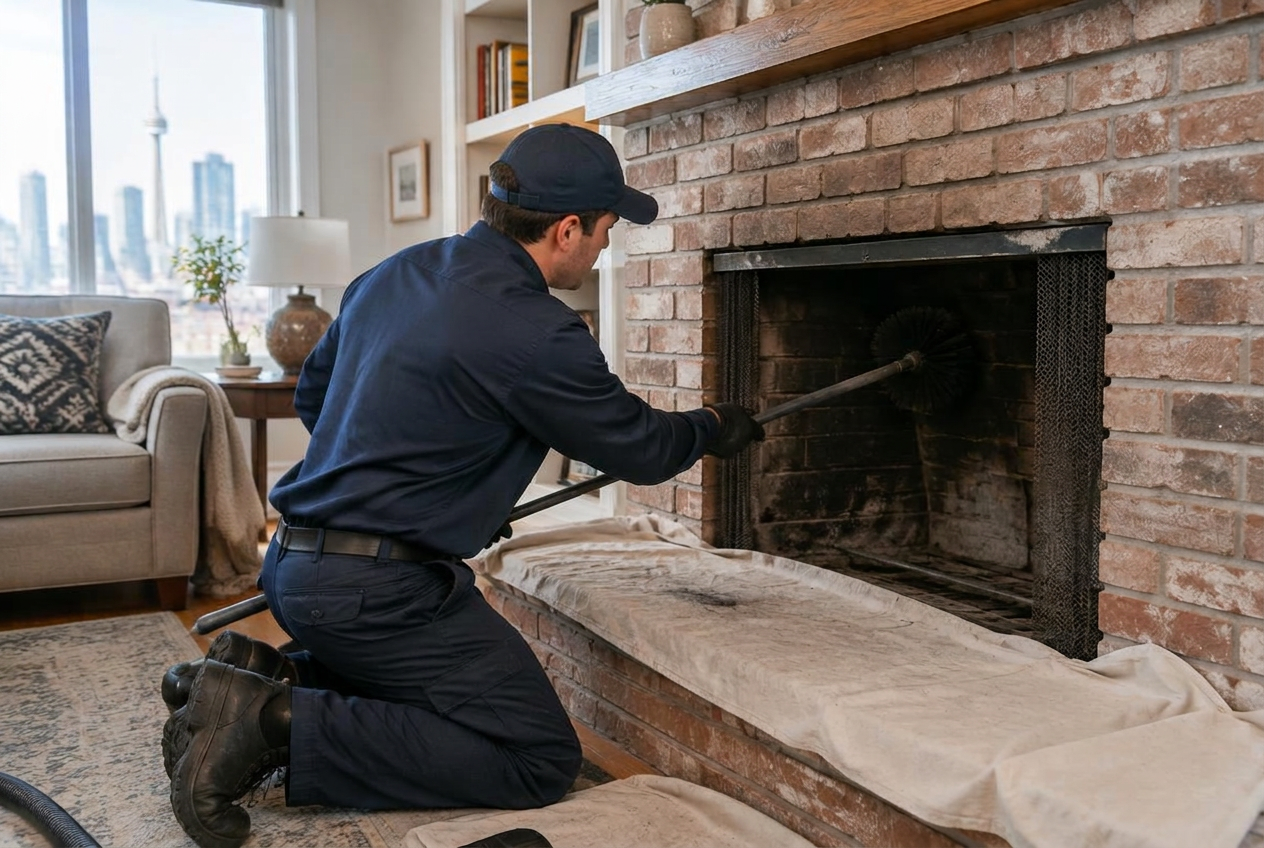
Fireplace Sweep for Markham homes: soot and creosote cleared with drop cloths down and a filtered vacuum running at the hearth. Serving Markham and the Greater Toronto Area (GTA). The estimated local market range is $229 – $449, not a fixed company rate. The final scope and quote are confirmed before work begins.
| Estimated market range | $229 – $449. All estimates are in Canadian dollars and exclude 13% Ontario HST. |
|---|---|
| Typical time | 1 to 2 hours typical on-site service time |
| Price factors | Flue liner condition and severity of stage two or three creosote accumulation; Chimney height, roof pitch accessibility, and whether top-down sweeping is necessary; Type of fireplace setup, such as traditional masonry versus a factory-built metal insert |
| Routine signs to discuss | Pungent Barbecue or Campfire Odours; Sluggish Draught and Smoke Spillage; Flakes of Black Soot on Hearth; Stiff or Jammed Damper Handle; Dense Black Smoke from Chimney Pot; Audible Roaring or Whistling in Flue |
What Fireplace Sweeping Involves for Markham Homes
A fireplace sweep is far more than running a brush through a dark pipe. It is an exacting mechanical cleaning process that removes soot, unburned hydrocarbon particulates, and corrosive glaze from the entire venting system. When you burn wood, volatile organic compounds travel upward as smoke. As these gases encounter cooler air near the chimney top, they condense into stubborn layers that cling to the liner walls. Left unaddressed, these residues solidify and create dangerous thermal hazards.
Our specialized sweep addresses the firebox, damper assembly, smoke shelf, smoke chamber, and flue liner. Each of these components handles combustion dynamics differently. The smoke shelf behind the damper frequently catches falling soot, loose mortar aggregate, and twig debris, which can obstruct airflow if ignored. By clearing every surface systematically, we restore proper internal cubic capacity so your fire draws smoothly, providing steady warmth without spilling smoke into your home.
We also assess physical components for signs of deterioration while clearing deposits. Markham homes feature a variety of traditional masonry structures and modern zero-clearance factory-built assemblies. Each style demands distinct brush stiffness, rotary sweeping speeds, and vacuum filtration to prevent interior surface abrasion. Our approach treats every installation individually, delivering targeted maintenance that safeguards structural integrity and extends system longevity.
- Scraping the smoke chamber walls smooth to improve draught dynamics
- Clearing accumulated ash and loose masonry debris from the smoke shelf
- Dislodging stubborn soot deposits from the damper frame and throat
- Scrubbing flue tile surfaces with appropriately calibrated brush heads
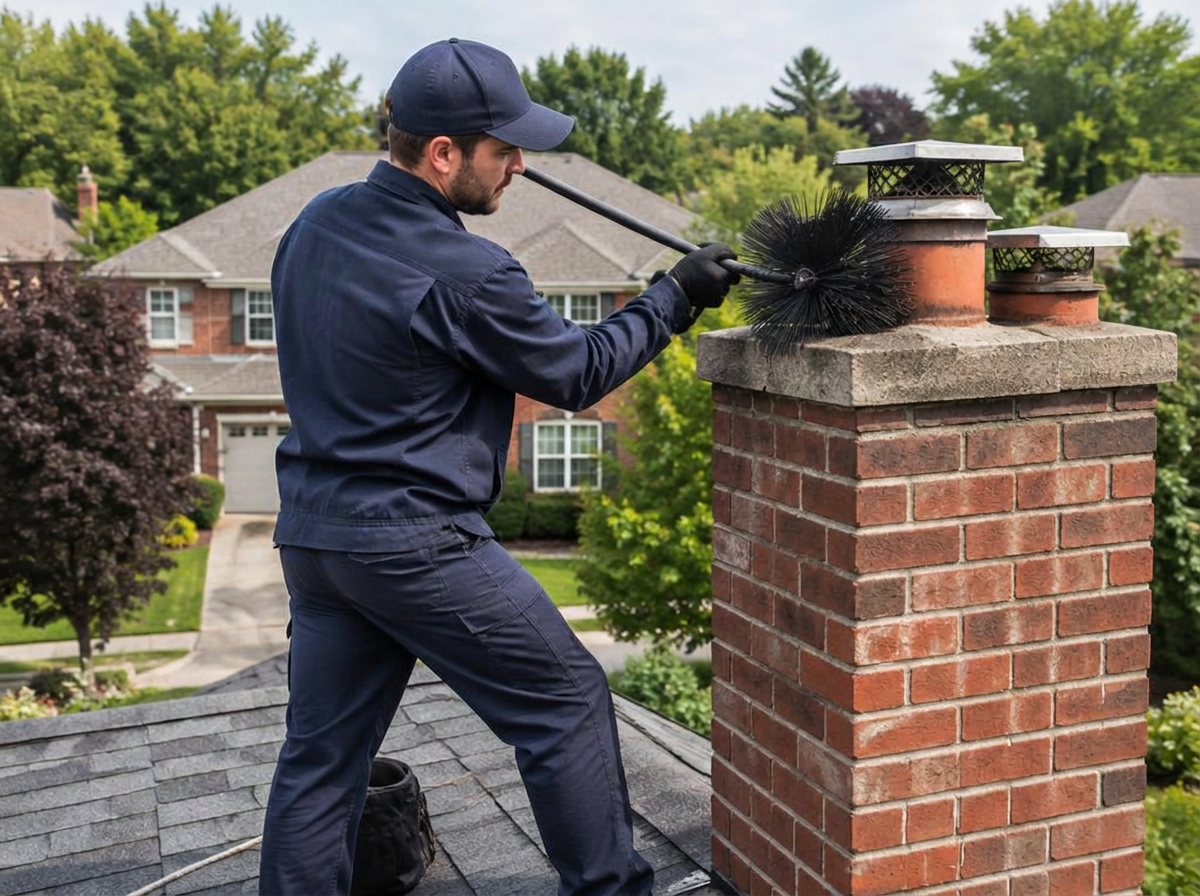
Thorough, mess-free fireplace sweeping to protect your Markham home throughout harsh Ontario winters.
Self-check
Warning signs you need fireplace sweep
Pungent Barbecue or Campfire Odours
Acrid, sour odours drifting from the fireplace during damp weather indicate heavy creosote and soot saturation along the smoke chamber walls or flue tiles, requiring prompt sweeping to clear built-up residue.
Sluggish Draught and Smoke Spillage
Smoke rolling into your living room rather than rising directly up the chimney indicates narrowed flue passages, blocked spark arrestor mesh, or heavy soot bridging inside the smoke chamber that restricts airflow.
Flakes of Black Soot on Hearth
Bits of black, crunchy, or tarry material falling onto the firebox floor or hearth indicate expanding creosote sheets that are peeling away from the liner and demand thorough mechanical removal.
Stiff or Jammed Damper Handle
A damper that binds, screeches, or fails to seat tightly usually suffers from thick soot build-up or rust along its pivot pins, requiring thorough clearing to restore proper chimney airflow control.
Dense Black Smoke from Chimney Pot
Thick, dark smoke pouring from your chimney stack indicates incomplete combustion and rapid creosote deposition, signaling that your flue is struggling with restricted air movement or excess fuel residue.
Audible Roaring or Whistling in Flue
Unusual rumbling, whistling, or wind-tunnel noises inside the chimney wall when a fire is lit can point to restricted thermal airflow or early stages of a dangerous flue ignition.
How Southern Ontario Winter Weather Affects Chimneys
The climate across Markham and surrounding regions brings sharp temperature shifts between November and April. Ambient air repeatedly swings above and below the freezing point within single days. This relentless freeze-thaw dynamic stresses exterior chimney masonry and internal clay tile flue liners. Moisture trapped inside porous brickwork or microscopic mortar voids expands by roughly nine percent as it freezes, breaking clay tiles and fracturing brick faces.
When soot and creosote combine with winter moisture, they form an acidic chemical slurry. This chemical mixture attacks mortar joints inside the flue, causing mortar crumb and compromising flue gas containment. If cracks develop, heat from your hearth can transfer directly into adjoining attic joists or interior wall framing. Routine chimney sweeping removes this corrosive material before it has the opportunity to react with rain, snow, or seasonal atmospheric dampness.
Cold external air also creates dense air plugs inside uninsulated flues, causing backdrafting when you first light a fire. A clean flue lined with smooth, deposit-free walls heats up much faster, establishing an upward thermal draught with minimal delay. Timely autumn sweeping prepares your hearth for the biting cold, preventing cold-weather airflow bottlenecks and keeping your fireplace ready for sudden temperature drops.
- Preventing acidic moisture from dissolving internal chimney mortar joints
- Reducing spalling brickwork triggered by trapped soot and melting snow
- Minimizing cold air plugs that cause smoke spillage during start-up
- Protecting clay tile liners from thermal shock during freezing weather
The Stages of Creosote and Fire Hazards Explained
Creosote forms as wood smoke cools, and it typically presents in three progressive stages, each presenting different maintenance requirements and fire risks. Stage one creosote looks like light, flaky black soot or grey powder. It brushes away easily with standard wire or polypropylene chimney sweeps and creates minimal obstruction if cleaned annually. This initial stage forms when wood burns with adequate air supply and high combustion temperatures.
Stage two creosote develops into dense, tar-like flakes or sticky, hardened granules that adhere tightly to the flue tile. This layer forms when restricted combustion air or unseasoned firewood leads to incomplete burning. Standard hand brushing often fails to remove stage two deposits; it requires heavy rotary whipping chains or chemical conditioning agents to fracture the brittle tar away from chimney walls without damaging the underlying flue material.
Stage three creosote is a dense, glass-like glaze that hardens into thick, concentrated fuel along the liner surface. It forms when low-temperature smouldering fires vent slowly into cold, oversized flues. Highly flammable, stage three creosote can ignite and burn at temperatures exceeding one thousand degrees Celsius, potentially destroying chimneys and spreading into structural roof framing. Routine sweeping halts creosote progression before dangerous stage three glaze accumulates.
- Stage one: Velvet-like soot easily cleared through standard mechanical sweeping
- Stage two: Thick, hardened tar chips requiring motorized rotary sweeping gear
- Stage three: Glossy, highly combustible fuel glaze requiring specialized remediation
- Significantly lower risks of flue fires when deposits are caught at early stages
Comprehensive Inspection and Drafting Assessment
Before sweeping begins, we conduct a close physical and visual assessment of the entire assembly. We examine the firebox firebricks, mortar joints, damper plate movement, and lintel integrity. Looking upward into the throat, we identify whether creosote accumulation is dry and powdery or sticky and glazed. This diagnostic step determines the proper tools, rotary speeds, and collection methods needed to clean your flue safely.
We also assess airflow dynamics inside the home. Modernized homes throughout Markham often feature airtight building envelopes, replacement windows, and powerful kitchen exhaust hoods. These home improvements can depressurize your living area, pulling air downward through the chimney rather than letting smoke exhaust freely. Evaluating air pressure balances helps us explain why you might experience backdrafting even when the flue itself is completely clean.
Following our preliminary check, we explain our findings in plain language before picking up any tools. Homeowners receive an honest appraisal of flue condition, deposit severity, and damper functionality. If we notice broken liner tiles, missing mortar collars, or corroded metal sections, we point them out immediately so you can plan repairs long before minor wear escalates into serious structural or safety problems.
- Evaluating damper seating to ensure positive closures and air regulation
- Examining firebox firebrick panels for heat cracks and missing refractory mortar
- Checking room pressure balance against modern kitchen exhaust fans
- Diagnosing drafting restrictions caused by improper chimney termination height
"When a storm loosened some bricks, I called for emergency repair in Thornhill. Their crew arrived within hours, secured the chimney crown, and restored its integrity without any mess. Truly impressive expertise."

Our process
How we handle your fireplace sweep, step by step
- 1
Hearth Protection and Dust Containment
We place clean drop cloths across walkways and seal the fireplace opening, setting up negative pressure vacuums to trap all airborne soot securely within the work area.
- 2
Pre-Sweep Flue and Damper Diagnosis
We examine the firebox, throat, damper pivot, and visible flue liner sections to determine creosote stage, soot thickness, and the most effective sweeping tool configuration.
- 3
Mechanical Sweeping and Flue Scrubbing
Using calibrated poly or wire brushes and flexible rods, we systematically scrub the liner from base to crown, dislodging accumulated soot and creosote without damaging tiles.
- 4
Smoke Shelf and Chamber Clearing
We carefully scrape the smoke chamber, brush the damper frame, and vacuum accumulated soot off the hidden smoke shelf behind the damper assembly using filtered extraction systems.
- 5
Final Draught Testing and Cleanup
We clean the hearth, safely package all soot waste, test smoke updraft buoyancy, and provide a clear, detailed verbal summary of your fireplace and flue condition.
Our Careful Step-by-Step Cleaning Methodology
Protecting your home interior is our highest priority from the moment we arrive at your door. We lay thick canvas drop cloths from the entryway straight to the fireplace hearth, shielding hardwood, tile, and rugs. We seal the fireplace opening with temporary poly covers and connect heavy-duty dust collection vacuums equipped with fine filtration systems. This containment ensures all airborne soot stays out of your living area during cleaning.
Once containment is secured, we work through the flue using customized sweeping brushes or rotary whip systems. Our rods navigate the entire vertical length from the smoke chamber up past the chimney crown. Controlled agitation knocks stubborn deposits off masonry walls, clay tiles, or stainless steel liners without scratching or loosening inner surfaces. Gravity carries the dislodged debris into our enclosed containment zone below.
After sweeping the vertical flue, we clear the smoke chamber, brush down the damper plate, and vacuum every remnant off the smoke shelf behind the damper. The firebox walls and grate are cleaned, and all collected debris is gathered into sealed containers for proper disposal. Finally, we vacuum the hearth area and conduct a complete draft verification test to confirm your chimney is clean, unobstructed, and ready for use.
- Deploying continuous industrial vacuum filtration to catch microscopic particulates
- Utilizing precision rotary equipment calibrated for clay tile and stainless liners
- Reaching all corners of the smoke chamber to remove hidden ash deposits
- Leaving your hearth, surround, and living room neat and clean
Carbon Monoxide Prevention and Fire Safety Practices
Every wood-burning fire produces combustion byproducts, including carbon monoxide, nitrogen dioxide, and volatile organic particulates. Carbon monoxide is an invisible, odourless, and tasteless gas that enters living spaces if flues become blocked or dampers malfunction. A properly swept chimney provides strong natural buoyancy, drawing toxic fumes up and out of your home. Sweeping clears out dead leaves, bird nesting debris, and soot bridges that could otherwise redirect carbon monoxide indoors.
Our working practices follow recognized solid-fuel safety protocols aligned with Canadian national building and fire safety codes. While we work as an independent service provider, we align all evaluations with rigorous CSA and safety association guidelines. We confirm proper clearances to nearby wood mantels, assess spark arrestor meshes on the chimney cap, and verify the structural stability of top flue terminations against driving winds.
We also remind every client about household detector placement. Ontario building safety standards require functional carbon monoxide alarms outside all sleeping areas in homes with fuel-burning appliances or attached garages. We recommend installing an interconnected alarm on the same level as your fireplace, testing it monthly, and replacing sensor units every five to seven years to ensure dependable early warnings.
- Confirming carbon monoxide detector readiness near fireplace living spaces
- Ensuring spark arrestor mesh on the chimney cap is clear of carbon clogs
- Checking combustible mantel clearances against recognized fire safety guidelines
- Eliminating blockages that could redirect noxious flue gases into bedrooms

Practical Firewood Selection and Daily Maintenance
The way you run your fireplace between annual sweep appointments determines how quickly creosote builds up inside your chimney. Burning seasoned hardwood is the most effective way to keep your flue clean. Woods like sugar maple, oak, beech, and ash cut and split for at least one year contain twenty percent moisture or less. Dry wood burns cleanly at higher temperatures, converting potential smoke into heat rather than sticky chimney creosote.
Avoid burning green unseasoned firewood, scrap construction lumber, painted trim, or household garbage. Green wood wastes fire energy boiling off internal water, creating cool, sluggish smoke that condenses rapidly on liner tiles. Pressure-treated wood or scrap containing adhesives releases toxic chemicals and corrosive residues that break down stainless steel liners and compromise indoor air quality. Clean, dry kindling and well-cured split logs provide the safest fire.
How you operate your damper also affects creosote formation. Always keep the damper fully open when burning a fire to ensure unrestricted exhaust. Smouldering fires created by choking down airflow produce heavy smoke and rapid creosote buildup. When your fire is completely out and ashes have cooled, close the damper to keep heated indoor air from escaping into the cold winter sky.
- Burning split hardwoods cured for at least twelve months under proper cover
- Using a digital pin-type moisture meter to confirm wood moisture below twenty percent
- Avoiding painted, pressure-treated, or resinous softwoods that emit toxic fumes
- Maintaining brisk, bright fires rather than low-temperature, smouldering burns
Choosing an Independent Sweeping Specialist
Selecting the right chimney professional protects your home investment and gives you confidence every time you light a fire. Look for an independent service team that focuses on detailed mechanical cleaning, complete diagnostics, and respectful property protection. Dependable technicians provide clear written explanations, provide upfront estimates before work begins, and never resort to high-pressure scare tactics about immediate chimney collapse.
Inquire about specific dust control measures, vacuum filtration setups, and containment practices before hiring a sweeping company. An inexperienced contractor using standard shop vacuums and loose tarps can release fine soot across your furniture, carpets, and air registers. True professionals arrive equipped with commercial-grade negative air machines, specialized chimney rods, and comprehensive floor coverings that protect your home from door to hearth.
As an independent chimney service based directly on Highway 7 in Markham, we value transparent communication, punctuality, and detailed workmanship. We take the time to answer your questions, explain flue mechanics, and show you exactly what was cleared from your chimney. Our goal is to keep your fireplace running safely, efficiently, and cleanly throughout the coldest months of the Canadian winter.
- Look for clear, upfront pricing with no hidden diagnostic or disposal fees
- Ensure technicians use commercial dust containment systems and floor protection
- Avoid contractors who pressure you into costly same-day structural repairs
- Choose an established team familiar with local Markham home architecture
Average pricing in Markham
$229 – $449
- Inspection / diagnostic
- $129 – $189 if performed without sweeping
- Typical time on site
- 1 to 2 hours typical on-site service time
- Parts and materials
- Replacement dampers, custom chimney caps, and refractory mortar repairs quoted separately
- What moves the price
- Flue liner condition and severity of stage two or three creosote accumulation · Chimney height, roof pitch accessibility, and whether top-down sweeping is necessary · Type of fireplace setup, such as traditional masonry versus a factory-built metal insert
Estimated local market range, not a quote. All estimates are in Canadian dollars and exclude 13% Ontario HST. Your exact price is confirmed before any work begins.