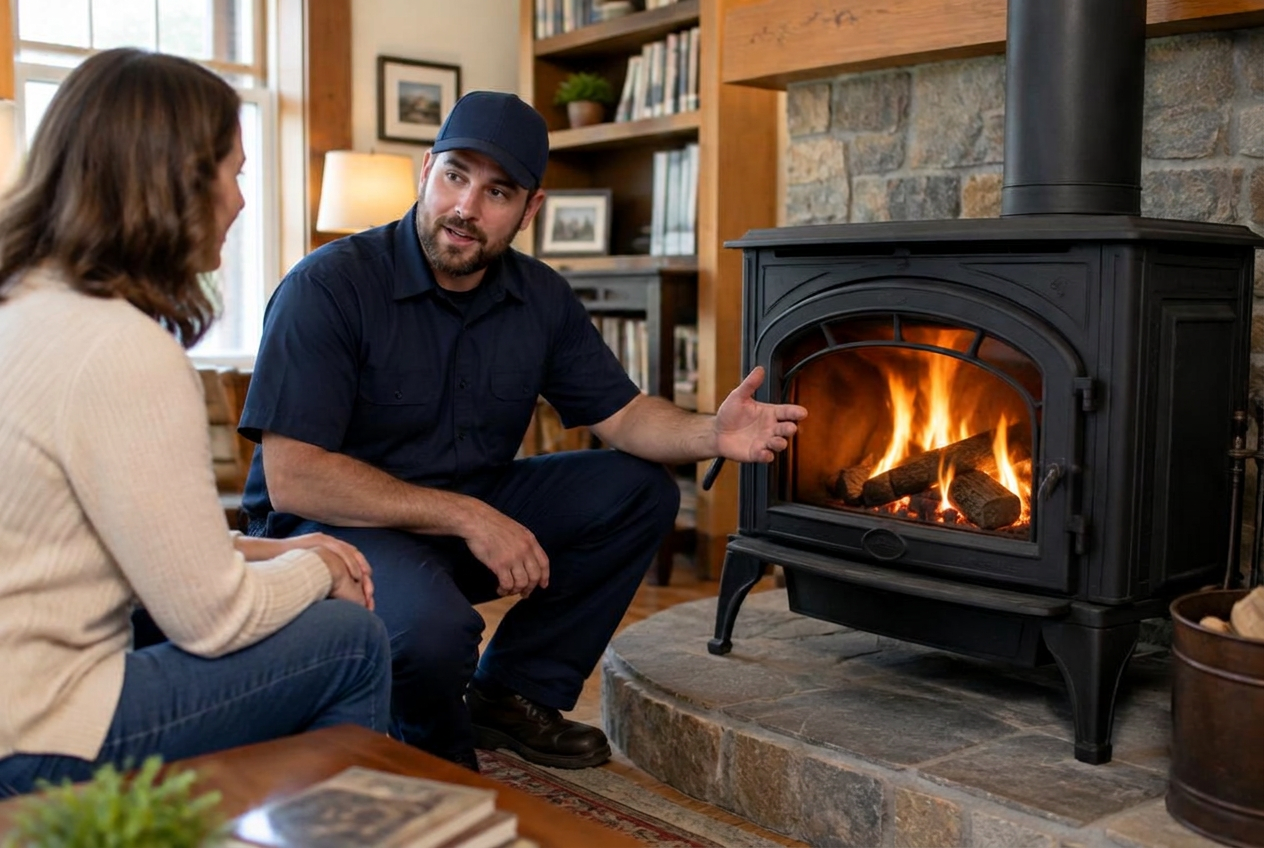

A fireplace provides essential comfort and dependable supplemental warmth throughout harsh Canadian winters, but safe operation always relies on an unobstructed exhaust path. Fireplace vent cleaning focuses specifically on clearing the dedicated exhaust pipes, chimney flues, and termination caps that vent combustion gases away from your living spaces. Over months of steady burning, these pathways gather fine soot, acidic creosote deposits, household dust, and outside debris that quietly choke draft flow. Markham Chimney Services operates from 4418 Highway 7 East, helping local residents restore proper ventilation across neighbourhood homes ranging from post-war brick bungalows in Unionville to modern multi-level builds along Thornhill Avenue.
When a fireplace vent becomes compromised, heating efficiency drops drastically while potential hazards rise inside your home. Flue blockages force hazardous byproducts like carbon monoxide, moisture vapour, and particulate matter back into your living rooms rather than releasing them safely into the outdoor air. Because our regional climate exposes venting materials to sharp temperature swings, standard soot accumulation often mixes with exterior moisture to form dense clogs. Professional vent servicing removes these hidden restrictions, safeguards indoor air purity, and ensures that your heating appliance operates exactly as designed during the coldest months across the Greater Toronto Area.
Fireplace Vent Cleaning: visit summary
Fireplace Vent Cleaning: a careful look and clean of the firebox, damper and flue, with a plain rundown of what we found. Serving Markham and the Greater Toronto Area (GTA). The estimated local market range is $189 – $449, not a fixed company rate. The final scope and quote are confirmed before work begins.
| Estimated market range | $189 – $449. All estimates are in Canadian dollars and exclude 13% Ontario HST. |
|---|---|
| Typical time | 1 to 2 hours on site |
| Price factors | Venting pipe length and physical access from ground, attic, or roof; Degree of creosote accumulation or presence of stubborn animal nesting; Type of fireplace system, such as wood stove, direct-vent, or masonry flue |
| Routine signs to discuss | Sluggish Draft or Smoke Spilling Indoors; Pungent or Burning Odours Lingering Indoors; Black Soot Staining on Glass or Surround; Thick White Moisture Residue on Glass; Flapping or Scratching Sounds Inside Vent; Carbon Monoxide Alarm Beeping or Triggering |
What Fireplace Vent Cleaning Involves for Markham Homes
Fireplace vent cleaning is the careful, mechanical and chemical remediation of the passage that directs combustion byproducts outside your home. While many homeowners picture sweeping a traditional open brick hearth, modern venting systems also include flexible stainless steel liners, rigid twin-wall stovepipes, direct-vent coaxial conduits, and specialized horizontal exhaust runs. Each configuration presents specific collection points where soot, lint, and weather debris settle. Thorough cleaning addresses the entire length of the venting channel, beginning at the appliance flue collar and extending past the roofline or wall termination cap.
As an independent chimney and fireplace company, we approach each venting system according to its distinct engineering requirements. Wood-burning systems accumulate dry soot and flammable creosote, which harden along the pipe walls and gradually reduce the internal diameter of the exhaust path. Gas fireplace vents, while free of heavy creosote, collect corrosive sulfur scale, household pet dander, lint, and white mineral oxides that stick to internal baffles and fan housings. Clearing these systems requires specialized rotary brushes, non-abrasive poly sweeps, and sealed vacuum containment systems that keep living rooms immaculate.
Routine clearing of the exhaust track also involves verifying that the physical mechanics of the vent assembly remain intact. Our technicians inspect the integrity of joint bands, elbow connections, cleanout tees, and external storm collars during the service appointment. By eliminating internal airflow friction and identifying structural vulnerabilities, vent cleaning ensures that your hearth system achieves the steady buoyant draft necessary to expel smoke and harmful gases quietly and efficiently.
- Mechanical removal of soot, ash, and creosote from internal exhaust walls
- Clearing lint, dust, and spider webs from gas appliance air intake and exhaust runs
- Scraping corrosive mineral scale and oxidation off termination caps and baffles
- Verifying clear movement across internal dampers and mechanical draft restrictors
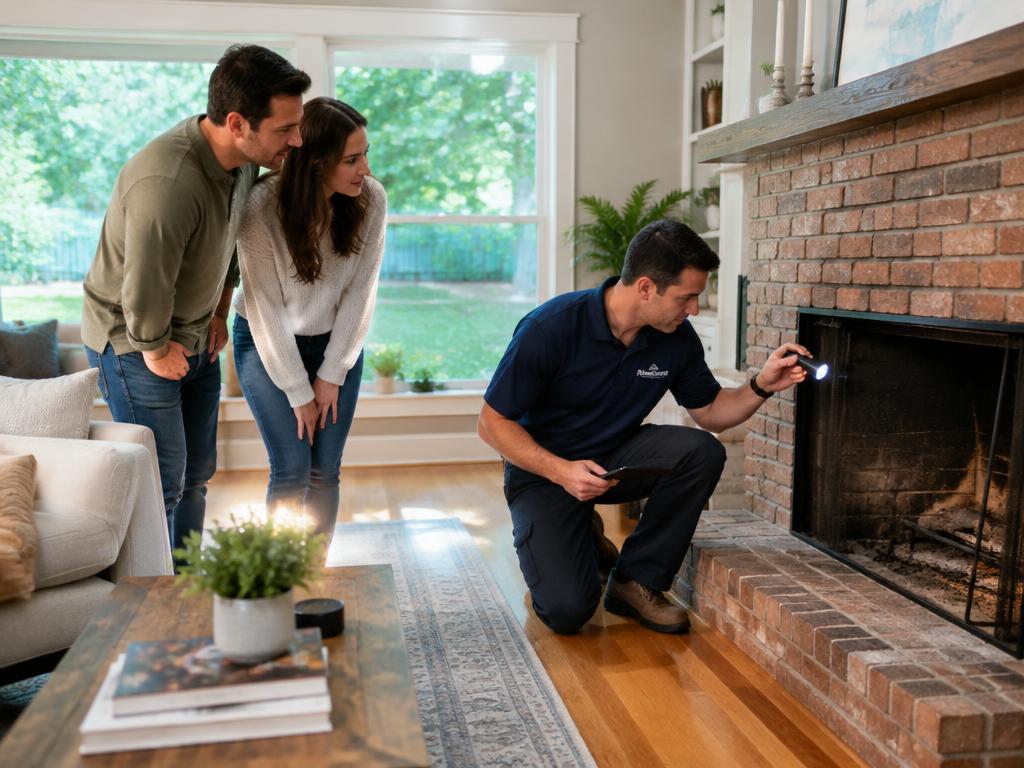
Reliable fireplace venting care to keep your Markham home warm, safe, and breathing cleanly all winter long.
Self-check
Warning signs you need fireplace vent cleaning
Sluggish Draft or Smoke Spilling Indoors
Smoke or warm exhaust rolls out of the hearth opening instead of venting upward, signaling a physical restriction, cold air plug, or heavy buildup inside the exhaust pipe.
Pungent or Burning Odours Lingering Indoors
A distinct smell of stale wood smoke, bitter soot, or sour sulfur in your living space points to trapped residue inside the flue that cannot escape properly through the vent.
Black Soot Staining on Glass or Surround
Dark, powdery soot gathering along the exterior fireplace trim, mantle, or viewing glass indicates that combustion gases are lingering too long inside the firebox due to weak ventilation.
Thick White Moisture Residue on Glass
Excessive condensation or chalky white mineral film on direct-vent gas glass shows that humid combustion byproducts are failing to clear quickly through the exhaust pipe.
Flapping or Scratching Sounds Inside Vent
Noises originating from behind the fireplace wall or inside the pipe often indicate that birds, squirrels, or rodents have made their way past damaged external termination screens.
Carbon Monoxide Alarm Beeping or Triggering
Any activation of an indoor carbon monoxide detector while using the fireplace indicates a serious venting failure that requires immediate evacuation and professional diagnosis.
How Southern Ontario Freeze-Thaw Cycles Damage Venting Systems
The climate in southern Ontario presents particular challenges for residential venting infrastructure. Winters in Markham regularly alternate between deep sub-zero freezes and sudden mid-season thaws driven by humid southern air masses. This constant cycling creates significant thermal expansion and contraction within metal pipes, masonry chimney structures, and external termination assemblies. When combustion vapour enters a cold flue pipe on a freezing afternoon, the sudden change in temperature causes quick condensation along the interior metal surfaces.
Liquid condensation creates an adhesive surface inside the vent that accelerates the accumulation of unburned soot and environmental particulates. Over weeks of burning, this damp slurry cures into a dense, stubborn crust that normal air currents cannot dislodge. Even worse, water trapped in microscopic joint cracks expands as it freezes overnight, loosening flue joints, warping horizontal termination louvres, and breaking apart the exterior mortar or sealant caps that keep outdoor moisture from penetrating your home envelope.
During prolonged winter cold snaps, the outer edge of an uninsulated chimney or exterior wall vent can drop far below freezing. This temperature differential establishes a stubborn thermal air barrier, often referred to as a cold air plug, inside the flue. When you light a fire, hot smoke cannot easily push through the heavy plug of chilled air, resulting in smoky backdrafts that fill living rooms with pungent soot before the exhaust run can warm.
- Rapid condensation buildup inside metal vent pipes during freezing conditions
- Accelerated soot adhesion caused by moisture mixing with exhaust gases
- Warped vent seams and displaced draft caps resulting from ice expansion
- Persistent cold air plugs that block startup drafting in exterior chimney runs
Carbon Monoxide Risks and Draft Reversals in Modern Tight Homes
Carbon monoxide is an invisible, odorless, and colourless byproduct of incomplete combustion that poses an immediate health risk to household occupants. In a properly venting fireplace, natural thermal buoyancy safely carries carbon monoxide up through the exhaust pipe and disperses it into the outdoor atmosphere. However, when venting channels become partially restricted by debris, creosote, or mechanical failure, the exhaust velocity diminishes, creating positive pressure within the pipe and allowing toxic gases to seep into the home.
Many renovated residences across Markham feature high-performance double-glazed windows, dense insulation, and continuous air-sealing membranes designed to conserve heating energy. While exceptional for lowering utility bills, these airtight home envelopes make heating appliances more vulnerable to draft reversals. When powerful kitchen range hoods, bathroom exhaust fans, or clothes dryers run simultaneously, they draw air outward and depressurize the house, pulling weak fireplace exhaust backward down a restricted flue.
A partially obstructed vent drastically amplifies the likelihood of pressure-induced backdrafting. The fireplace simply cannot establish enough upward draft velocity to overcome indoor negative air pressure. Routine vent sweeping clears the internal channel to its full factory diameter, reducing internal friction so combustion gases easily lift upward and leave your home safely, even when indoor mechanical ventilation systems are running.
- Unimpeded evacuation of odorless carbon monoxide and harmful combustion gases
- Prevention of backdrafting caused by negative household air pressure
- Elimination of lingering chemical smells, sulphur odours, and smoky air
- Protection of sensitive automated indoor air sensors and furnace filters
Animal Intrusions, Nesting Debris, and Environmental Blockages
Markham is renowned for its leafy residential streets, ravines, and mature urban tree canopies, but this natural environment also brings high urban wildlife activity. Chimney flues and fireplace exhaust terminations offer warm, sheltered cavities that mimic natural hollow trees for local critters. Squirrels, raccoons, mice, and chimney swifts frequently seek out fireplace terminations as nesting grounds in late autumn and early spring, creating severe and sudden flue blockages.
Nesting animals introduce substantial amounts of dried grass, twigs, leaves, and insulation into the venting channel. These materials form dense physical plugs that block airflow entirely while introducing dry, highly combustible fuel into a pipe designed to convey hot gases. When a homeowner attempts to ignite their fireplace without realizing a nest is present, the radiant heat can quickly spark a dangerous internal flue fire or cause an immediate backup of thick smoke.
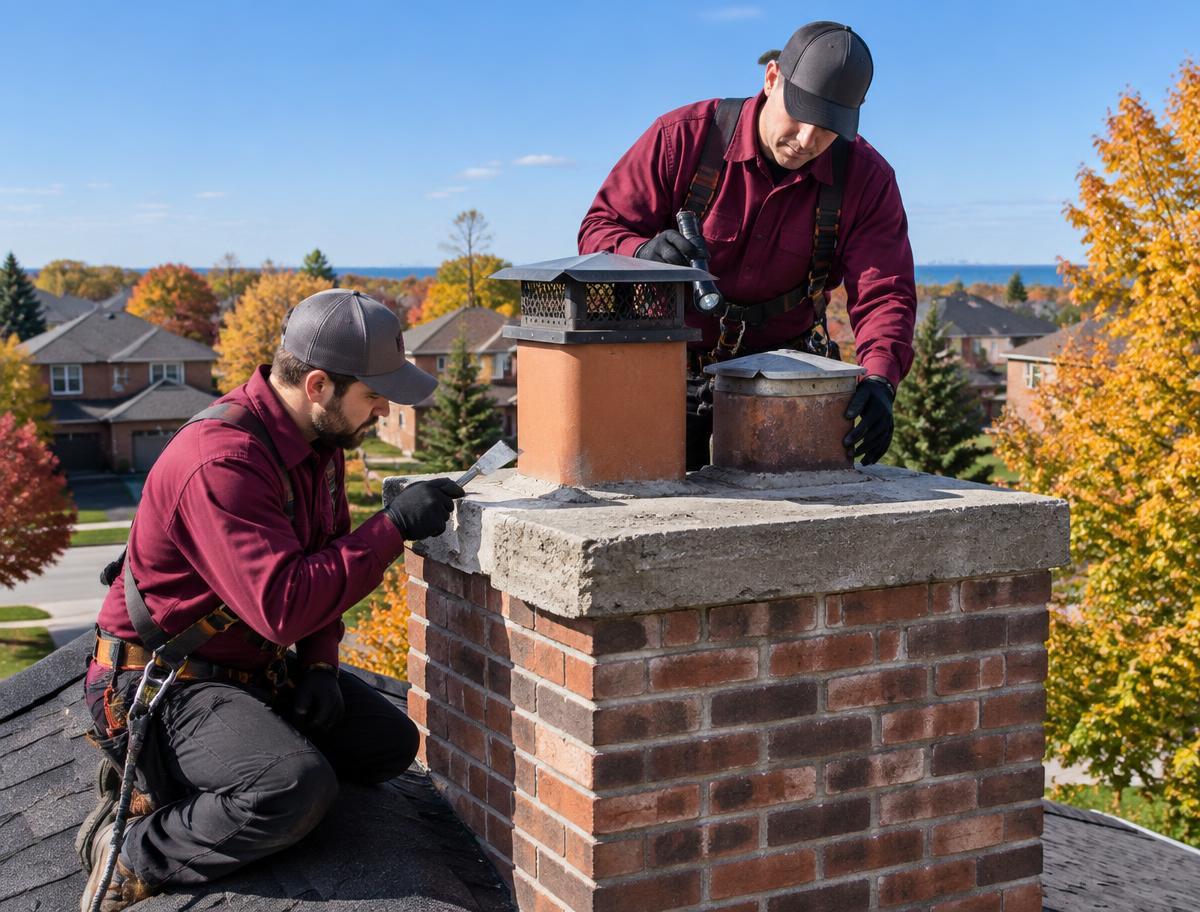
Beyond active nesting, falling autumn foliage and windblown pine needles routinely gather on rooftop termination screens and within the recesses of rain caps. Decaying organic matter traps humidity, corrodes wire mesh screens, and creates a dense mulch that restricts ventilation. Professional vent cleaning removes all foreign organic debris, restores unobstructed drafting, and identifies compromised cap screens that require protective repair before animals can enter again.
- Extraction of dry twigs, straw, and leaves left behind by nesting animals
- Removal of animal waste and biological materials that cause pungent odours
- Clearing rooftop vent spark arrestor screens packed with autumn leaves
- Inspection of termination caps for chew marks, bending, or animal damage
"I discovered odd odours coming from my chimney and booked a deodorizing treatment Downtown. They applied a specialized solution, sealed minor cracks, and eliminated the smell completely. My living room feels fresh again."
Our process
How we handle your fireplace vent cleaning, step by step
- 1
Arrival and Workspace Containment
We lay protective runners across flooring, seal the hearth opening, and connect high-power HEPA vacuum systems to keep your home dust-free throughout service.
- 2
Visual Diagnosis and Flue Inspection
Our technician inspects the firebox, damper plate, flue collar, and termination cap to evaluate soot thickness and detect any bird nests or structural obstructions.
- 3
Mechanical Sweeping and Scale Removal
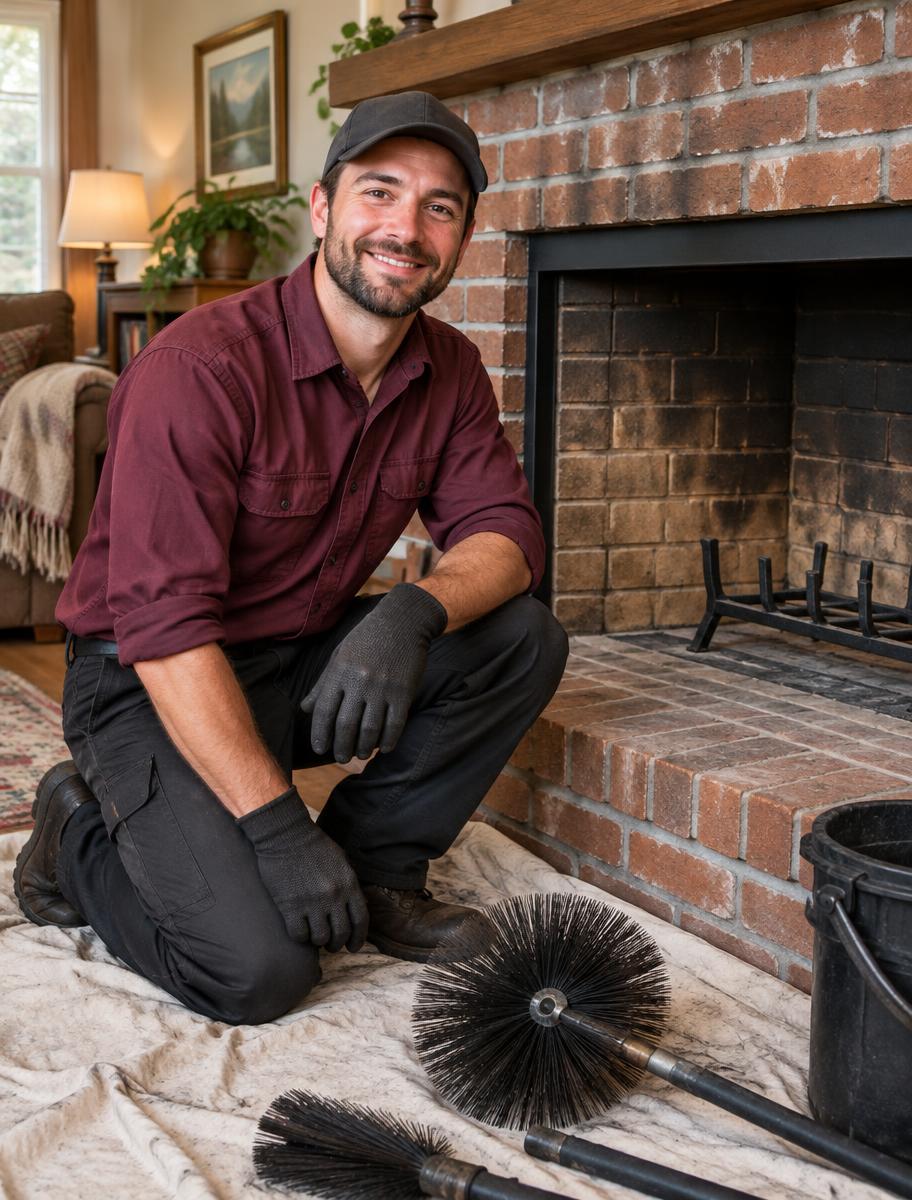
Using matched rotary brushes and flexible rods, we scour the interior walls of the vent to loosen stubborn creosote, soot, scale, and foreign debris.
- 4
Vacuum Extraction and Component Detailing
We vacuum all dislodged soot from the appliance base, clean the exhaust baffles, polish internal viewing glass, and verify unobstructed damper movement.
- 5
Draft Testing and Homeowner Report
We perform a final draft clearance check to confirm safe exhaust flow, followed by a clear, plain-language summary of our findings and maintenance advice.
Venting Differences: Gas Inserts, Direct Vents, and Wood Stoves
Different fireplace fuel types utilize distinct venting principles, and each demands a tailored cleaning procedure. Traditional open wood-burning fireplaces and airtight wood stoves rely purely on natural thermal buoyancy to exhaust through heavy masonry flues or factory-built insulated chimneys. These systems require heavy-duty mechanical sweeping to strip away volatile creosote, a tar-like substance that condenses when wood burns at variable temperatures and serves as the primary fuel source for chimney fires.
Direct-vent gas fireplaces, by comparison, operate on a balanced coaxial or colinear pipe design. One pipe pulls clean combustion air from outside the building, while the companion pipe exhausts spent gases outdoors, completely isolating the fireplace from indoor room air. Because gas burns cleanly without producing solid ash, many homeowners mistakenly assume these vents never require cleaning. In reality, direct vents frequently accumulate corrosive sulfur white powder, dead insects, outdoor spider webs, and domestic dust that impede gas burner air flow.
B-vent gas appliances rely on household air for combustion and exhaust through a double-wall metal flue using natural draft. If the internal aluminum liner of a B-vent becomes fouled with oxidation scale or ceiling insulation fallout, thermal draft stalls quickly. Independent technicians assess the specific venting architecture of each system, choosing the correct nylon brushes, HEPA vacuums, and diagnostic tools matching the manufacturer design of your specific appliance.
- Rotary sweep methods matched to the diameter of stainless steel wood liners
- Specialized lint and scale extraction for coaxial direct-vent gas pipes
- Gentle cleaning of fragile aluminum B-vent walls without puncturing seams
- Clearing combustion intake pathways to maintain correct fuel-to-air ratios
Safety Standards and Methodical Cleaning Procedures
Our service protocol adheres strictly to Canadian safety principles and recognized industry best practices, reflecting the thorough standards taught across CSA guidelines and national fire protection codes. We begin every appointment with a comprehensive diagnostic evaluation before any physical cleaning starts. This involves inspecting the appliance firebox, checking the condition of the flue damper, examining accessible vent pipe joints, and assessing the external termination cap from the roofline or ladder position.
To protect your home during the cleaning process, our technicians establish complete floor protection and dust containment barriers across the workspace. We seal the appliance opening using specialized sheeting and employ high-efficiency particulate air (HEPA) vacuum systems that operate under negative pressure throughout the sweep. This containment strategy guarantees that microscopic soot particles, fly ash, and allergen dust remain trapped inside our equipment rather than dispersing into your living area.
Using custom-sized polypropylene brushes, flexible rotary rods, and specialized hand scrapers, we sweep the entire internal surface of the exhaust run. We systematically clear the flue from the termination down to the appliance collector, breaking free all adhered deposits. Once sweeping is complete, we perform a secondary inspection of the vent passage to ensure complete removal of blockages and confirm that internal dampers and exhaust baffles operate smoothly.
- Initial visual diagnosis following CSA and national fire safety guidelines
- Complete drop cloth containment and industrial HEPA vacuum air filtration
- Calibrated rotary brushing to preserve delicate pipe liners while clearing deposits
- Final draft verification to ensure immediate, buoyant exhaust clearance
Preventative Habits and Seasonal Homeowner Maintenance
While thorough flue sweeping must be completed by a skilled professional, homeowners can take several practical steps throughout the heating season to preserve clear venting. For wood-burning fireplaces, fuel selection represents the single most important factor. Always burn seasoned, dry hardwood such as maple, ash, or oak that has dried for at least twelve months with a moisture content below twenty percent. Burning damp or green wood produces thick, cool smoke that rapidly coats vent walls in gummy, flammable creosote.
If you enjoy a modern gas fireplace, pay close attention to the flame picture and the cleanliness of the burner surround. Keep the base of the fireplace vacuumed and free of household dust, pet fur, and carpet fibers, which can be drawn into the combustion chamber and exhausted into the vent. Regularly inspect the exterior termination vent on the outside wall or roof of your home, ensuring that autumn snow drifts, garden vegetation, and outdoor insect nests do not block the protective metal louvres.
Make a habit of testing your home carbon monoxide alarms every month and replace aging sensor units according to their manufacturer schedules, typically every five to seven years. Install detectors near every sleeping area and on every level of your home, particularly in rooms adjacent to the fireplace. If you notice this, stop using the appliance and call Markham Chimney Services at (365) 362-5190.
- Burn only properly seasoned hardwoods with moisture levels under twenty percent
- Keep the appliance base and fan compartments free of dust, lint, and pet hair
- Maintain clear clearance around external wall vents by clearing deep winter snow
- Test digital carbon monoxide detectors on every residential level monthly
Finding a Trustworthy Independent Fireplace Specialist in Markham
Selecting the right chimney and fireplace specialist requires looking beyond hasty low-cost offers and high-pressure sales tactics. Fireplace venting involves high heat and toxic combustion exhaust, meaning inexperienced workmanship can leave severe fire and air quality hazards hidden behind your drywall. Homeowners should look for independent specialists who demonstrate detailed knowledge of Ontario building codes, provide clear written explanations of their diagnostic findings, and hold full commercial liability insurance.
A reputable service provider takes time to explain their process plainly, answering your questions without resorting to scare tactics or confusing technical jargon. During an estimate or initial phone consultation, ask whether the company uses clean drop cloths, dedicated HEPA extraction vacuums, and appropriate non-damaging brushes designed for your specific flue liner type. Companies committed to professional craftsmanship will readily discuss their dust-containment practices and show high respect for your living space.
At Markham Chimney Services, we take pride in serving our local community with honest, transparent advice and meticulous attention to detail. Operating directly from Highway 7, we understand the distinctive architectural styles and challenging winter conditions that affect homes in this area. We focus entirely on delivering thorough, dependable venting care that protects your investment, preserves your family safety, and keeps your fireplace running at its peak efficiency all winter.
- Verify full commercial liability insurance and compliance with Ontario safety codes
- Look for clear, upfront pricing without hidden fees or surprise upsells
- Confirm that technicians use clean workspace drop cloths and industrial HEPA vacuums
- Choose an established local business familiar with regional home architecture
Average pricing in Markham
$189 – $449
- Inspection / diagnostic
- $99 – $149
- Typical time on site
- 1 to 2 hours on site
- Parts and materials
- Replacement rain caps, spark arrestor screens, gasket seals, and cleanout doors
- What moves the price
- Venting pipe length and physical access from ground, attic, or roof · Degree of creosote accumulation or presence of stubborn animal nesting · Type of fireplace system, such as wood stove, direct-vent, or masonry flue
Estimated local market range, not a quote. All estimates are in Canadian dollars and exclude 13% Ontario HST. Your exact price is confirmed before any work begins.