
A clean chimney flue is essential for the comfort, warmth, and safety of your Markham household. When you light a fire in your wood-burning fireplace or run your heating appliance, smoke, combustible gases, and microscopic particulate matter travel upward through the flue passageway. Over time, these exhaust byproducts condense along the interior flue walls, forming thick layers of soot and flammable creosote. Left unattended, this accumulation restricts airflow, pushes toxic gases like carbon monoxide back into your living rooms, and presents a severe chimney fire hazard. Professional flue cleaning clears these hidden hazards before they disrupt your home.
Operating directly from 4418 Highway 7 East, Markham Chimney Services provides homeowners throughout Markham neighbourhoods with attentive, mess-free chimney care. Whether you live in a classic brick bungalow in Unionville, a mid-century home in Cornell, or an expansive property in Angus Glen, your venting system must withstand demanding seasonal conditions. From removing glazed creosote deposits to extracting nesting debris, our detailed cleaning process restores smooth drafting and guards your chimney lining against rapid decay. We treat your living space with the highest level of care, protecting your flooring and air quality throughout every service visit.
Flue Cleaning: visit summary
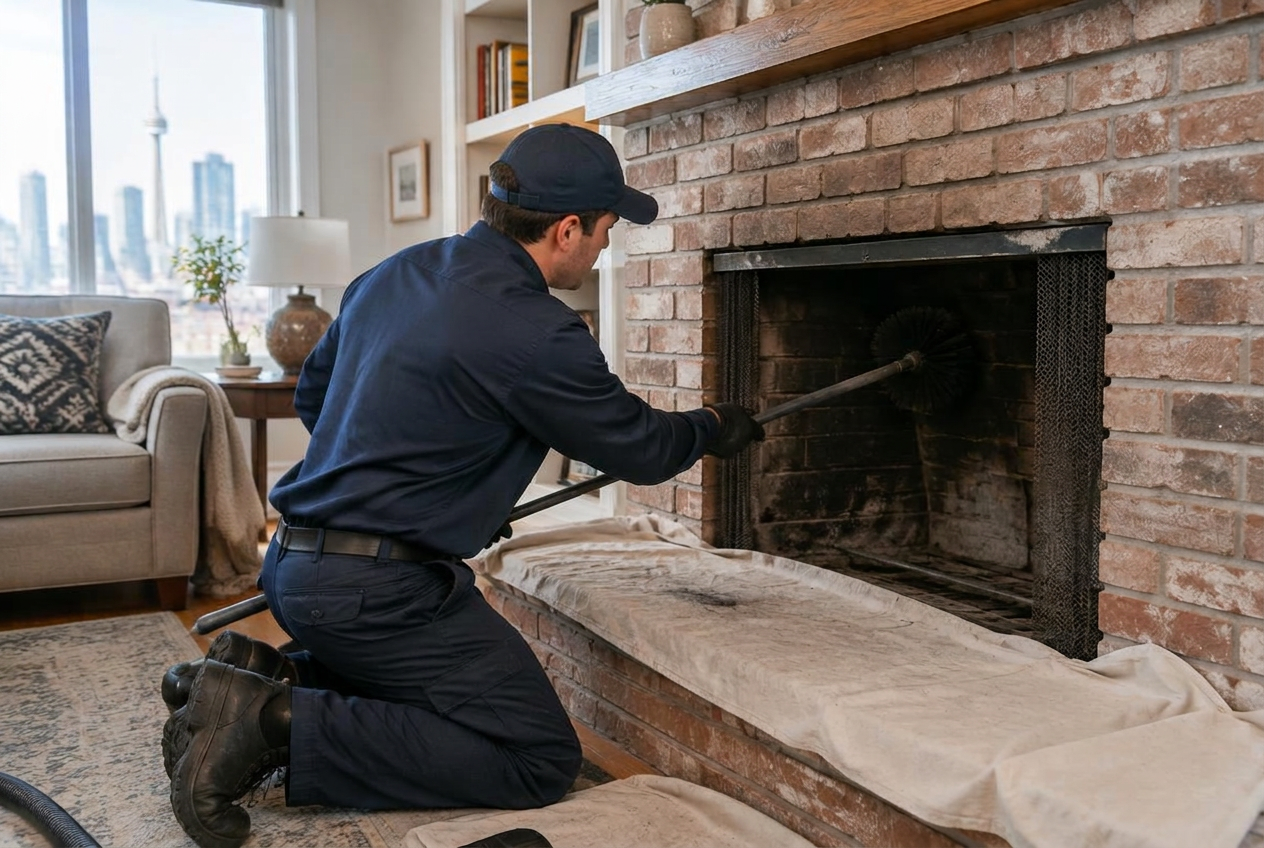
Flue Cleaning for Markham homes: soot and creosote cleared with drop cloths down and a filtered vacuum running at the hearth. Serving Markham and the Greater Toronto Area (GTA). The estimated local market range is $229 – $489, not a fixed company rate. The final scope and quote are confirmed before work begins.
| Estimated market range | $229 – $489. All estimates are in Canadian dollars and exclude 13% Ontario HST. |
|---|---|
| Typical time | 1 to 2 hours typical on-site time |
| Price factors | Flue height, accessibility, and chimney liner construction material; Severity and stage of creosote accumulation (powdery soot versus glazed tar); Presence of wildlife nests, blockages, or damaged damper mechanisms |
| Routine signs to discuss | Thick Tar-Like Deposits on Flue Walls; Smoke Spilling Backward into the Room; Pungent Barbecue or Ash Odours; Sluggish Fires That Struggle to Breathe; Bits of Fallen Tile or Flakes in the Firebox; Audible Animal Sounds Inside the Chimney |
What Flue Cleaning Involves and Why Your System Needs It
The flue is the inner working channel of your chimney, serving as an exhaust conduit that expels the dangerous byproducts of combustion out of your home. Whether your chimney is constructed with traditional clay tile liners, a poured masonry channel, or a modern stainless steel liner, the interior walls are constantly exposed to high heat, moisture, and chemical particulates. Flue cleaning is the process of sweeping, scrubbing, and vacuuming away the soot, ash, bird nests, and combustible creosote that cling to these internal surfaces.
Over an active burning season, soot and creosote naturally build up in varying thicknesses along the flue tile joints and pipe seams. When airflow becomes restricted, the natural draft weakens, leading to sluggish fires, lingering odours, and sluggish exhaust movement. A professional cleaning does not merely improve the appearance of the firebox opening. It clears the entire vertical run from the smoke chamber or appliance collar up to the top termination point, ensuring that air moves upward without restriction.
Regular flue sweeping also permits a closer look at the condition of your liner. By removing heavy soot blankets, hidden cracks, crumbling mortar joints, or shifting clay tiles become clearly visible before they allow heat transfer into adjacent framing. For Markham homeowners relying on wood stoves, open hearths, or high-efficiency inserts, scheduled maintenance is the single most effective way to ensure reliable, safe venting throughout the cold months.
- Thorough mechanical sweeping of the entire internal flue length
- Targeted removal of powdery soot, flakes, and hardened creosote
- Clearing obstructions such as leaves, masonry fragments, and animal debris
- Restoration of proper convective draft and airflow balance
- Clean workspace maintenance using specialized containment drop sheets
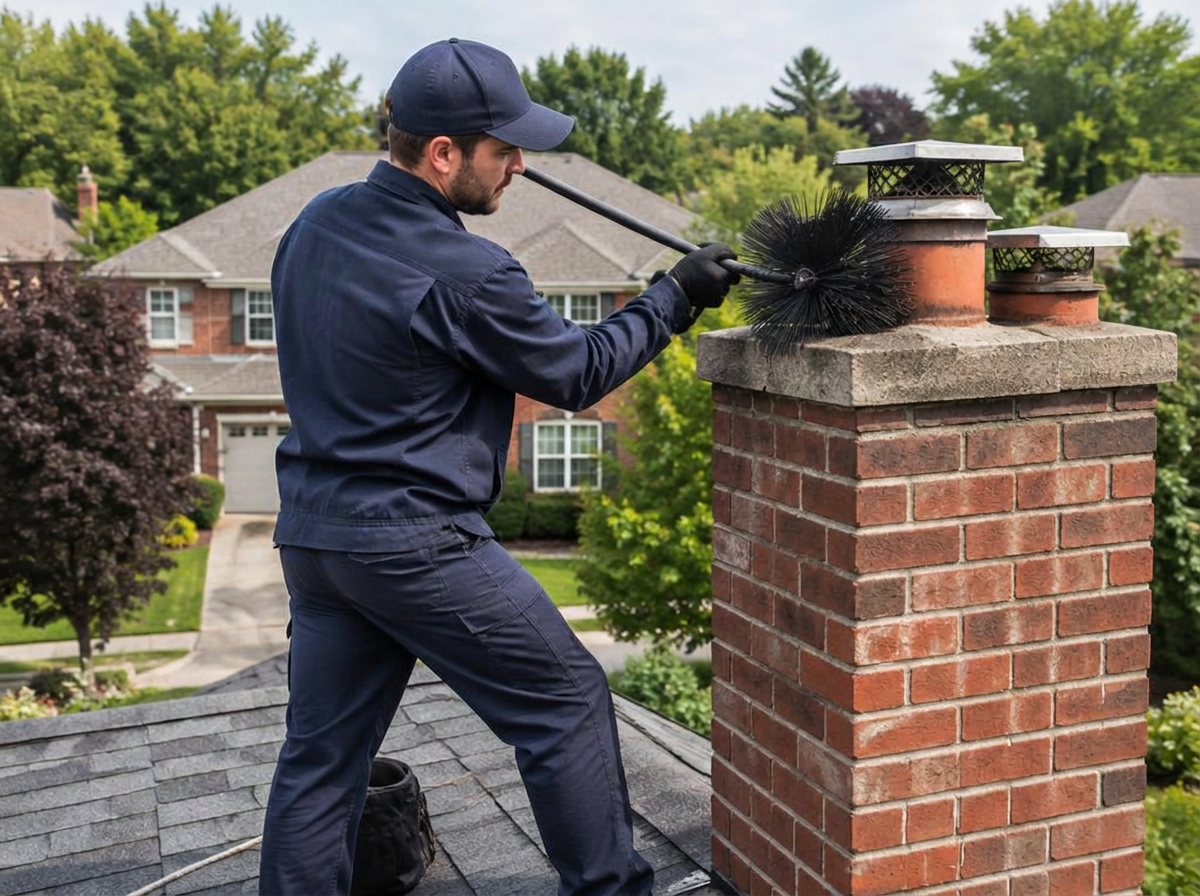
Keep your fireplace venting safely and burning cleanly through every cold Ontario winter with thorough flue sweeping.
Self-check
Warning signs you need flue cleaning
Thick Tar-Like Deposits on Flue Walls
A dark, shiny glaze or crunchy black crust visible inside your damper opening indicates hazardous creosote accumulation requiring immediate mechanical sweeping before lighting another fire.
Smoke Spilling Backward into the Room
When smoke regularly rolls out of your firebox opening rather than climbing upward, your flue is suffering from restricted airflow, heavy soot accumulation, or external blockages.
Pungent Barbecue or Ash Odours
A sour, sooty smell drifting from the fireplace during damp weather or warm summer afternoons means creosote and moisture have saturated your uncleaned flue liner.
Sluggish Fires That Struggle to Breathe
Fires that take unusually long to catch, burn weakly, or produce heavy smoke usually suffer from starved draft caused by a partially obstructed vertical flue conduit.
Bits of Fallen Tile or Flakes in the Firebox
Finding clay shards, mortar sand, or black flakes falling onto your hearth floor reveals interior flue deterioration and freeze-thaw damage that requires urgent professional attention.
Audible Animal Sounds Inside the Chimney
Scratching, fluttering, or chirping noises within the chimney structure mean birds, squirrels, or raccoons have entered the flue, creating dangerous fire hazards and complete venting blocks.
The Impact of Ontario Freeze-Thaw Weather on Chimney Flues
Chimneys in Southern Ontario endure some of the harshest seasonal weather shifts in the country. Autumn rainfall and winter snowmelt saturate porous exterior masonry, while freezing overnight temperatures cause that trapped moisture to expand rapidly. In Markham, temperatures frequently cycle between positive and negative values throughout January and March, subjecting clay flues and mortar joints to intense mechanical stress that accelerates cracking and spalling.
When moisture mixes with combustion soot inside the flue, the result is acidic. Water vapor is a natural byproduct of burning wood, and if the flue operates at cold temperatures, that vapor condenses on the liner walls. The acidic solution slowly eats away at terra cotta tile liners, metal joints, and masonry crowns, weakening the structural integrity of the chimney from the inside out. A flue coated in heavy creosote traps this moisture against the walls, speeding up deterioration.
Cold winter air also causes what technicians refer to as a cold air plug. Dense outdoor air sits heavily inside an uninsulated or exterior chimney chase, resisting the initial upward push of warm smoke when you ignite your fire. If the flue is already narrowed by months of unaddressed creosote deposits, the cold plug forces irritating smoke and harmful combustion gases straight into your living room instead of lifting cleanly outside.
- Repeated freeze-thaw cycles crack clay tiles and loosen flue joints
- Moisture combines with soot particles to generate corrosive acidic solutions
- Cold outdoor air creates stubborn draft plugs in exterior masonry flues
- Damp creosote emits sour, pungent odours into the home during spring thaws
- Winter ice formations at the chimney crown can obstruct exhaust exits
Understanding Creosote Stages and Fire Prevention
Creosote is a combustible hydrocarbon residue that condenses along the cooler surfaces of your chimney flue as wood smoke cools. It develops in three distinct stages, each presenting higher risk and greater cleaning difficulty. Stage one creosote resembles dry, flaky soot that sweeps away relatively easily with standard chimney brushes. If addressed early, this level of accumulation rarely causes permanent liner harm or structural issues.
When fires smoulder at lower temperatures or unseasoned firewood is burned, the residue thickens into stage two creosote, which appears as dense, sticky, or tar-like flakes. This form adheres tightly to tile seams and metal flue walls, significantly constricting draft space. If stage two creosote is left uncleaned, additional smoke exposure and heat bake the material into stage three creosote, a shiny, hardened glaze that coats the flue interior like hardened asphalt.
Stage three glazed creosote is highly flammable and the leading cause of chimney fires across residential neighbourhoods. A brisk, high-heat fire can ignite this glazed layer, producing temperatures exceeding one thousand degrees Celsius inside the chimney. Such extreme heat can crack masonry, warp steel liners, and ignite surrounding wall studs in a matter of minutes. Professional flue sweeping removes these combustible residues before they reach ignition temperatures.
- Stage one: light, flaky soot with low immediate ignition potential
- Stage two: thick, sticky tar flakes that severely impede flue airflow
- Stage three: rock-hard glazed creosote that burns at extreme temperatures
- Significantly decreases the danger of sudden internal chimney fires
- Protects adjacent home framing from severe radiant thermal transfer
Draft Difficulties, Smoke Backdrafts, and Carbon Monoxide Risks
Your chimney operates on basic physics: hot air rises naturally due to buoyancy, creating a pressure difference known as draft. For a flue to draft properly, it must remain unobstructed, warm, and matched in volume to the appliance beneath it. When soot and creosote build up along the inner diameter of the flue, the channel narrows. This constriction creates friction, slowing the upward movement of hot exhaust and destroying the natural draft effect.
When draft fails, homeowners experience backdrafting, where smoke, fine particulate matter, and offensive odours roll into the room rather than exiting outdoors. This is particularly problematic in modern, tightly sealed Markham homes where mechanical ventilation systems, bathroom exhaust fans, and range hoods compete with the fireplace for indoor air. A restricted flue cannot compete against these indoor negative pressure zones, leading to persistent indoor smoke issues.
Beyond visible smoke, a compromised flue carries the silent risk of carbon monoxide infiltration. Carbon monoxide is a colourless, odourless, and tasteless gas produced by incomplete combustion. If an obstructed flue slows the venting process, dangerous concentrations of carbon monoxide can seep through unsealed chimney joints or backdraft into your living spaces. Installing certified carbon monoxide alarms on every living level and maintaining an open, clean flue channel are non-negotiable safety practices.
- Narrowed flue diameters drastically reduce natural thermal drafting power
- Smoke rollout damages indoor ceiling paint, curtains, and air quality
- Household negative pressure easily reverses draft in dirty chimney flues
- Carbon monoxide risks multiply when venting exhaust pathways are partially blocked
- Working carbon monoxide alarms should be tested monthly near sleeping zones
"After noticing smoke backing into the room, I called for an inspection in Buttonville. Their technician diagnosed a minor blockage quickly, cleared it thoroughly, and explained how to avoid future issues. Excellent service."
Our process
How we handle your flue cleaning, step by step
- 1
Room Protection and Hearth Containment
We place clean floor covers, seal the fireplace opening, and establish negative HEPA vacuum filtration to capture airborne soot and keep your Markham home clean.
- 2
System Diagnosis and Flue Assessment
Our technician evaluates the damper, smoke chamber, and flue interior using high-output lighting to determine creosote stages, debris levels, and structural liner materials.
- 3
Comprehensive Mechanical Flue Sweeping
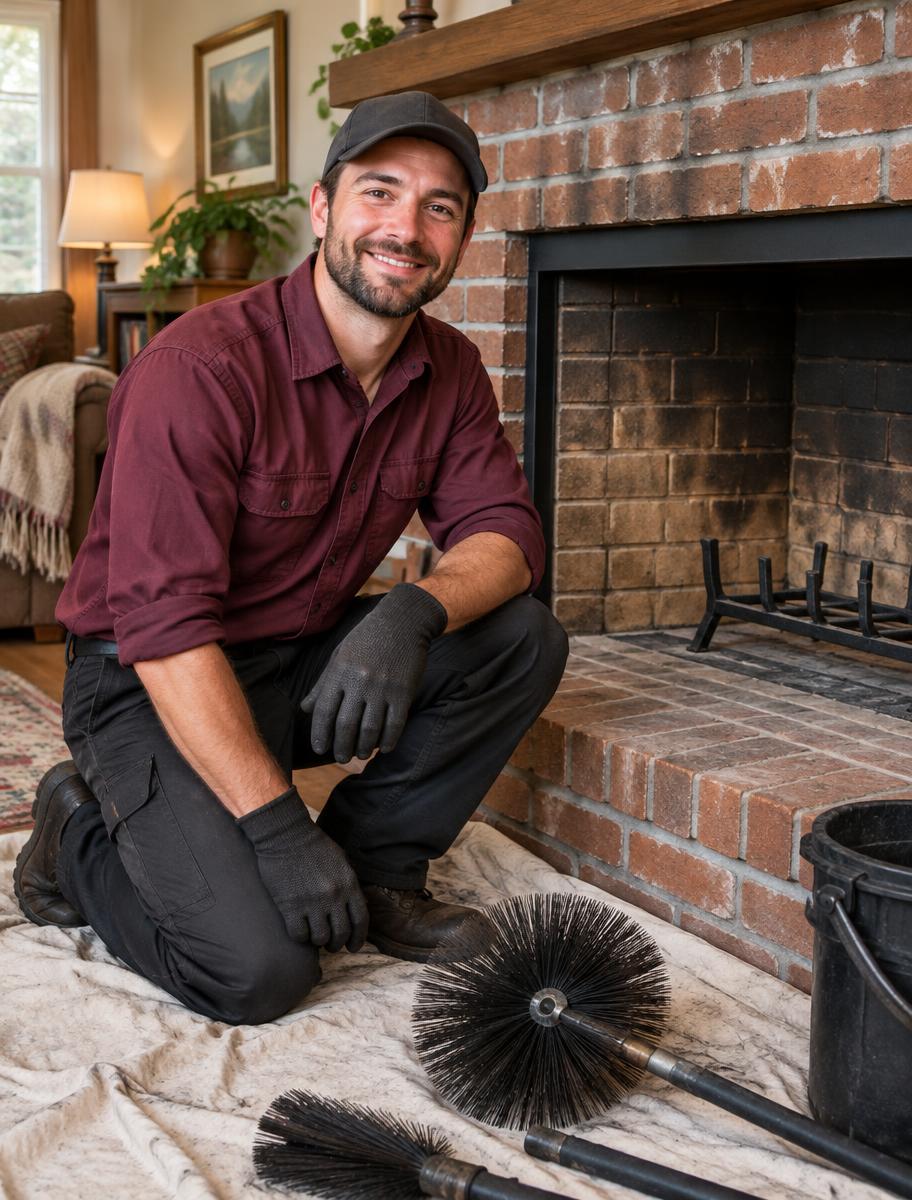
Using professional sweeping rods, specialized heads, and purpose-matched brushes, we thoroughly scrub the entire length of your flue to remove combustible creosote deposits.
- 4
Debris Extraction and Smoke Shelf Cleanout
All fallen soot, creosote chips, and debris are vacuumed out of the smoke shelf, throat, and firebox with industrial containment equipment, leaving the hearth pristine.
- 5
Draft Check and Customer Debrief
We confirm smooth damper movement, check natural draft flow, and explain our findings with practical maintenance recommendations for safe burning.
Primary Causes of Flue Blockages and Lining Degradation
While creosote is the most common cause of flue restrictions, external factors often compromise chimney venting. Markham features mature tree canopies in many settled areas, making flues prime targets for nesting wildlife. Squirrels, raccoons, and migratory chimney swifts frequently enter uncovered chimneys to establish nests. Dry twigs, leaves, and animal bedding can completely plug a flue within a few days, creating a total blockage that traps all exhaust indoors.
Another frequent culprit is the burning of green or wet firewood. Wood with a moisture level higher than twenty percent expends tremendous heat energy simply boiling away internal water. The resulting smoke is unusually cool and laden with unburned gases, which rapidly condense on cold flue walls to form heavy creosote. Burning household trash, painted lumber, cardboard, or glossy paper also deposits corrosive chemical films that speed up metal liner rust and glaze tile surfaces.
Finally, physical structural deterioration inside the chimney causes hidden blockages. As mortar joints age and experience decades of Ontario freeze-thaw cycles, clay flue tiles can crack, shift out of alignment, or shed heavy fragments that tumble downward. These masonry pieces frequently lodge in the chimney smoke shelf or offset bends, catching rising soot and quickly forming an impenetrable barrier that chokes appliance venting.
- Wildlife entry resulting in animal nests, dried leaves, and debris plugs
- Burning wet, unseasoned, or treated wood that releases dense moisture
- Collapsing clay liner tiles and loose mortar obstructing smoke channels
- Lack of a protective exterior chimney cap or spark arrestor mesh
- Improper appliance sizing causing cool exhaust and accelerated buildup
Our Careful Inspection and Flue Cleaning Procedure
Every thorough flue cleaning service begins with complete room containment. Before handling any sweeping equipment, our team protects your living area with durable floor coverings, dust barriers, and high-efficiency particulate air vacuums. We seal the hearth opening to ensure that soot loosened inside the flue cannot escape into your home atmosphere. Keeping your living room spotless is just as important to us as scrubbing the interior flue walls.
Next, we conduct an extensive assessment of the system. We check the damper operation, smoke shelf, lintel, and flue base, observing the type, thickness, and stage of accumulated creosote. Using specialized rods, flexible whips, and properly sized chimney brushes matched to your liner type, whether clay, cast masonry, or stainless steel, we methodically sweep the entire vertical run. We work smoothly to strip away soot without scratching or cracking delicate flue tiles.
Following mechanical sweeping, we clear the dislodged debris from the smoke shelf, firebox, and ash dump using our industrial containment vacuums. We follow industry best practices inspired by CSA standards and recognized solid-fuel guidelines, confirming that clearances and damper movement operate correctly. Once our work is complete, we provide you with a clear verbal overview of your chimney health, noting any liner gaps or exterior crown vulnerabilities.
- Total hearth containment using industrial canvas and HEPA filtration
- Liner-specific sweeping brushes chosen to protect clay and stainless steel
- Full-height sweeping from the hearth or rooftop through the entire flue
- Thorough vacuum evacuation of the smoke shelf, damper plate, and firebox
- Transparent reporting on visible flue condition, draft, and appliance clearances
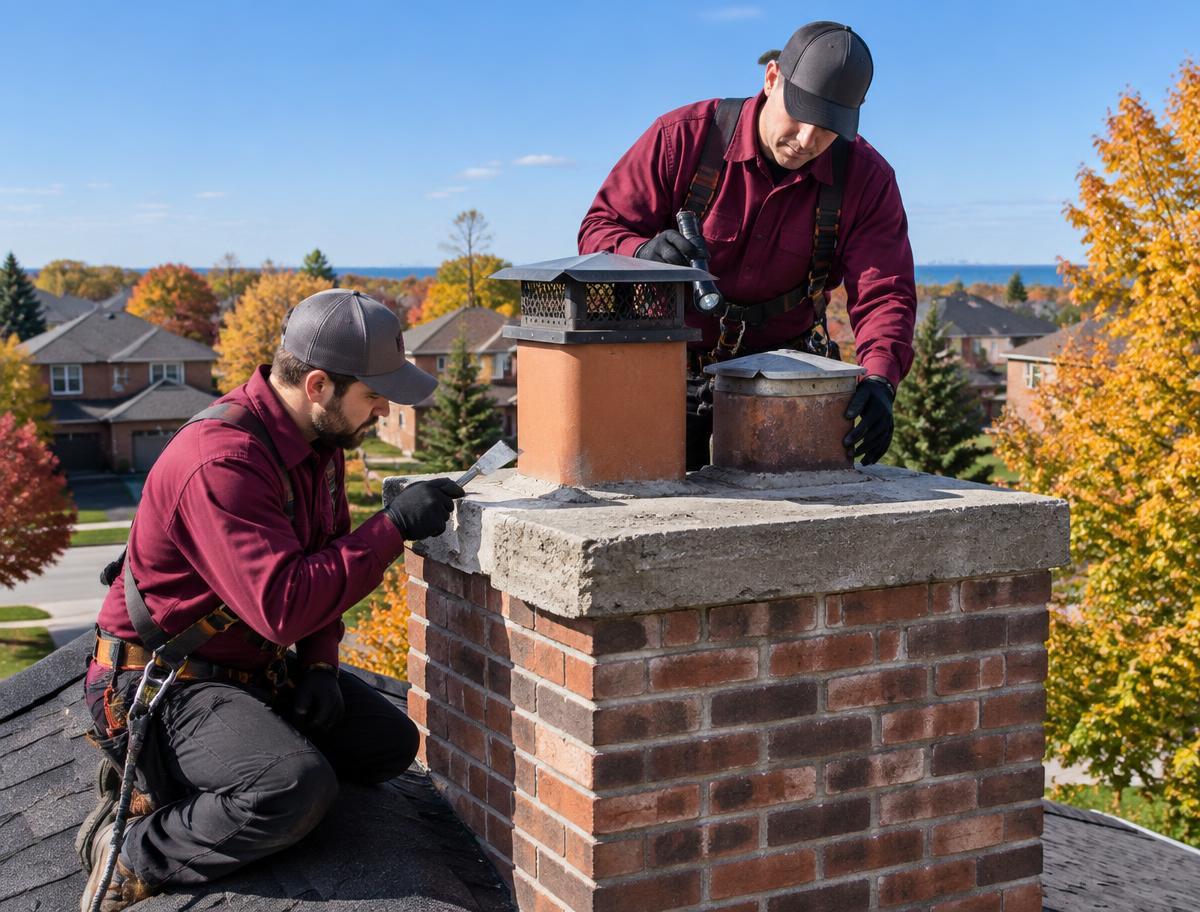
Homeowner Maintenance and Safe Burning Practices
Homeowners can take practical everyday actions to keep their flue cleaner and extend the time between deep maintenance cleanings. The most critical factor is fuel selection. Always burn seasoned hardwoods such as maple, oak, or ash that have dried for at least six to twelve months. Firewood should have a moisture content between fifteen and twenty percent, which you can easily confirm with an inexpensive digital moisture meter split-test.
Avoid building slow, smouldering fires that lack adequate combustion air. While it may seem efficient to shut your damper or air intake down for an all-night burn, sluggish combustion keeps flue temperatures low, forcing volatile unburned hydrocarbons to condense as thick creosote. Instead, burn bright, hot fires with sufficient combustion air to establish an immediate upward draft, keeping flue gases hot until they clear the chimney cap.
Perform simple periodic checks throughout the winter heating season. Look inside your firebox with a bright flashlight to inspect the visible throat above the damper. Watch for drafting changes, strange whistling sounds, or downdrafts during windy days. If you ever notice burning odours lingering after a fire has gone cold, schedule an inspection before lighting your next fire to prevent small issues from expanding into costly chimney structural repairs.
- Burn seasoned hardwood dried to under twenty percent moisture content
- Avoid slow, smouldering burns that drop internal flue exhaust temperatures
- Never burn painted lumber, treated construction scraps, or household garbage
- Ensure carbon monoxide alarms on every floor are tested on schedule
- Maintain clean clearances around hearth areas, mantels, and hearth rugs
Selecting a Reputable Chimney Sweeping Specialist in Markham
Choosing the right chimney sweeping professional protects both your financial investment and your family safety. Chimney maintenance requires deep understanding of combustion physics, masonry construction, venting codes, and proper equipment operation. When searching for a provider across Markham and the Greater Toronto Area, look for an established local presence that uses dedicated dust containment vacuums and liner-friendly sweeping systems.
A trustworthy chimney professional will always provide clear, transparent pricing before commencing work and will gladly explain what their service includes. Beware of door-to-door operators who offer unrealistically cheap cleanings only to claim your chimney requires thousands of dollars in emergency structural repairs without showing you photos or clear evidence. Professional chimney care is grounded in honest evaluation, careful craftsmanship, and respect for your home.
At Markham Chimney Services, we take pride in serving our neighbours across Markham with reliable, independent chimney sweeping and flue cleaning. We are an independent chimney and fireplace company focused on doing every job right the first time. We treat your property with courtesy, answer all your technical questions plainly, and help you enjoy warm, worry-free fires in every season.
- Demand dedicated HEPA dust containment and guaranteed mess-free service
- Verify clear, upfront pricing without high-pressure scare tactics
- Ensure sweeps use appropriate brush materials tailored to your liner type
- Look for clear photographic evidence of any identified internal flue defects
- Choose an established local business rooted right here in the community
Average pricing in Markham
$229 – $489
- Inspection / diagnostic
- $129 – $189
- Typical time on site
- 1 to 2 hours typical on-site time
- Parts and materials
- Chimney caps, top dampers, and replacement clay or stainless liner parts quoted separately
- What moves the price
- Flue height, accessibility, and chimney liner construction material · Severity and stage of creosote accumulation (powdery soot versus glazed tar) · Presence of wildlife nests, blockages, or damaged damper mechanisms
Estimated local market range, not a quote. All estimates are in Canadian dollars and exclude 13% Ontario HST. Your exact price is confirmed before any work begins.