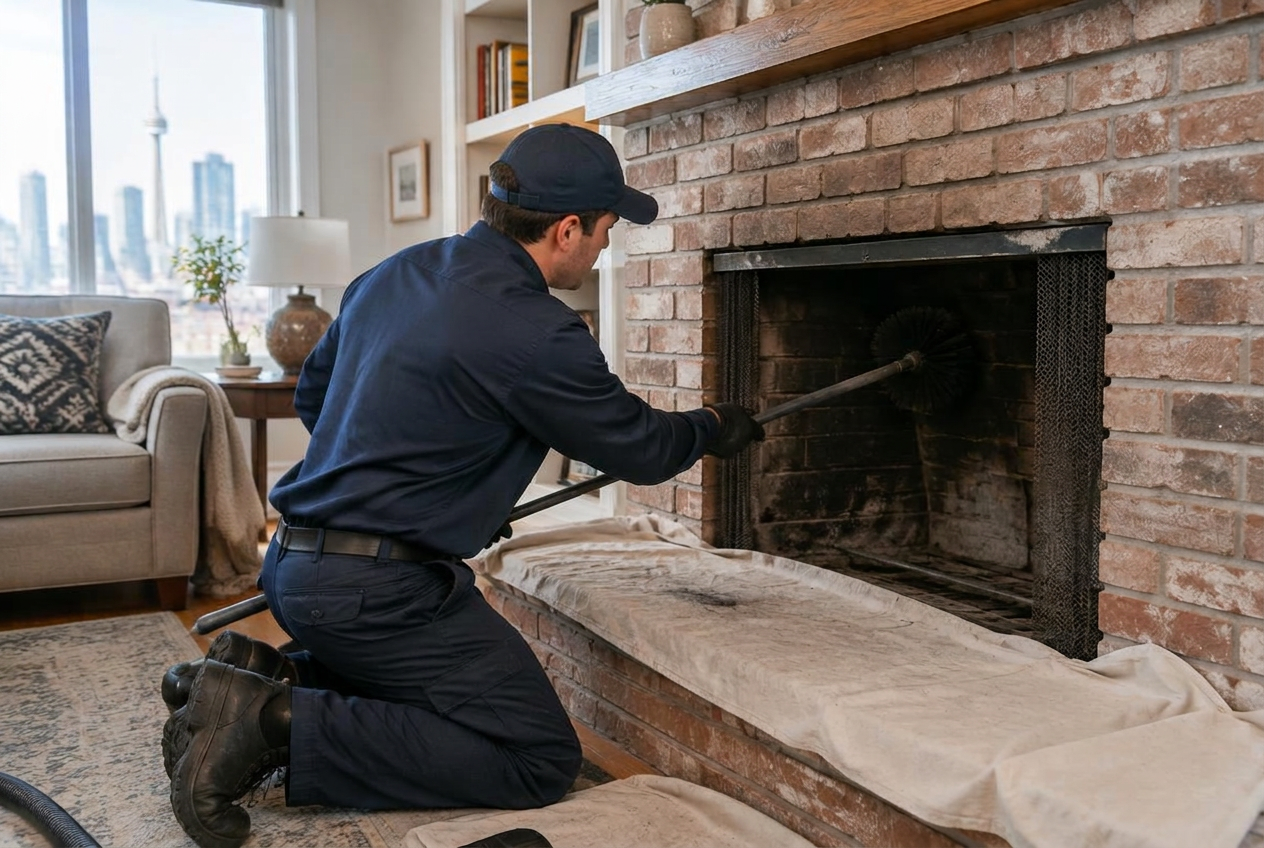
A crackling fire brings warmth and comfort to your living space during a freezing Ontario winter, but every fire leaves behind microscopic combustion byproducts. Over weeks and months of steady heating, these fine particulate residues coat your chimney liner, smoke shelf, and damper assembly. At Markham Chimney Services, located at 4418 Highway 7 East, we provide complete, mess-free soot removal designed to protect your household from structural fire hazards, draft reversals, and indoor air pollution. Our local team understands the unique heating demands placed on homes throughout our community, from historic brick residences near Unionville to mid-century properties in Cornell.
When left unaddressed, dry soot absorbs moisture from the damp winter atmosphere, turning into an acidic compound that corrodes clay tiles, stainless steel liners, and mortar joints. Thorough removal requires far more than running a handheld brush up the hearth; it demands specialized containment, high-performance filtration, and careful diagnosis of draft dynamics. Whether you operate an open masonry fireplace, a modern zero-clearance unit, or an efficient wood stove, professional soot management safeguards your family while restoring peak heating efficiency. We take pride in delivering honest assessments and considerate service tailored specifically to the structural quirks of local residential chimneys.
Soot Removal: visit summary
Soot Removal for Markham homes: soot and creosote cleared with drop cloths down and a filtered vacuum running at the hearth. Serving Markham and the Greater Toronto Area (GTA). The estimated local market range is $189 – $429, not a fixed company rate. The final scope and quote are confirmed before work begins.
| Estimated market range | $189 – $429. All estimates are in Canadian dollars and exclude 13% Ontario HST. |
|---|---|
| Typical time | 1 to 2.5 hours depending on flue height and soot depth |
| Price factors | Total height, pitch, and accessibility of the exterior chimney stack; Severity, volume, and chemical moisture level of internal soot accumulation; Type of fireplace appliance, liner material, and overall system condition |
| Routine signs to discuss | Visible Black Powder Around the Hearth; Persistent Smoky or Acrid Odours; Sluggish Draft and Smoke Spillage; Oily Black Stains on the Chimney Breast; Unexplained Rattling or Falling Debris; Flaking or Spalling Interior Masonry |
Understanding Chimney Soot and How It Accumulates
Soot is a powdery black or dark brown byproduct created by the incomplete combustion of fossil fuels and wood. Unlike heavier, glazed creosote, fresh soot consists primarily of amorphous carbon particles mingled with mineral ash, trace metals, and volatile organic chemicals. As warm smoke rises from your firebox, it begins to cool against the cold masonry walls of the chimney stack. Once the gas temperature falls below the condensation point, tiny airborne particles drop out of the thermal plume and cling to the inner perimeter of your flue.
The physical nature of soot makes it deceptively problematic inside residential exhaust passages. Because the individual particles carry static electrical charges, they readily attract one another, building fluffy, velvety blankets over every interior surface. This velvety layer behaves like an insulating blanket, but not in a beneficial way. It narrows the effective diameter of the flue pipe, introducing drag that restricts the natural draw of air, which subsequently prevents fresh combustion oxygen from entering the lower firebox.
Over repeated burns, loose carbon deposits gradually compress into dense cakes along the smoke chamber and chimney throat. In systems where small amounts of moisture are present, this soft carbon matrix serves as a foundation for heavier tars to latch onto. Addressing loose soot before it solidifies into difficult creosote glaze remains the simplest and most cost-effective maintenance discipline for any homeowner operating solid-fuel heating equipment.
- Consists of microscopic, unburned carbon particles carrying volatile chemical compounds.
- Forms when cooling exhaust gases slow down and drop particulate against flue walls.
- Acts as a restrictive friction layer that reduces upward thermal draft over time.
- Provides an absorbent surface that traps corrosive chemical vapors inside the chimney.
- Represents the earliest and most manageable stage of solid-fuel exhaust residue.
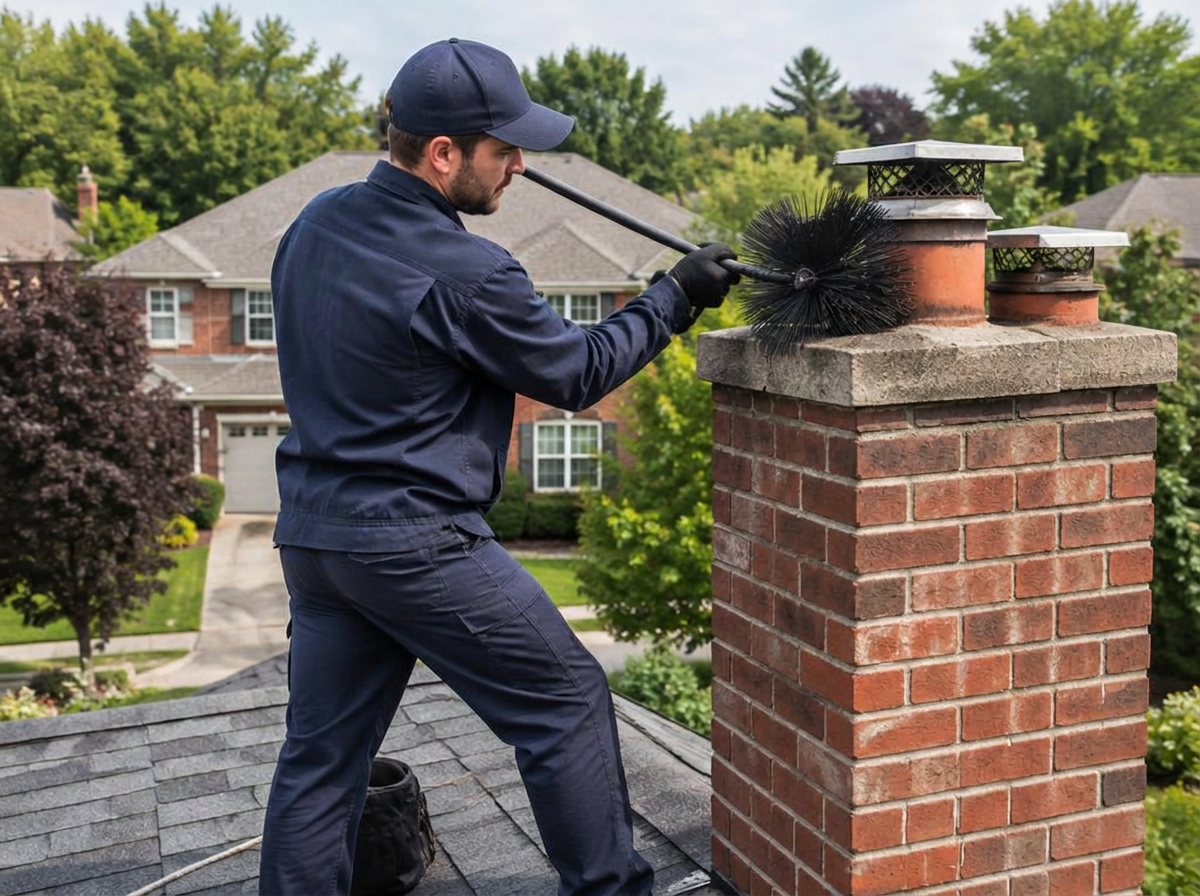
Breathe easier and burn safer with meticulous chimney soot removal tailored to Southern Ontario homes.
Self-check
Warning signs you need soot removal
Visible Black Powder Around the Hearth
Loose, powdery black dust gathering along the hearth extension, damper handle, or firebox floor signals that normal upward draft has weakened, allowing fine exhaust particles to settle directly into your living area.
Persistent Smoky or Acrid Odours
A strong smell resembling a damp campfire or sour charcoal lingering around the firebox indicates that humid air is pulling acidic soot residues backward down the chimney stack during periods of system disuse.
Sluggish Draft and Smoke Spillage
When smoke billows into the room upon opening the firebox door or lighting kindling, heavy interior soot accumulation may be choking the flue cross-section and restricting the natural upward flow of heated air.
Oily Black Stains on the Chimney Breast
Dark, greasy discolouration appearing along the brickwork or drywall surrounding the fireplace opening indicates that unburned combustion particulates are repeatedly rolling out of the hearth opening instead of venting through the roof.
Unexplained Rattling or Falling Debris
Sounds of gravel-like particles striking the closed damper assembly typically indicate that dried cakes of soot and ash are detaching from upper flue tiles and tumbling down into the lower throat area.
Flaking or Spalling Interior Masonry
Cracking or chipping along clay flue liners or firebrick joints reveals that trapped acidic soot moisture has penetrated masonry pores, triggering destructive freeze-thaw damage that requires urgent professional cleaning and evaluation.
The Harsh Ontario Climate and Flue Condensation
Operating a fireplace in Southern Ontario exposes chimney venting systems to extreme thermal shock. During deep midwinter cold snaps, outside temperatures drop well below zero while the flue core reaches hundreds of degrees within minutes of ignition. This dramatic thermal gradient encourages rapid condensation on exterior-facing chimney walls, especially on older masonry stacks lacking exterior insulation. The moisture generated by burning wood condenses on cold brickwork, mixing directly with dry exhaust dust to create concentrated sulfurous and carbonic acids.
Our local freeze-thaw cycles worsen this chemical challenge dramatically. Water droplets trapped within soot-coated clay flue tiles freeze, expand, and thaw dozens of times between November and April. Because soot holds moisture against the masonry like a wet sponge, the porous clay tiles cannot dry naturally. Over time, the expanding ice crystals pop the faces off clay tiles, a destructive failure known as spalling, which leaves open cracks where embers can escape into adjoining wall cavities.
Springtime introduces another climate-related complication across local neighbourhoods. As humid lake air pushes northward, uncleaned chimneys pull moisture down into the house through stack effect. Damp soot emits a pungent, stale campfire smell that permeates living areas and basement rec rooms. Timely spring or early autumn soot extraction neutralizes these seasonal moisture hazards, preserving both structural masonry integrity and comfortable indoor air quality throughout the changing seasons.
- Extreme temperature gradients accelerate moisture condensation along flue boundaries.
- Acidic mixtures corrode internal flue tiles, stainless liners, and iron dampers.
- Moisture retention inside soot layers magnifies destructive winter freeze-thaw damage.
- Humid summer air interacts with residual soot to generate sour, invasive household odours.
- Uninsulated exterior chimney stacks suffer significantly faster particulate buildup.
Primary Causes of Excessive Soot Buildup
While all fires generate a nominal amount of carbon byproduct, excessive accumulations usually point to operational or mechanical deficiencies. The most common culprit is burning unseasoned wood with high moisture content. When cordwood contains more than twenty percent moisture, substantial combustion energy is wasted boiling away internal sap instead of sustaining high firebox temperatures. This low-temperature burn produces sluggish, heavy smoke that cannot escape quickly, shedding massive volumes of soot before reaching the chimney terminal.
Restricted airflow represents another widespread contributor to accelerated carbon deposition. Operating a wood-burning appliance with the air dampers throttled back too aggressively starves the flames of vital oxygen. Without sufficient oxygen, fuel cannot burn cleanly down to fine ash; instead, it smolders, throwing off dense clouds of unburned carbon. Similarly, modern tightly sealed building envelopes can prevent sufficient makeup air from reaching the hearth, creating negative room pressure that impedes draft velocity.
Mechanical mismatches between the appliance and chimney liner also encourage abnormal accumulation. If a high-efficiency wood insert is vented into an oversized masonry flue, the hot exhaust gases lose velocity and cool down prematurely within the vast interior volume. That sudden thermal loss forces particulate matter out of suspension immediately above the smoke shelf. Proper appliance sizing and correctly proportioned chimney liners prevent this rapid deceleration and maintain safe exhaust velocity.
- Burning green, freshly split, or waterlogged wood containing high moisture levels.
- Excessive throttling of air controls, leading to oxygen-deprived, smoldering fires.
- Insufficient combustion air supply caused by modern, tightly sealed home construction.
- Mismatched flue sizing that allows rising exhaust gases to expand and cool too rapidly.
- Burning household waste, treated lumber, or paper products containing synthetic chemicals.
Health and Air Quality Risks of Airborne Soot Particles
The risks associated with chimney soot extend well beyond exterior masonry damage and flammability. Soot particles fall into the microscopic category known as fine particulate matter, measuring two and a half micrometres or smaller. When a chimney suffers from draft sluggishness, these microscopic specks bypass firebox openings and drift into your living space. Once suspended in domestic indoor air, fine particulates penetrate deep into lung tissue, carrying toxic compounds directly toward the bloodstream.
Prolonged exposure to soot dust can irritate delicate mucous membranes, triggering coughing fits, eye irritation, and chronic throat soreness among household occupants. For residents living with underlying respiratory conditions such as asthma, bronchitis, or allergies, the presence of loose soot particles can provoke severe respiratory distress. Children and elderly family members remain especially vulnerable to airborne carbon contaminants settling in family rooms during cold winter evenings.
Beyond active respiratory threats, soot settles on furniture, carpets, drapes, and painted surfaces, creating persistent staining that resists ordinary household cleaning agents. Vacuuming soot with standard domestic vacuums only makes the issue worse by blowing microscopic carbon particles straight through domestic paper filters and into the surrounding room air. Professional mechanical extraction with true HEPA filtration stops this hazardous contamination at the source, keeping your indoor environment healthy and clean.
- Microscopic carbon particles readily penetrate human lung passages when airborne.
- Aggravates respiratory conditions such as asthma, chronic bronchitis, and environmental allergies.
- Deposits persistent oily film on living room fabrics, walls, and finished furniture.
- Standard domestic vacuum cleaners lack filtration density to trap fine soot dust.
- Can harbour polycyclic aromatic hydrocarbons and acidic chemical residues.
"When a storm loosened some bricks, I called for emergency repair in Thornhill. Their crew arrived within hours, secured the chimney crown, and restored its integrity without any mess. Truly impressive expertise."

Our process
How we handle your soot removal, step by step
- 1
Hearth Containment and Site Protection
We lay heavy canvas drop cloths across floors and install an airtight protective seal over the hearth opening, connecting our industrial HEPA negative-air filtration system to prevent soot escape.
- 2
Visual Flue Inspection and Draft Assessment
Technicians evaluate damper articulation, measure the depth of carbon accumulation, inspect the smoke chamber, and evaluate natural airflow dynamics before disturbing any soot layers inside the flue.
- 3
Mechanical Agitation and High-Efficiency Vacuuming
Using flexible rods and specialized brushes matched to your liner, we scrub the entire flue column, dislodging carbon while our continuous negative-air extractor captures airborne particles instantly.
- 4
Smoke Chamber and Smoke Shelf Extraction
We sweep and vacuum the critical flat shelf behind the damper where heavy soot accumulates, removing hidden debris that routinely escapes basic visual checks and causes persistent draft restrictions.
- 5
Final Sweep Verification and Safety Briefing
Our team completes an optical check of the cleared passage, details the physical condition of your liner, and provides practical wood-burning guidance to help you keep your chimney clean.
Detailed Soot Removal and Flue Cleaning Methodology
Our soot extraction process follows rigorous methodical standards designed to guarantee total containment and thorough system rejuvenation. Before moving any equipment into your residence, our technicians protect your flooring with heavy canvas drop cloths and establish clean working perimeters around the hearth. We seal the entire firebox opening using specialized containment covers fitted with high-efficiency negative-pressure vacuum ports. This equipment prevents loose soot from escaping into your living room while mechanical agitation is underway.
Once containment is secured, we deploy specialized sweeping rods fitted with poly or wire brushes chosen to match your flue liner material. Rotating brushes dislodge packed carbon deposits from the chimney cap downward to the smoke shelf, scouring every corner of rectangular clay tiles or stainless steel round liners without abrading the host material. The dislodged soot falls directly into the sealed hearth cavity, where our continuous negative-pressure filtration captures airborne dust immediately.
The final physical phase targets the smoke shelf and throat damper assembly, areas that frequently collect pounds of hidden debris out of standard visual range. We clear these structural ledges using specialized crevice tools and high-volume industrial extractors. Once mechanical cleaning concludes, our team removes containment barriers, wipes down the firebox interior, and conducts an unobstructed optical review of the flue lining to confirm that the entire passage has been restored to clean, functional condition.
- Complete hearth sealing using heavy canvas runners and airtight firebox containment barriers.
- Industrial high-volume HEPA filtration establishing continuous negative air pressure.
- Flue-matched mechanical brushing calibrated to protect tile, steel, or cast materials.
- Thorough mechanical clearing of the hidden smoke chamber and smoke shelf collection areas.
- Final optical check to confirm full particulate removal and unobstructed draft flow.
Safety Protocols, Combustion Gases, and Carbon Monoxide
A heavily soot-laden chimney is inherently unpredictable and dangerous. As carbon deposits accumulate inside the flue, they form an uneven coating that alters exhaust gas velocity and temperature profiles. The primary life-safety risk is chimney fire. While dry soot requires higher ignition temperatures than volatile creosote, sustained high-heat fires can ignite heavy soot layers, burning violently at temperatures exceeding one thousand degrees Celsius. Such intense heat quickly shatters clay liners and radiates directly into combustible framing timbers.
Equally concerning is the threat of carbon monoxide poisoning resulting from restricted drafting. Carbon monoxide is an invisible, odorless, and tasteless combustion byproduct that must be vented safely outdoors. When soot restricts the flue passageway, exhaust gases back up into the chimney throat and slip into living areas through damper seams or loose glass doors. Ensuring unobstructed drafting through regular soot removal provides the first line of defense against dangerous flue gas reversal.
We align all our working methods with CSA standards and Canadian solid-fuel safety principles to protect your household. Every service visit emphasizes the necessity of maintaining functional, modern carbon monoxide and smoke alarms on every level of the home, particularly near sleeping quarters. Our technicians inspect damper operation to ensure complete, unhindered closure and opening, verifying that the mechanical pathways responsible for directing toxic combustion products out of your home remain entirely clear.
- Unchecked soot buildup creates fuel reserves capable of sustaining high-temperature chimney fires.
- Restricted exhaust flues force dangerous carbon monoxide gas back into living areas.
- Working protocols align with CSA guidelines and Canadian solid-fuel safety best practices.
- Emphasizes the vital necessity of operational carbon monoxide alarms throughout the residence.
- Ensures critical damper hardware articulates smoothly without mechanical binding.

Best Practices for Maintaining a Clean Flue Between Sweeps
Homeowners can take simple, consistent steps to significantly curb soot accumulation between regular professional service calls. The most impactful habit is fuel selection. Always burn split, well-seasoned hardwood such as sugar maple, oak, or birch that has air-dried in a sheltered outdoor location for at least twelve months. Using an inexpensive digital moisture meter to test wood across a fresh split face confirms whether your logs are ready; readings should consistently register under twenty percent.
Combustion technique also dictates how much soot your firebox produces. Avoid building slow, smoldering fires packed with oversized whole logs. Instead, use the top-down fire-building method, placing larger split logs on the bottom, smaller fuel in the middle, and kindling with natural fire-starters at the top. This technique generates rapid heat at the top of the stack, pre-warming the chimney flue immediately and establishing a strong upward draft that sweeps exhaust smoke out before it can condense.
Pay close attention to air supply settings throughout every heating cycle. Maintain an open damper setting until coals are glowing white-hot and radiant heat fills the firebox. Never burn glossy magazines, coloured wrapping paper, cardboard boxes, pressure-treated offcuts, or painted wood scraps, as their chemical additives produce toxic, sticky residues that bind rapidly to flue walls. Simple mindfulness during fire preparation dramatically lowers chimney cleaning requirements and keeps your heating system running at top efficiency.
- Burn only seasoned native hardwoods with moisture content confirmed below twenty percent.
- Adopt top-down fire-building methods to establish rapid chimney draft from initial lighting.
- Avoid low-temperature smoldering fires by providing plenty of combustion air.
- Never introduce household waste, plastics, cardboard, or treated lumber into the firebox.
- Keep your ash bed trimmed to roughly two centimetres to maintain optimal airflow.
Selecting a Qualified Chimney Cleaning Professional
Your chimney venting system is an essential life-safety system, which makes choosing the right service provider an important decision. When evaluating contractors, look for dedicated hearth professionals who utilize modern containment equipment and industrial-grade HEPA extraction systems. Reliable contractors will happily explain their diagnostic process, walk you through potential chimney deficiencies, and provide itemized work scopes in plain language without resorting to pressure tactics.
Homeowners across our service territory should verify that any visiting technician maintains comprehensive general liability insurance and operates with full provincial workplace safety coverage. An experienced sweep approaches each property with profound respect, utilizing heavy drop cloths, corner protectors, and clean shoe covers to ensure your living space remains pristine. Avoid bargain-rate operators who offer quick sweep jobs in under twenty minutes without cleaning the smoke chamber or inspecting the liner.
We are proud to serve homeowners across Markham and the Greater Toronto Area (GTA), bringing thorough craftsmanship and thoughtful care to every hearth we tend. Our technicians treat your home with the care it deserves, combining extensive hands-on expertise with honest assessments of your chimney condition. Choosing Markham Chimney Services means choosing lasting peace of mind, reliable warmth, and an uncompromising commitment to your family safety.
- Demands true commercial-grade HEPA vacuum containment to safeguard home cleanliness.
- Confirms active general liability insurance and provincial workplace safety compliance.
- Provides clear, unhurried explanations of structural observations and needed repairs.
- Cleans critical auxiliary components including smoke chambers, dampers, and caps.
- Respects personal property through conscientious containment and careful site preparation.
Average pricing in Markham
$189 – $429
- Inspection / diagnostic
- $129 – $189 (waived when combined with cleaning)
- Typical time on site
- 1 to 2.5 hours depending on flue height and soot depth
- Parts and materials
- Replacement damper seals, refractory panels, or chimney caps quoted separately
- What moves the price
- Total height, pitch, and accessibility of the exterior chimney stack · Severity, volume, and chemical moisture level of internal soot accumulation · Type of fireplace appliance, liner material, and overall system condition
Estimated local market range, not a quote. All estimates are in Canadian dollars and exclude 13% Ontario HST. Your exact price is confirmed before any work begins.